
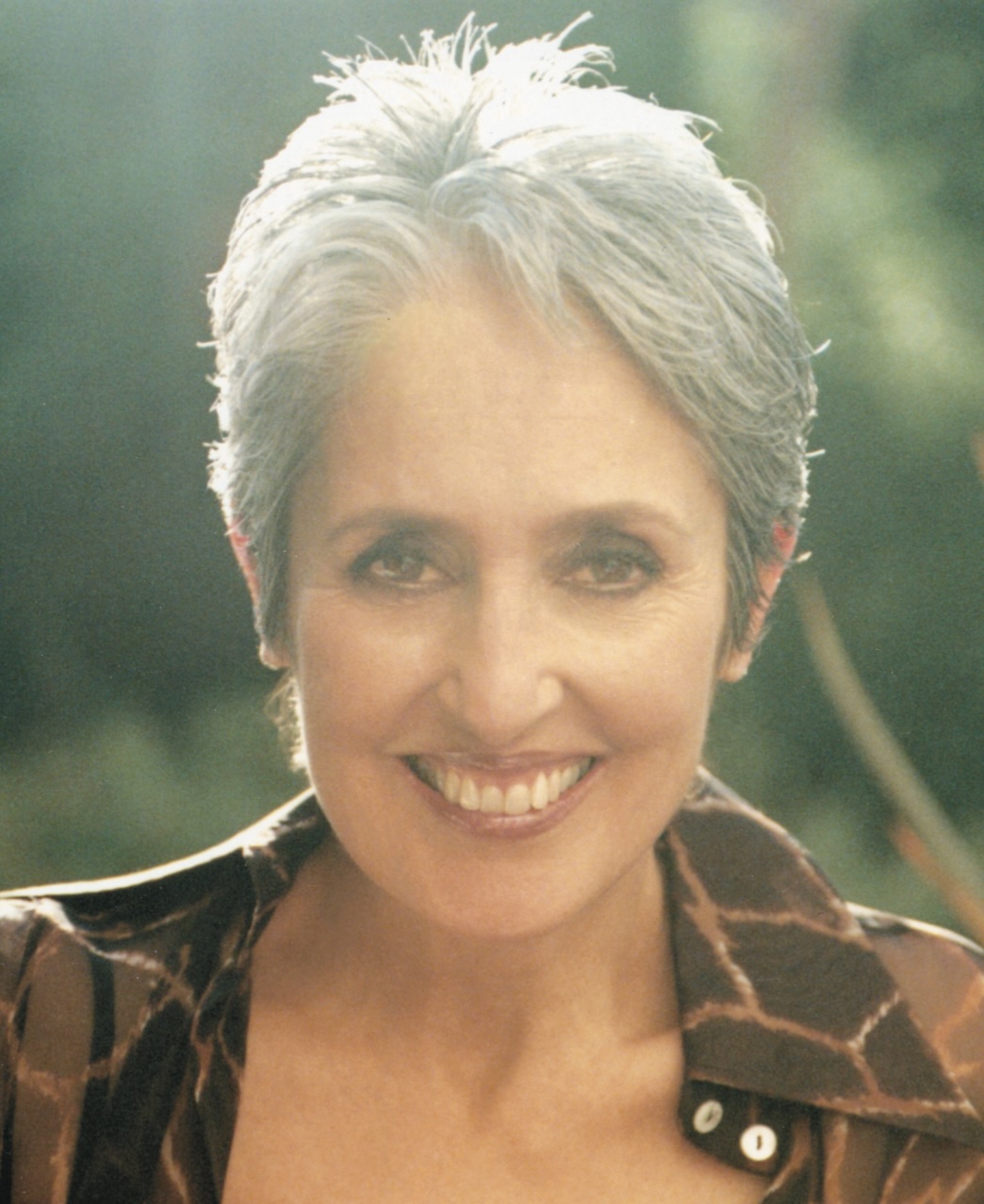
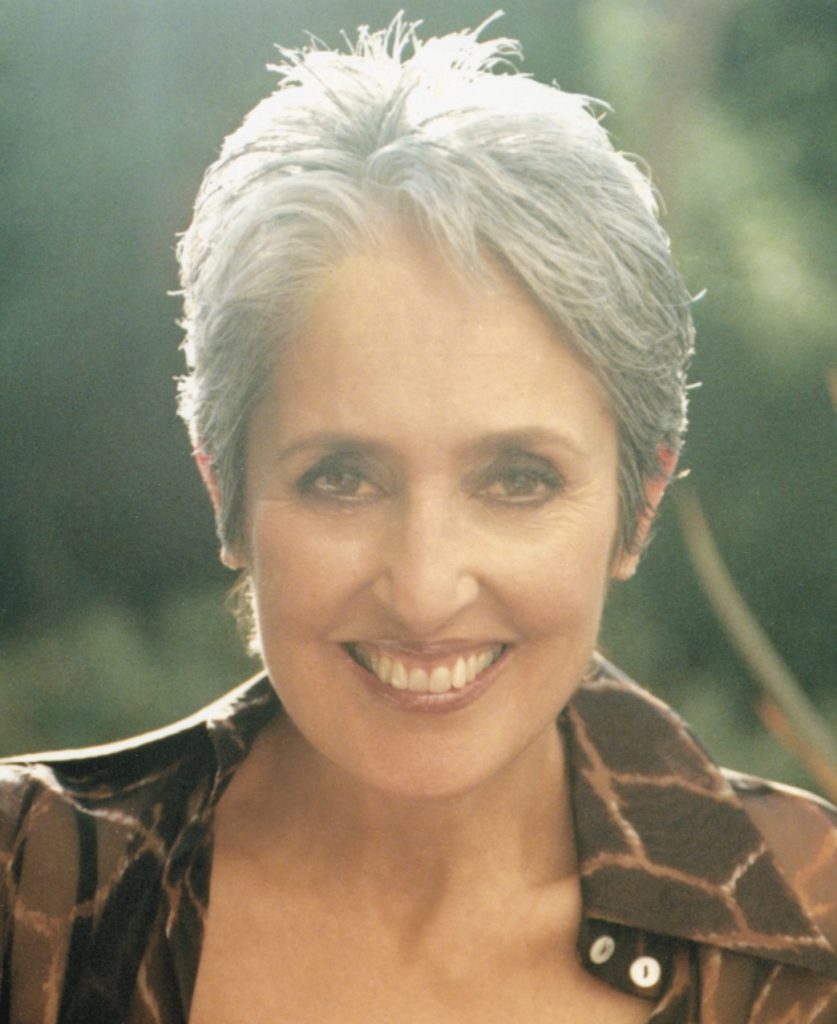
At every stage in her career, Joan Baez has given voice to social issues and causes. Her methods of using music as a form of political protest have been hugely influential. Baez marched on Washington with Martin Luther King Jr. in 1963 and marched for peace in Iraq in 2003.
When I went into the South for the first time to sing, it was 1961, and I didn’t know anything. I didn’t even know that the contract said it would be a segregated audience. Of course, I had my little tantrum. When I went back the next year, I had the contract changed, which was really a joke because the blacks didn’t even know who I was. But in 1963, when everything was really happening, I went into the South and sang in black schools. The whites came on the campus because they were my audience. The blacks came to see it because they were curious.
People still come up to me and say, “I was there.” It was very dangerous, but as a young white woman, I had no idea. All this stuff went on out of my sight. Somebody would come up to me years later and say, “I was the sheriff’s daughter and couldn’t be seen there.” She was running around, ducking her head. I asked her what would’ve happened to her, and she said, “I could’ve gotten killed.”
After being involved in the civil-rights movement, there came this “war” (Vietnam). It was as though my work was already defined for me. The two hats just folded into one. I put it on my head and went out. But I think anybody who’s honest about it and did the kind of work that David (Harris, her former husband) and I did would admit to confusion at the end of the war. Instead of jubilation, there was a lot of disorientation. A “what do we do now?” kind of thing.
I started working with Amnesty International in 1971. I went lots of places, did the Cambodian refugee thing, did Latin America, made films in both of those places. We’d gone over to Cambodia to take down stories from the boat people from Vietnam, and while we were there, we realized the Laotians were just as important and weren’t getting much press.
When I was at the Cambodian border—in the middle of fucking nowhere, with people starving to death around us—the press was there. And this guy says, “You’ve been accused of doing political action to sell records.” And I said, “Yeah, I’ve really got a big market out here at the Cambodian border.” Either that, or they’d say I was using my music in order to do political things.
Political activism today is totally different. What happened with the marches against the war in Iraq was us discovering we didn’t have that much of a free press anymore. You get eight million people marching on the same day and Fox News doesn’t run it—that was an education for all of us.
I’d always put politics before the music. But about 15 years ago, I realized my music was really suffering terribly. I was in a musical depression. Either I could just stop and relax with being called a “legend” or I could put the time and energy into seeing how valid I could make myself. I seem to be mostly there to inspire people. They sit back as though they’re waiting for me to tell them what to do. When somebody comes up to me and says, “What are you going to do now?” I say, “Yes, what are you going to do?” It’s the only wise thing I can say.
—interview by Jud Cost