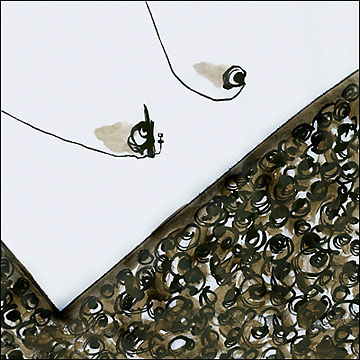
Every Saturday, we’ll be posting a new illustration by David Lester. The Mecca Normal guitarist is visually documenting people, places and events from his band’s 25-year run, with text by vocalist Jean Smith.
Smith: Munich, sometime in the 1990s. When we arrived for soundcheck, the booking guy had the microphone in pieces: bare wires. The PA was a pile of crap. I don’t think we even got a soundcheck. The club was packed, and management was pressuring us to start the show. The set was pretty intense—wild. At some point, the booking guy started coming up to me while we were playing to tell me management wanted us to stop; we were well short of completing the set. I probably told him to fuck off. He came up and said if we didn’t stop, we weren’t getting paid—and the money was good in Europe. They pulled the plug on their shitty PA, which suited me just fine. The mic had been an obstacle impeding my ability to be heard. Free of it, I stepped off the stage into the audience of beer-drinking Bavarians and sang right in their faces. Dave’s guitar was still coming through his amp. The DJ put the music on to drown us out, and the booking gu said we weren’t getting paid. I found the manager and yelled at him until he got out some money and threw it at Dirk, our tour manager, who we’d known for about two days. Dirk didn’t speak English at this point. We had to push our way out, lugging guitars, amps and merch through the crowd the whole length of the bar. Dirk had the car out front. There were about six of us, and we went to a restaurant and met some record store people and journalists. Dirk seemed upset—he was concerned that I was really upset—and I was like, “Hey man, this is what we do. That was great!” And our excellent friendship began.
Outdated reference point or not, the anti-apathy sentiment on Superchunk‘s sophomore single “Slack Motherfucker” still seems characteristic of Mac McCaughan 20 years after he wrote it. The recently dormant Superchunk is moving again, and McCaughan also fills his time with Portastatic and co-ownership of Merge Records. As if that wasn’t enough to keep him busy, McCaughan is guest editing magnetmagazine.com this week.
McCaughan: Apparently, Finland had for years a reputation as a really horrible place to grab a bite to eat. They didn’t take kindly to this rep, and more than one restaurant in the nation’s lovely capital city of Helsinki has set about rectifying the situation. On a trip for a music conference recently, we had the occasion to dine in the cozy confines of Restaurant Juuri, which serves what it calls “Sapas” (as in the Finnish version of tapas). We deduced that Sapas must be a bogus word, but the dishes themselves were small and delicious takes on traditional and non-trad Finnish foods. What is not to like about “nettle marinated whitefish, blackcurrant—mustard sauce”? or “grilled salsify and rosehipjam”? I’ll tell you what’s not to like: nothing! My favorite was something called “eggcheese spiced with oregano, baked on top of straws,” and while I did not partake of “slightly smoked reindeer heart with gelée of rowanberry wine,” it was a hit at the table. Finland, who knew!?
They’re nobody’s buzz bands anymore. But since 1993, MAGNET has discovered and documented more great music than memory will allow. The groups may have broken up or the albums may be out of print, but this time, history is written by the losers. Here are some of the finest albums that time forgot but we remembered in issue #75, plus all-new additions to our list of Lost Classics.
You should hear the collective groan around the MAGNET office whenever the idea of writing a scene-report article is discussed; most bands pay more attention to their MySpace page than their hometown. But geography is a powerful thing, and we have been guilty of chasing its musical meaning, sometimes with success (the Chicago post-rock family tree we published in 1996), sometimes with failure (Texas psych/rock or Norwegian pop scenes, anyone?). But one of the most genuine groundswells was in our own backyard in the late ’90s.
Sounds From Psychedelphia, a 10-band compilation issued in 1999, is the main artifact of that era of Philly sound. On it, you can hear Lenola taking a My Bloody Valentine-like, effects-bent riff and stretch it like taffy; witness the Asteroid #4 delve into neo-Pink Floyd bliss; take in the shimmering guitar-pop heroics of the Photon Band; and hear Aspera Ad Astra imagine what Brian Jones’ own personal orchestra would’ve sounded like. While shape-shifting noise merchants Bardo Pond and jangle-pop outfit Mazarin aren’t present on Psychedelphia (the former was signed to Matador at the time, and the latter debuted afterward), both bands filled in pieces of the local puzzle.
But, predictably, you had to be there. Live, the Asteroid #4 employed a fog machine and a kaleidoscopic light show, while Bardo Pond would stage sit-down performances at art museums and Lenola (which actually hailed from nearby locales in southern New Jersey) cooked up its own visual schemes. “At one show, we wore suits that were covered in Christmas lights and handed out light-refraction glasses to the crowd,” remembers Lenola singer/guitarist Jay Laughlin. “We were plugged into extension cords at our feet. It looked awesome, but (drummer) Sean (Byrne) was getting shocked while we played, so that was a one-off thing.”
Beneath all that onstage window-dressing, Philly’s psych/rock scene was steadfastly DIY, with nearly every band forming its own label to release its albums. There was Lounge (Asteroid #4’s imprint, which issued the Psychedelphia comp), Tappersize (Lenola), File 13 (Aspera Ad Astra) and Colorful Clouds For Acoustics (Azusa Plane). “The DIY thing was out of necessity, really,” says Laughlin. “We sent the albums to every label we knew of and never got a bite.”
No widespread national attention was forthcoming, and Lenola called it a day in 2002; the band’s members now play in Like A Fox and the Twin Atlas. Aspera also disbanded, with members joining Rollerskate Skinny’s Ken Griffin in Favourite Sons. The Asteroid #4 is still around, but 2006 saw an endpoint for Mazarin (a cease-and-desist order was issued by a Long Island bar band of the same name) and a tragic epilogue (the suicide of the Azusa Plane’s Jason DiEmilio; pictured above). :: THE AZUSA PLANE America Is Dreaming Of Universal String Theory // Colorful Clouds For Acoustics, 1998 Effectively the solo guise of Jason DiEmilio, the Azusa Plane represented the experimental outer limits of Philadelphia’s otherwise rock- and pop-leaning psych scene. America Is Dreaming was a two-disc symphony of guitar-and-amplifier manipulations, a melodic beehive of sound that never submitted to drone. What John Fahey did for guitar strings (harnessing a miasma of notes and harmonics with godlike grace), DiEmilio did for feedback.
Outdated reference point or not, the anti-apathy sentiment on Superchunk‘s sophomore single “Slack Motherfucker” still seems characteristic of Mac McCaughan 20 years after he wrote it. The recently dormant Superchunk is moving again, and McCaughan also fills his time with Portastatic and co-ownership of Merge Records. As if that wasn’t enough to keep him busy, McCaughan is guest editing magnetmagazine.com this week.
McCaughan: My main guitars are Gibsons, but they’re also kind of bulky, and I don’t want to haul my old Marauder around on family vacations, so I got this little Martin acoustic mini guitar essentially to carry down to the beach in case I hear The Perfect Riff in my brain (it’s called “mind composing”) and I need to jam it out. More likely, it’s sitting on the couch ready to bust out for a rousing version of “Up On The Roof” or “Mr. Tambourine Man” for the kids. Soon they will be large enough to play it themselves.
We’re psyched to premiere the following video from West African singer/songwriter Hermas Zopoula because: a) we get to mention that the capital of his native Burkina Faso is Ouagadougou; and b) we can further look down our noses at the weak afro-posturing of Vampire Weekend. Zopoula is the youngest of 36 children in his family (in your face, Octomom) and will see his first American release, the two-disc Espoir/Live In Ouagadougou issued by the Asthmatic Kitty label on May 19. “Pai Doun Yunai,” below, appears on the live album recorded in Zopoula’s back yard.


 Every Saturday, we’ll be posting a new illustration by David Lester. The Mecca Normal guitarist is visually documenting people, places and events from his band’s 25-year run, with text by vocalist Jean Smith.



 Outdated reference point or not, the anti-apathy sentiment on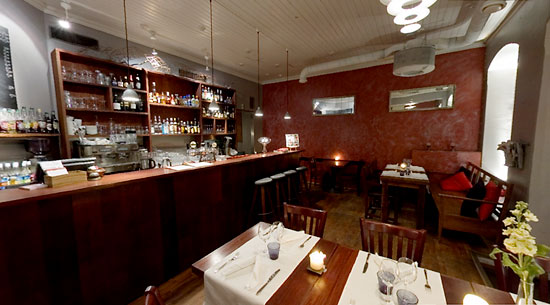
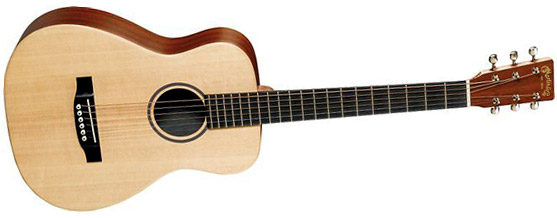 McCaughan: My main guitars are Gibsons, but they’re also kind of bulky, and I don’t want to haul my old Marauder around on family vacations, so I got this little