
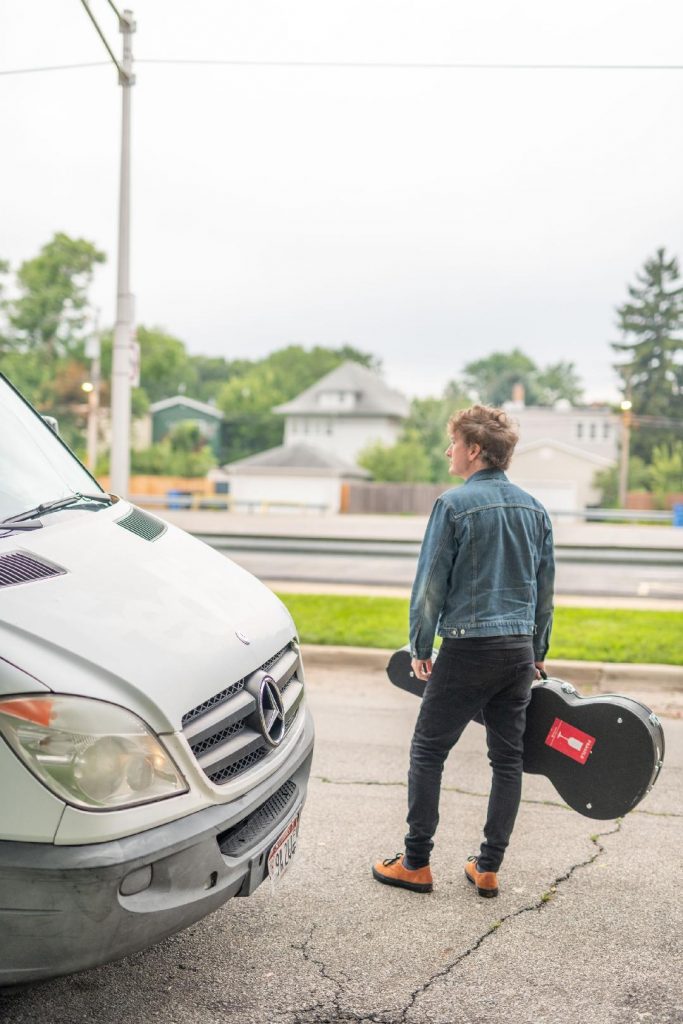
Singer/songwriter/guitarist/bassist Jason Narducy is typically a very busy man. When not fronting his Split Single project—time for a new record, Jason, just saying—he’s an erstwhile member of the Bob Mould Band; tours with the likes of Superchunk and Sunny Day Real Estate; and travels around playing solo house concerts. Oh, and he also covers R.E.M. songs with actor Michael Shannon and a crew of solid musicians at sold-out shows across the country and across the pond, as one does. He likely has other things going on, but space here is limited.
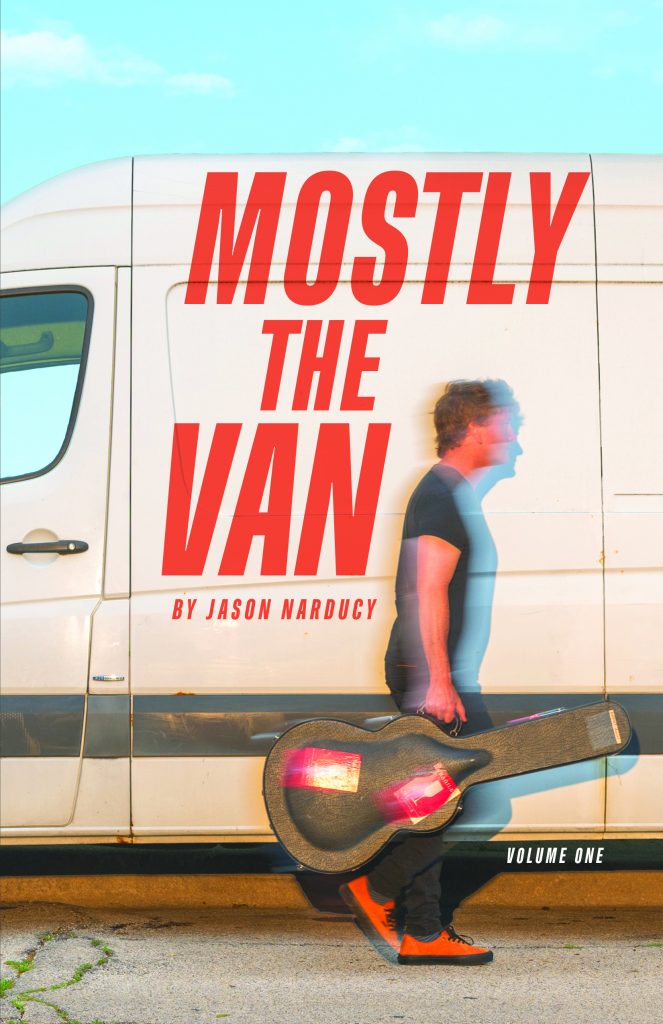
Narducy amazingly still had some idle time to add to his résumé (he doesn’t really have a résumé) by becoming an author. Mostly The Van—volume one of a planned trilogy—isn’t a linear autobiography but rather a short (102 pages) collection of music-lifer tales presented in a photo-heavy design featuring multiple typefaces. While the first approach surely would’ve been an entertaining read—Narducy is a witty, engaging storyteller regardless of format—Mostly The Van is visually appealing and pleasantly diverting as is.
MAGNET’s Matt Hickey asked Narducy five questions (give or take) about the book, and Narducy answered them because that’s how interviews work.
The book has an interesting design with different fonts and a lot of great photos, but why did you decide on this format vs. a more straightforward autobiography? And why is it called Volume One?
I kept finding photos that accompany stories and sending them to Tim Hogan, the designer. He proposed that we lean into that, and he sent me samples of a ’90s magazine called Raygun. Raygun was too much for me. I mean, I love that it existed—it was original and something to behold—but it was too extreme design-wise for me. It was difficult for me to read the stories because the lettering was so jumbled. So we found a good compromise and, it seems, created a unique book. I love what Tim did.
I’d never done anything like this before so I wasn’t sure if people would be interested in a book written by me. I called it Volume One because I have three volumes sketched out, but I would stop at one if it tanked. Thankfully, there have been enough sales to warrant more.
I’m always curious when a musician who’s not technically a writer—and yes, I’m aware that songwriting is indeed writing—sits down to do this kind of writing. How did you find the process? Easy? Tedious? Something else?
I had fun with it. The thought of writing a book had been kicking around for a couple of years, but I didn’t know how I should approach it. I enjoy stories that describe uncomfortable or precarious situations. Musicians get in those situations from time to time.
So I spent the spring and summer lying on my couch, typing on my phone. I did some research when it was necessary, such as looking up the name of the Hamburg venue the Bob Mould Band got lost in and looking up dates and setlists of shows. I sent the short stories to Freda Love Smith, who edited them for me. She’s a musician (Blake Babies, Mysteries Of Life, Sunshine Boys) and has published books, so she was invaluable to the process. She could see things I couldn’t. Her feedback was extremely helpful.
There’s a story early on about one of your daughters that’s very moving. What kind of limitations, if any, did you place on family stories or other personal things to include or not include?
I just asked her if it was OK for me to include it. I wouldn’t have put it in the book if she didn’t want me to. That one is a good example of having a great accompanying photo. You can see her tears of joy clearly. I’m hearing positive feedback from a lot of people about that one because we all remember being that age and trying to find a community that will welcome us.
One of your heroes, Pete Townshend, is mentioned a few times, including when you schemed—with an unlikely accomplice—to meet him at a radio station. You didn’t meet him that day, but I know you did eventually. Was the rest of that story just not interesting enough to make it or will it be in a future volume?
I have a couple more Pete Townshend stories. He’s one of my favorites, so I feel very fortunate to have met him.
How did the R.E.M. covers band project with Michael Shannon come about? I can’t imagine that you envisioned it would turn into full-on tours and having the actual R.E.M. join you onstage in Athens, which you talk about in the book.
Michael Shannon and I were introduced to each other by Robbie Fulks when we performed Lou Reed’s The Blue Mask album at the Hideout in Chicago. We then did another show together with Robbie playing Velvet Underground songs. Robbie moved to L.A., so Michael started asking me to assemble musicians for shows. We played annually, and it was usually covering an entire album like Neil Young’s Zuma or The Modern Lovers. In 2023, I suggested we cover Murmur by R.E.M., and it got a strong response. I received emails from promoters around the country asking us to bring the show to their venues. So we didn’t plan it—there was just a lot of interest.
We were all surprised when R.E.M. joined us onstage. Peter Buck was onstage next to me because we had planned to play a handful of songs with him. But when Michael Stipe got onstage and said, “Let’s go,” Peter leaned over to me and said, “I did not think Michael would do that.”
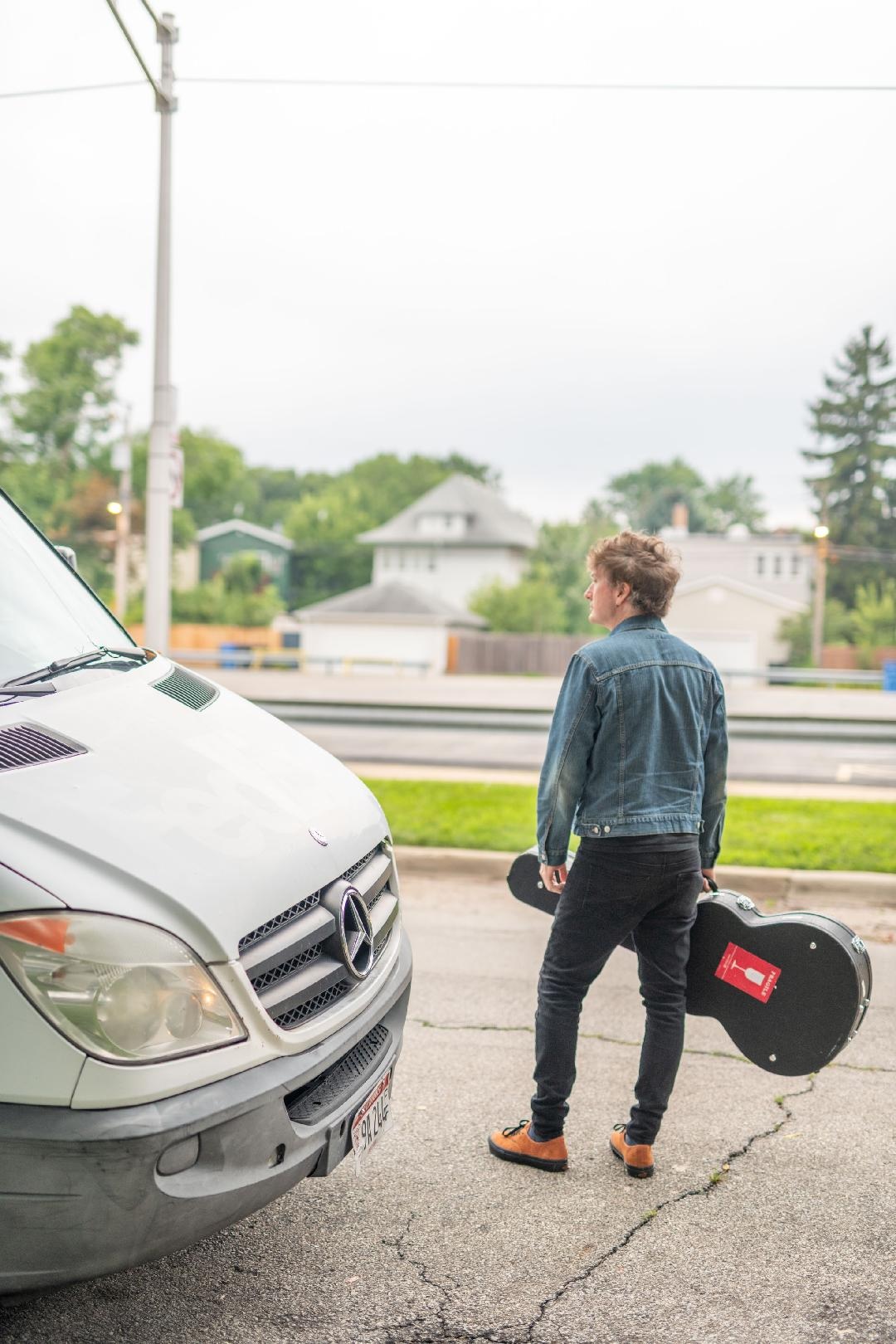
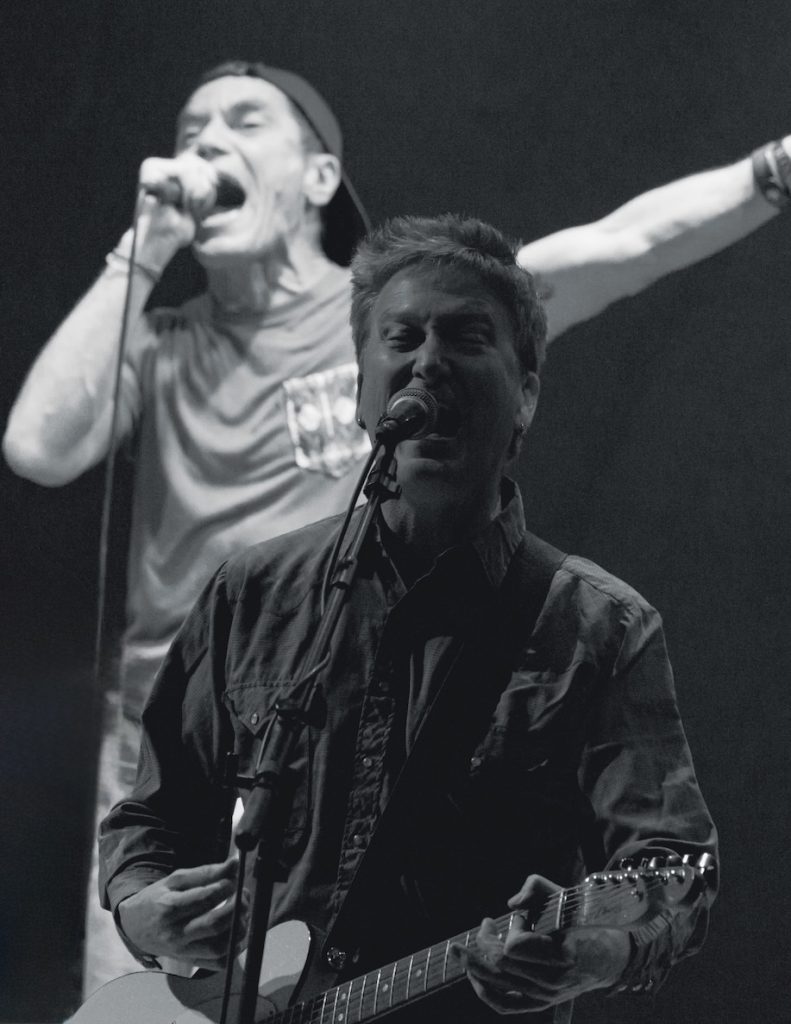
—Narducy/Shannon photo for MAGNET by Chris Sikich; Narducy photo by Nathan Keay