
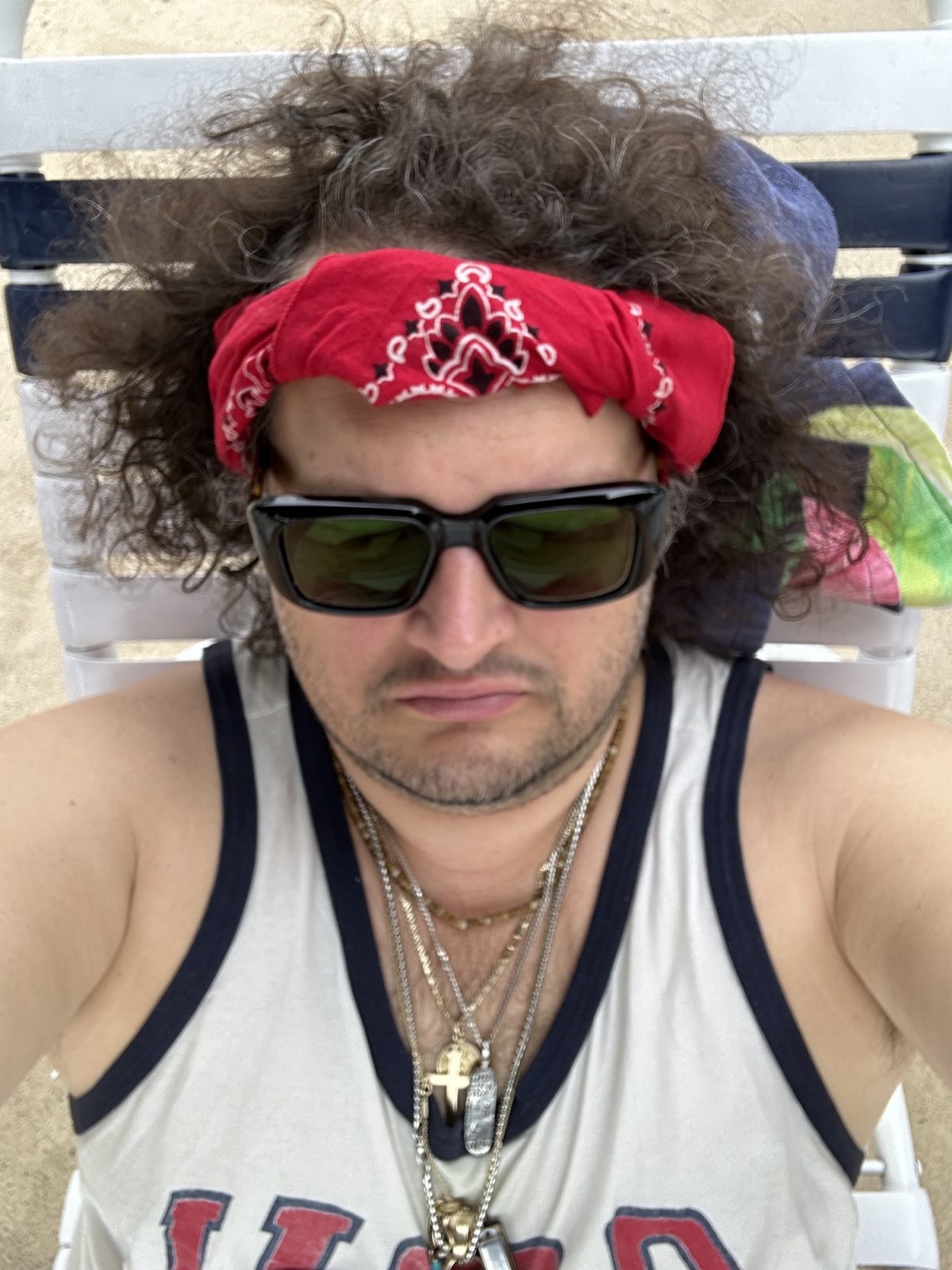
It can’t be easy to field all those “famous dad” questions, especially after four decades. But Adrian Perry, the 40-something son of Aerosmith’s Joe Perry, seems to take it all in stride. It helps that he’s found success on his own terms, juggling and on-and-off gig as an indie rocker with a rock-solid career as an attorney in New York. The dude cleans up well when he needs to, but you can still see that semi-maniacal shredder’s glint in his eye—even in a three-piece suit.
Under the mysterious guise of El Cortina, Perry flexes his genetic (and self-made) gifts more impressively than ever on his expansive new solo LP, Top Down (Declared Goods). MAGNET’s Hobart Rowland recently caught up with Perry for a revealing chat.
A recent Apple Music search uncovered about a half-dozen new-age albums under your name. Can we assume that this your secret musical alter-ego?
Busted. My great ruse has been exposed. But seriously, folks, that ain’t me—though I could probably use some new-age music to destress every now and then. Maybe that other artist is a distant cousin? We shall see.
The guitar-heavy grind of TAB The Band (later Dead Boots) couldn’t have been further from new age. Looking back on the group’s almost 10-year run in the early aughts, what are your primary takeaways?
First, we had an absolute blast. I loved being in a band with my brother Tony, who’s a super-talented musician, engineer and producer; he’s now focused on the latter. Just a lot of fun memories. We were DIY all the way, so we learned a lot of lessons together. I’m grateful for the bands that took us on the road, especially Stone Temple Pilots, who were so good to us on many tours. Musically, there are a lot of songs I still like. There are a bunch that I’d like to have back, rewrite and re-record, but that’s the deal. We were young, figured it out on our own and did our thing.
We still license music from the band for TV, film, etc., so some of the music has legs, which is cool. Ben Tileston (drummer) and Lou Jannetty (guitar, vocals, graphic artist) are still close friends with me and Tony. They were Tony’s school friends, so it’s a lot of love. Lou directed a video for our song “She Said No (I Love You)” in a time-capsule style, with photos and video clips from us on tour. If you want to get a vibe for the band and our experience, you can find that video on YouTube.
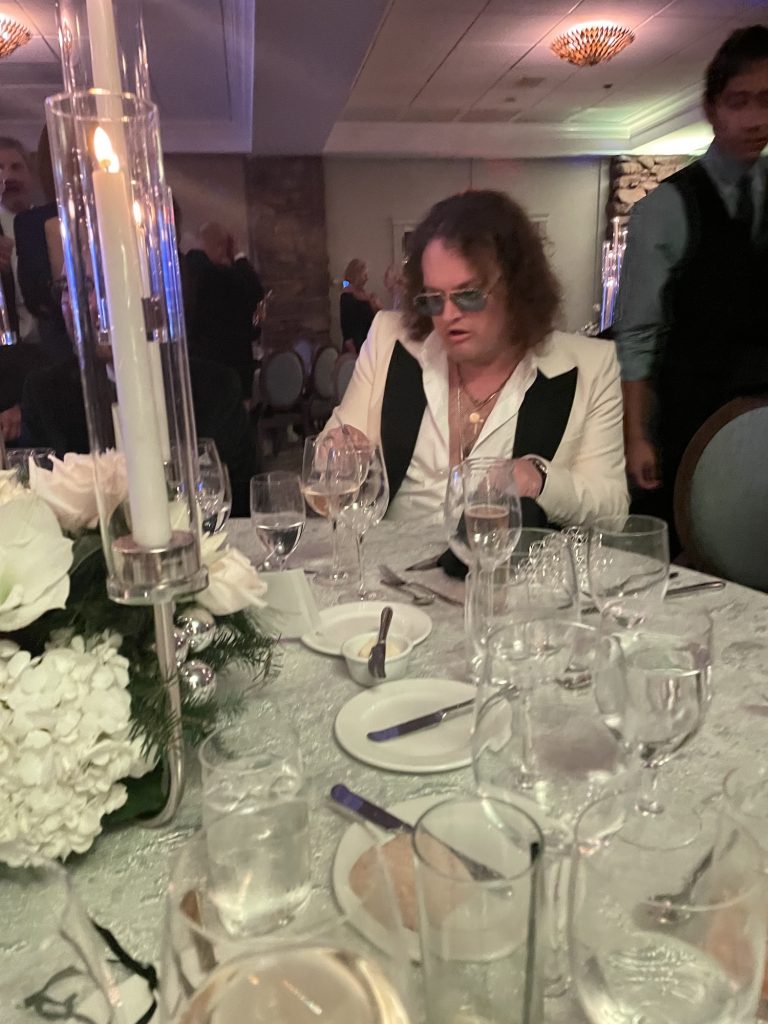
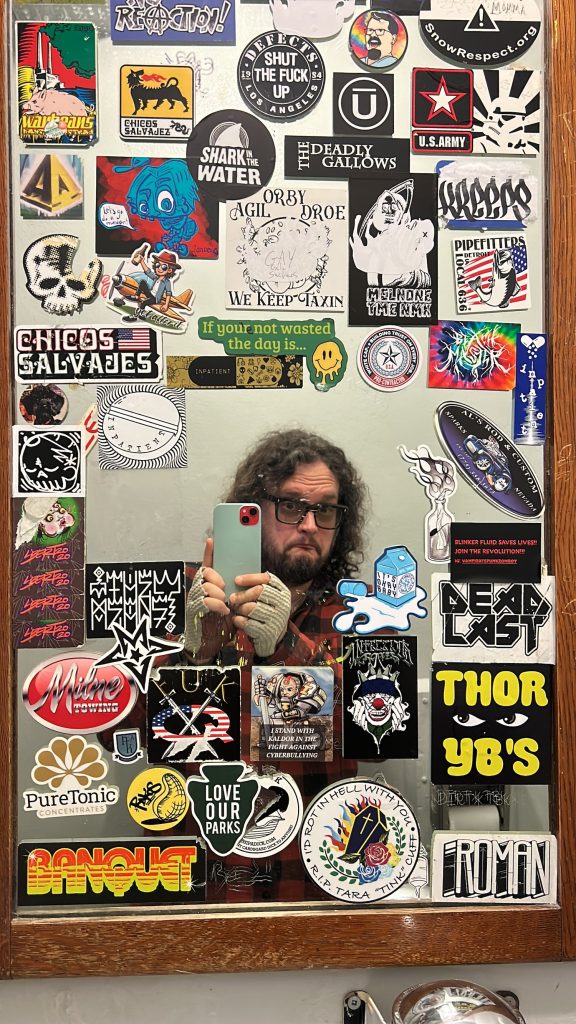
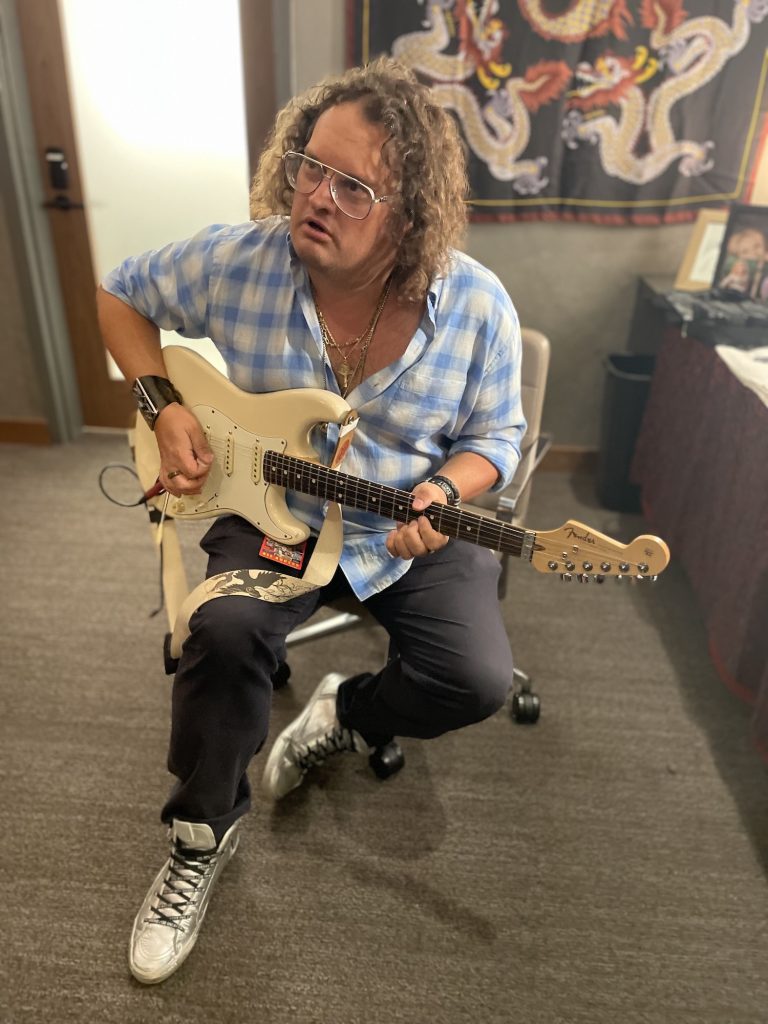
Tell us about El Cortina and Top Down, your first proper solo project. Why did it take so long?
I always had a vision of working in a band context because that’s what most of the artists I look up to did. As time went on, I matured enough to be confident in a “solo” vision and was gearing up to do it at some point when time allowed. After TAB/Dead Boots stopped, I stepped away for a few years and focused on my legal career. The pandemic is what got the fire burning again—inside all the time, staring at the guitar. This new project has been a few years in the making. The vision for this record was to bring together some early-’70s rock and pop/rock sounds—a Laurel Canyon vibe, with some edge here and there. I was listening to a lot of Warren Zevon, Jackson Browne, Linda Ronstadt, and some Johnny Winter, since I wanted to dig in more on some slide. There’s always Neil Young in there, too. Then those artists kind of blended with my bread-and-butter influences, like the Beatles, the Stones, New York Dolls, Velvet Underground, Sly & The Family Stone, Stevie Wonder, Jeff Beck, Cheap Trick. You may hear bits of all the above on the record.
I need to give a shout-out to Eric Lense, who helped produce half the record, played drums on a bunch of tunes—plus some vocals and guitar—and helped get the live band together. Jeff Citron helped a ton with getting things recorded and getting sounds to clarify the vision. He works a bunch with Rich Costey (Fiona Apple, Foo Fighters). Last but not least, I’ve got to give a lot of credit to Zach Hancock (Roots, Mumford & Sons) who mixed the record and really helped bring the entire project together sonically.
Given your Stanford University education and law degree from Georgetown, music obviously hasn’t been your only interest. How has your real-world experience in the music industry translated to a specialty in intellectual-property law?
I try to bring all my practical knowledge of the industry to my legal work. I focus on negotiating tech contracts and licensing deals, and help clients launch products, often in “edgy” areas where tech and entertainment collide—like AI content creation or using music and video in virtual or augmented reality (video games). I also help clients buy and sell rights in music or video content, and I do sponsorship and endorsement deals. I have knowledge of how the industry works from years of touring and working in A&R. I also worked for Saturday Night Live for two years in the music department and film unit. Plus, what I’ve soaked up from my dad comes in handy. I think the folks I work with appreciate it.
How did growing up the son of Joe Perry sway your decision to pursue other career avenues?
Through my dad, I’ve seen the best, the worst and the everything-in-between of the industry starting from a young age. Early on, at like six years old, I had the thought that the family needed a lawyer. It seemed like my dad and his band dealt with a lot of frustrating business issues, and it wasn’t always clear whom they could trust. So that had an impact on me. It wasn’t until I was 12 or so that I started to play music and really got bit by that bug. It’s like breathing to me, but making a living at it is a whole different thing. Even when it’s going well, it’s challenging. There’s a lot to like about having a more stable job that doesn’t require constant travel. But there’s plenty to like about joining the circus, so to speak, as well.