
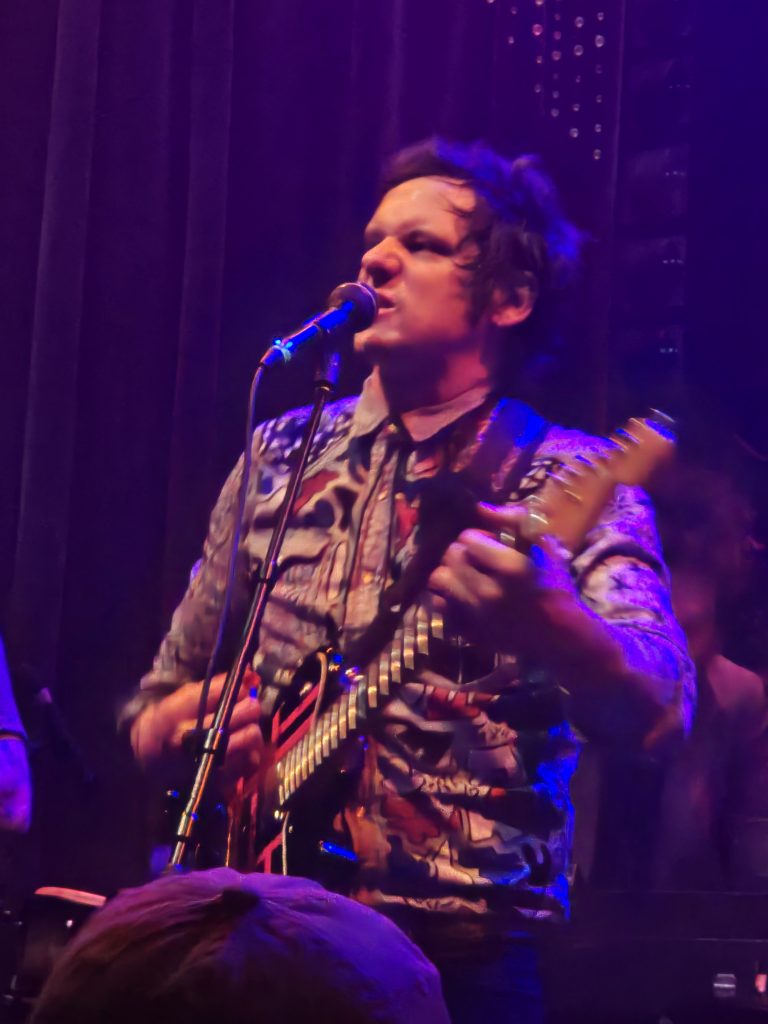
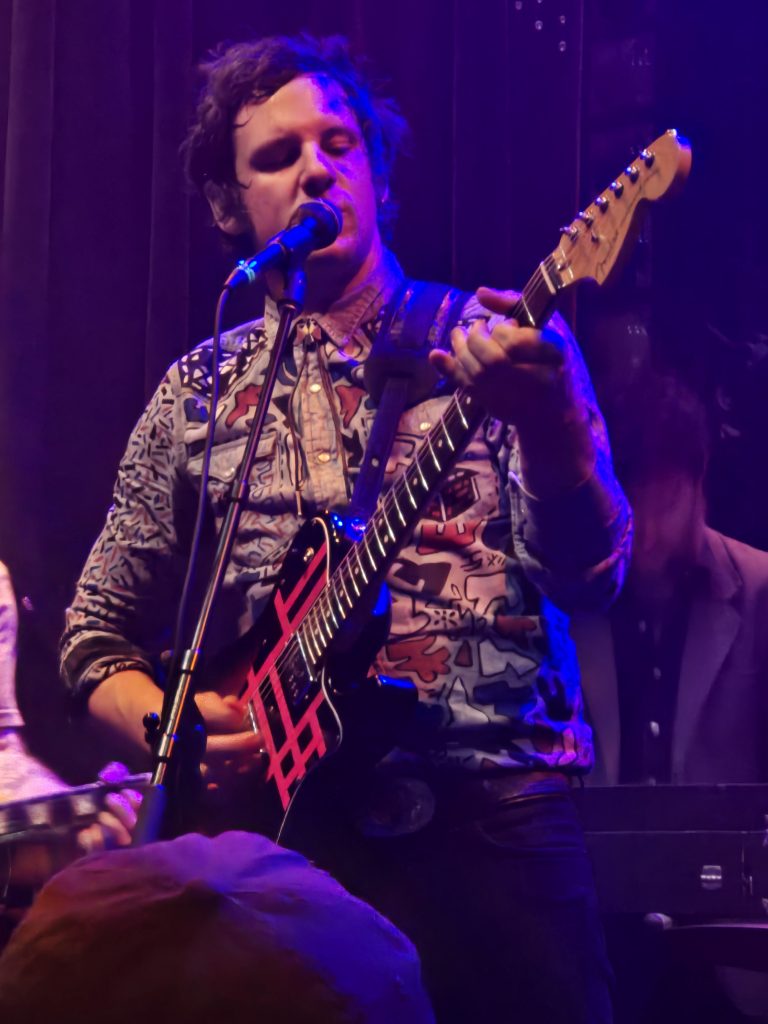
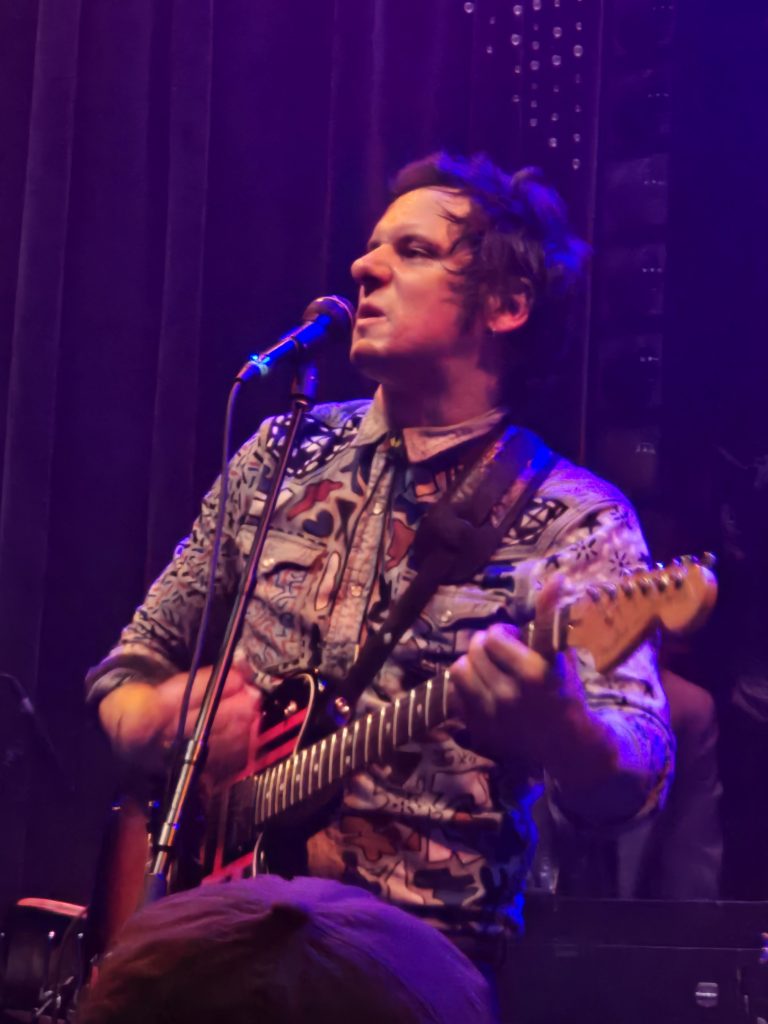
Maybe some of you knew Ryan Davis at the helm of State Champion over the past couple decades. Or as the boss of Louisville’s Sophomore Lounge label. Or maybe you got wind of the first Ryan Davis & The Roadhouse Band album, 2023’s Dancing On The Edge. If so, I’m a little jealous, because, like many folks, I “discovered” Davis this year, with the fabulous New Threats From The Soul. (I’ve always scoffed at the Grammys giving the Best New Artist award to someone whose impact was first felt in a given year, even if it came after years of industry toil—see Shelby Lynne—but I kinda get it now. Kinda. I’m confessin’ here to being a late-adopter.)
New Threats From The Soul is something special. It has roots in Americana, with pedal steel and fiddle lacing through the songs and Davis’ broken baritone calling to mind Waylon Jennings or Richard Buckner or Sturgill Simpson. But it can also pivot into surprisingly frantic breakbeats, and its patient, long songs create a world that is spellbindingly distinct. He’s not so much a storyteller as a world-builder and a word-worker: Almost every line contains a memorable turn of phrase that situates his downtrodden characters in an existentially fraught landscape. Some lines hit as immediate catch-phrases; others are buried in the middle of a verse. (The extensive lyrics are worth reading.) It’s no surprise that David Berman was a fan of Davis’ early work; Davis is a writer’s writer, although he’s totally unpretentious.
I was excited to see how the Davis’ songs would translate to stage. He’d sold out the club date at Philly’s Johnny Brenda’s and is already booked for the much larger Union Transfer in April. At least I’d be a bit ahead of that curve.
The evening opened with a short solo set from Mike Polizze, who helms Philly psych stalwart Purling Hiss. His acoustic finger-picked blues and casual drawl link him to local compatriots Steve Gunn and Kurt Vile, who also split their time between contemplative acoustic projects and noisy, adventurous electric ones. The subtle and fascinating songs often ended with him creating and seamlessly layering guitar loops.
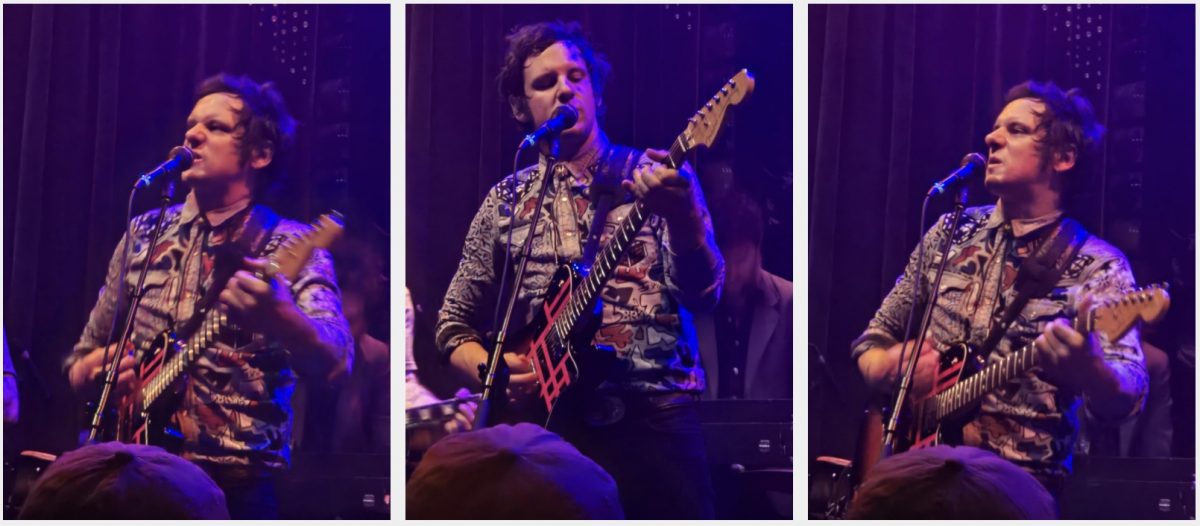
Davis and band started softly, with “Bluebirds In A Fight” from Dancing On The Edge. It’s a slow ballad, with the first few minutes mostly Davis talk-singing and quietly strumming an electric guitar while Trevor Kikrant added pedal-steel moans. The deliberate, leisurely pace called to mind Jason Molina’s ballads, but it shifted when Davis added a brief melodica solo, and then the full six-piece band kicked in for a thrilling coda (a dynamic shift that doesn’t appear on the album version). Favorite lines (the opening verse): “These are your nuclear provisions/The past is a joke played on the future by the present/There is no cure for your decisions/The future’s a joke played on the present by the past.”
From there, the joyful energy stayed high. “The Simple Joy,” a twangy duet with Will Oldham on New Threats, became a word-rich anthem that had much of the audience joining in. Favorite line: “And tonight it feels I’m only feeling with the feelings that I don’t express.”
“Monte Carlo/No Limits” stretched out even more; it’s one of the many songs that push the 10-minute mark. They tend to slowly evolve: They aren’t multi-part suites; they don’t contain long guitar solos or instrumental passages; most of them don’t even return to choruses that are more than a catch-phrase line or two, often with a twist of phrasing. Instead, they accrete with detail, both lyrical and instrumental, and shift slowly, and Davis changes his vocal delivery along the way. They sometimes seem endless, but they’re endlessly captivating. Even a friend of mine who is constitutionally averse to songs much longer than four minutes is willing to make an exception for Davis’ songs.
On New Threats, “Monte Carlo/No Limits” starts with some acoustic finger-picking and pedal steel and ends with frantic electronic beats behind a string section; At Johnny Brenda’s, it ended with Davis and lead guitarist Smokey DeRoeck trading power chords while percussionist (and synth player) Dee Dee Bongo went wild on his namesake bongos. Favorite line: “The doorbell doesn’t work, but it don’t need to if the Rottweiler’s home.”
“Better If You Make Me” was more conventional, with a singalong chorus that Davis delivered while shimmying his hips and gesticulating. There’s some rockabilly in his moves. Favorite line (the chorus): “I’d be willing to change, change for the better, if you make me.”
“Learn 2 Re-Luv,” from Dancing On The Edge, didn’t quite reach the heights of the rest of the set. It seemed more limited by its tear-in-my-beer heartbreak tropes. Maybe I’m missing something. Davis’ songs can be cleverly deceptive, and sometimes the zingers reveal themselves gradually. Favorite lines: “When the things that made us laugh have made us turn ugly/You’re gonna have to learn to re-love me for the person/I became on my own.”
To begin the next song, Davis and DeRoeck hunched over their electric guitars for a loud, dense blast of fast-strummed noise—nothing remotely country there—but it cut short after a minute or two when Davis’ amp blew out. The band vamped for a few minutes while a new amp got set up, and then they segued into “Junk Drawer Heart,” a Dancing On The Edge highlight. At Johnny Brenda’s, bassist LD sang unison vocals; on the albums, Davis enlists some other excellent female vocal foils: Catherine Irwin (Freakwater), Joan Shelley, Edith Frost. The song wove images of a lovelorn sad-sack with more clever metaphors than on “Learn 2 Re-Luv.” Favorite lines: “So I make my way down to the bar/Lately, it’s the only place I like to go when it rains/But someone’s been fuckin’ with the jukebox again/Now it only plays the ‘Sultans Of Swing.’” (As Berman would say, that’s a suffering jukebox.)
Davis songs are as likely to allude to Dire Straits as they are to Hank Williams (as on “Bluebirds In A Fight”) or the Spinners (as on “New Threats For The Soul,” the first of three epics that filled the set’s last half hour, each of which patiently built to a loud climax). “New Threats” ambled to a cheerful rolling rhythm, courtesy of drummer Jim Marlowe, and filigrees of melody, here anchored by Nikrant’s pedal steel (instead of the horns and strings on the album) and LD’s backing vocals. It’s jaunty. And deep. And witty. Favorite lines (hard to choose here: so many in this song!): a tie between “I left my wallet in El Segundo/I left my true love in a West Lafayette escape room” and “I’m scrambling to find Christ in all the places I’m told he likes.”
On “Flashes of Orange,” Dancing On The Edge’s emotional centerpiece, Davis sang each of its many verses with increasing intensity, and it had a hint of the gospel spirit of a Stones or Primal Scream song while still leaning into its mournful, cracked-voice country soul. Favorite lines: “But it’s getting longer babe, the list of things I’d do for a buck/If I only had a Pepsi now, for all the coke spilled in this truck.”
The set ended, as New Threats does, with “Crass Shadows (At Walden Pawn),” another exercise in slow-build transformation. While the set’s last three songs traced similar arcs, they each followed their own engrossing pathways. “Crass Shadows” felt like a benediction, with a ray of hope delivered from some winged Dionysian god. Favorite lines: “I’ll be sittin’ Shiva, suckin’ my thumb, mesmerized by the damage I’ve done/My wings in these winds are like candles to sun.”
Davis is having his moment in 2025 (the night before the Johnny Brenda’s show, Katie and Alison Crutchfield tapped the Roadhouse Band to open in NYC for one of their few Snocaps shows), and he looks positioned to carry it into the new year, headlining bigger shows and appearing at Wilco’s Solid Sound Festival in June. The Roadhouse Band sounded great in the club, but the arrangements and the songs were expansive: They’ll sound great on the larger stages. And I wouldn’t be surprised when I see them next, different lines will be my favorites.
—Steve Klinge