
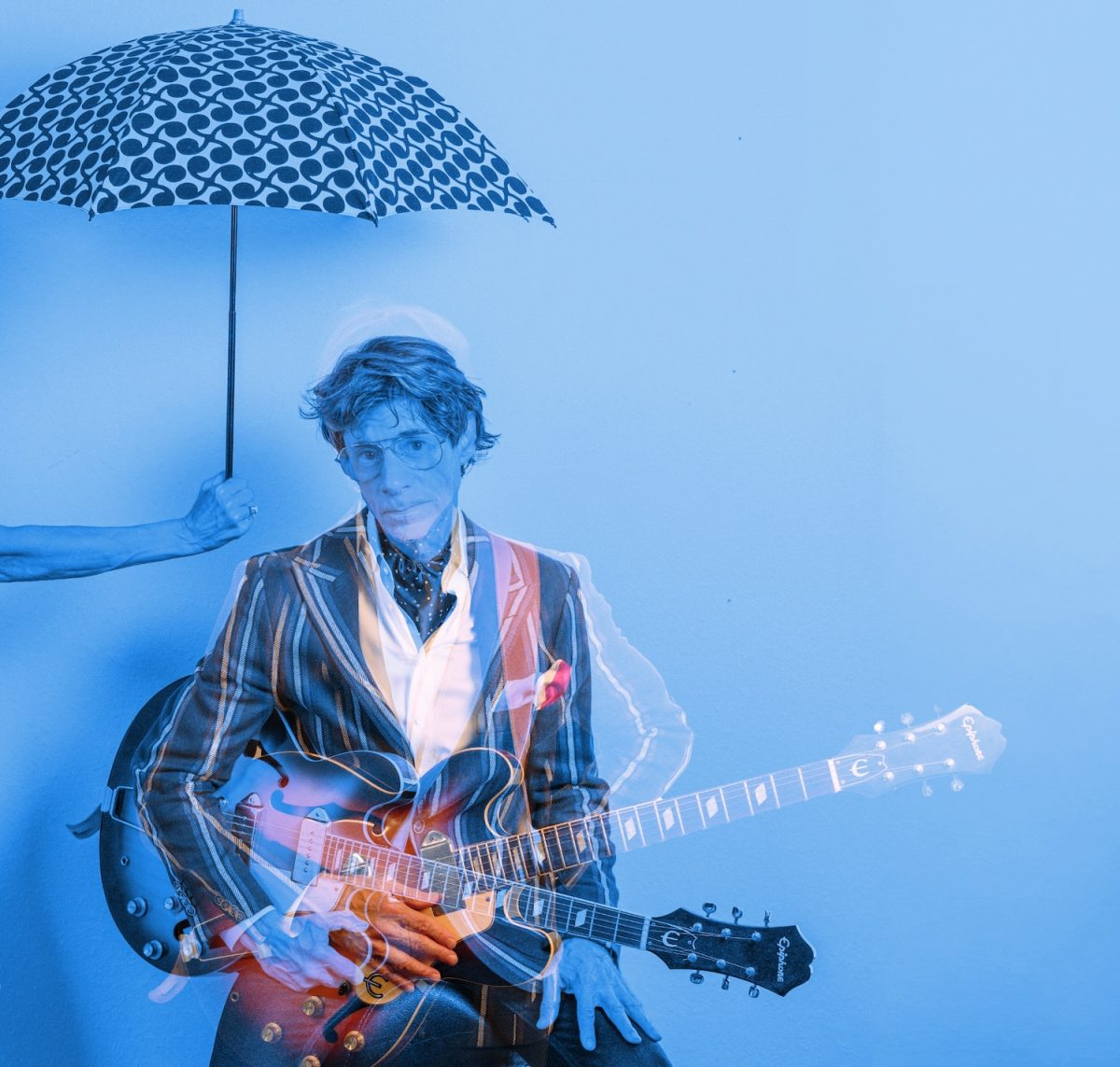
Championed by power-pop obsessives for his stellar work with hot-minute major-label hopefuls Cotton Mather, Robert Harrison has been a beloved (if underappreciated) fixture on the Austin music scene for more than three decades. And if that band’s must-hear 1997 masterpiece, Kontiki, was Harrison’s Revolver, Future Clouds And Radar’s Big Weather (Star Apple Kingdom) is his, well …
“Over the years, I’ve seen my work compared to everyone from the Beatles, XTC and Bowie to the Flaming Lips, Robyn Hitchcock, Beck, Guided By Voices, the Shins, Neutral Milk Hotel and Wilco,” says Harrison. “At first, it bugged me, because it felt like people were listening for references instead of listening to the songs. But all those artists have made great records, so I’ve come to accept that if people hear echoes of things they love, maybe I’m getting somewhere.”
Here’s more from Harrison: “When it emerged in 2007, Future Clouds And Radar was my conscious break from the traditional two-guitars/bass/drums format that shaped Cotton Mather. It’s been 16 years since the last FC&R release, and in many ways, this feels like the start of a new chapter. After spending the last decade writing and producing under different umbrellas, I found myself drawn back to the name that always offered the widest creative aperture—a place where melody, experimentation and a little sonic mischief can all coexist without explanation. With room to stretch, break things and start again.
“These seven songs were made in Austin with trusted friends. They brought me back to the instinct that first fueled FC&R: Follow an idea wherever it wants to go, and wait for an eventual break in the weather.”
—Hobart Rowland
1) “Chicken Out”
“Those ‘Keep Austin Weird’ bumper stickers that popped up 20 years ago, right as the dot-com boom began reshaping the city’s complexion, weren’t enough to spare us from homogeneity dressed up as progress. But weird still lurks in the margins, where artists and other part-time tumbleweeds do what it takes to survive in a boomtown. That’s why I love Lyft and Uber drivers. If I want good stories, I’m not likely to find them so much in the Dell break room as when I hop in a Lyft. For instance: a stripper on sabbatical raising three children who’d never heard of NPR yet felt moved to recite long passages from Look Homeward, Angel and suggest we might want to continue our conversation. One benefit of getting older—god help me—is being able to spot the difference between a terrible life decision and a pretty great song idea.”
2) “Brass Tacks”
“Back in the comparatively quaint days of Orange 1.0—when Kellyanne Conway rolled out the ‘post-fact era’ like a bad magic trick—some people seemed to take it as permission to reinvent themselves at will. My own brush with that broader national dysfunction brought this song to life. I’ve always preferred politically charged songs that observe rather than lecture. My first vocal pass was more confrontational but somehow didn’t ring true, so I decided to try the opposite—cool and detached, simply reporting, ‘I see exactly who you are and what you’re doing.’ So I left the mic up, set my alarm for 3:30 a.m. and sang it in a single take with my eyes shut. Then I went back to bed.”
3) “The Hype”
“If our species can survive the next few years, I wonder if iPhones will eventually be required to come with a warning label like cigarettes: ‘Warning: This portable Narcissus pond undermines relationships, fractures families, divides communities and gradually dulls your appetite for books without pictures.’”
4) “The Man Who Would Be King”
“I’ve never quite understood why the class president—and head of the university yacht club, no less—needed to borrow my tie. Or why a certain rock icon I genuinely admire recently felt the need to borrow from my acclaimed late-’90s thesis celebrated in U.K. periodicals of the day. When my publisher asked if I wanted to take action, I said, ‘Sure, let me write him a new song, better suited to his style and throw in a few songwriting tips.’”
5) “Cabbagetown”
“It really should be called Normaltown—the neighborhood where I lived in Athens, Ga., before moving to Austin. But Cabbagetown over in Atlanta sounded better, even if it’s now prohibitively expensive for the very artists who put it on the hipster map. This one is a proper wrong-place, wrong-time tale. I love singing with Betty Soo—especially the dissolute way she delivers the line, “And now I’m cleaning up my act.” Because it doesn’t sound like that’ll be happening anytime soon.”
6) “Going To Meet The Big Man”
“I grew up in Alabama surrounded by the kind of folks who feel forgotten enough to fall under the spell of a demagogue. Two-thirds of Americans spend their entire lives within 50 miles of where they were raised, and many of them end up as targets of ‘news’ feeds engineered to reinforce their fears and prejudices.”
7) “The Copy Cat”
“Frenchie Smith suggested we strip things back for the third verse and leave about 20 seconds of vocal alone. His reasoning: ‘If I leave you 20 seconds of silence, you’ll do something with it I want to hear.’ I tried everything—string quartets, bells, synths, even backward piano—but nothing quite worked. One night, my girlfriend, whose new daughter-in-law is from India, said, ‘It’s too bad you can’t work some Bollywood dance music into one of your songs.’ And I thought, ‘Well, there’s one thing I haven’t tried.’”