
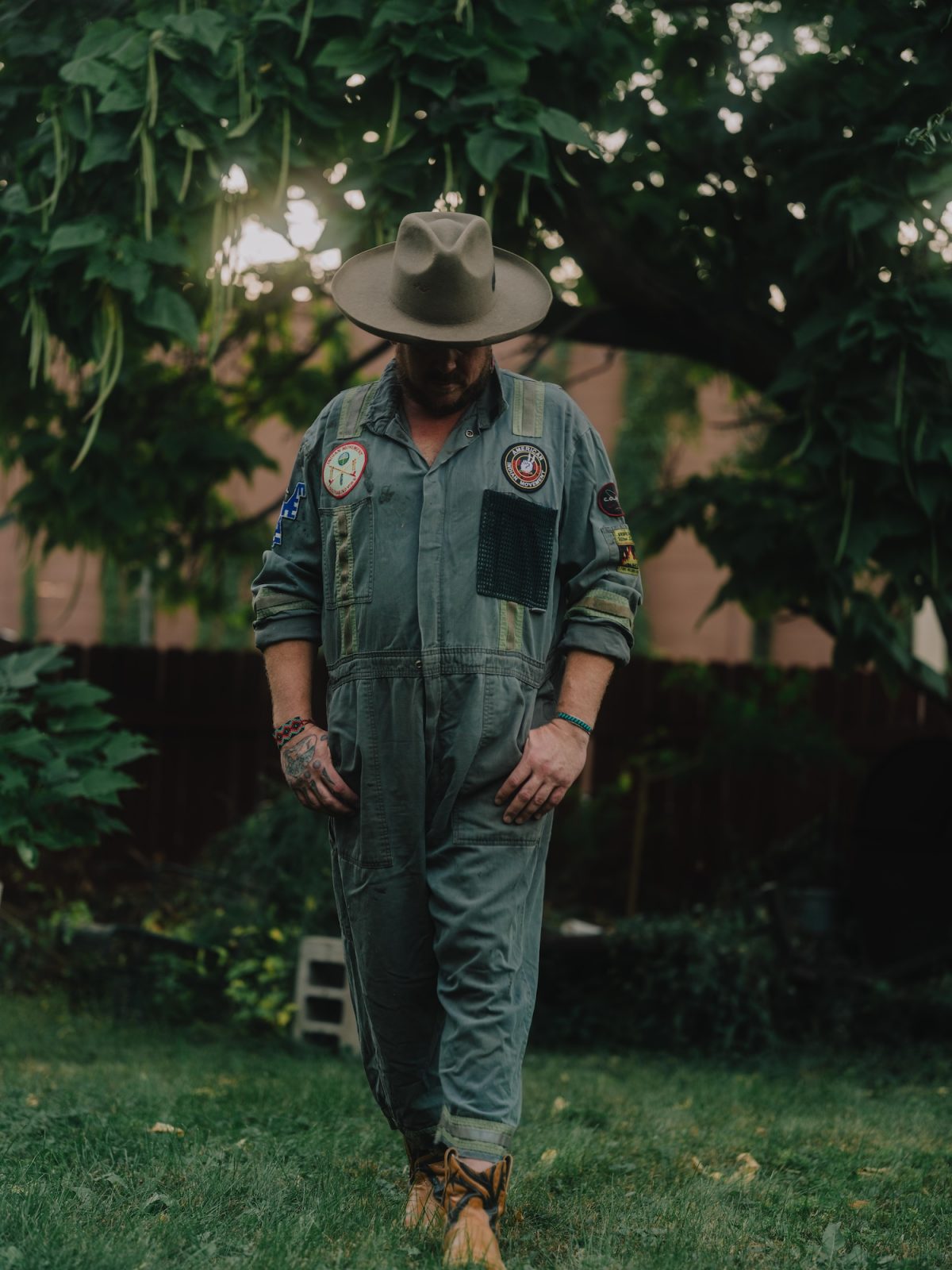
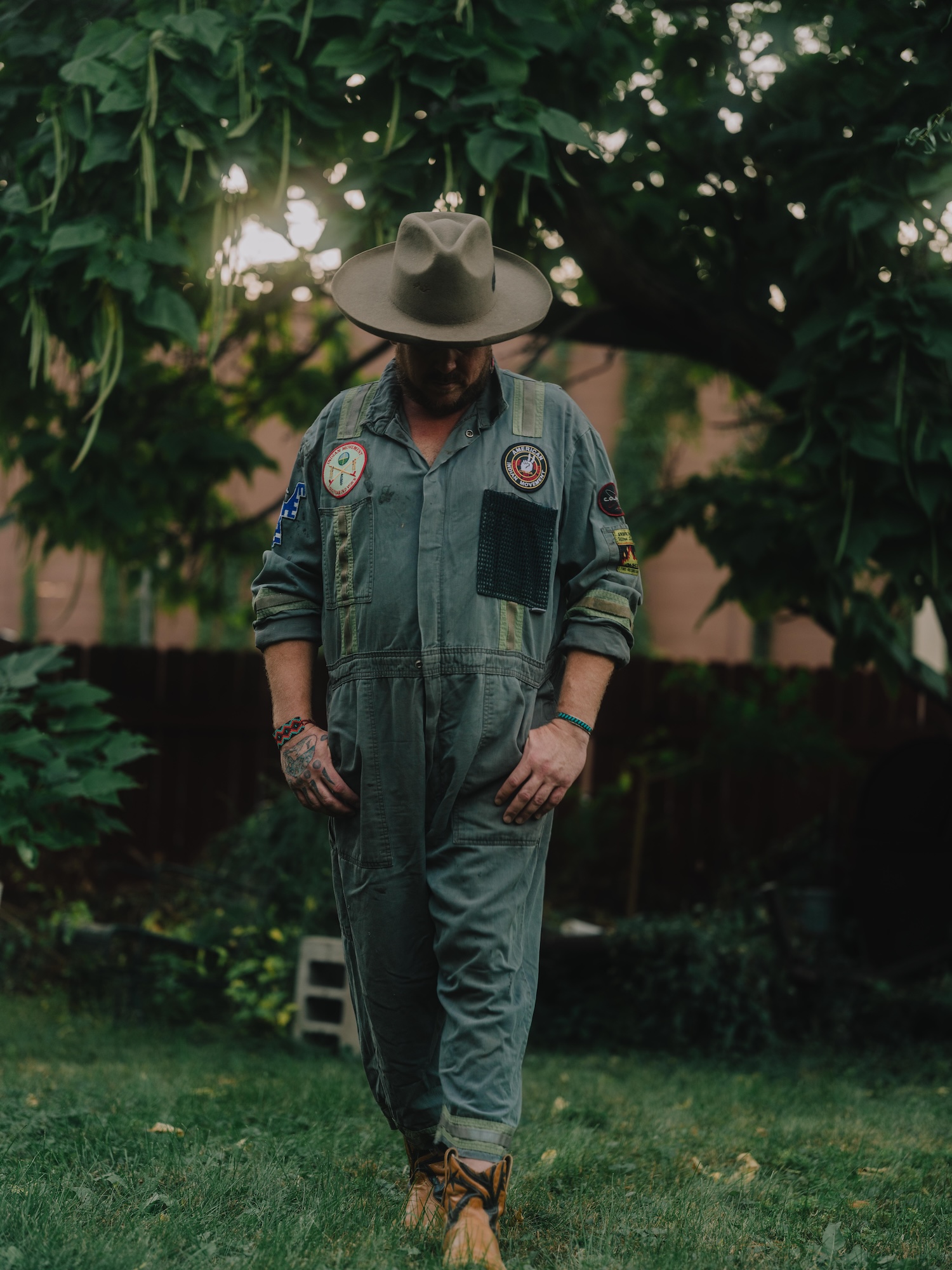
David Huckfelt believes a folk singer has a sworn duty to keep classic songs alive—with a reverence that equates to “performing little error-free ceremonies.” He estimates he can sit down and play about 300 songs on the spot, many of them learned during his 24-year tenure as the co-leader of Minneapolis indie-folk fixtures the Pines.
“It’s a blessing and a curse,” says Huckfelt. “Once a song really hits me and I’ve heard it a few times, it’s in there and it won’t go away for nobody.”
For I Was Born, But … (Don Giovanni), Huckfelt began with a list of 60 songs. “They’d been popping into my shows here and there when the mood was right, which is always a sure sign that it’s time to finish writing a new batch of my own songs,” he says. “Tom Waits said there’s only one reason why you write new songs: You get sick of the old ones. But some songs I never get tired of.”
Huckfelt tracked 15 of those 60 covers live in a two-day session at Tucson, Ariz.’s Dust & Stone Recording Studio with producer/multi-instrumentalist Gabriel Sullivan. Huckfelt had support from former Bob Dylan band member Winston Watson (drums), Connor “Catfish” Gallaher (pedal steel, electric guitar, dobro) and Thøger Lund (bass). Back in Minneapolis, drummer J.T. Bates (Bonny Light Horseman, Hiss Golden Messenger) and guitarist Jeremy Ylvisaker (Andrew Bird, Grace Potter) added some choice overdubs.
“I see these songs as direct messages from the Earth, rather than some kind of signs from heaven,” says Huckfelt. “They’re meant to be played, shared and banged into around a campfire some night—not hung up on a wall somewhere in your home office.”
Here’s Huckfelt’s take on each track.
—Hobart Rowland
1) “Changing Of The Guards” (Bob Dylan)
“From the hands of the master, the epitome of an anthemic, Homeric odyssey built in lyrical cascades around the fundamental human themes of passionate love, personal integrity and a healthy/vital distrust of authority. If Dylan had been born a Japanese Zen roshi instead of the greatest songwriter of all time, his temple would’ve been the hardest to be admitted to—and his punishing teaching on the inevitability of change legendary.”
2) “Anything” (Adrianne Lenker)
“There’s a good reason why Adrianne is next to Bob here: She might be the most visionary young songwriter working today. When I first heard her songs, it felt like a shooting star streaked across the radio and landed in a field somewhere near where my heart had been camped for years.”
3) “Any Way The Wind Blows” (J.J. Cale)
“J.J. Cale is a haiku master of whatever the exact opposite of overthinking is. This dusky gem is one chord, no changes, no B section, no palatial bridge getting in the way of the groove. It’s street poetry, beat poetry, cowpoke poetry. The man who’s thumbing a ride beside a forgotten highway has more style in his transience than you’ll have in your whole life. I tend to think the best thing Eric Clapton ever gave the world is the songwriting and royalties career he handed to J.J. Cale.”
4) “I’m Alive” (Jackson Browne)
“I came to Jackson’s songs like many of us—through the two or three radio hits pounded into our brains. But getting to know his deeper catalog, as well as his activism, made it clear that there was a whole continent under the iceberg. This song brought me to tears on a long, lonesome drive through northern Minnesota. Even though it’s as catchy and produced as a perfect pop song could be, I vowed to learn it and sing it.”
5) “Early Morning Rain” (Gordon Lightfoot)
“Dylan once said, ‘Every time I hear a Gordon Lightfoot song on the radio, I wish it would never end.’ I’ve got roughly 500 hundred LPs from my mom’s record collection. I got two from my dad’s, and one of them is The Very Best Of Gordon Lightfoot. ‘Early Morning Rain’ is a masterpiece because it balances on the razor’s edge of love of self and love for other. The narrator isn’t some helpless wretch, but a mature human being living with the decisions he’s made—and making appropriate room for regret.”
6) “All Done In” (Howe Gelb)
“For years, I thought this song belonged to one of my most cherished songwriters of all time, the legendary Rainer Ptacek of Tucson. If you’ve never heard Rainer’s records, stop reading right now and come back after you’ve listened to The Farm and Alpaca Lips—then we can talk. One afternoon while sitting with Giant Sand’s Howe Gelb, I asked if he could help me decipher the third verse of this gorgeous song. Little did I know that he wrote it. Of course, he told me after I played it that night at Hotel Congress and gushed about Rainer.”
7) “Two Gunslingers” (Tom Petty)
“‘Two Gunslingers’ is a prescription—and even a plan of action—for the times we’re living in politically. Until the two sides of our country recognize that it’s the spectacle of rage and violence that runs the whole machine and grow tired of being pawns in this game of late-stage capitalism, I don’t think we’ll have much peace.”
8) “Even When” (Pieta Brown)
“I’ve known Pieta for 20 years, and her poetry never fails to inspire. Take any one line from this song, make it your mantra, practice diligently and get back to me on how much more empathetic you become.”
9) “NDN Kars” (Keith Secola)
“Bill Monroe invented bluegrass, Bo Diddley invented the Bo Diddley beat, and Keith Secola invented the sort of rallying around the inextinguishable human spirit represented in one of the most hopeful anthems in modern history. ‘NDN Kars’ is a celebration of what you truly have that can’t be taken from you. It’s fierce resistance, pure and simple. I’ve played it with Keith 200 times all over this country of ours. It never fails to wash over and inspire a crowd.”
10) “The Race Is On” (George Jones)
“When my grandfather was nearing the end of his life, I used to take requests from him bedside at the farm in Iowa. George Jones was his favorite singer, period. I—and almost anyone else—have no real business recording a George Jones song. But as the Zen monks say, when you encounter ultimate reality, even though there’s nothing to say in this world of tears, you have to say something. I know George didn’t write this song, but he sang the living hell out of it—like he did every last piece of music he ever touched.”
11) “Little Satchel”
“Trying to explain a song embedded this deeply in the public domain is like trying to explain wind. It’s easier if you just get out in it. There’s enough poetry in this four-and-a-half-minute romp that if it were the only song to have survived the 1800s, it would still be plenty. Gallantry, heroism, romance, alienation, kept promises and (un)empty threats—it’s all here for the taking. Plus, Trampled By Turtles’ Ryan Young on fiddle.”
12) “Stop Rainin’ Lord” (Warren Zevon)
“I can confidently say the one record that has clobbered me hardest in the last five years or so is Warren Zevon’s Preludes, a collection of demos, b-sides and odds and ends from his recording career, mostly delivered solo on piano or acoustic guitar. The slick production and sheer brashness of most of Zevon’s records had made his songwriting somewhat inaccessible to me. Preludes brought it right to my doorstep. I lived with that record on repeat for about 17 months. ‘Stop Rainin’ Lord’ is the kind of song that probably fell out of his pocket on a Tuesday morning, but that’s kind of what I love about it. Man meets hobo. Hobo tells man his story. Man never forgets. In and out in two minutes.”
13) “Yours No More” (Malcolm Holcombe)
“I sometimes refer to Malcolm Holcombe as ‘that dangerous North Caroline hillbilly poet’ because I want to wake people up to his brilliance and make sure they’re on their feet when his songs start coming at them. We lost Malcolm last year to cancer, but he left us a catalog of brilliant, rough-hewn folk/country/blues songs that will never die. I believe ‘Yours No More’ is the most poignant and potent anti-Trump song to come out of the last 10 years—not overtly in name, but in message.”
14) “Who Do You Love?” (Bo Diddley)
“Bo Diddley is a gunslinger—only with words and rhythm. This song is undeniable. Tom Walbank leds the charge here, and I swear three of the four walls at Dust & Stone fell down flat during his harmonica solo.”
15) “Raft To Freedom” (Dan Reeder)
“Dan Reeder helped get me through the pandemic. And I’ve gone back to him repeatedly for expert advice on how to laugh through the absurdity of American horseshit. I wouldn’t be surprised if he writes a song called ‘Two Factor Authorization’ soon. His BS detector is forever on high alert, and he’s as skillful as a samurai with his wit and the way he wields words.”
See David Huckfelt live.