
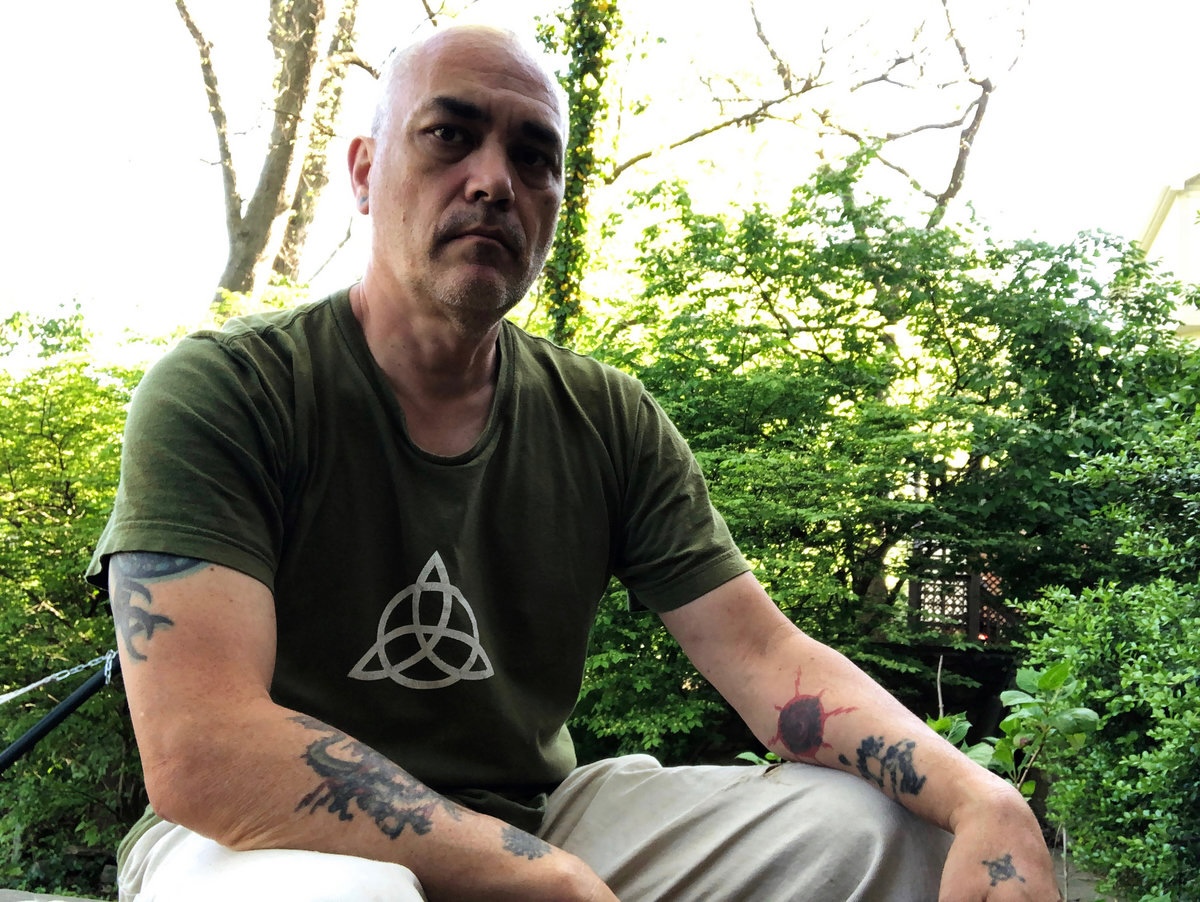
Pullman is one of those curious indie supergroups that never quite had chance to dig in its heels due to various global tragedies, life events and prior obligations. But there’s no denying the post-rock credentials of a lineup that includes founding members of Tortoise (Ken “Bundy K.” Brown and Doug McCombs), Rex (Curtis Harvey) and Come (Chris Brokaw).
The band’s 1998 debut, Turnstyles & Junkpiles, was a subdued-yet-intricate, live-to-tape affair that drew comparisons to everyone from Leo Kottke to Gastr del Sol (with whom Brown has played). Pullman added drummer Tim Barnes for 2001’s more expansive (and percussive) Viewfinder, only to follow that up with quarter century of silence. Until now.
An album that’s essentially been finished since 2024, III (Western Vinyl) began as a collaboration between Brown and Barnes, soon after the latter went public with his diagnosis of early-onset Alzheimer’s. Even as Barnes’ symptoms worsened, the two continued to work almost daily, and the music eventually blossomed into a full-fledged Pullman LP.
In a recent conversation with MAGNET’s Hobart Rowland, Brown charted the patchy history of Pullman, detailed its acoustic-to-electric evolution and pondered why modern recording habits make it so easy to collaborate and so difficult to say enough is enough.
How did Pullman initially come together?
When I was in Brooklyn recording Rex 3 alongside Brian Deck, Curtis and I played a guitar duo that ended up on that album as “Oafish.” We both really enjoyed that and talked about trying to put something together in a similar vein, focusing on acoustic guitars. It was something I’d been thinking about around that time. Curtis suggested we ask Chris to join us, and I thought Doug would make a great addition, too. That would’ve been around 1997. We made the first LP over a couple of days in the Tortoise loft, where I was living at the time. It was all recorded live—just the four of us playing in my room. Tim joined the band for Viewfinder a few years later, and we did a handful of shows after that LP came out.
III is Pullman’s first new music in 25 years. Why the long break?
After Viewfinder came out, we planned a small tour. The first—or maybe second—show of that tour was at Tonic in Manhattan on September 10, 2001. Naturally, with the events the next day, that tour came to a halt. We were able to reconvene and do that small run of shows again the following spring. Then all got back to whatever else we had going on. At the time, Curtis’ kids from his first marriage were young, and he’d started working at a job he still holds today at Dia Beacon (a contemporary-art museum in the Hudson Valley). Doug was pretty busy with Tortoise, and though things were somewhat winding down for Chris with Come, we all had other pressures coming to bear on us, both musical and otherwise.
One thing led to another, and Pullman took a backseat. Every few years, we’d talk about doing something. But for one reason or another, it would never get off the ground. As we got older and were living in at least three—at times four—different cities, it just became more challenging, because we were pretty consistent with wanting to all be together in the same place to work on new material.
How did Tim’s Alzheimer’s diagnosis figure into the early stages of the new album’s development?
It was the primary factor in terms of being a motivation to actually stop talking about doing something and get to work. In the early stages of the record, his dementia hadn’t progressed to the point that him traveling was entirely out of the question, but there were other things that stood in the way of that. So things moved forward a little slowly at first. But Tim’s progression continued, so finding workarounds to his communication deficits and so forth became a concern at some point.
I do need to point out that, for a really long time, making music with Tim was both therapeutic and one of the few ways we could interact that was almost always positive. I think the Pullman LP and all the various projects that got released in 2025 under Tim’s name are a real testament to music’s transformative power in the face of something like Alzheimer’s.
The tracking for III was finished back in 2023. What sort of tweaks did you make between then and now?
Once the record was put to bed, we made no real changes. Although the credits accurately state that it was recorded through 2023, there was a considerable amount of work to be done assembling, mixing and editing the parts to all the songs, so it wasn’t really “done,” per se, until 2024. If you listen to the long fade-ins and lengthy ambient codas to some of the songs, there was one point where it was envisioned that those sections might overlap so the entire album could play as one piece. There isn’t really a good way to realize that across all formats—especially streaming. So that’s the only change. We discarded that idea and just let each song be a discrete entity.
With projects put together on a computer, it’s really easy not to know when to call something done. I’ve learned over the years, both through remixes or other projects that are built in the box, that you need to reach a point where you just stop messing around with something—because there’s always some element you can continue to adjust one way or another if you allow yourself.
How has the band’s sound evolved over the past three decades, and where does III fall in that evolution?
Early on, it was pretty explicit that we were going to use all acoustic instruments. We wanted to see if we could come up with something in a short span and record it live. After accomplishing that, we pushed those restrictions aside on the second record and made the deliberate choice to include Tim on drums. That created new opportunities and somewhat necessitated embracing electric instruments and some changes to how we’d approached things.
With III being put together remotely, we had to deal with all that entailed. We also had to discard a lot of the ways we’d done things in the past out of necessity. I’d say the change in sound over time had as much to do with circumstances as making specific aesthetic choices. But, yeah, we moved from being a very acoustic, simple project to approaching things more like the rock bands we’d been in. Eventually, we embraced the wider sonic palette of some of the other kinds of bands we’ve been involved in. All that said, we all like to listen to and make all kinds of music, so we’re just kind of directed by where each set of music takes us. We’ve let things evolve as naturally as possible.