
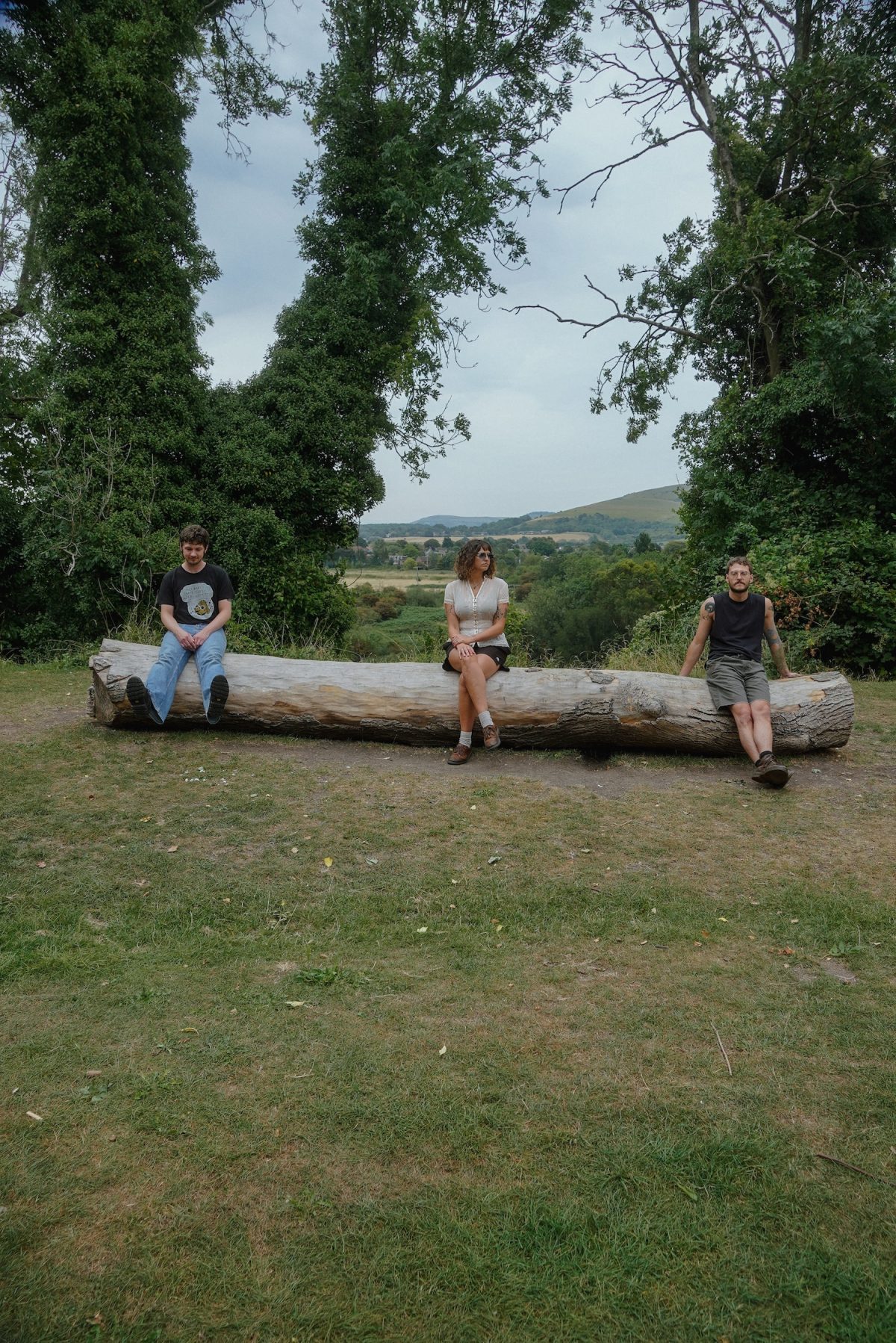
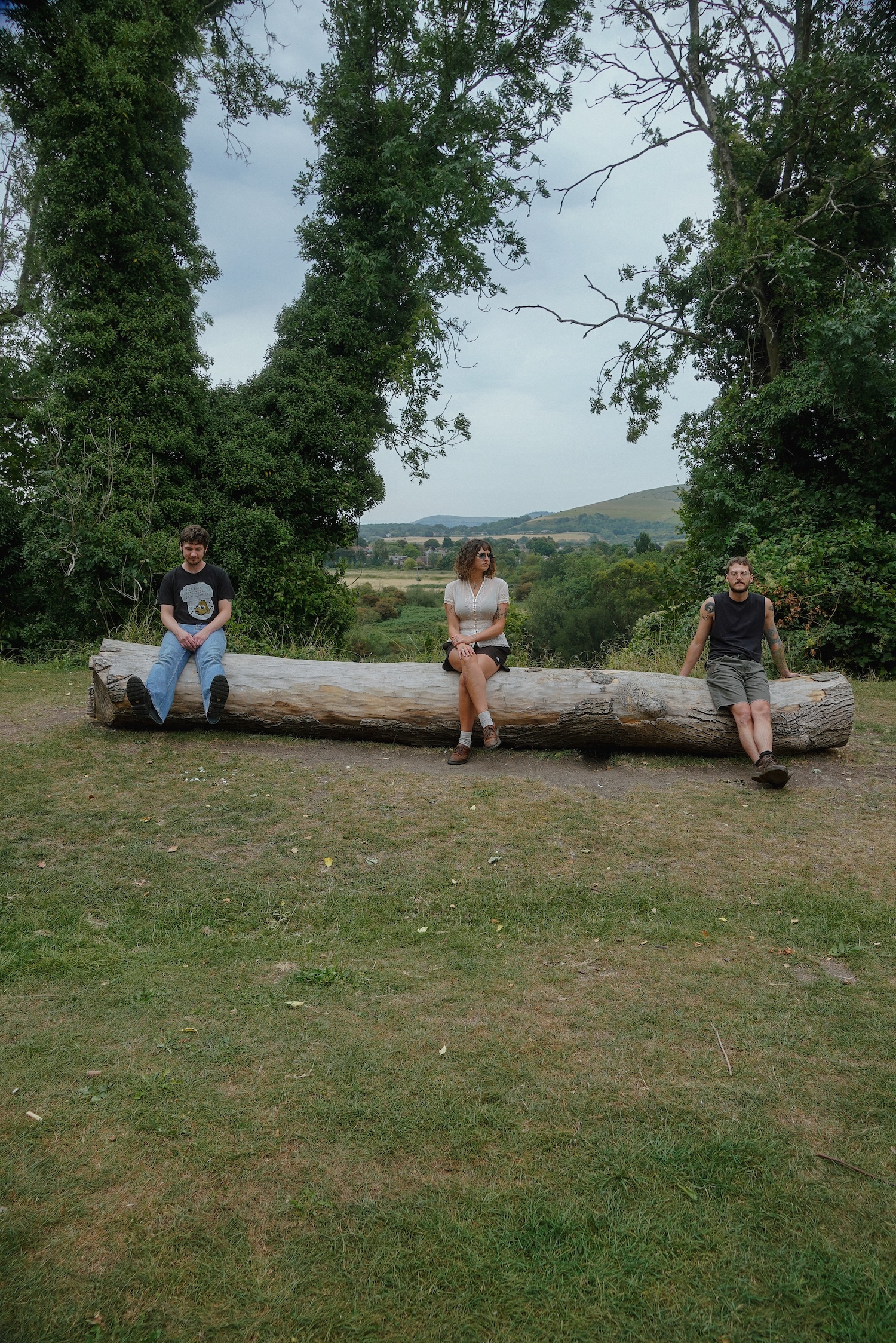
Prog rock is not dead. Especially in the misty moors of the U.K., where Plantoid found the mojo for its second LP at a majestic residential studio in Wales with tons of vibe. And while there are a few winding epics on Flare (Bella Union) that exceed six minutes, the Brighton-based band also strived for more succinct moments. Plantoid even wrote its first tune (“Splatter”) that clocks in at less than three minutes, perhaps taking inspiration from ’70s prog heroes who had success in the ’80s with a more streamlined approach.
MAGNET’s Hobart Rowland got the scoop on Flare from vocalist/guitarist Chloe Spence, drummer Louis Bradshaw and guitarist Tom Coyne.
Tell us the details of your writing retreat to Wales.
Spence: After our first album and a summer of festivals and touring, we desperately needed the time and space to touch base musically. Penhesgyn Hall was perfect for what we needed—tucked away in the hills of Anglesey overlooking the mountains of Eryri National Park. The live room is an old barn conversion with amazing acoustics, surrounded by the Welsh countryside. We could make as much noise as we wanted and go as late as we needed. We spent an intense 10 days writing, jamming, talking and playing table tennis until we came out with the framework for Flare.
How did the fresh surroundings alter the way you approached the collaborative process as a band?
Bradshaw: We’d never done anything like it before. Having the opportunity to focus on nothing but writing music for an extended period of time allowed us all to live and breathe the creative process. Being surrounded by rural Anglesey ensured that there were absolutely no distractions. It allowed us to stay grounded and clearheaded, so we could be open to anything creatively.
What were some of the ways you worked with producer Nathan Ridley to further flesh out your sound?
Spence: Nathan was really our backbone on this album. While the initial ideas came from us, he was there to inspire, offer suggestions or open us up to a new direction. There were a lot of discussions where ideas were flying around. He encouraged us to sit on it for a minute and see it completely through, or to take a break and talk it out together. When something was fresh and exciting, he’d make it known, and his pure energy helped glue us all together. We all got really deep and honest with each other, and cooked and ate every meal together. At the end of the 10 days, none of us wanted to leave, and we were all brimming with excitement over what we’d created.
When middle-aged dudes like me think of prog rock, we veer toward bands like Rush, King Crimson, Jethro Tull, Yes, etc. But the genre certainly didn’t end in the 1980s. Where does Plantoid fall on that spectrum?
Tom Coyne: We’re definitely influenced by all those bands. We were listening to King Crimson’s Discipline around the time we were writing the album, and we used Yes’ infamous “Owner Of A Lonely Heart” as a bit of a pump song to get us going while recording the song “Dozer.” There’s something about those two bands transitioning into the ’80s was very inspiring. Both opted for more of a groove-based thing and more experimental production, often using synthesizer guitar effects and samples to create wild soundscapes on more widely accessible records. I’m certain this seeped into our creative process.
There are moments on Flare that sure sounds like a conscious effort to move away from prog rock’s busyness.
Bradshaw: We never initially labeled ourselves as a prog rock band, although the amalgamation of our influences ended up leading us down that road on our first record (2024’s Terrapath). We all have expansive musical tastes and influences—prog certainly being a part in that. Plantoid is a vessel for all our influences and inspirations to come together at a specific point in time. What you hear in Flare is a more current representation of how we’ve evolved as a band.