
Guitarist Derek Bailey, one of the first practitioners of non-idiomatic free improvisation, once opined that solo extemporization was an inferior activity. Since he played unaccompanied concerts quite often, Bailey might’ve been pulling the interviewer’s leg, but that doesn’t mean he didn’t mean it, since his preferred playing situation was one where the musicians hadn’t fixed on a vocabulary yet.
A quarter century has passed since Bailey left this earth, but if anyone has his words and example committed to heart, it’s John Butcher. The English soprano/tenor saxophonist took Bailey’s precedent quite seriously as he developed his own capacity to operate within the realm of absolute freedom, and you can perceive elements of Bailey’s example in Butcher’s disinclination to wear out his welcome with any combination of musicians, as well as the combination of flexibility and sheer singularity inherent in his playing. And like his fellow Brit, Butcher has amassed a shelfful of solo recordings built up from unaccompanied performances in conventional and sonically interesting but circumstantially unlikely settings.
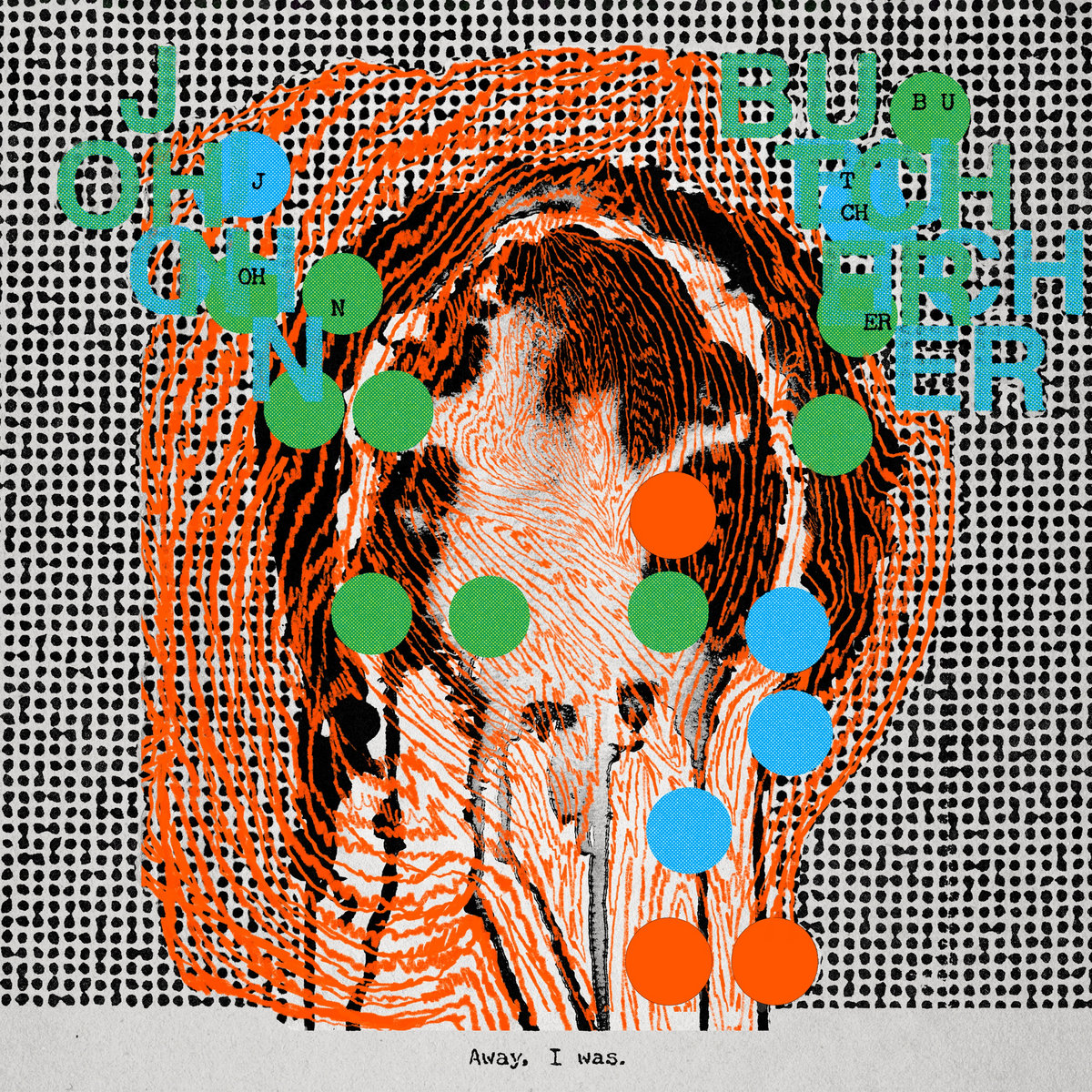
Since Butcher lays on the humor much more sparingly than Bailey, there’s nothing dismissive about the presentation of Away, I Was. If he were more of a wise guy, the Londoner might have named it Odds & Sods, since it’s a grab bag of one-off individual efforts made between 2008 and 2025. But just as Odds & Sods transcended its humble origin as a between-albums comp by virtue of the quality of its contents, Away, I Was might be the very best way to introduce a listener to John Butcher, solo saxophonist. It represents him both in the studio and in concert, acoustic and amplified.
The two most recent recordings, “Brinks” and “Fujin’,” were excerpted from club gigs in Poland and Norway, respectively, and together they present one of the spectrums along which Butcher operates. The first starts hard and fierce, with a vibrato that could put a hole in your wall. But each sound is deployed with an inarguable clarity that reveals one of the generative paradoxes of Butcher’s art. He may zealously favor spontaneous processes, but he’s also a fantastic composer, one who works mostly in real time. His ideas are very clear and executed with unerring decisiveness, so that when he momentarily shifts from bold to soft, it sounds both startling and inarguably right.
“Fujin’” begins with a sequence of whistle-flecked gusts and humid pops, then advances into a sequences of linear progressions of varied, polished tones that bank and tumble like precision aerobatic maneuvers. Butcher doesn’t just dabble in unusual sounds and shapes, he wields them as essential and entirely equal aspects of a vocabulary that comprises just about anything a saxophone can do. It’s worth acknowledging that some of his early influences were Chicago blues harmonica players and the electroacoustic music of Karlheinz Stockhausen. Butcher likes his sounds complex.
As “Shaken Stains” exemplifies, he’s also willing to accept technological augmentation. The current on this track comes from two sources: the voltage powering the microphone and the audible vibrations of a crowd waiting to hear Japanese experimental/psych band Fushitsusha perform. Perhaps mindful of the storm about to break, Butcher delivers one focused attack after another, shifting tone from steel-wool wind to corkscrewing split pitches. The brief, overdubbed “Pricklings” compacts four streams of sound, each sounding like it is escaping under extreme pressure, but each drawn perfectly into piece.
And speaking of Bailey, Butcher doffs his hat to the man on “Listening To DB Listening To JR.” It’s based on a transcription of an improvisation from the guitarist’s 1994 album, Drop Me Off At 96th. Butcher negotiates the original performance’s challenging intervallic leaps with care, drawing out its implicit melody. But if much of his work involves making the saxophone perform tasks that it wasn’t meant to do, here he uses unsaxophonic source material to stage a deep dive into the horn’s textural potential.
While Away, I Was skips from one zone to the next, Butcher always sounds complete at home. [Relative Pitch]
—Bill Meyer