
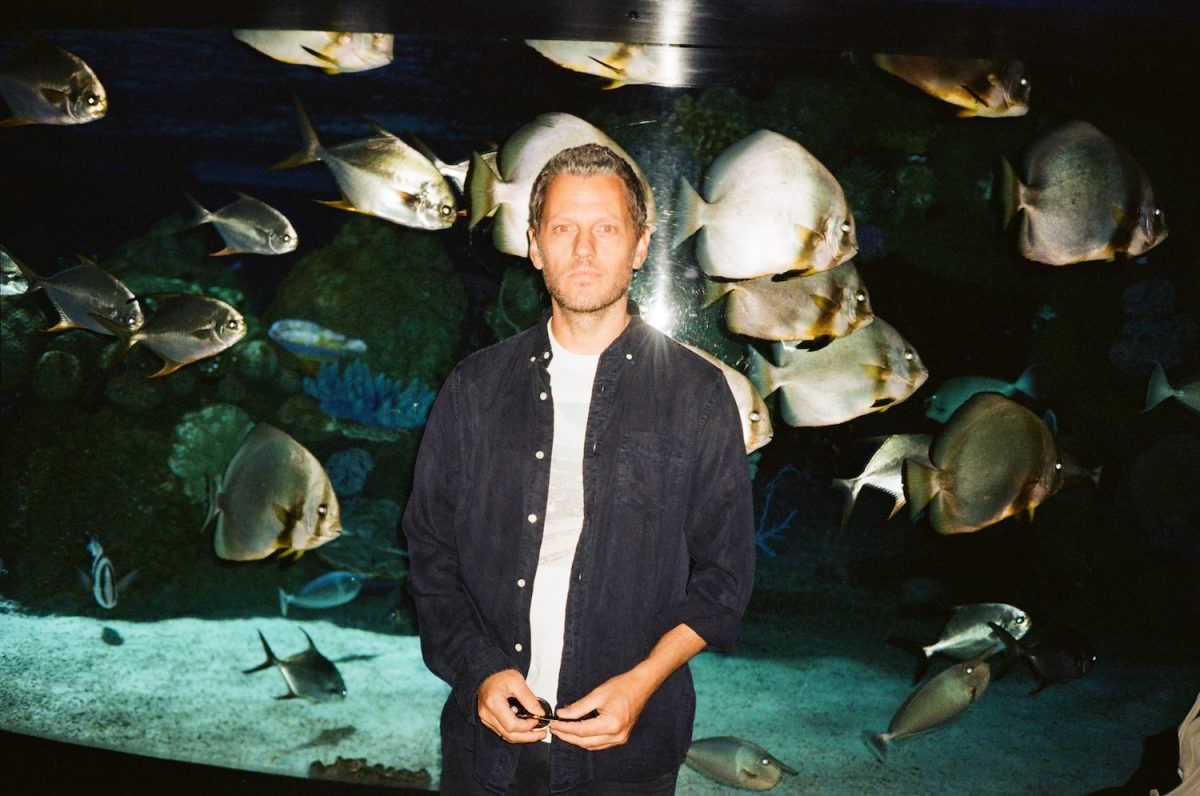
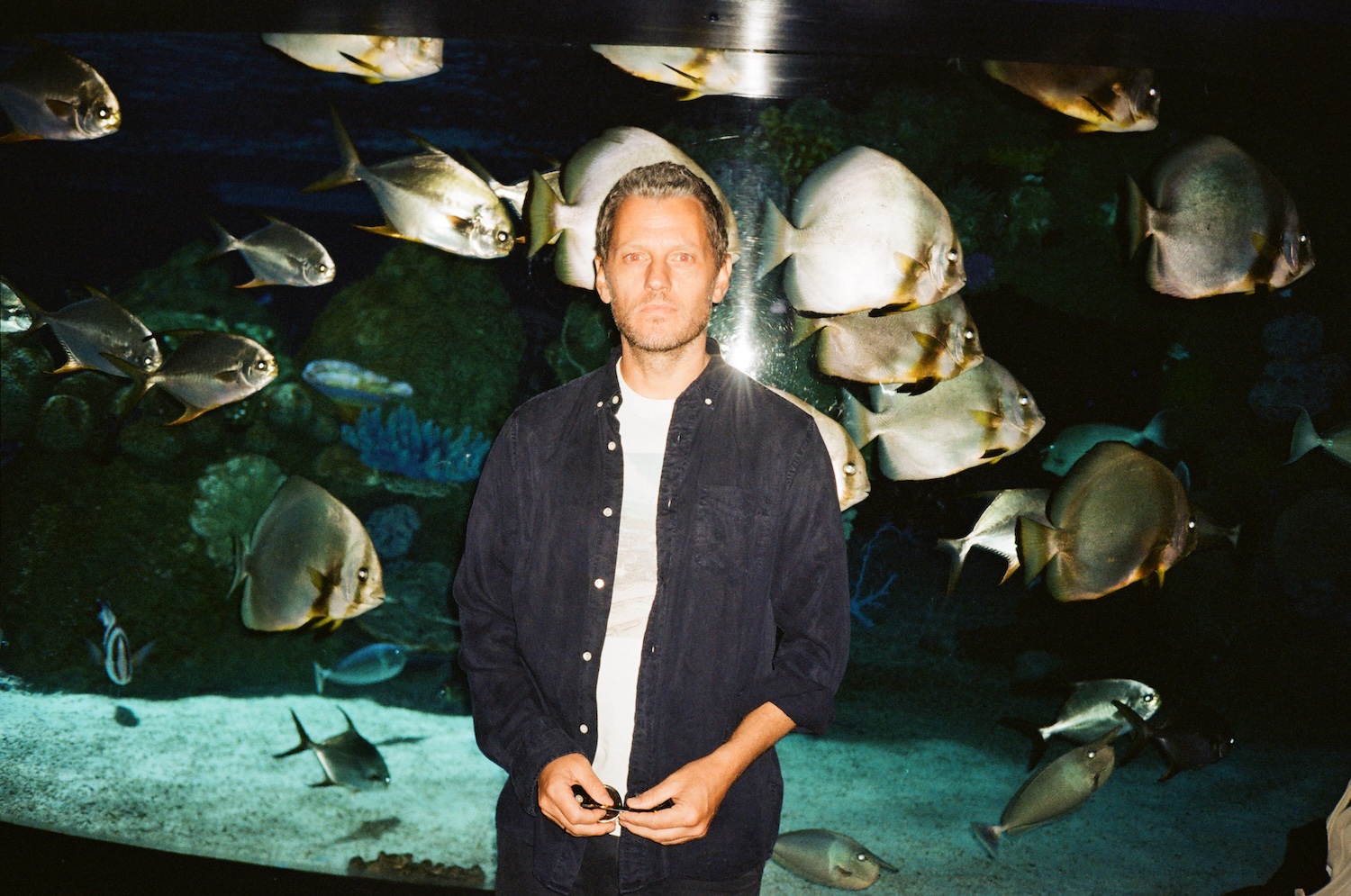
Jamie Hilsden’s more anarchistic instincts were honed by years of recording and touring with a pair of outspoken Israeli punk acts, Man Alive and Useless ID. Large takes things down a notch significantly, offering a more reflective, sonically forgiving vehicle for the native Canadian and avid surfer, who’s currently working on his dad skills in a country that’s anything but storybook perfect.
MAGNET’s Hobart Rowland reached out to Hilsden to discuss Large’s self-released debut LP, the surfy-psychedelic Marine Life.
Where are you based these days?
I’m Canadian, but Israel is my home, which makes that a heavy question. My family came to Israel when I was a kid after my father took a clergy position in Jerusalem. I’ve lived in a lot of places, but my wife and I ended up settling in Tel Aviv. In the past three years, daily life has been filled with instability, confusion, heartbreak, hope and everything in between. Things are better, for now. We recently became parents for the first time, so the last year has been mostly focused on that. I still surf when I can, but that’s taken a backseat to parenthood, music production and live gig work. Right now, I’m pretty busy with everything surrounding the release of the record and playing shows with the band.
Tell us about the recording process for Marine Life. Who did you work with?
Dan Zeitune produced and mixed the record and also plays bass in the band. He’s an incredible producer and engineer. I initially tried recording the album myself, but it never sounded the way I’d hoped. It felt flat. Once Dan got involved, everything clicked. One of the first things he pushed for was recording a lot of the album live as a band, mostly without a click track. That was something I’d always been nervous about, but it ended up being the key to making the songs feel alive. A big part of the process was finding the right players and then letting them bring their perspective. Dan also has an incredible collection of vintage outboard gear and microphones—and much more importantly, he actually knows how to use them. I couldn’t be happier with how the record sounds.
Oceanic themes loom large on the album. What inspired them?
That was never a conscious decision—I only noticed it after the fact. I think it’s partly because I surf, and partly because many of the songs were written while I was living in Warsaw, Poland. I missed the sea, and it found its way into the lyrics.
What’s the status of Man Alive these days?
We still play shows occasionally, and we’re very close as friends. But we haven’t recorded anything new in years. We talk about it, but life gets busy. I’d love to make another record with them at some point.
How does what you’re doing as Large differ from the music you’ve been involved with in past, whether its Man Alive or Useless ID?
I’m a live guitarist in Useless ID, but Man Alive is in the same punk-adjacent world. Large is very different. For one, the recording process is completely different. With Man Alive, most of the creative work happened in writing and rehearsals, and the studio was about capturing a performance. We’d book a couple of weeks and knock out a record. With Large, the studio is a bigger part of the creative process. It’s a place to experiment, to shape arrangements and explore sound design. It’s slower and more obsessive, but also very exciting and rewarding. But I think the biggest difference is the approach to lyrics. In punk, there’s a pressure for songs to be about something. I always felt like I needed to start with having something to say and then find a way of saying it that sounded musical—and I’d dread that part of making music. In recent years, I’ve learned to reverse that—to focus on writing lyrics that sound good and feel resonant and let an understandable meaning emerge organically, if at all. I found that to be a good hack for accessing more subconscious ideas, which tend to be truer. I know this probably isn’t new to anyone who grew up on indie records. But for someone who came up through punk, it was a big shift. Now writing lyrics might be my favorite part of music.