
Almost half a century after Gary Numan’s Tubeway Army released its self-titled debut album, it’s necessary to weigh his impact (again, only louder) as a pioneering spirit of post-progressive, ’80s-division electronic rock. That’s the clear distinction to be made with what Numan’s done as an innovator, as opposed to his digi-brethren in say, Depeche Mode (which turned its angst into something more dark and dreamily Eurocentric) or pre-Dare Human League.
Numan was never much of an electro-pop persona to begin. Electro-punk, maybe at the start (certainly through to his pre-industrial middle years), but no, never dance music. Despite the top-20 success of his totemic “Cars” in the U.S., there really was, and is, no frivolity to what it is Numan has executed in the name of saddened, sequenced, programmable, frosty music, long before the conception of chill wave. His deeply reflective lyrics, like refrigerator-magnet poetry tiles puled from a steampunk top hat, are filled with the twin towers of isolation and alienation, a wealth of machine-fed dystopias, romantic dreads and, after his open discussions of living with Asperger’s syndrome, a new, more serious wave of unsocial interaction as their own brand of communication. For all the bleak portent of Numan’s aesthetic, from its words to its music, there’s something healing about what it is that he does, as if all who bask in his tortured tones will be comforted and balmed.
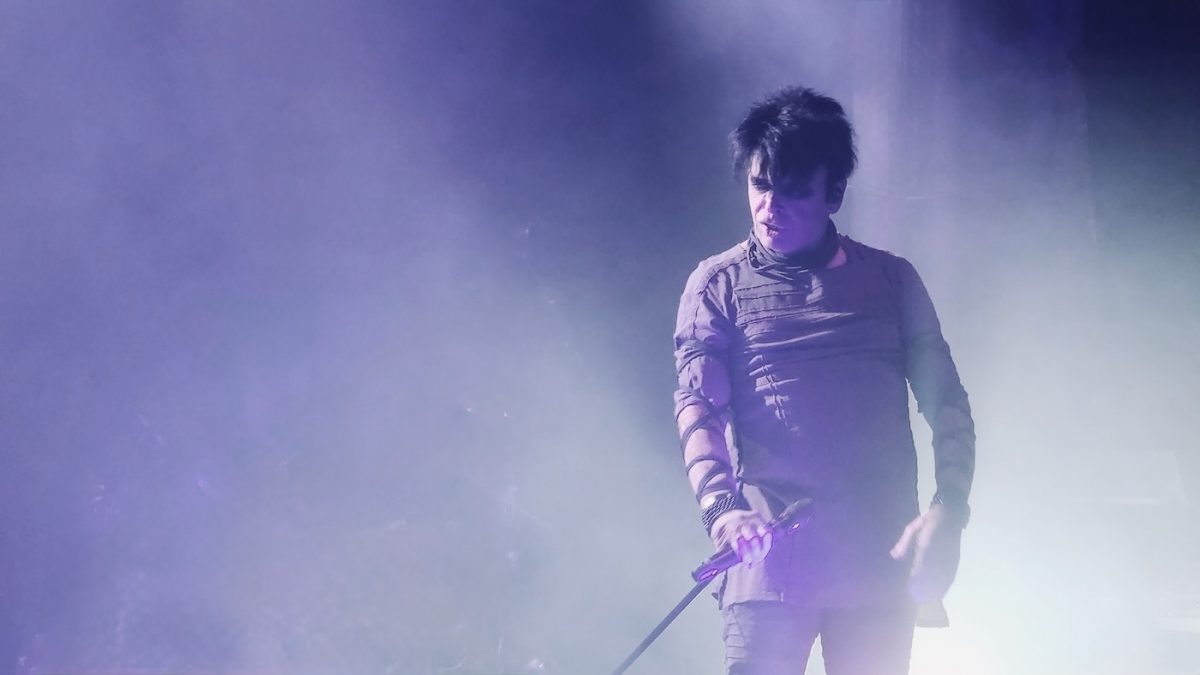
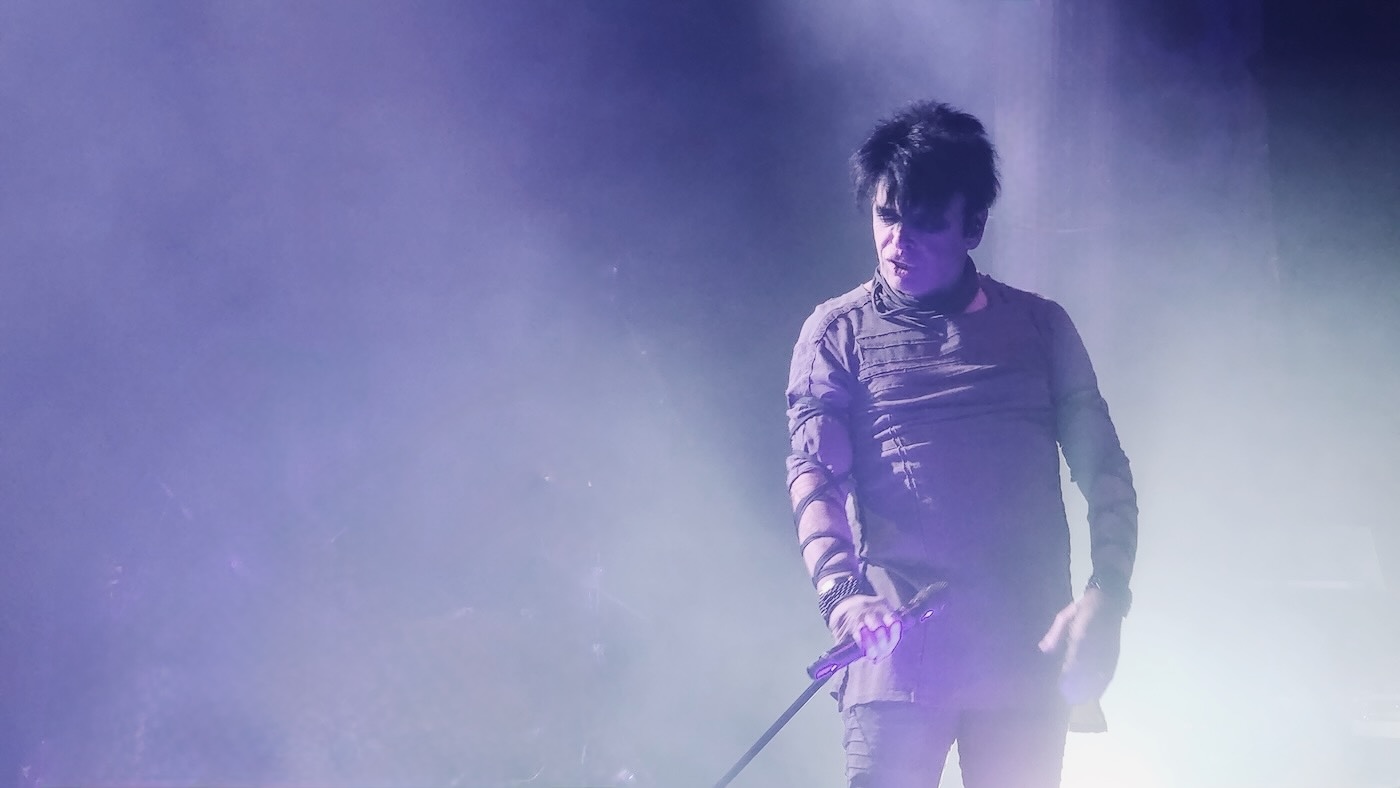
So, at present then, Numan—looking like Yungblud’s dad with his thickly spiky, tousled mane, racoon eye makeup and what appears to be a straitjacket turned into a matching, two-piece tunic/slacks set—is akin to a walking, writhing, thrashing, undulating id as he paced/stalked across the stage of Glenside’s Keswick Theatre. Along with Numan’s tonsorial/sartorial demeanor—so much for the halting robot alien guy he acted as at his start—and a deeply saturated-color light show, his now-deeper voice growled/crooned its way through the mournfully souped-up sounds of “Halo,” “A Prayer For The Unknown” and “Haunted.”
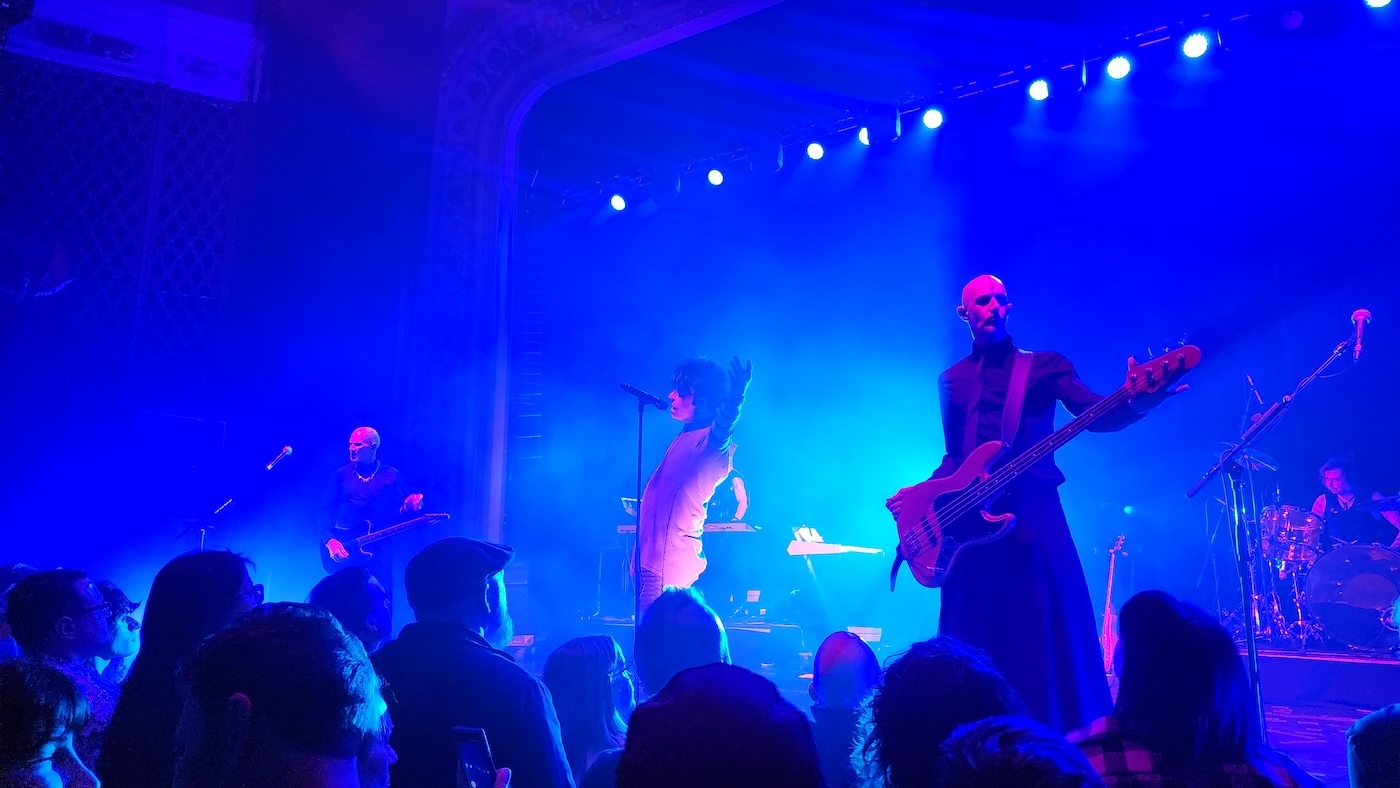
Together with what looks like Brandi Carlile’s bald, guitar-playing Hanseroth Twins (only with Numan’s guys, guitarist Steve Harris and bassist Tim Slade, wearing liturgical cassocks), moments such as “Ghost Nation” and “Love Hurt Bleed” come across like a 21st-century remake of 1962 noir-horror cult classic Carnival Of Souls redone as a musical with a Trent Reznor/Atticus Ross score. Remember, though, Numan did it first. (And I’m pretty sure I just wrote the only ever graf to contain both Gary Numan and Brandi Carlile. You’re welcome.)
Certainly, most of Numan’s newer work and fresher arrangements of old songs such as “Down In The Park” are more hunkered-down industio-tronics with low, bass-y, lava-like electronic soundbeds so to rattle the chains of each track. On occasion, when Numan and the bald guys sang, their voices became just another tone within Numan’s layered mix; likely his intention, as I’ve heard him do this in past live shows. Like his vocals, his once-vaunted synth sounds are also often made part of the live mix’s rich layering: a bittersweet touch to Numan’s all-melancholic morass/crunched texture vibes.
Numan shifted sound bars and sands when he and his ensemble turned anxiety on its heels by welcoming Middle Eastern-stylized melody lines and rhythmic swirls into “My Name Is Ruin” and “The Gift.” Even his daughter’s song, “Nothing’s What It Seems” (with Raven singing at the mic with dad Gary), though lighter in its melody, held the weight of industrial morass at its band-aid-taped fingers. However, when absolutely needed—on iced-over syn-romps from 1979’s The Pleasure Principle such as “M.E.,” “Metal” and “Films”—Numan and Co. allowed their mellotron-stringed synthesizers to whine and wheeze more loudly, with Numan’s vocals suddenly an octave higher so to emulate his misspent LinnDrum-thumped youth.
With that, anyone in the crowd who only likes their Gary Numan chilled, unshaken and unstirred, found satisfaction.
—A.D. Amorosi