
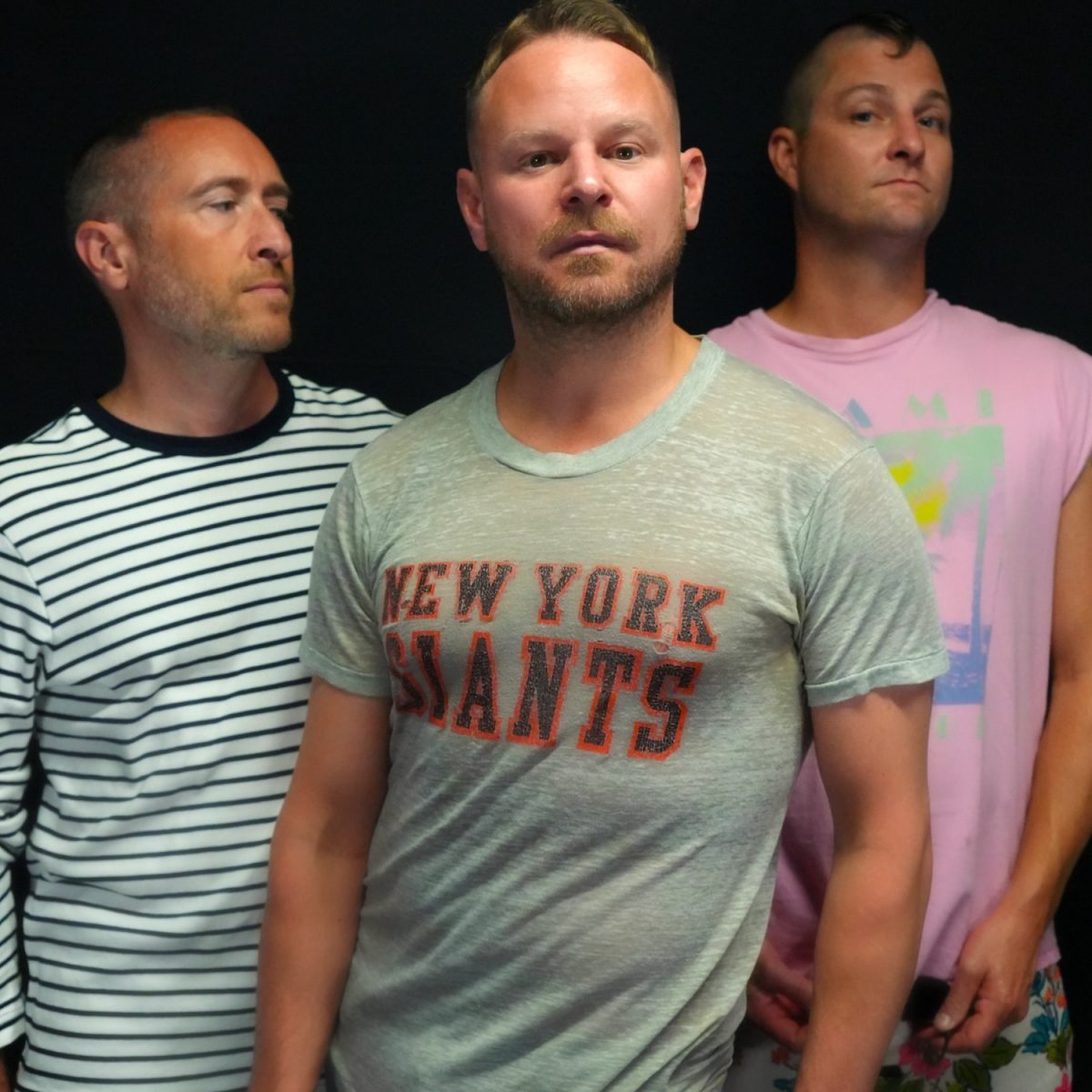
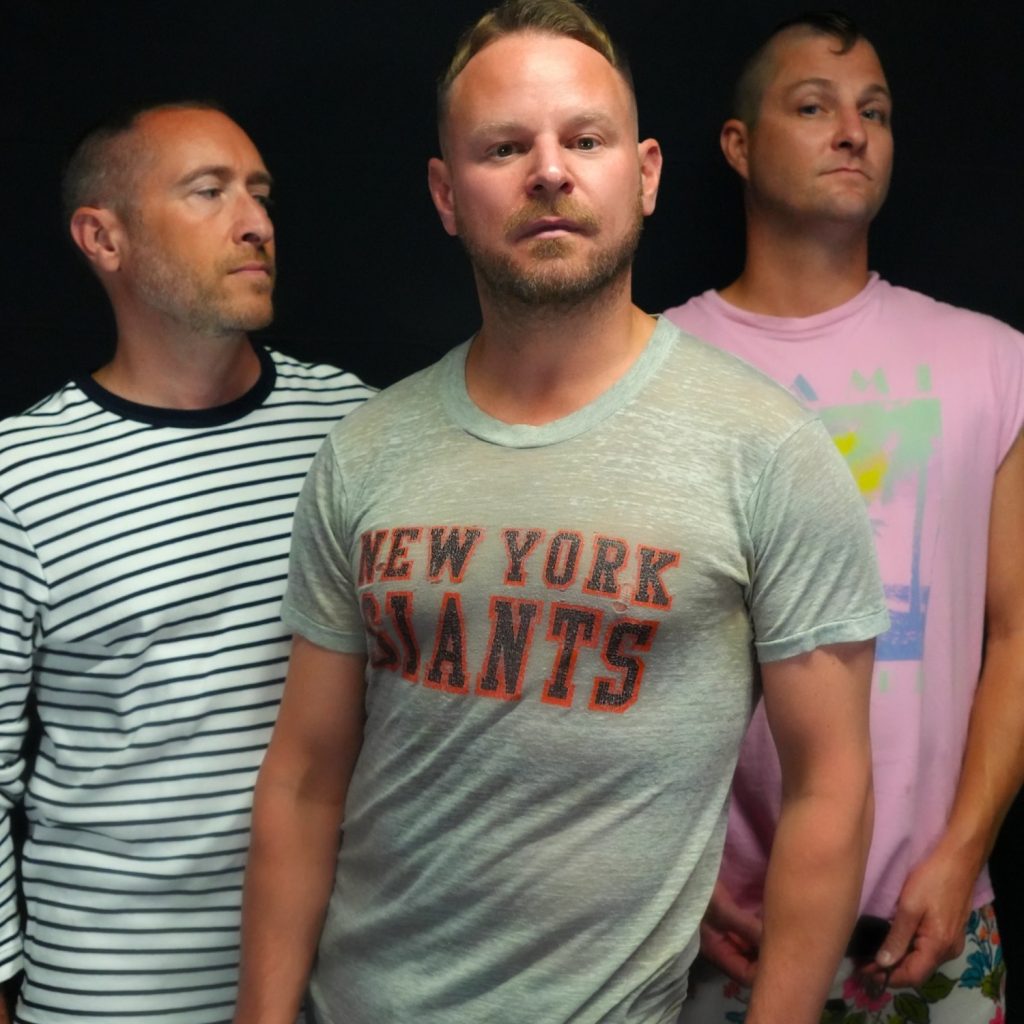
After 16 years off the grid, post-millennial queercore ambassadors the Dead Betties have been busy of late. Their typically pointed new EP, Whitey, follows a few blistering singles torching the de-evolved mindset that fueled the 2024 presidential election. That same year also saw the release of the eight-song Impossible Future, the New York City trio’s first new music since 2008’s This Is My Brain On Drugs. Even when they were on extended sabbatical, it was unreasonable to expect three guys as extroverted as the Betties’ Joshua Ackley (vocals, bass), Erik Shepherd (guitar) and Derek Pippin (drums) to keep a lid on it.
“In those 16 quiet years, we were still recording together for ourselves,” says Ackley. “There are three albums that will never see the light of day, but they were our way of blowing off steam and staying connected.”
Always forthcoming, articulate and honest, Ackley offered (much) more in a recent interview with MAGNET’s Hobart Rowland.
The Dead Betties have been especially prolific over the past two years. What brought you back into the mix?
We’ve always been pretty prolific, even during the stretches when we weren’t visible. The long break really followed our time at Warner Music. Those releases, and everything surrounding that period, were intense to live through together—especially after being in each other’s lives since we were teenagers. In the years since, life has just happened. We’ve all played in other bands, released solo work, got married, had kids. We never stopped being musicians; we just expressed that in different ways.
The thing about the Dead Betties is that we always find our way back to each other. We have an extremely specific musical language—and that’s rare. It’s more like a marriage, with all the difficulties that come with that kind of intimacy. We lived together for a decade. We worked together every day. What’s changed in the past two years is the world. These are dark times, and artists have a responsibility right now. Art is a record—it’s how future generations will understand what we went through. If you take your work seriously, this is the moment to over-create. So, we made a conscious decision to show up, to release more, to be present. In doing that, we’ve found a new kind of footing as a band. Maybe even a better one. Time will tell.
What inspired the mix of the personal and the political on Whitey?
We’ve been political, even preachy. But in the past, our politics were wrapped in metaphor and oblique storytelling. You could feel urgency; you could feel the critique. But you couldn’t always locate the personal perspective behind it. It was more like a character shouting a political message than a person speaking from lived experience. Whitey is different. It’s the first time I’ve written in a truly first-person way. The political energy on this EP is much more personal—and that reflects the moment we’re living in. Politics has become personal for so many people. Rights are being stripped from individuals in real time. Entire communities—especially the trans community and the parents supporting them—are facing relentless attacks. It’s impossible to separate that from the music you create.
I grew up in the ’80s and ’90s during a period shaped by the AIDS crisis, by the cruelty of “don’t ask, don’t tell” and by a dominant culture that defined normal through a narrow, white, Christian, heteronormative lens. I know what it feels like to be pushed outside the boundaries of who’s allowed to belong. And I think anyone who lived through that kind of era has a responsibility to speak up now, because we have a template for how to survive times like these. Younger queer people don’t have those same memories. They grew up in quite different cultural conditions. By grounding the political in something personal, there’s a chance to create connections and possibly even a generational bridge. Maybe these stories can help someone who’s navigating a very dangerous moment in our society.
You’ve said you wanted to go back to where you started on this EP.
When I talk about going back to where we started, I mean returning to the moment when we first fell in love with each other as musicians. That feeling is easy to lose over time, especially when life gets complicated and you become very structured about roles, responsibilities and how things should work. It had been a long time since we simply played for the pleasure of it, without overthinking. I wanted to soften some of my own personal rigidity and make something that sounded like the Dead Betties being in love with making music again. We love dissonance, we love tension, we love noise—and I wanted that again.
Before we move into the longform double album we’re planning for next year, it felt important to create something that honored where we came from—almost like a small swan song to the earliest version of the band. There’s also the cultural backdrop. When the Dead Betties formed, the landscape was dominated by a very aggressive kind of machismo. Limp Bizkit was everywhere, Woodstock ’99 had just happened, women were assaulted at the festival, and the culture around rock music was soaked in violence. Eminem was one of the most openly homophobic artists of that era. It was a hostile, narrow world—and in many ways, we’re back in a similar cultural moment. Morgan Wallen, who’s a known racist, is the top-selling artist of the year. That’s not an exaggeration. It’s a clear reflection of where society is.
Why did you opt to self-produce this time?
At our core, we started as a four-track band. When you only have a few tracks to work with, you learn how to edit, how to commit and how to strip down a song to its essential truth. During the years when we were less active publicly as the Dead Betties, we were still working. We produced each other’s solo work. We produced the music we made in other bands. The three of us have always stepped into that role for one another, no matter what project we were in. We also built our own studio and invested in our own equipment. We learned how to run sessions in a way that served the band’s instincts rather than someone else’s ideas. There’s freedom in that.
How has the queer music scene changed since the Dead Betties first started? And do you see yourself as a vehicle for that change?
It almost feels like we’re working in an entirely different field. We’re a relic from a time before social media, before streaming and before the era when Silicon Valley began buying up catalogs and turning music into a tech asset. That corporatization has flattened so much of the landscape. Everything now tends to fall into the same compressed three-minute formula—the same tempo, the same key, the same vocal approach. It’s an ecosystem of sameness.
The queer music scene has changed just as much. When we were starting out, queerness was often hidden or coded. Think about the early days of Bloc Party, when no one knew that Kele Okereke was gay. That sort of silence used to be extremely common. Now there’s a much greater level of acceptance and visibility. Artists can be out, free and public in ways that simply weren’t possible 20 years ago. That’s real progress. And it matters.
The queer scene has fallen into some of the same traps as the broader industry. So much of music today feels overly safe, overly generic and often disconnected from the wild, vibrant lineage of queer art that shaped so much of our cultural DNA. Little Richard was outrageous; Sylvester was outrageous. There are brilliant queer musicians carrying that torch now. Perfume Genius has made some of the best albums of the past decade. Kara Jackson is a revelation. Tami Hart is a force of nature. So there are some bright spots. But there’s also an entire wave of queer pop that feels like a continuation of the social-media era of music, where everything is filtered into something palatable, polished and algorithm friendly. That disappoints me. I wish more queer artists would reclaim the disruptive, transgressive energy that our community has always brought to culture.
As for whether I see myself as a vehicle for change, I’m not sure I’ve ever considered that. I do wonder if the concept of a scene even exists anymore. Social media has dissolved so much of the local nuance and collective identity scenes once relied on. What I can do is make honest work, refuse to flatten myself for an algorithm and tell the truth in the loudest, messiest, most musical way I know. If that creates space for something different, then I am proud of that.