
Loyal MAGNET readers have Josh Bloom to thank for a least a few of their favorite stories. Over the past 28 years, his Fanatic Promotion company has been fostering an authentic connection between musicians and the media. Aside from a current roster of clients that includes Dan Bern, Mike Viola and the Chapin Sisters, Bloom has worked with Sufjan Stevens, My Morning Jacket, the Avett Brothers, the Decemberists, Steve Earle, Daniel Johnston and many other well-known names. He’d been devoting more time to honing his writing skills via Substack and other outlets when he was approached by J-Card Press publisher Jeff Gomez for some publicity help on his rock-biography imprint.
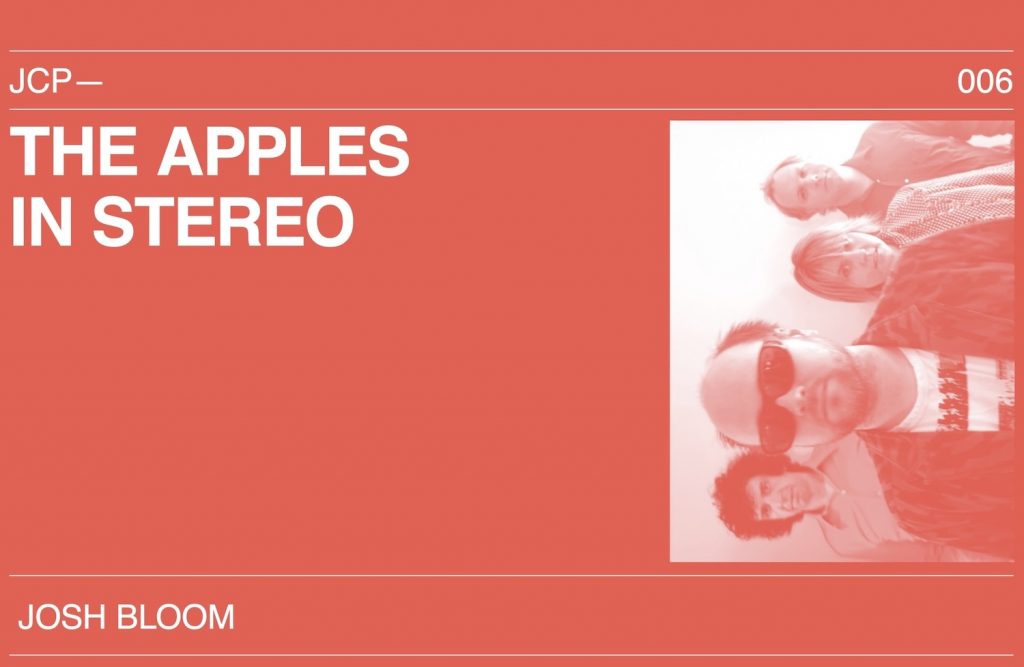
Instead, the Fanatic founder offered Gomez a proposal for a book on his longtime Apples In Stereo pals, Robert Schneider and Hilarie Sidney. About eight months later, Bloom produced The Apples In Stereo, J-Card’s sixth release.
“I’ve never written a book before—and even though I thought I could, thinking you can do something and then being told, ‘Go do it. Here’s your deadline’ are two different things,” says Bloom. “It was sort of mind-blowing because I’d made a note to contact a successful author of rock books that I know, but after announcing I signed a book contract, she reached out to me first.”
Bloom revealed more about that successful author and her sage advice in a recent chat with MAGNET’s Hobart Rowland.
What drew you to the Apples In Stereo as a book subject?
I’ve known Robert and Hilarie for decades, going back to their beginnings as the Apples In Stereo. They were a couple at the time, and we were all living in Denver. We’ve continued to be friends throughout the years, and they were the only potential subject that came immediately to mind. I had access to the band members, and my personal story intersected with theirs. From a rock-history perspective, I’ve always felt the Apples, their songs, their records and Robert’s production never received the attention they deserve. This is mostly because they were mixed into the history and story of Elephant 6. I wanted to distinguish the band as an autonomous group outside the collective. They’re pretty damn incredible.
What was the toughest hurdle you ran into when trying to tell their story?
The toughest hurdle was myself. I knew that if I was going to tell an entertaining story that brought the reader into the world of the Apples and the reverence I have for their music, I was going to have to speak in the first person. I wasn’t sure if hearing from me for hundreds of pages was going to work, but I knew that if I didn’t approach it this way so my fingers could fly, I’d never finish the project. Or worse, I’d end up with a glorified Wikipedia entry even more boring than Wikipedia itself.
How did you pace yourself?
When I started to feel creatively exhausted each day, I had to learn to force myself to stop working on the book. Pushing myself to be creative when I’m already tapped out for the day is disrespectful to anyone who reads my words later.
How did Robert and Hilarie feel about the book idea when you first approached them?
I don’t remember exactly how they felt, and I don’t remember because their reaction probably wasn’t memorable. The majority of events in this book took place more than 30 years ago—many are painful, and some were after the membership of the band had changed. Also, a book and documentary about Elephant 6 had been published and released in the past five years, so the band might’ve felt that any story was already told and they wouldn’t get to elaborate. Everybody was happy for me, encouraging and willing to participate to the level I was asking of them. Other than that, they were mostly like, “Oh, cool,” which I actually take as unbridled enthusiasm from rock stars, frankly.
And this stuff all happened so long ago.
In the acknowledgments, I mention how weird it must be to have people paying so much attention to what you were doing three decades ago. I think about Paul McCartney in these terms a lot of the time. Not counting the early days of the Beatles before fame, he’s spent nearly the past 60 years of his life representing what he did for less than 10 years in his 20s. It’s just a wild concept to me.
In your research for the book, what was the most surprising revelation you uncovered about the band?
That their debut, Fun Trick Noisemaker, is held in such high esteem by musicians. I tell a story in the book about Beck’s band members’ fascination with a cymbal sound on the record’s “She’s Just Like Me.” That’s how deep it goes. When Robert told me that the album was “our vision”—referring to him and Hilarie—it confirmed many of my personal opinions about the band. Hilarie’s role was much more essential to their existence than had ever been acknowledged publicly. This was the early ’90s, and women in rock had to fight for equal representation—especially in a band otherwise made up of men. When I also found out that Hilarie brought in guitarist John Hill and bassist Eric Allen, solidifying the lineup that made their foundational records, that fact had a similar effect on me—and the narrative of the book.
Do you feel the Apples have received enough credit for their role in the Elephant 6 legend?
I don’t. Let me be clear, it’s not like I feel as if anyone or anything was intentionally holding the band back, but Elephant 6 became the majority of the story, and any band inside of it seemed to fall underneath that umbrella instead of opening their own. But I’m more indignant about what I perceive as this oversight than the band is. It’s just that I’m not sure that rock historians or fans of rock history understand that the Apples were the first band to release music on Elephant 6, a label they were also responsible for running at the outset. Additionally, Robert produced the fundamental recordings by Neutral Milk Hotel and the Olivia Tremor Control that drew—and continue to draw—attention from the media and fans. He did all of this while writing, recording, releasing and touring Apples In Stereo material in a time before the ubiquity of the internet. Again, these are my opinions. I don’t think the band themselves care about this as much as I do.
And what about that mysterious author’s advice?
It was Annie Zaleski (Taylor Swift: The Stories Behind The Songs, Lady Gaga: Applause). She said the task would be less intimidating if I approached it like a collection of mini magazine features. She told me the hardest thing to do is to not rely too much on quotes—and to try and weave an entertaining narrative that tells a story.