
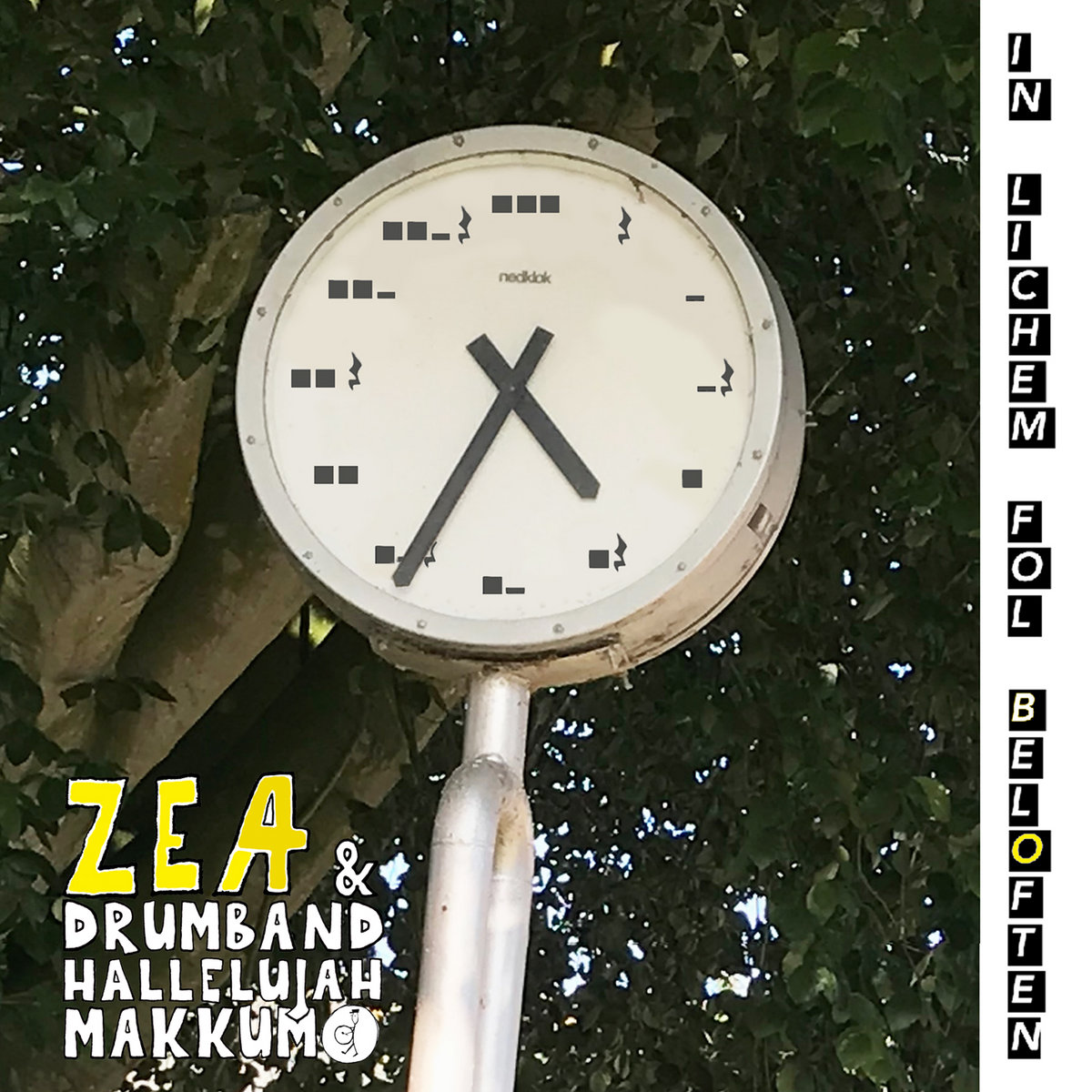
You might think you’re busy, but are you busy like Arnold de Boer of Zea? In addition to being the Ex’s mouthpiece for the past decade and a half, he’s been the singer, guitarist, songwriter, conceptualist, booker, driver, etc., of Zea for 31 years. Throughout that time, the project has continually morphed, operating as a one-man show, a stylistically chameleonic ensemble and a multi-continental, collaborative endeavor that often projects its messages in more than one tongue.
In Lichem Fol Beloften (“a body filled with promises”) is sung entirely in Frisian, the language spoken in de Boer’s northern Netherlands neck of the woods. He wrote some of the lyrics, taking others from poems translated into the dialect. If you get the CD or LP editions, they come with a book that presents each song in Dutch and English as well as Frisian, which ensures you’ll catch the impressionistic intent of the words as well as the earnest sound of de Boer’s delivery.
In Lichem Fol Beloften’s roots go deeper than linguistics. On half of it, Zea joins forces with Drumband Hallelujah Makkum, the local marching drum corps that de Boer played in when he was young and still includes his dad. Their presence adds emphatic punctuation to the title track’s tense acoustic-guitar groove and an undeniably martial cadence to “De Fügel,” which is scored by the lacerating slashes of Xavier Charles’ clarinet and Harald Austbø’s cello.
A quartet version of Zea rounded out by the supple swing of drummer Ineke Duienvoorde gives the rest of the songs a sparser but no less stirring sound. In Lichem Fol Beloften closes with a traditional Frisian lullaby that sounds sweet, though it contains intimations of rural mayhem: The baby may be swinging in the cradle, but the cow is stuck in the ditch and there’s no one to help get it out. It would seem that de Boer’s work is never done. [Makkum]
—Bill Meyer