
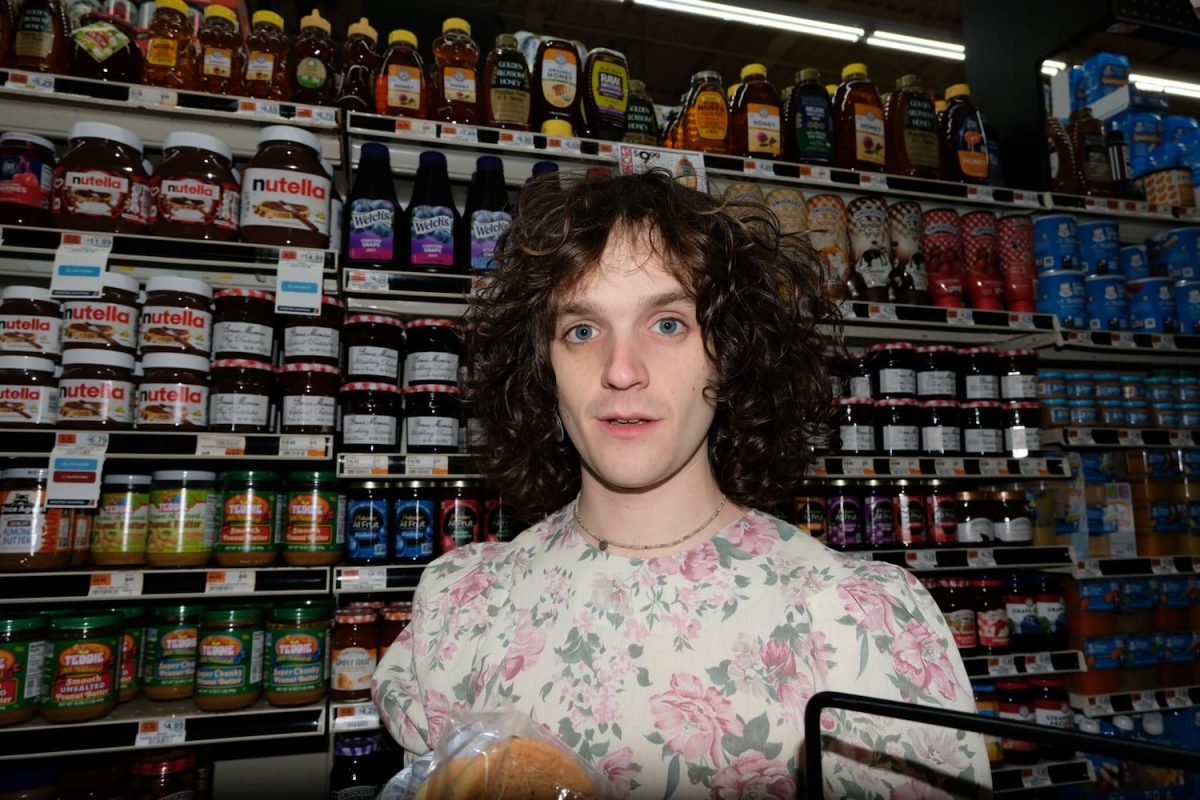
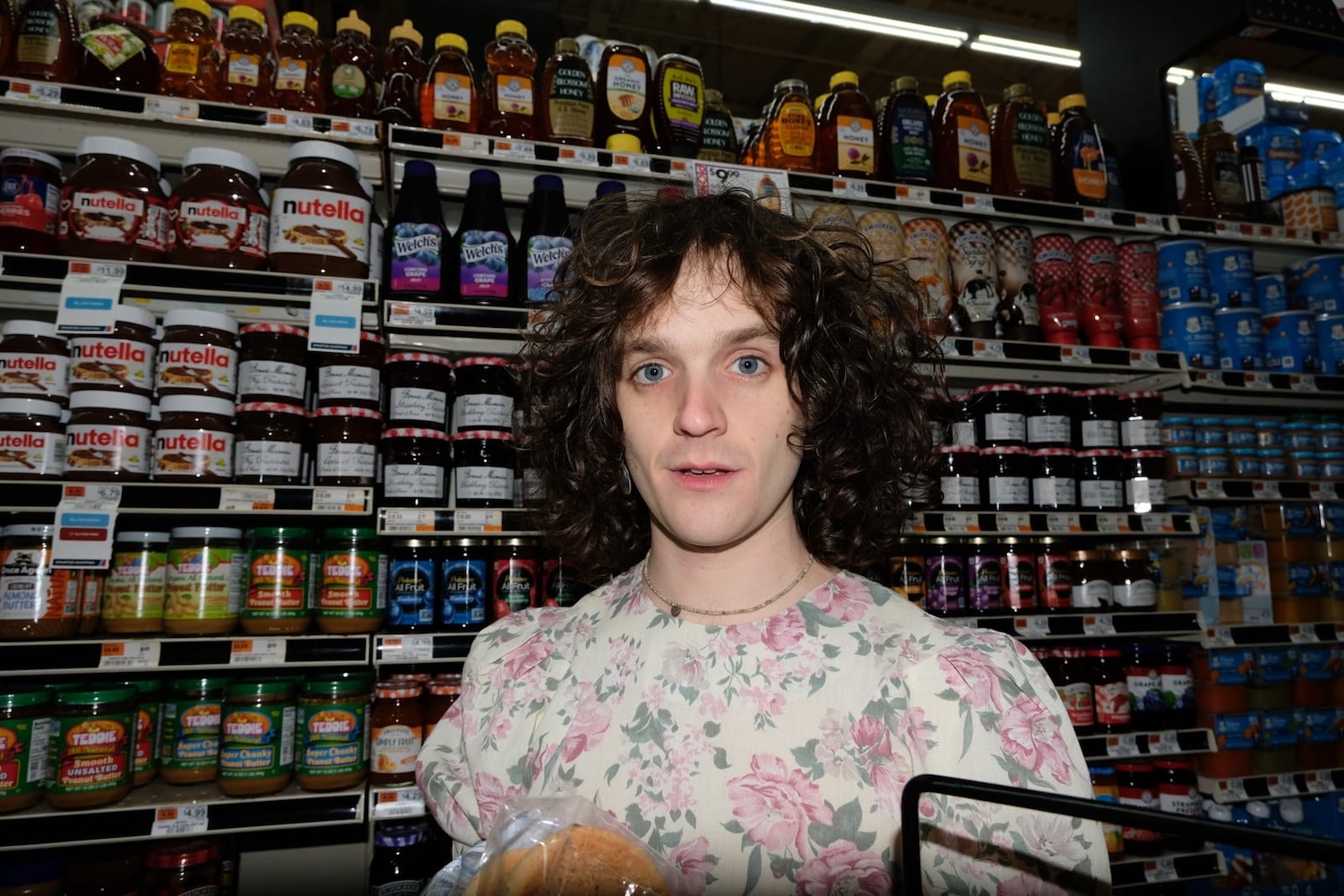
Asher White had taken her obsession with cerebral singer/songwriter Jessica Pratt to the next level: a full-album reimagining of Pratt’s 2012 debut. Bouncing between Rhode Island and New York, White likes to stay occupied. The transgender multi-instrumentalist, producer, writer and visual artist has released more LPs in her 26 years on this earth than many artists do in their entire careers. (Guided By Voices excluded.) Jessica Pratt (Joyful Noise), the follow-up to 2025’s well-received 8 Tips For Full Catastrophe Living, is her 16th—but at this point, White may not even be counting.
White discussed her latest passion project with MAGNET’s Hobart Rowland.
First, the obvious question: Why Jessica Pratt?
There’s truly nothing better than a good song. A substantive, true song is like a nourishing, protein-rich meal: ecstatic and eternal, reminding you of the interconnectedness of being alive. Jessica Pratt’s debut is full of those kinds of songs, presented in their barest form—sometimes imperfect, with buzzing strings, flubbed notes and murmured lyrics, but always exquisitely composed. The sparseness of the original invited re-arrangement. I knew these songs’ DNA so well that I wanted to explode them and piece them back together, using them as vehicles to realize production and arrangement ideas I’d been hoarding.
Covering an entire album by another artist can be tricky. How did you approach it?
Kind of naively and maybe arrogantly. I learned the guitar parts mostly by ear, with help from forums and YouTube, and I was surprised to find that Pratt’s arrangements weren’t difficult—just weird. I’m not a great guitarist, but the parts had an intuitive ease. The idea of covering an entire record came from wanting to impress my label. I’d been learning many of these songs over time, and because I work quickly, I figured I could realize full-band arrangements without starting from scratch.
What was is your recording process like?
Although I live in Brooklyn, my studio is in Providence, which prompts monthly lost weekends where I stay up for days recording. My studio is basically a “room with trash” in the basement of a decrepit mill. No control room—just cheap mics pointed at different instruments. My process is monastic and hermetic. I hole up and overdub piano, drums, guitars, etc., moving quickly between instruments so I don’t have to explain ideas to anyone. A few tracks (on Jessica Pratt) are almost entirely electronic and were made in my Brooklyn apartment directly in Ableton, where I fussed over cracked plugins.
Would you ever do the full-album thing again?
Totally. I could see doing something wild, like a full cover of Big Gucci Sosa by Chief Keef & Gucci Mane. There are so many records that fell through the cracks or were hampered by their original production that deserve a reverent reimagining—mid-1980s and early-2000s records, for instance. Immediately I think of overlooked work by artists people assume they know, or late-career records that could be liberated from their original cultural context. For me, that could even include odd choices like the Jonas Brothers or late Joan Armatrading.
How do you keep up your prolific pace?
I truly love doing it. Making music is how I relax. As a teen, I did it after school instead of homework. Now I do it after work. I structure my day jobs to be menial or mechanical, so I’m not intellectually depleted by the evening. I spend work hours planning what I’ll record later—and that anticipation motivates me. I’m willing to take shitty wages if it means preserving the headspace to create. Also: I like parties.