
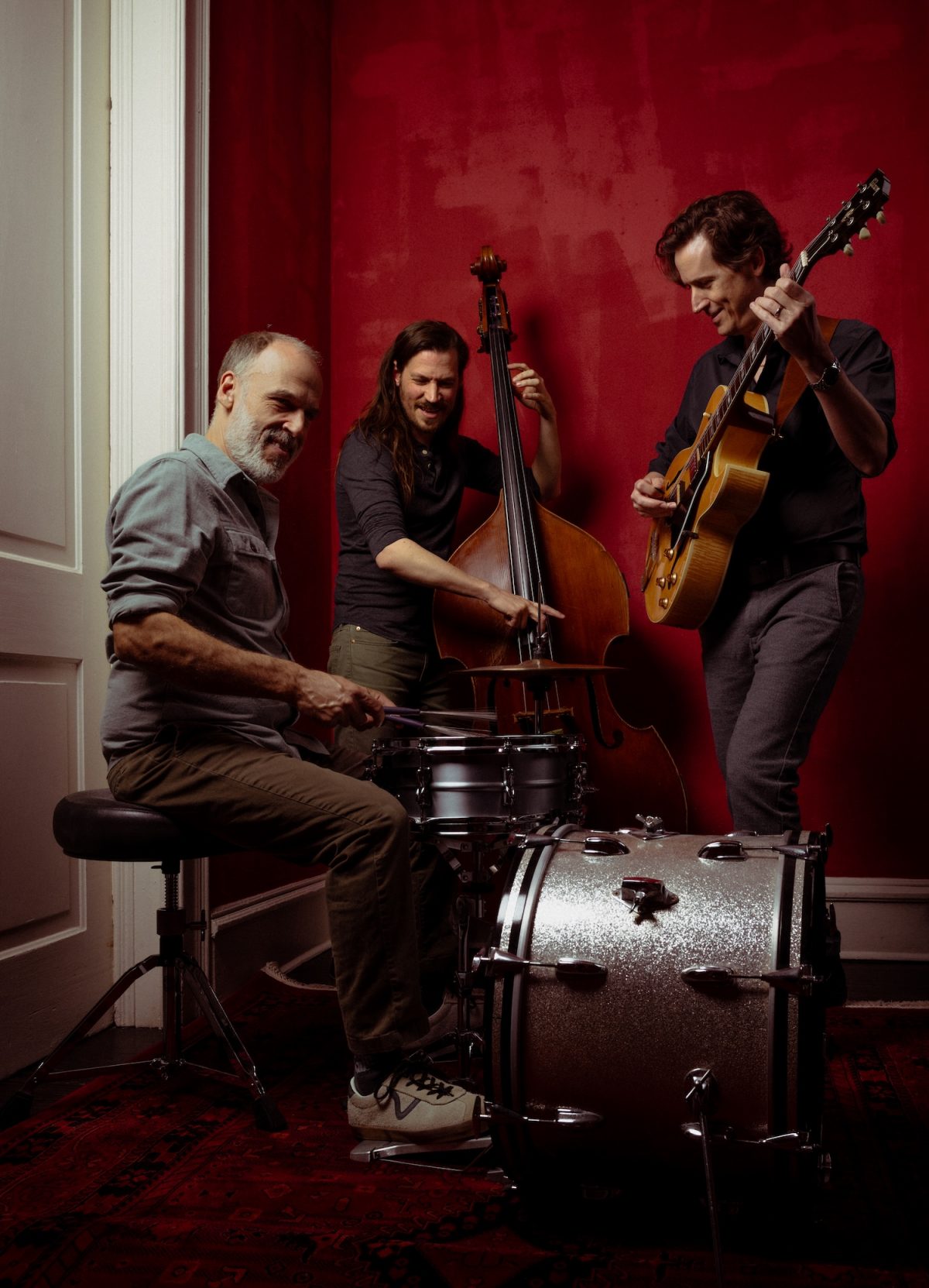
Cento Threeo’s Halfway To Mellowtown (SecondBridge) reconnects Don Cento to his earliest musical language. Across a three-decade career spanning jazz, indie rock and Americana, the Austin stalwart has toured and recorded with Sarah Jaffe, Ume, Little Jack Melody, Chomsky and others. His production work for labels like Drag City, Bloodshot and Tompkins Square has touched on everything from metal to classical, while his recordings under El Cento and with instrumental outfit Shibboleth have found their way to TV and film.
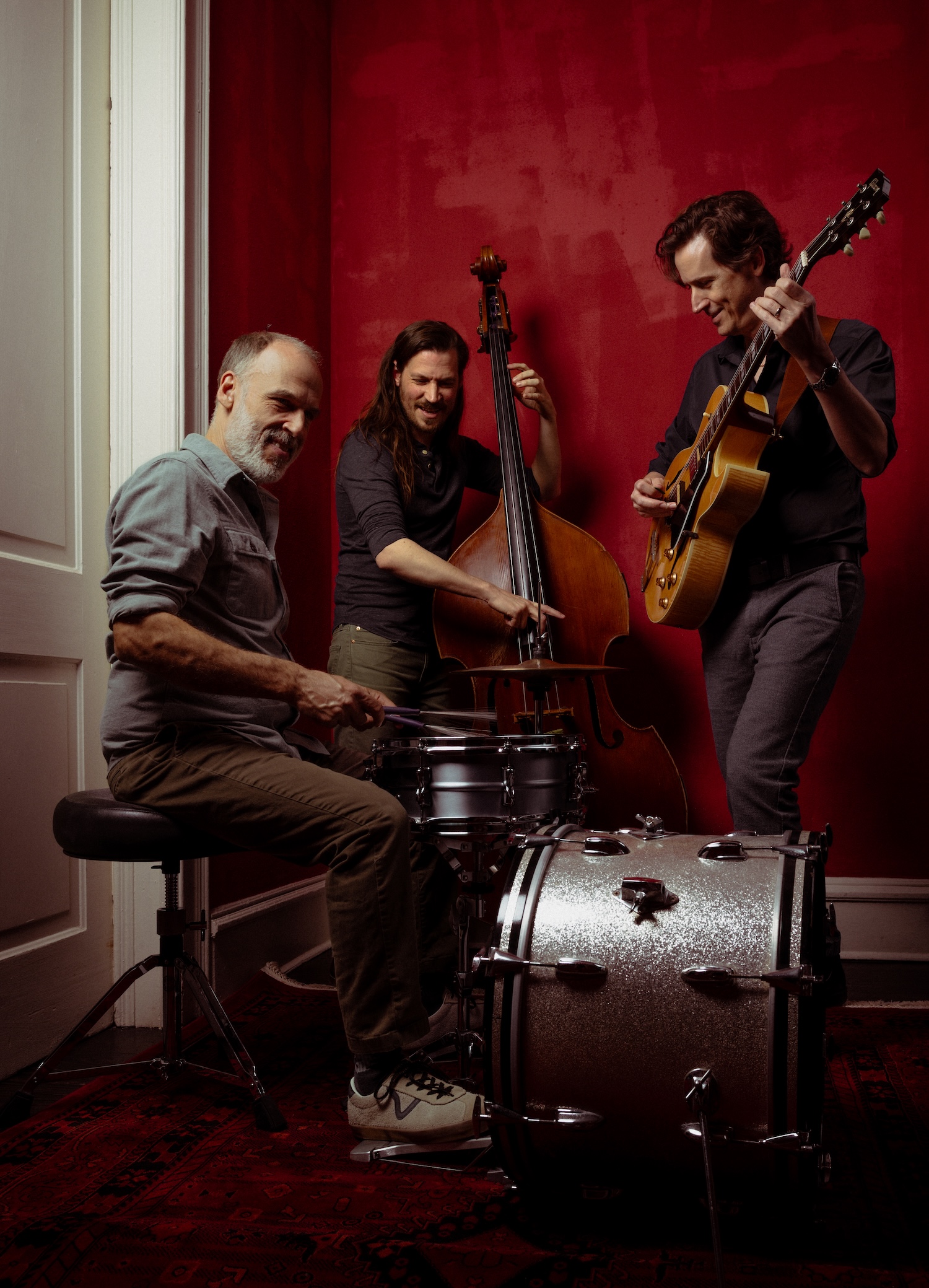
Cento Threeo began as an informal channel for reimagining ’60s and ’70s FM-radio favorites through an atmospheric, jazz-adjacent lens. It quickly evolved into something more ambitious as Cento turned his focus to original material for a trio featuring bassist Phil Spencer and drummer Norm Bergeron. Rooted in composition but open to improvisation, Cento Threeo merges the sophistication of classic post-bop and late-’90s jazz guitar with the textural sensibilities of Americana and indie rock.
Recorded live over two days at Church House in Austin with engineer Stuart Sikes (White Stripes, Cat Power, Loretta Lynn), Halfway To Mellowtown features 10 originals and an inspired take on Rosanne Cash’s “Seven Year Ache.” Here’s more from Cento.
—Hobart Rowland
1) “The Judy Valve”
“This opening track serves as a sort of thesis statement for the record. A lot of the elements I like to explore are present: dissonance, unrelated chords, elements of the blues. I’m most happy with the structure and the way we pass the melody from the guitar to the bass, reusing the melody over different chords and a different texture. The title is an inside-joke my wife and I have regarding a low-water-pressure issue we experienced. My mother-in-law (a.k.a. Judy) suggested the solution. We could never remember the actual name of the part, so the ‘Judy Valve’ was our placeholder. Turns out it’s a pressure-reducing valve, but that’s not nearly as good a title.”
2) “It Takes What It Takes”
“This began life as a vocal song. Buried somewhere in my phone, I have a vocal-and-guitar demo with some very rough lyrics. Perhaps I was lazy and didn’t feel like finishing them, but when I brought the song to the Threeo, it seemed to fit. One of my goals was to challenge myself to write ‘jazz’ material that didn’t rely on the typical jazz-tune structure. Maybe it’s the vocal origin story, or because it’s based on a typical pop-song structure, but it almost feels like a cover … of my own tune.”
3) “Dennis Muren”
“One of the earlier tunes I wrote for the band, this is a bit of a stew of influences: John Scofield, the Meters, maybe some Little Feat. The funkier feel is a bit of an outlier on the record, but it gets by on its optimistic charms. I wrote it while my wife and I were watching the documentary series about the special-effects company Industrial Light & Magic (Star Wars, Raiders Of The Lost Ark, Jurassic Park, etc.). I grew up in the 1980s loving those movies and devoured any behind-the-scenes stuff I could get my hands on. Dennis Muren was a key early figure at ILM, and I’ve always found his work especially inspiring.”
4) “G’Orangers”
“The main riff and melody for this song came together almost in real time. After that, I tinkered with the length of some of the phrases. I liked the longer version; Phil liked the shorter version. A compromise was struck: long at the beginning and short at the end. The guitar and bass solo sections are just different enough to keep the song interesting and moving forward. It was written around the time the Texas Rangers won the World Series and obliquely named for them. And for my wife, who’s a huge Rangers fan.”
5) “Halfway To Mellowtown”
“The title track has had an interesting journey. Bits and pieces were working, but it took several weeks of throwing stuff at the wall to connect them. Most of this work was done in an Airbnb in Cape Girardeau, Mo., overlooking the Mississippi River. When it came to recording, we started with our usual performance approach: quicker tempo, higher energy. But those takes felt forced and cheesy. Fortunately, Stuart has incredible ears and impeccable taste. He suggested we slow it down and move the focus from the improvisation to the simple, Midwestern-flavored melody. We did one take like that and had it.
“The title comes from some off-the-cuff words of encouragement I gave to Randy Reynolds, a fantastic singer/songwriter/musician I’d produced in 2022. We liked the phrase enough that I wrote it on a Post-it note and stuck it on my computer monitor. I looked at that note every day for at least a year. One day, I picked up the guitar and sang those words to what became the chorus melody. I never finished those lyrics, either. Probably for the best.”
6) “The Builder”
“A fantastic song written by Phil. The interlocking melody and bass line make it feel like a baroque fugue. I love the way Norm responds to the melody on the drums. It’s a challenge to learn and interpret somebody else’s melody from a piece of sheet music, and I’m happy with this result. But I think I play it a little looser nowadays … and I think Phil likes that.”
7) “Make The Silence Louder”
“This opens the second side of the vinyl LP and is another one of the early tunes in the writing process. I feel like it perfectly captures the vibe we were after and set the tone for the writing that followed. It’s kind of based on a blues, and it’s mostly a waltz—save for a sneaky bar of 2/4 toward the end that necessitates keeping one’s antennae up. I love the way Phil and Norm play this song: loose yet controlled, ebbing and flowing.”
8) “No Fleas, Please”
“A straight-ahead jazz tune with a cool little hook at the end. No muss, no fuss. The two main sections are in the same key, which bothered me initially. I tried to finesse them so that wouldn’t be the case, but it never felt right. I brought it to the band, and Phil and Norm figured out how to make each section feel unique and complementary. Named in honor of my late dog, Calvin, and the time he was stricken with fleas. It was traumatic for everybody involved, and none of us were the same.”
9) “Horse-Breaking Hector
“Written circa 1993 while studying The Iliad in college—hence the title—this was the first complete song I ever wrote. It’s a moody ballad that owes a lot to my favorite guitarists/composers of that era—John Scofield and Bill Frisell—which is a pretty high bar. I love the stretchy/gooey feel of the rhythm section on this take. I’ve been playing the song off and on for decades, and this feels like the definitive version.”
10) “Filibuster In E Minor”
“A noir-jazz night journey with a barn-burner drum solo courtesy of Norm. I wrote this very quickly and didn’t think too much of it. When we first started playing it, this was the song people would mention after gigs … It always seemed to be record-collector types who really dug it. It’s certainly the most specific-feeling song in terms of genre on the record. Maybe that’s the hook. There’s also an unconscious nod to a very famous song from the early 1990s.”
11) “Seven Year Ache”
“We close all our shows with this classic song by Rosanne Cash, so it seemed to be the perfect choice to end the album. We recorded this at the end of the day in a single take. And though we’d played it many times live, this take felt brand new and captured a feeling of in-the-moment discovery. The song was suggested by my wife, a fan of 1980s country music. I’d forgotten all about it, but it turned out to fit the Threeo like a glove. The fade was Stuart’s idea—and I think it’s perfect.
See Cento Threeo live.