
With its images of yachts, socialites in sun hats and musicians performing at the 1958 Newport Jazz Festival, the 1959 film Jazz On A Summer’s Day framed music as one element of the mid-20th-century good life. But the tune that played through its opening credits insinuated some quiet radicalism into the lifestyle boosterism. The Jimmy Giuffre Trio, with its no-drums lineup playing a briskly paced convergence of blues feeling and chamber intricacy, was simultaneously approachable and quite distinct from anything else going around. Clarinetist/saxophonist Giuffre, trombonist Bob Brookmeyer and guitarist Jim Hall proposed a non-hierarchical combination of aesthetics that still holds water.
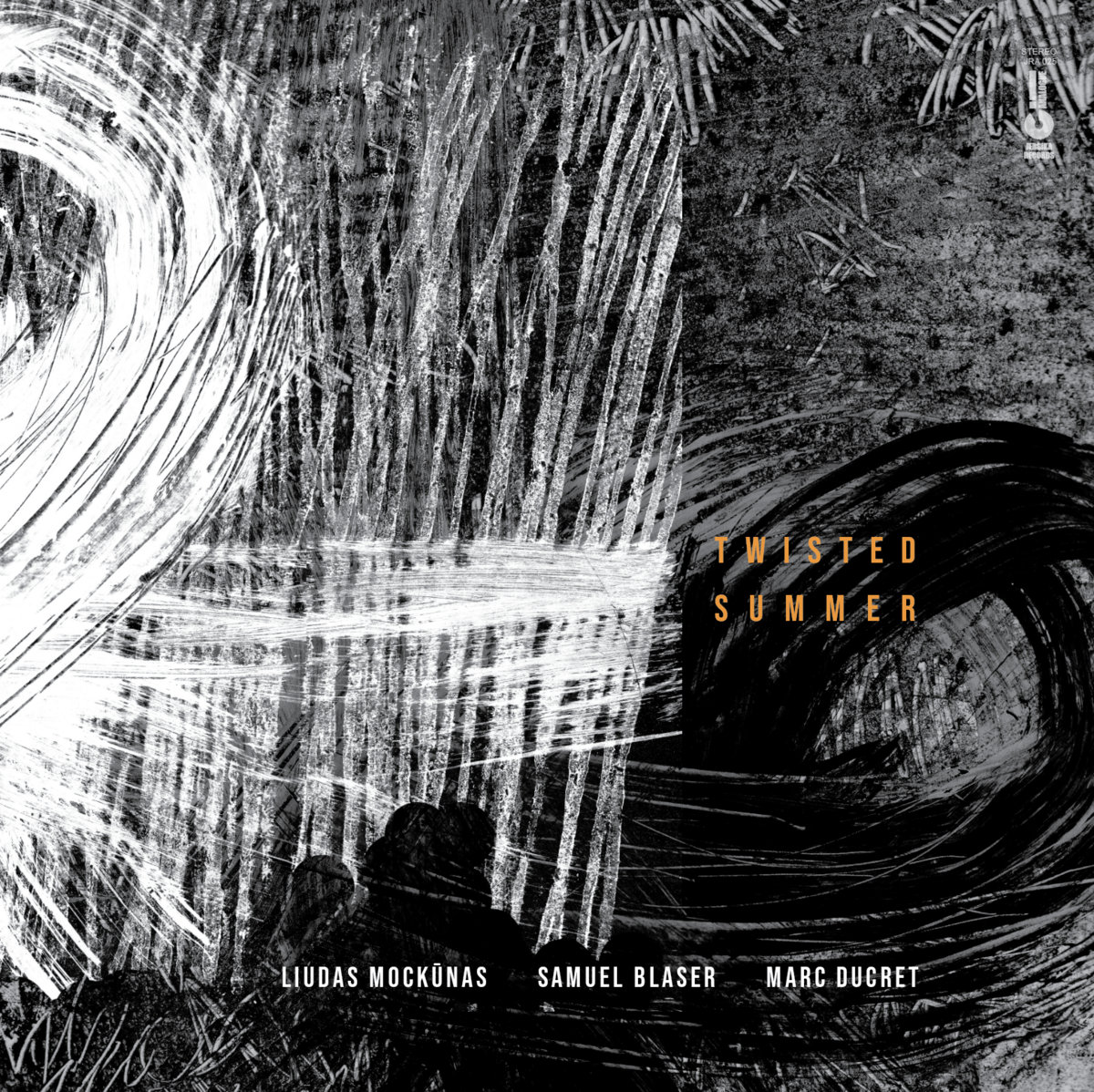
For evidence, consider Twisted Summer. It was recorded 65 years and an ocean away from Newport by a trio that replicates the Giuffre Trio’s lineup, but not its sound. This group, like so many jazz ensembles worth hearing in the 2020s, is multinational. Clarinetist/saxophonist Liudas Mockūnas is Lithuanian, trombonist Samuel Blaser is Swiss (disclosure: I’ve written liner notes for some of Blaser’s albums) and guitarist Marc Ducret is French. Why does internationalism matter? That’s a question that can be answered anew every time a band convenes, but here, it may simply be a matter of having to look long and far to find people who not only get the chamber-jazz concept at work here, but are ready transform it with unsentimental confidence and rough sensitivity.
“Drop It,” the Mockūnas tune that kicks off Twisted Summer, is packed with event. The layered deployment of tenor sax and trombone in the opening seconds suggests a convergence of noir jazz with something more hymn-like. Then bent-guitar notes twist around the windy choir, setting up a sequence of changes that somehow come quickly, but patiently. The title track, by Ducret, ascends and descends in almost Sisyphean fashion. After some initial languid harmonizing, his guitar slaloms off track, quick and jittery, only to step back while the two horns engage in an escalating, staccato exchange that becomes almost pugilistic in intensity, then evaporates into silence, only to come back as a determined blues trudge. On Blaser’s comparatively pithy “Dama,” roles keep changing as the players alternately jostle and cradle whoever takes the imploring, singer-like lead.
The three additional originals on the flip side of Twisted Summer each pull in a different stylistic direction. But if the compositional approaches may vary, the musicians’ attunement to each other’s maneuvers ensures cohesion. Their interactions are precise and supportive, balancing aggression with grace. The record’s production is similarly assured. The Jersika label is an unabashedly analog-partisan enterprise, and the direct-to-two-track-tape recording is vividly faithful without drawing attention to itself. [Jersika]
—Bill Meyer