
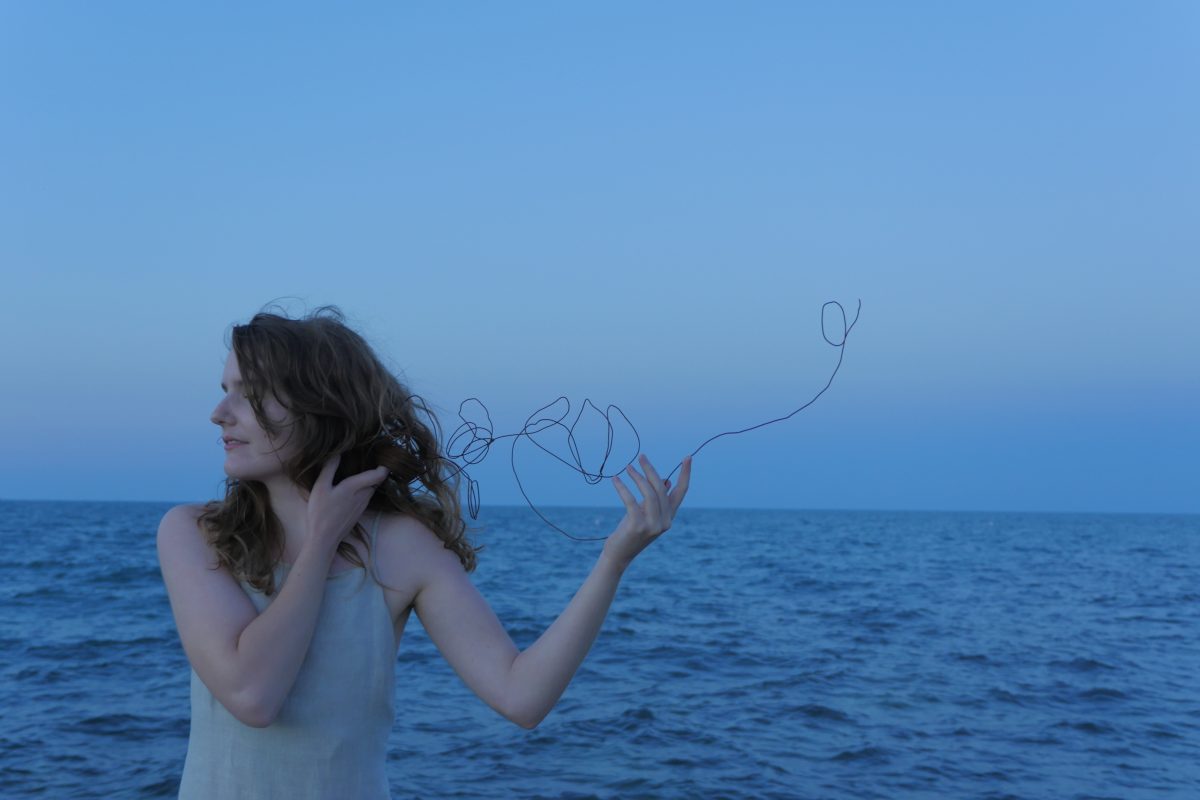
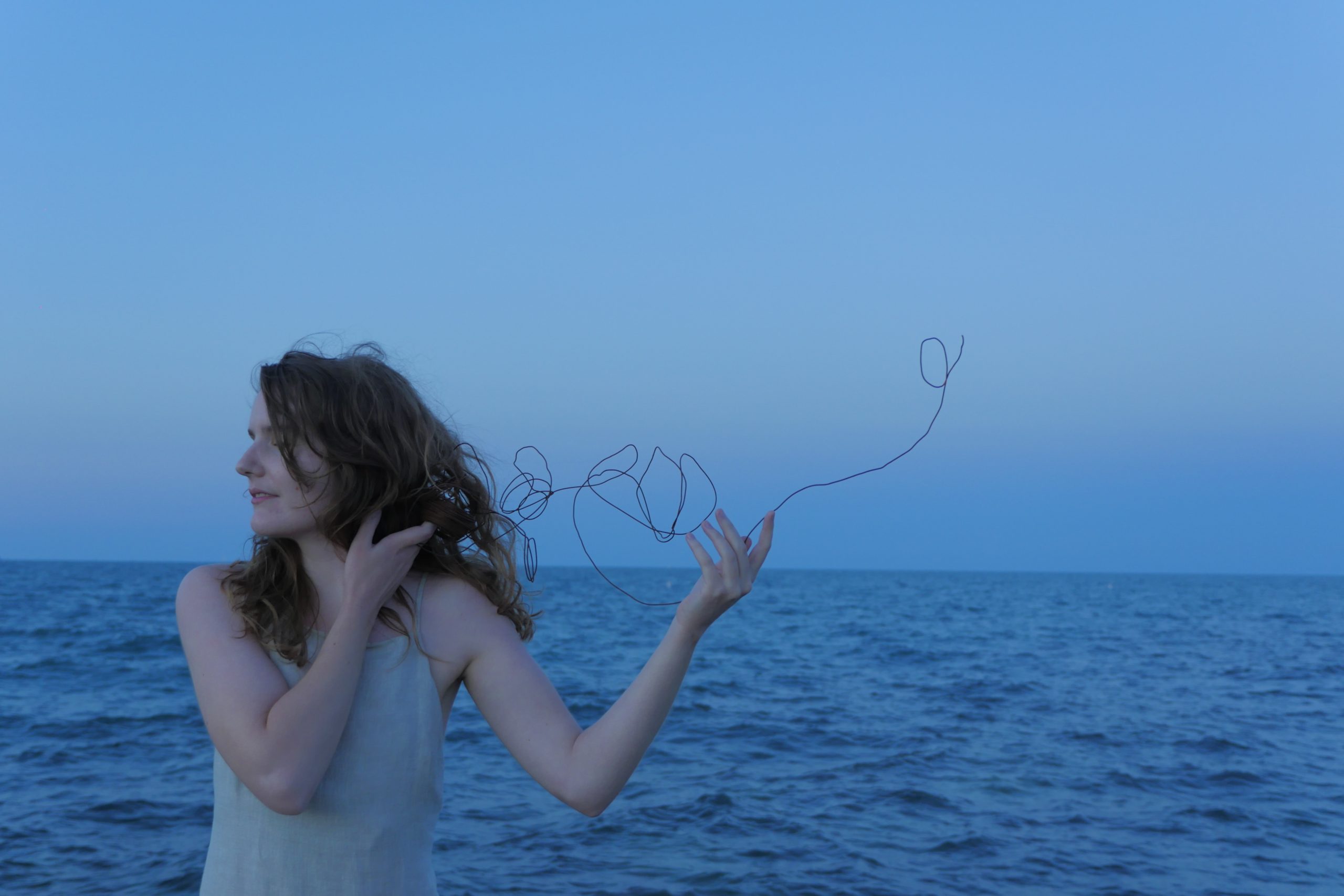
For Maris Maeve O’Tierney, the music of Park Hills Circle convenes at the intersection of a vast and varied landscape. The singer, composer and multi-instrumentalist draws equally from the storytelling traditions of her Irish homeland, the expansive wilderness of an Alaskan upbringing and the rich musical vocabulary of opera and classical guitar. Not surprisingly, stylistic disparity and restless energy loom large on All Of A Sudden (Pravda), a debut that balances the ethereal weight of Kate Bush with the emotional candor of Tori Amos.
The album signals a new direction for O’Tierney, who’s spent more than a decade performing with her identical twin sister, Bryce, in the acclaimed music, poetry and storytelling duo Maeve & Quinn. Written in O’Tierney’s new hometown of Chicago, the songs on All Of A Sudden often look to nature for emotional landmarks. Saxophonist Dustin Laurenzi, keyboardist Aaron Otheim and drummer Quin Kirchner flesh out Park Hills Circle’s intimate folk foundation and fingerstyle guitar. Stacked vocal harmonies, cozy synths and cinematic arrangements combine for a luminous sound inspired by the belief that music can guide us back to ourselves.
O’Tierney takes us through All Of A Sudden song by song.
—Hobart Rowland
1) “Clearing”
“I’m an identical twin, and through that I feel hard-wired for emotional intimacy, collaboration and often leaping into the deep end of relationships. Twinship is a beautiful gift and a way of moving through the world with sensitive creativity. But I’ve had to learn how to moderate what I need in my closeness with others. ‘Clearing’ captures a desire for independence while also trusting new vulnerability with a romantic partner—finding a balance to feel spacious and full as a person with room to keep growing. Ideally, I think we all want to arrive at a place where we can feel secure within ourselves and within friendships and relationships. Sometimes that requires letting go and holding close all at once, so that push/pull and tension is part of this song, too. The saxophone line becomes an echo or extension of an earlier melody in my voice, with Dustin shaping around the line I sing in the song’s chorus.”
2) “Spring Is Here”
“As an Alaskan currently living in Chicago, walking along Lake Michigan brings me home to nature. ‘Spring Is Here’ came to mind one afternoon while dancing with my own shadow reflected in the water. The song is a waltz of changing seasons—letting go of an emotionally distant partner to confidently embrace oneself. I took inspiration from impressionist paintings and arias from my classical-voice and opera background, struck by the irony of how devastating feelings could be expressed through sunlit pastel colors and lilting, sweet melodies. I wanted ‘Spring Is Here’ to float, with the gently rolling guitar motif and vocal melody gradually becoming more buoyant and brighter. The lyrics follow this arc, moving from the strain of unequal care to abundance and the freedom in self-acceptance.”
3) “Softly Calling Your Name”
“The chorus for this song came to me while walking through NYC’s LaGuardia Airport, headed back to Chicago following an East Coast tour. I was reminded of a moment, years earlier, when I’d met my now partner on an airplane flying this same route. The unexpected and almost nostalgic feeling you get meeting someone for the first time who somehow feels timeless. That mood of warmth, sparkle and a growing unconditional romance is something I wanted to bring to this song. I originally wrote it on piano, which shaped the dreamy ballad tone in the final album arrangement.”
4) “Unspoke”
“This emerged on a sleepless night in the wake of a heavy Chicago thunderstorm. I was finding the daily rhythms of making my own home, after a period of living with my twin sister. Living alone, your own mind is sometimes a companion and sometimes an adversary. Learning to navigate that dynamic showed me new things about myself, especially as I sought healing from depression. After days of inner silence, words came to me, and I experienced my surroundings in a surreal way. When I finally fell asleep, I dreamt of my first home: the coastline of Alaska. I was a whale, swimming upward from cold ocean depths to shimmering warm sunlight above, surfacing for air. The lyrics helped remind me of who I am—reflecting on the fearlessness and wonder of my childhood self, the compassion of friends who loved me even at my—and often their—lowest point and the strength of my Irish ancestors who sang as a ritual to heal.”
5) “Where I Can See You”
“I admire Kate Bush and Sinéad O’Connor for their ability to balance emotional grit or dynamic tension with an atmosphere of the mystic and ethereal. The repeated chorus line that builds through the latter half of this song draws energy from that kind of approach, turning over the same words again and again, finding various angles of the emotion and colors in the voice to emphasize. Sometimes healing requires re-telling the story in a different way.”
5) “Company We Keep”
“My heritage is Irish, and I spent part of my childhood living on the west coast of Ireland in a small village called Kilshanny, County Clare. Irish traditional folk music has always been in my ear and my soul, and I’ve listened to and/or sat in on music sessions at pubs and in other community spaces in Ireland over the years. The guitar rhythm and strum pattern of this song draws influence from those sessions, honoring the style of great guitar players of the scene like the late Dennis Cahill.”
6) “A Million Times”
“Sonically, I wanted this song to feel close to the ear, as if you were telling a dear friend a layered secret or whispering a meditative mantra to yourself. The chorus speaks to a desire we all encounter to shift a way of living or being. But sometimes it’s hard and requires deep patience to change. Quin’s organic percussion—especially on the instrumental section in the middle of the song—helps capture the gentle but also tenuous feelings of taking small steps into a new rhythm.”
7) “Playing With Fire”
“Genre is fluid to me. I move toward the style that best fits the emotion of the story I’m trying to tell. This song was fun to record, as it explores another part of my vocal range and timbre to lean into a more alt-folk, almost country space that felt right for the story. The vocal scatting part on the chorus is a way of letting go emotionally. Sometimes you don’t have any words left when trying to express your heart’s truest feelings.”
8) “The Way Up”
“Caring for mental health—and nurturing a resilient sense of home and well-being amid our turbulent world—is a throughline that organically emerged on this album. I find songwriting can often be prophetic. Songs know or understand something about us or about the world around us—often something that needs to be healed—before we even realize it. ‘The Way Up’ emerged in this way. I was reflecting on how our moods as humans can dynamically ebb and flow. Sometimes, we feel so brave, like we could conquer any fear. Other times, we just want to curl under the sheets and dwell safely in stillness. Antidepressants tend to level everything out as you find the ideal treatment. So I suppose this is an ode, or anthem, for finding a way to live comfortably and truly in a full range of emotions. The chorus line captures this and calls for tenderness: ‘Right now I am a flat line, baby, but the mountains are in me.’ This line is particularly dear to me as an Alaskan. I’ve always felt an ancient strength in the mountains. They’ve been shaped by glacial time and the natural elements over and over, and yet they keep standing tall.”
9) “All Of A Sudden”
“This is the first song I wrote for the album—the heart and anchor around which the rest of the songs orbit. It first sparked when I was on a late-night walk in Chicago summertime. Trying to find my way through a period of heavy depression, I noticed the moon that night—bright, full, clear—and felt it was keeping me company, something I’d often felt as a young girl growing up in Alaska. That moment with nature brought me back into my body and spirit, inviting a sense of wonder and expansiveness. When I returned to my apartment, I picked up my nylon-string classical guitar and found comfort in its warm, round tone. Over the days ahead, I used a loop pedal to arrange fingerstyle guitar motifs, also exploring my way toward an alternate open tuning that helped create lush chords for the song’s outro. On the final album version of the song, Aaron plays an integral role in capturing the emotional arc. His sparkling, almost aurora-borealis-like synth lines are a soaring voice that then expand with the rest of the arrangement into the instrumental outro. I wanted the outro to open and unfold joyfully … to dance, inviting a freeing of and returning to the spirit: ‘On my own, I know I’m home again.’”
See Park Hills Circle live.