
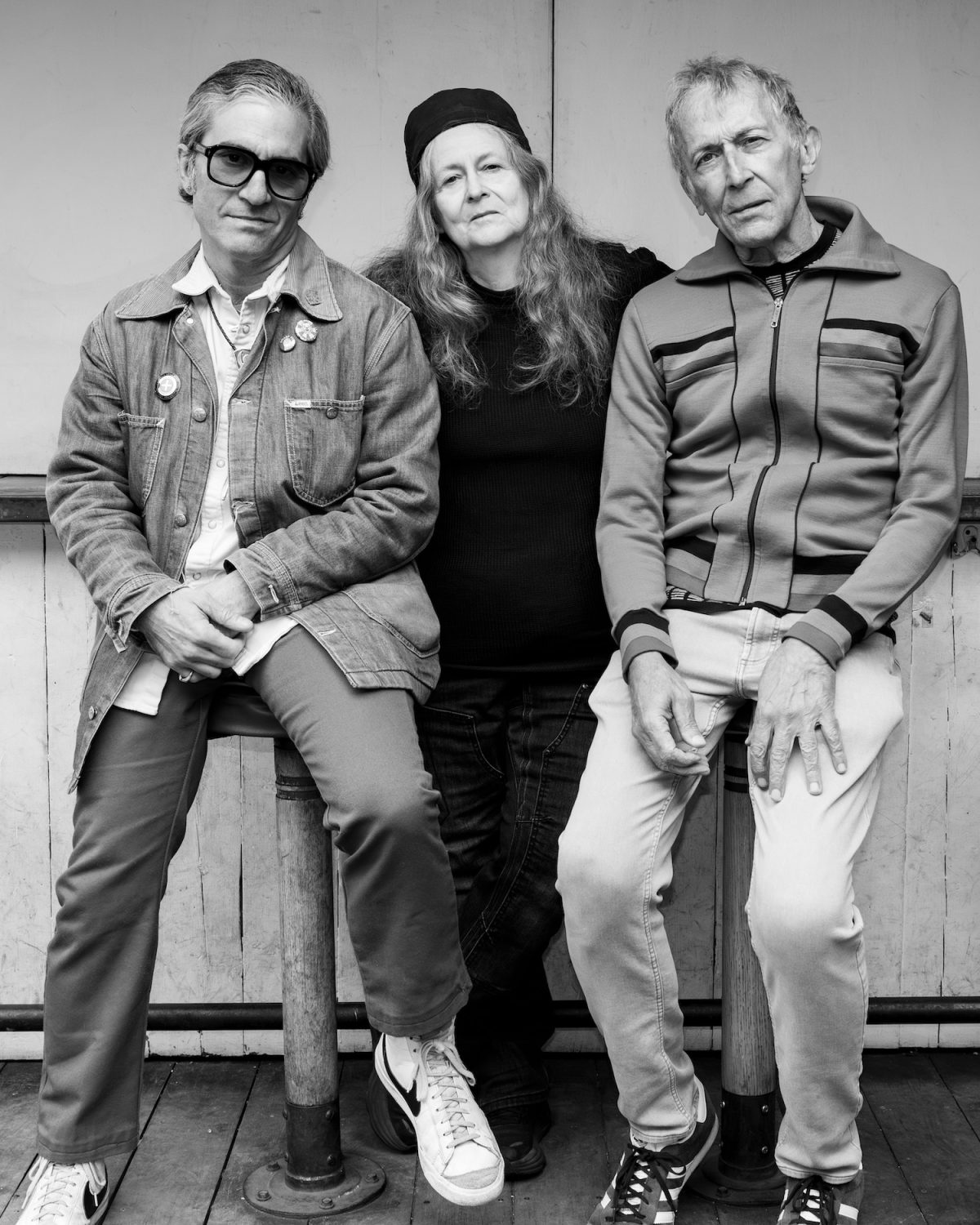
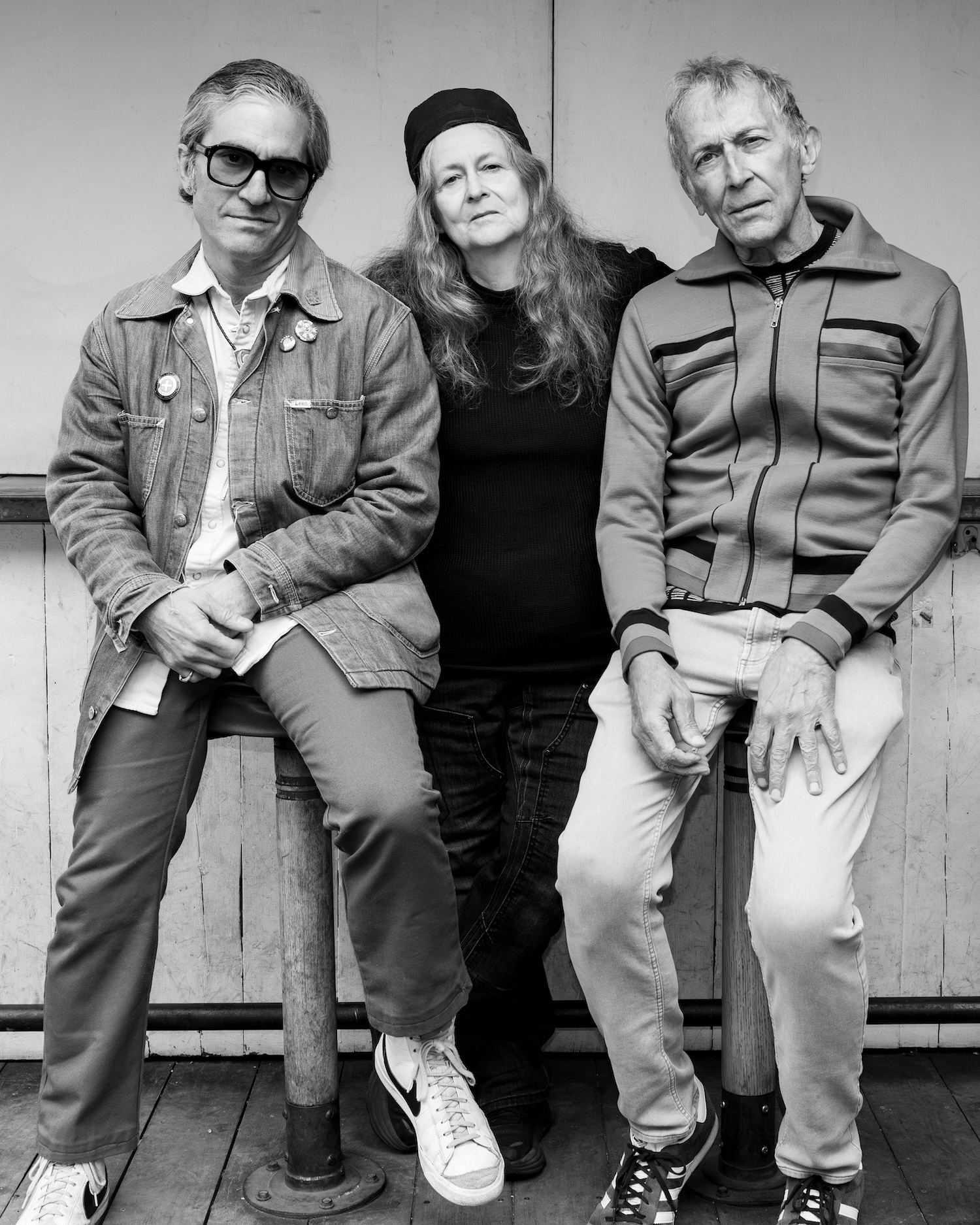
For more than four decades, Antietam has occupied a singular place in American underground rock. Partners in music and life, Kentucky natives Tara Key and Tim Harris married shortly before forming the group in Hoboken, N.J., in the mid-’80s. Joined in 1990 by drummer Josh Madell, they’ve amassed an idiosyncratic catalog that negotiates punk, indie rock, melodic pop, noise and improvisation without ever locking into any of them for too long. That resistance to easy categorization is central to The Counting Game (Dromedary). On its 14th album, Antietam continue the open-ended experiment much in same the way it has for more than 35 years: three musicians hashing it out in a room, waiting for something none of them could’ve anticipated to rear its head.
Key and Harris recently convened with MAGNET’s Hobart Rowland to discuss Antietam’s ever-expanding musical vocabulary, bringing a new generation into the fold and why the band’s indie iconoclast designation continues to endure.
At this point in Antietam’s lifespan, what still makes the three of you feel there’s unexplored territory left to be discovered?
Harris: Most of our music comes out of the three of us jamming. It’s something we’ve done for three and a half decades. When we freestyle, anyone can introduce a sound, a riff, a pattern—and the other two will react. What we come up with is somewhat of a puzzle, almost beyond our control. But one reason to go forward is that we’re always finding out about things we didn’t know before—maybe brand-new things or maybe things we should’ve noticed before.
Key: For example, I’m still finessing my guitar sound after almost 50 years. Over the course of the past two years, I’ve pivoted to a new set of amps and a second pedalboard. I’ve always treated my guitar palette like a panel at mission control, and I never tire of doing the equations necessary to incorporate a new pedal. Distortion tones are colors to me. I was explaining to the band yesterday that I’ve just added a mauve to my traditional brash yellow and longtime cerulean. The newly acquired lime green is problematic, but I love a challenge. Still on tap: disruptive scarlet.
I love the lyric in “The Finest Line” where you ask, “What can I give instead of take?” Did that question emerge from something specific in your life, or is it part of a broader reassessment of what matters to you now?
Key: Definitely the latter informed by an endless cascade of the former. I feel some of my sharper edges softening with age while my focus is sharpening. I’ve learned a lot in just the last decade, informed by both what I’ve achieved and some incalculable losses incurred. I’ve gotten better at knowing what’s important and what’s not. I’ve been lucky in this life so far. I had parents who unquestioningly supported my quirkiness and tacit refusal to do things the normal way. I’ve gotten to do what I love the most with my partner. Through making music, I’ve found the most important relationships I have. And I started thinking, “That sure seems like a lot of taking for a lifetime.” And I’m by no means ready to settle-up yet.
After playing together all these years, do you have to actively find ways to surprise each other?
Harris: When one of us is carrying on from thing to thing, someone might shout, “Do that! Keep doing that! Don’t forget that!” Then again, we usually tape rehearsals, and the shock of recognition often comes in the playback stage when we say, “What was that?”
Key: There are nights when jamming can seem like driving a stretch from Zanesville to Wheeling at 1 a.m. with fog encroaching. But you have to keep driving to get to the moment the sky clears, the static breaks on the radio and the perfect song pops out of the speaker. Josh blew my mind when he spontaneously came up with the complex circular beat on the verses of “The Finest Line.” And I know Tim will always find a new way to flip a bass line that pulls the rug out from under me.
Josh’s daughter Trixie sings on “Spy Vs. Spy.” What was it like bringing a second generation into the band?
Key: The three of us have spent more than 35 years together making music—but just as important, we made a family and shared a lot of living. We’ve seen Josh grow from the still-underage shot of adrenaline we were lucky to meet, to seeing his record store, Other Music, become a touchstone for record stores all over the world, to being lucky enough to be a part of his real family. Tim and I never had children, so Trixie is as close as it comes. What I didn’t anticipate was how fascinating it would be to watch her react to music like a sponge—not unlike myself with radio and one-hit wonders in the ’60s and Bowie and Neil Young after that. Her musical vocabulary was way deeper than mine was at age 10. How she came into the universe already a David Bowie superfan is a mystery—and that was an early clue that we were going to get along just fine. She finally took the stage with us during Yo La Tengo’s 2024 run of Hanukkah shows, confident on second guitar. At one point, I took a solo over her rhythm and was glad I was not singing because, looking over at her, I teared up. She’s left for college now, so asking her to be on The Counting Game was a no-brainer. And you know what? She nailed both her piano part and vocal part in one take.
Has being difficult to categorize ultimately helped Antietam endure?
Key: Yes, probably so. Eventually, I think being hard to pigeonhole unwittingly came in the back door and became a brand for us. It’s definitely not about having a lack of focus. I actually have a recurring dream where I’m living in a house that has rooms I’m only just discovering after many years—and I’m so surprised and delighted in these dreams every time I open a new door. That totally translates to how I conduct my creative life. All I’ve ever wanted is to be a real-time reporter. My beat: trying to make sense of intangibles. That requires a pretty broad vocabulary that’s mutable and open to change. I never wanted to be trapped in amber. The biggest reason it’s still fun to play is that the exploration of what we do and who we are is open-ended. It’s life-based, not product-driven. If you come along for the ride, I can pretty much guarantee we’ll get off the interstate and take some back roads.