
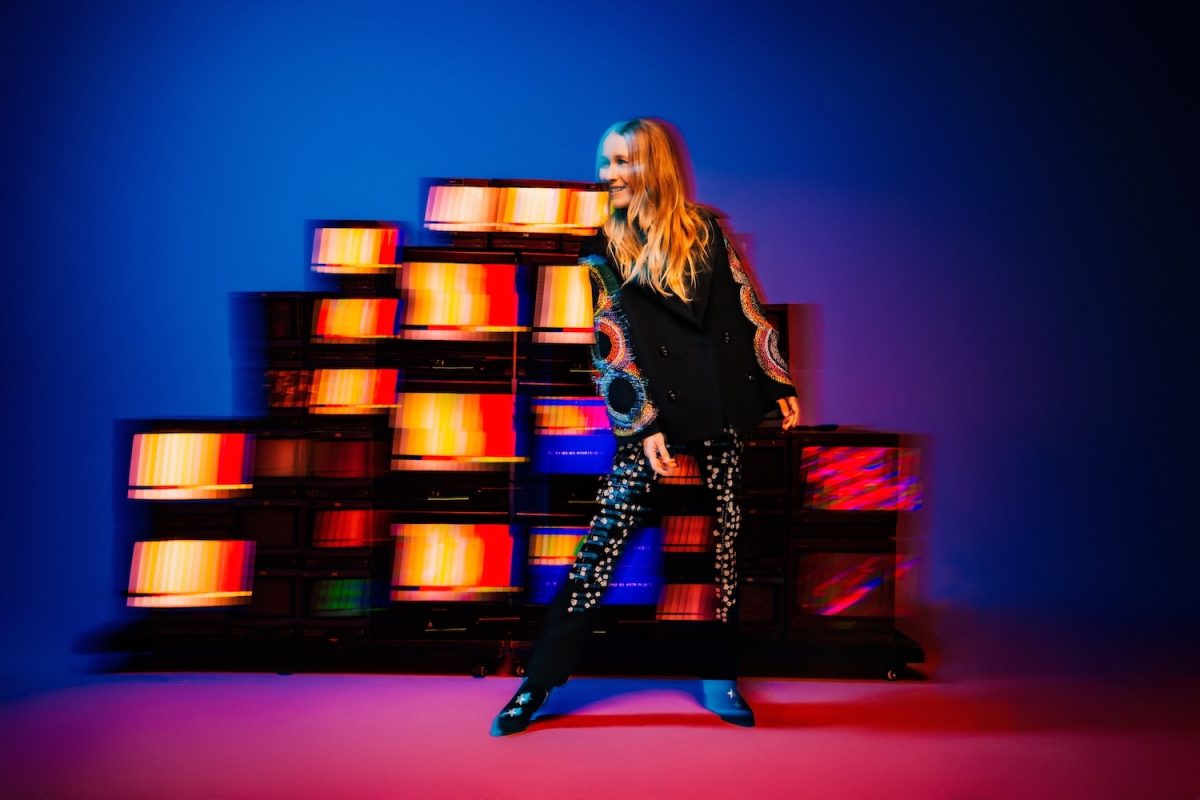
For all the momentum surrounding her 10-year career as a genre-hopping bassist for hire, Karina Rykman has arrived at a somewhat unexpected realization: There’s something to be said for not rushing. Like Joyride before it, the new Late Checkout (High Rotation) embraces the here and now—and that hasn’t been easy for Rykman, who’s never been particularly good at sitting still. Raised on New York’s Upper West Side, she was still finishing up classes at NYU when she landed the high-profile slot with Marco Benevento’s band she still holds today.
Much like her 2023 debut, Late Checkout took root at Trey Anastasio’s Barn in Vermont’s Green Mountains. After two weeks of marinating in the music there, the band headed to DFA Studios in New York, where the instruments and equipment associated with LCD Soundsystem’s James Murphy opened up an entirely different set of possibilities.
Rykman chatted with MAGNET’s Hobart Rowland about her evolving relationship with songwriting, the fearlessness of her teenage years and why the bass will always be at the center of it all.
For much of your career, you’ve been known primarily as a bassist and live performer. With Late Checkout, how convinced are you now that songwriting has finally become central to your identity?
Songwriting is certainly more a part of my identity now than it ever has been, and I’m striving to continue in that direction. Having said that, the bass is at the forefront of everything I do. Bass is the place. Bass is the nucleus. I think in bass-centric terms. So, both are true at once—I’m a singer/songwriter/bassist. It’s more of a “yes, and” rather than an “either/or” for me. Expanding the palette, striving for more.
At age 13, you were cold-calling New York clubs and exaggerating your band’s draw just to get gigs. Looking back, where do you think that confidence came from?
Man, we were such lunatics, looking back on it. That brash, reckless abandon I had in eighth grade is slightly tamed now, I think. Growing up, I had such great bandmates, and we just egged each other on. Calling clubs just seemed obvious at the time. I was overly confident and hyped up by my friends. I didn’t fear “adults”—only-child syndrome—so to get on the phone at 13 and talk to an old curmudgeon of a small club owner? No problem. I still have that same drive to succeed, but perhaps I’m more considerate now.
You recorded the new album at two studios with very different musical histories and vibes. How did those varied environments bring out different sides of the LP?
This record wouldn’t be what it is without both elements. The Barn allowed us to truly lock in for 14 days. We lived together; we didn’t leave the property once; and it snowed every day. We did all the basic tracks there, and the extreme focus that being in the middle of nowhere on a hill in snowy Vermont with zero distractions gave us was everything. Once all the basics were tracked in Vermont, going back to NYC felt like a time warp into the future—playing all of James Murphy’s toys and putting all the bells and whistles on this thing in an extremely sleek, modern environment. It was awesome.
How does being a bassist shape the way you construct a song when you’re the one at the center of it?
Well, I’ll tell you, it’s proving increasingly difficult to write all these complex bass lines and have to sing at the same time. I often think of Paul and Geddy and Sting and all the greats who make it look effortless. I have to work really hard at it. Otherwise, it’s just the way my brain works at this point. If the bass line doesn’t hold my attention, I won’t continue writing the song. Simple as that.
The title Late Checkout suggests lingering past the point when you’re expected to leave. What does that phrase mean at this stage of your life and career?
To me, it suggests a contentment within the journey … unrushed, unhurried, unbothered. My first record is called Joyride, and I didn’t realize it at the time, but there’s a serious throughline between both themes. They idealize being happy with where you’re at, creating an oasis in time and space, and enjoying it thoroughly. That’s how I conceive all of this—especially the live shows. We’re creating these moments I’m reveling in. I guess it’s about presence, at its core. I’m a presence guy.
See Karina Rykman live.