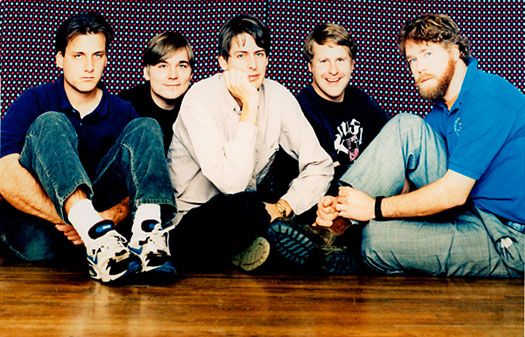
They’re nobody’s buzz bands anymore. But since 1993, MAGNET has discovered and documented more great music than memory will allow. The groups may have broken up or the albums may be out of print, but this time, history is written by the losers. Here are some of the finest albums that time forgot but we remembered in issue #75, plus all-new additions to our list of Lost Classics.
Like restaurants and dot-coms, record labels fail at an alarming rate. So it isn’t exactly newsworthy that Bobsled Records lasted only five years. What’s notable is that the Aurora, Ill., indie burned so brightly and left a vapor trail of mini-myths. At the center of it all was Bob Salerno, a former tennis pro. One of the great characters in the indie-label world, the mutton-chopped, Motown-loving Salerno founded Bobsled with friend and financial backer Jeff Slay (the label name is a play on “Bob” and “Slay/Sleigh”).
Initially operating from his basement, Salerno attracted bands by releasing music on 180-gram, colored vinyl. Scottish outfit Adventures In Stereo (featuring Primal Scream’s Jim Beattie) was the label’s inaugural signing in 1997, notably followed by Chicago’s orchestral-pop Chamber Strings, French/German disco-punk duo Stereo Total and power-pop vets Velvet Crush. A true believer in his roster’s hit-making potential, Salerno poured money into radio promotion, retail campaigns and label-sponsored tours.
“There didn’t seem to be any middle ground with Bob,” says one former associate who wishes to remain anonymous. “He was shooting straight for the top. He always talked about the possibility of his releases going platinum. Not even gold.”
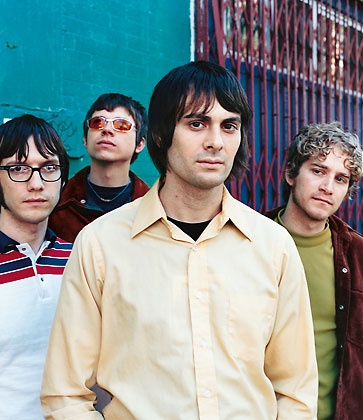
By 2002, however, Salerno’s zealous drive became a fatal flaw: Following a show by flagship Bobsled band the Waxwings (pictured), he penned a scathing letter to the Detroit retro-rockers that was later posted on the internet. Salerno criticized the group’s lack of preparation and singer/guitarist Dean Fertita’s failure to exude a rock-star persona: “Mick Jagger wouldn’t be hangin’ out in the club before HIS RECORD RELEASE show!” he wrote. “Bush leagues!!! Dean, you’re just fuckin’ hangin’ out by the fuckin’ entrance before the show, AND SOMETIMES ALONE! PATHETIC!!! A REAL rock ‘n’ roll band would have been backstage getting psyched up for the greatest show of their entire lives!!!”
“The band stopped trying,” says Salerno, who changed his name to Björn Forsell and ran the Giant Pecker label. “[Bobsled’s] philosophy was equal effort—which they gave on their first record, but then they lost perspective on the second. We guaranteed them—and all our artists—around $10,000 to $12,000 per record, and we ended up spending roughly $200,000 on each at the end. So when they stopped trying and copped the attitude that it was all owed to them, I got pissed. And rightfully so, I still believe.”
Bobsled never produced a hit album, and the label folded after the release of the Waxwings’ second album, 2002’s Shadows Of The Waxwings.
:: THE WAXWINGS Low To The Ground // Bobsled, 2000 The Waxwings apparently didn’t get the central-casting memo that required all Detroit bands to be immersed in the garage legacy of the Stooges and the MC5. The Byrds-via-R.E.M. jangle of the Waxwings’ debut was a refreshing change of pace from the carbon-monoxide-marinated angst of their Motor City peers.
Ever wonder what will happen during the last five minutes of late-night TV talk shows? They let musicians onstage! Here are tonight’s notable performers:
Late Show With David Letterman (CBS): Tinted Windows
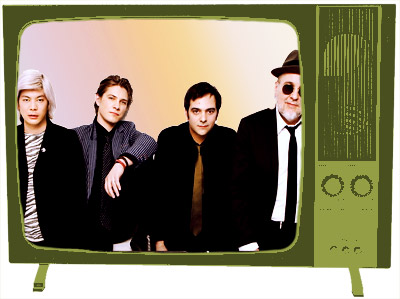
Last week we peered into the abyss of Bad Supergroup Ideas and we saw pestilence, Sammy Hagar, an undercooked burger from the Hard Rock Cafe, and it was all called Chickenfoot. This week, all supergroup wounds will be healed with Tinted Windows, the power-pop ensemble of Adam Schlesinger (Fountains Of Wayne), James Iha (Smashing Pumpkins), Bun E. Carlos (Cheap Trick) and Taylor Hanson (Hanson). The Hanson stumbling block—we’re way past that. The band’s self-titled album is everybody’s teenage dream. Tonight they’ll be performing “Kind Of A Girl.” Watch this space next week for a complete magnetmagazine.com takeover by the irrevocably cool Iha.
Outdated reference point or not, the anti-apathy sentiment on Superchunk‘s sophomore single “Slack Motherfucker” still seems characteristic of Mac McCaughan 20 years after he wrote it. The recently dormant Superchunk is moving again, and McCaughan also fills his time with Portastatic and co-ownership of Merge Records. As if that wasn’t enough to keep him busy, McCaughan is guest editing magnetmagazine.com this week.
McCaughan: How can music that reminds me so much of some other music still be so compelling? There’s certainly something comforting about the familiar strumming-on-top-of the-fuzzing and the cooing-over-the-buzzing, but if there aren’t songs underneath all that early-’90s throwback coating, who would take the time to dig them out? Well, there are songs and there’s also the comforting part and even if you still have your Black Tambourine and Pale Saints and Swirlies records you will be quite happy to add the Pains Of Being Pure At Heart to the shelf. I was impatient so I bought the CD, but I bet this rules on vinyl.
This roaring piece of bombastic death metal … OK, so maybe the new Moby song isn’t quite such a shocker. But “Shot In The Back Of The Head” lets you know, from the title to the last chords, that this track is a change of pace for Moby. Instrumental and eerie, “Shot” (the first single off Wait For Me, due June 30 on Mute) is less electronica, more melancholy pop. Be sure to check out the suitably creepy music video courtesy of David Lynch, who takes the song’s hypnotic glamour and turns it into a bizarre, animated world.
Corey duBrowa’s Over/Under entries on Radiohead and Elliott Smith prompted insightful reader comments such as “This list fails,” “[Given] the fact Smith’s gone, this seems disgraceful” and “Where’s the html tag for sarcasm?” DuBrowa once wrote a lengthy Seattle Weekly essay lauding Pavement’s 1992 debut LP, Slanted And Enchanted, which stands among the finest releases of the ‘90s and established Pavement as one of the definitive voices of its era. Listed here are his takes on the band’s most overrated work and its satchel of underrated gems, as well as a preemptive plea to fellow Portlander Stephen Malkmus to call him sometime for a Spanish coffee at Huber’s. The first one’s on us, dude.
:: The Five Most Overrated Pavement Songs 1. “Here” (1992) Back when Pavement was still little more than a two-person tape-splicing party focused on divining the previously unexplored terrain between the Fall, Swell Maps and ‘70s krautrock, Stockton, Calif., homeboys Stephen “S.M.” Malkmus and Scott “Spiral Stairs” Kannberg waged war on the music industry by burying their sloppily assembled and unapologetically Anglophilic cut-and-paste melodies under sedimentary layers of static and tape hiss. Slanted And Enchanted neatly captured the “preppy scumrock” aesthetic of the era; filed into the cracks somewhere between the faux sturm and fake drang were songs like “Here,” little mellow jazz docents that came on like Low b-sides, taken out for a ride in the country and ditched among the barnyard skeletons and rusted-out jalopies up on blocks. Sometime shortly thereafter, I saw alt-country artist Richard Buckner cover “Here” and thought his version a vast improvement on the original, which leads me to believe that while the Cult of Pavement holds this tune close to its heart, a different arrangement might have suited it better.
2. “Cut Your Hair” (1994) Yeah, it’s Pavement’s biggest “near-miss” and probably the only song recognizable to anyone outside of the band’s fanbase. Its diary-like story of Everyband—from the advert claiming “chops a must, no big hair” to its conclusion, staring down the barrel of something as ambitious/anti-slack as “attention and fame/career, career!”—is a good barometer for Pavement’s then-struggle to accept the possibility of success on anyone’s terms but its own. (It’s not for nothing that the group penned a poison-tipped screed called “Fame Throwa.”) Crooked Rain Crooked Rain eventually sold half a million copies; by way of extension/mathematical logic, “Cut Your Hair” served as the gateway to such numbers and is overrated as a result. And that probably makes me a snob.
3. “Range Life” (1994) By definition, two things will date your band/song faster than any other. One is a sound associated with a very specific time and place in history. (Hello, Thompson Twins; how do you do, Duran Duran?) The other are lyrics landlocked in a similar zone of specificity. (Anyone broken out their copy of Prince’s “Ronnie, Talk To Russia” lately?) With “Range Life,” Pavement fell prey to the latter by being dead on right about the targets in question: namely, grunge-era mainstays Smashing Pumpkins (“Nature kids/They don’t have no function”) and Stone Temple Pilots (“Elegant bachelors/They’re foxy to me/Are they foxy to you?”), the posers of their generation. As it happens, both bands and their kitchen-sink dramas (and ill-conceived reunion tours) have rendered them irrelevant in ways that Pavement will never remotely approach. But “Range Life” and its tired-sounding country-rock trappings never really transcend the limits of the song’s subject matter, making it something of a novelty item within the Pavement catalog. Wan And Withdrawn?
4. “Shady Lane” (1997) Malkmus once told me, “The Pavement guys could tell you that I had a more controlling mentality in the early days. We used to just ram songs through. Around the time of Crooked Rain and (1995’s) Wowee Zowee, there was no real group dynamic, per se; it was just, ‘This is a song, here’s how it goes, and it’s gonna be good.’” Trouser Press must’ve also sniffed this out, going one step further by calling Crooked Rain “a damn fine case for dictatorship.” The simple reality is that the longer Pavement continued, the more pressure Malkmus must have felt to get his four fellow fireants in a box and make magic, when all were involved in various side projects and life/family endeavors. “Shady Lane” was the single from 1997’s Brighten The Corners, which found the playful experimentation of Wowee Zowee mostly discarded in favor of producer Mitch Easter’s more focused, pop-leaning orientation. I found it to be Pavement’s first boring record, although the “Shady Lane” b-side (“Wanna Mess You Around”) is a hidden Pavement gem that could probably qualify as number six on the underrated list below. But taken in sum: underwhelming.
5. “Major Leagues” (1999) When Pavement’s swan song, Terror Twilight, came out in 1999, I reacted more negatively in a MAGNET review than I feel about the album today: “Is it really so hard to rock out for a minute without cross-referencing every other lick for the obscurants in the house? The cleverness is starting to envelop these guys like a noose around the neck.” (To which one reader replied, “It seems duBrowa cannot accept the inevitable evolution: Just because Pavement isn’t a new band doesn’t mean the quality of its music has declined. Maybe he should try to be less concerned with being cool and on the cutting edge than performing his job as an objective listener.” Some things never change, I guess.) On Pavement’s final tour in support of the record (a moment captured for posterity on the Slow Century DVD), Malkmus directs the audience’s attention to a pair of handcuffs dangling from his mic and explains wearily that the prop symbolizes “what it’s like to be in a band.” Clearly Malkmus had other things on his mind by then (a solo career right over the horizon), and “Major Leagues” (the single from Terror Twilight) features a lovely melody, a typically inscrutable lyric examining the dissolution of relationships both personal (“You kiss like a rock/But you know I need it, anyway”) and professional (“Angle for the ringside seats/When they fall, don’t blame me”). Too Eagles for my liking, but a good indicator of what lay ahead for Malkmus just over the next creative hill.
:: The Five Most Underrated Pavement Songs 1. “Debris Slide” (1990) I’m sure this pick will out me as a Luddite-leaning Pavement elitist, given that it’s taken from one of the band’s earliest EPs, the ridiculously influential Perfect Sound Forever. It was recorded in two days over Christmas break 1989 for chump change, back when Malkmus and Kannberg were essentially a college-rock art project with studio owner/hippie burnout Gary Young serving as “just push record”/beats-for-hire manservant. With its barely tuned guitars, Basement Tapes white-noise aesthetic and abstruse lyrical willfulness, “Debris Slide” treated early listeners to all of S.M. and Spiral Stairs’ influences in one tidy, perfectly distilled package: the Fall’s noisy inscrutability, the Pixies’ noisy melodicism (buried within the killer “ba ba ba da ba” chorus), Sonic Youth’s love of noisily offputting instrumental constructs. It’s not an easy listen, but it’s well worth the effort. If you pay close attention, you can see that other musicians were listening, too, given that Blur’s “Song 2” (e.g., “That Woo-Hoo song”) is almost directly descended from the lunging, falling-forward-in-a-hurry sound first heard here, a mere seven years earlier.
2. “Perfume-V” (1992) If you’re picking from among the embarrassment of riches that comprises Slanted And Enchanted, finding something “underrated” is actually a heavy-duty critical task: “Trigger Cut” and “Summer Babe” are both terrific pop songs masquerading as “alternative” (it’s the light dusting of lo-fi grime that seals the deal on Malkmus’ aural slight-of-hand) but have been heralded to the point of redundancy over the years. So it falls to a track like “Perfume-V” to leap to the front of the line. With Malkmus singing through his Jonny Greenwood-like curtain of hair and playing the living daylights out of whatever vintage Jazzmaster he was shredding to bits at the time, “Perfume-V” is two minutes of Lou Reed in a blender, spun violently on the “high” setting, and served as bloody as the contents of Dan Aykroyd’s Super Bass-o-Matic.
3. “Frontwards” (1992) In the wake of its debut, Pavement went from being a strictly underground phenomenon (a studio-only act championed largely by critics and fellow musicians who’d had their beat-up Slanted And Enchanted tapes for more than six months by the time it was officially released—perhaps one of the first examples of the music industry using intentional leaks) to more of a genuine buzz band. (Even so, sales of Slanted only tipped the 150,000-unit scale two years ago, making Pavement, perhaps, the Velvet Underground of its era.) “Frontwards” came from the group’s next move—the Watery, Domestic EP—and in many ways perfectly encapsulates the Pavement shtick: slyly competent musicianship (just dig those synched guitar/drum 16th notes on the bridge), fractured melodies made more evident by slightly improved recording techniques and lyrics that boasted in a manner more befitting the hip-hop crowd than the slack generation who adored the band (“I’ve got style, miles and miles/So much style that it’s wasted”). Perfect in every way.
4. “Gold Soundz” (1994) Crooked Rain CrookedRain may have escorted Pavement to the indie-rock debutante ball—Malkmus and Kannberg added a second percussionist/Bez figure (Bob Nastanovich), a bass player (Mark Ibold) and a real drummer (Nastanovich friend Steve West)—but for all of its sonic improvements and Lollapalooza-baiting, it’s still the work of five pop-culture assassins taking deadly, precise aim at the mainstream. “Gold Soundz” demonstrated that Malkmus could retain his barbed, goofy sense of humor (“Is it a crisis or a boring change?/I keep my affect to yourself … And they’re coming to the chorus now”) without changing his pitch-perfect “nothin’ matters and what if it did?” vocals. A truly golden melody woven throughout the song nevertheless failed to follow up on the radio success of “Cut Your Hair,” ensuring that Pavement would retreat to the safety of its underground culture bunker just in time for the alt-rock masses to move along to the next batch of would-be 15-minute heroes.
5. “Gangsters & Pranksters” (1995) An outtake from the Wowee Zowee sessions, this track proved that incrementally better recording conditions (Memphis’ Easley Studios), nominally improved musical technique and expanded creative range (the album’s roving-eye/sprawling ambition ranged from Pink Floyd-like pastoral jams to punk-flavored, industry-skewering sendups like “Brinx Job” and “Serpentine Pad”) still couldn’t smooth out Pavement’s deliberately rough edges, evidently fueled by a massive amount of marijuana consumption, according to interviews the band gave at the time. “Gangsters & Pranksters” features what I believe to be the best Malkmus lyric ever: “Gangsters treat their ladies right, and pranksters curse their chickless plight/‘I’ve got all of this Harvard LSD, why won’t anybody fuck me?’” All wrapped around a melody as strong as anything in the Pavement catalog. You can thank me later.





 Ever wonder what will happen during the last five minutes of late-night TV talk shows? They let musicians onstage! Here are tonight’s notable performers:
 This roaring piece of bombastic death metal … OK, so maybe the new