

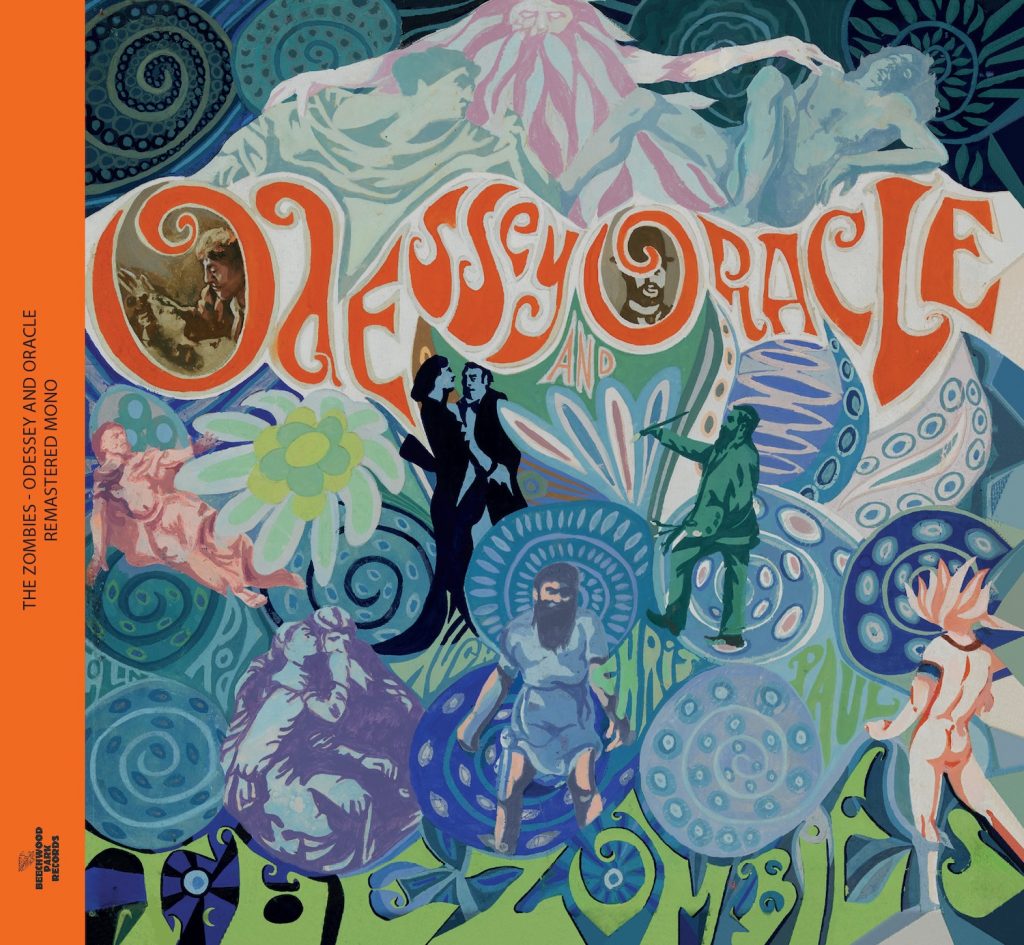
Odessey And Oracle is one of the ’60s era’s great last gasps, its final track, “Time Of The Season,” a darkly exotic celebration of hippie culture that also served as a timely sendoff for the naivete that came with it. Fittingly, Odessey And Oracle was also the last we’d hear from the Zombies. Self-produced quickly and cheaply by the band under the (supposed) onus of an impending breakup, the album was released in England in April 1968, almost a year after the Beatles’ Sgt. Pepper’s Lonely Hearts Club Band. Both classics were largely recorded at what’s now Abbey Road Studios, though Odessey And Oracle probably wouldn’t have made it to the United States if it weren’t for the advocacy of CBS staff producer Al Kooper.
Out now, Odessey And Oracle Mono Remastered is the first of four Zombies reissues coming from the Beechwood Park imprint. Its release coincides with Hung Up On A Dream, a new documentary on the band available now on most streaming platforms. Of the few Odessey And Oracle revisits over the years, this is the most significant, as it marks the first time the original mono mix has appeared on LP since 1968. Under pressure from their label, primary songwriters and co-producers Rod Argent and Chris White signed off on a hasty stereo remix that sacrificed key elements from the mono recording—most notably the horn parts in “This Will Be Our Year.”
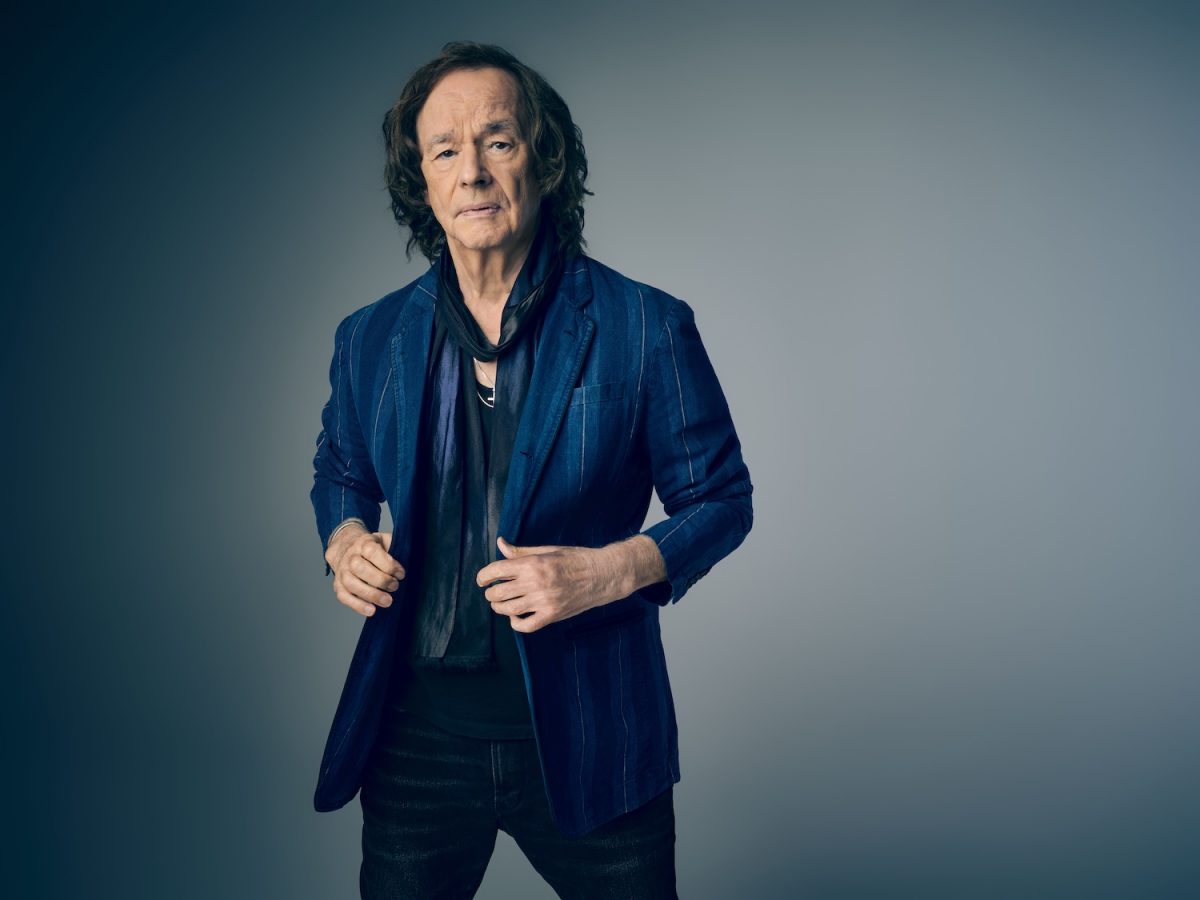
Listening to the reissue almost 60 years later, Odessey And Oracle sounds like it could’ve been the work of a few different bands. Its array of styles and moods remains a stunning testament to a group at the height of their abilities, unwilling to let time or money constraints spoil their grand exit.
Holding it all together are the empathetic lead vocals of Colin Blunstone, who recently chatted with MAGNET’s Hobart Rowland via Zoom from his home in Hatfield, England.
Would you shed a bit more light on the significance of having this mono reissue of Odessey And Oracle out there after all these years?
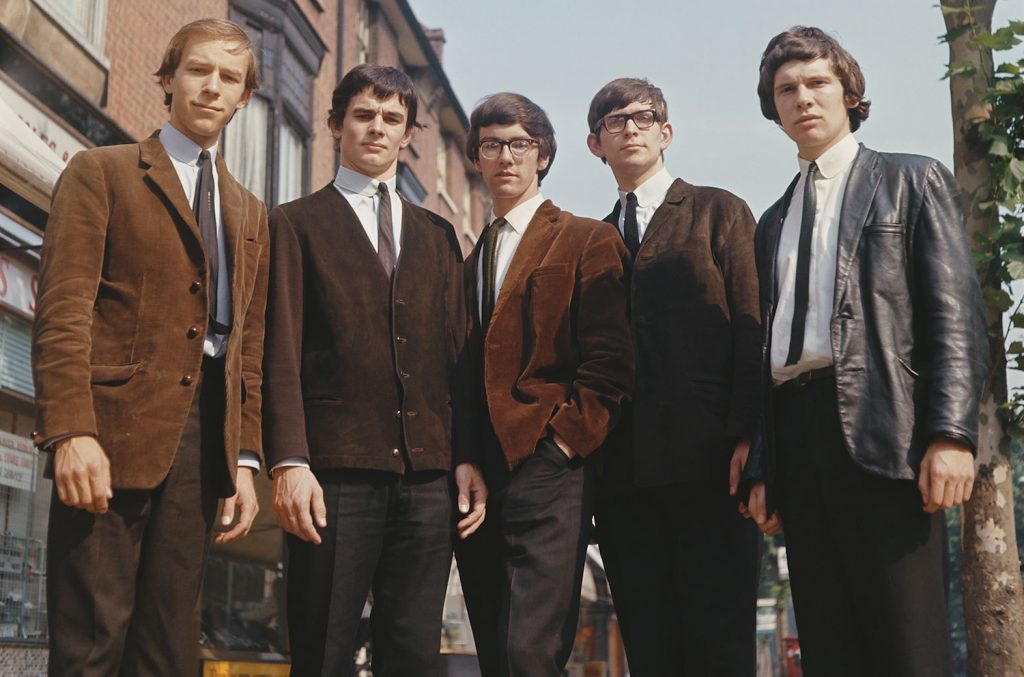
I haven’t seen it or heard the new mix myself, so it’s a slightly tricky situation. As far as I know, no one else is doing interviews for this release. Sadly, (guitarist) Paul Atkinson died. (Drummer) Hugh (Grundy) is living on an island off Spain, so I don’t think he does many interviews. And both Rod and Chris have had strokes—although they’re fine. So that leaves one person, and it’s me.
The whole thing was recorded in mono. Then, when Rod and Chris took the album to CBS, they said, “Stereo is happening now.” There wasn’t a budget to remix it in stereo, so they did this sort of simulated stereo mix. I wasn’t part of this operation, so I can’t really go into detail. But what you’re hearing is, I think, them trying to give you some kind of stereo representation, but it’s not real stereo. It’s such a long time ago … 50 or 60 years ago … so I’m bluffing a little bit here.
I know Rod and Chris had to pay for [the stereo remix] themselves. They went back into Abbey Road and tried to get a rough approximation of stereo, which probably led to the original records sounding somewhere in between. I’ve had copies of Odessey And Oracle that sound a little strange to me … like the lead vocal is coming up from the side. It doesn’t sound how it should be. But I’ve never really talked about it because I know it’s a slightly delicate area. I don’t listen to it a lot. … I don’t listen to anything that I’ve done that much, to be honest. But when I have listened to it, I’ve felt quite uncomfortable—though I’ve never really talked about it before. As I said, I didn’t feel it was my place to say anything.
What are some of your most vivid memories of the recording process?
Well, the Beatles had just been in. They finished a couple of days before we went in. There were no eight-track machines in the U.K., so Abbey Road improvised a situation where they put two four-track machines together—and with the process they made up, you lost one track. So, in effect, you were recording on seven tracks. We inherited this system in the same way we inherited the two main engineers the Beatles worked with it: Jeff Emerick, the main one, and Peter Vince.
But it was the other way around with us: Peter did most of Odessey And Oracle, and Jeff did some of it. Jeff recorded “Time Of The Season,” though I don’t know if he mixed it. If you listen to the fade out, it’s actually two Hammond organs Rod’s playing … two separate tracks. When Rod was listening to the track, he thought there was a place for this clapping, and we just did it in one pass. It’s so funny how these things happened spontaneously. And then afterwards, of course, it’s a huge hit.
The Beatles were mostly in Studio Two, which is kind of tucked away a bit in the middle of the building. We were in Studio Three, and there was a block of flats next door. The soundproofing wasn’t that good, so we had to stop at 10 p.m. They were quite vigorous in the timings. It was 10 a.m. to 1 p.m., and you had a chance to have lunch. Then it was 2 p.m. to 5 p.m. and 7 p.m. to 10 p.m. The Beatles started to change all that. But at the time, it was quite strict. The engineers all wore coats and ties. The engineers and technical staff wore long, white coats and coats and ties. The guys who just carried equipment around had long, brown coats. It was like being in a laboratory.
“Changes” was the only track we all sang harmonies on. All five of us were singing—and to get our notes, we were standing by the piano. The red light was on, and we were actually singing the five-part harmonies, and two of the guys in the long, brown coats came in and took the piano out of the studio. They just took it while we were singing. It was all business … all business. And the funny thing was, we finished that take. No one stopped while these guys came in and took the piano away. The piano had to go. I don’t know where it was going; I can’t imagine where it was going.
What was your budget like?
Very, very tight. CBS gave us a thousand pounds to finish the album, so we had to record really quickly. We rehearsed extensively before we went in. We hired a sort of community center in the little village in Hertfordshire, and we just rehearsed and rehearsed. We knew the songs, we knew the arrangements, we knew the keys. We knew exactly what we were going to do—except for “Time Of The Season,” because that was the last song written.
Funny that it’s the last song on the LP, too.
It’s weird, isn’t it? I’ve told this story a million times, but I didn’t really know the song that well. Rod was coaching me from the control room, saying, “Can you sing that phrase on the beat? Can you sing that? Can you push that word?” I knew we were running out of studio time, and unfortunately, I had a big clock and a red light right in front of me. I think it was an afternoon session, so it was coming up on 5 p.m. I knew we had to stop, and I was getting more and more fraught to cut to the chase. We’re going at one another, hammer and tongs, in between takes. And then I had to come back to, “It’s the time of the season for loving,” and there was no love lost at that point … But only until the end of the session, and then everything was forgotten. It was fine.
The sheer volume of ideas on Odyssey And Oracle is amazing.
Our influences were so widespread, from classical music to modern jazz to the blues, rhythm ’n’ blues, rock ’n’ roll and pop music. I think that helped us have a unique sound. That was to our advantage, of course. But it also was to our disadvantage because the music industry loves to categorize music or bands or whatever. And sometimes we fell into the cracks. Were we a psychedelic band? Were we a rock ’n’ roll band? Were we rhythm ’n’ blues? Were we this? I think people found it hard to place us.
My feeling about the album was that it was the best we could possibly do at that time. I think that’s particularly true of Rod and Chris’ songwriting. Everything just came together. There’s not a weak track. On the second side of Odessey And Oracle, there’s a song called “Butcher’s Tale” … with flies coming down on someone, dead bodies on a wire. When they first played it for me, I said to them, “I can’t see how this song is going to fit on this album.” So they said, “OK, don’t worry. Chris will sing it.” There was no discussion. You can’t imagine anyone else singing it now.
We were never trying to join a trend or anything—it never crossed our minds to do that. In the end, I wonder if that’s part of the reason why the album continues to have staying power. It shows up on movie soundtracks and TV shows. There’s just so much variety. It’s really like you could pick and choose the mood.
Well, it was supposed to be your defining statement, correct?
I’ve heard Rod saying in interviews that he knew the band was coming to an end. But I would’ve found it hard to totally commit to a project if I knew it was the end. I thought the band was going to go on. I’d be curious to know what we might have done next. But, of course, we’ll never know.