
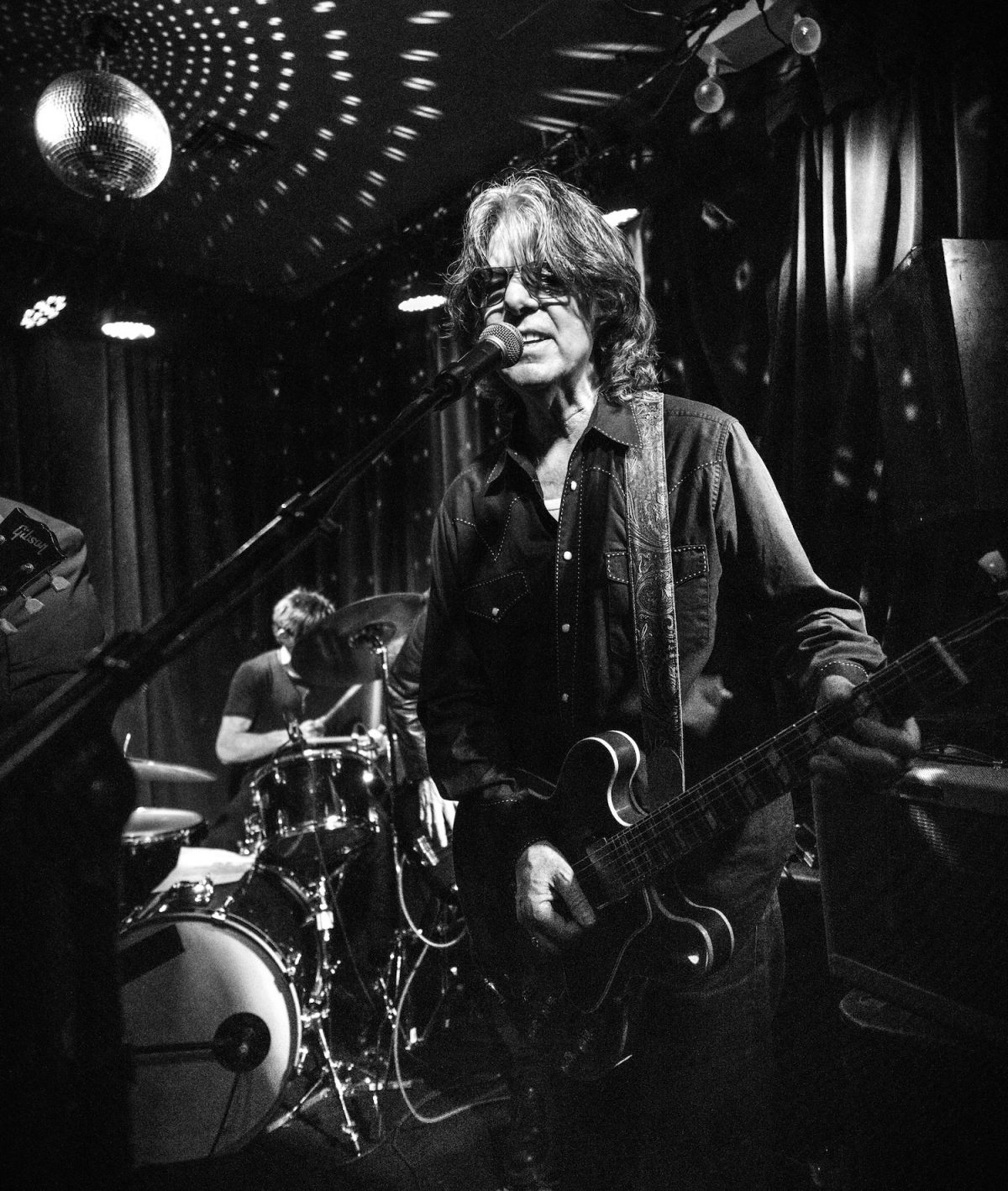

Mostly by virtue of their lack of pretension, the Yayhoos’ alt-country supergroup status never quite resonated with the general public over their 10-year, two-album run from the mid-’90s through early 2000s. And with a lineup this stellar, that’s a damn shame. Dan Baird led roots-rock pioneers the Georgia Satellites; drummer Terry Anderson is best known for holding it down with North Carolina favorites the Woods; and bassist Keith Christopher has played with Billy Joe Shaver, Paul Westerberg and Todd Snider. Guitarist Eric “Roscoe” Ambel, meanwhile, has had numerous associations with Triple-A greatness, not least the Del-Lords, Steve Earle and the Bottle Rockets. Together, they certainly weren’t reinventing the wheel, but they did lock into a glorious synergistic groove that channeled the Stones, the Faces and the Mats—often all at once.
Bloodshot has just reissued the band’s two LPs: 2001’s Fear Not The Obvious and 2006’s more-produced Put The Hammer Down. Coming up on 20 years since their breakup, MAGNET’s Hobart Rowland gets the story from Ambel on the Yayhoos’ well-lubricated tussle with greatness.
How did the Yayhoos go from a casual collective to a semi-legit enterprise?
Initially, the three of us had records coming out, and we all just decided, “Well, let’s get together.” So we went out and supported all our records together. That was the birth of the thing—and we enjoyed it. In the early years of my (now-defunct New York City) bar, the Lakeside Lounge, the Yayhoos were playing, and there was a record business guy named Howard Thompson. He’d signed the Georgia Satellites to Elektra. He wasn’t really into the Yayhoos. In the record business at that time, having multiple singers was a thing they just couldn’t figure out. Conventional wisdom was against it, you know?
But because of his history with Dan, Howard was like, “Well, I’ll give you guys a development deal. Here’s five grand. Go to a studio and record three songs, and then we’ll think about it.” I knew Howard wasn’t going to sign the band. My idea was: Let’s take the five grand and have a songwriting week.
Your debut couldn’t have been recorded under looser circumstances. Tell us about that.
We went to Terry’s dad’s house outside Raleigh, (N.C.). It was sort of like a garage in the barn. It was done with an eight-track ADAT and five microphones over five days. We wrote the songs, recorded the thing, and that was it. We mixed it a couple of times. I’m not a professional recording engineer … or I wasn’t back then. It was recorded in 1997, so it kind of gestated for a while. It was just a tape that made the rounds—like an underground sort of bootleg thing. Bloodshot said, “Hey, we’ll put it out.” And so that’s how it became a CD—and it was released in 2001.
This is 2001, and I had the guys fly up. We had a little two-week tour booked around the CMJ festival, and the guys came into town on September 10. On September 11, it was the most beautiful morning—and then, all of a sudden, everything changed. That day, we were supposed to have a session with the famous photographer Ebet Roberts at my recording studio in Williamsburg, so we made our way out there. We were upstairs watching the buildings come down, you know.
So we we’re stuck in town, and all the gigs had been cancelled. We were booked at Brownies, and we decided we’d play. Everybody was happy to come out. It wasn’t political or anything. It was just about people getting together and having a good time. After the gig, we took all the money and walked over to the local firehouse and gave it to them.

Did you actually tour after that?
Yeah. I had a Suburban at the time—a maroon one. I always called it the Tony Soprano because it was just like his on the show. All the bridges and roads were blocked off. But we were four white guys in our 40s in an unmarked Suburban, so we got waved through everywhere we went. The next thing you know, we’re playing in D.C., and it’s the same thing—we get waved through. Every time we’d check into a hotel on our little tour, I’d hand them my ID, and then they’d look at the New York address and look at me like, “Oh my God.”
Our job was to spread the joy and have a good time with the people who showed up. That was our thing. I was also touring and recording with Steve Earle at the time, so this was like everyone’s favorite second band. Dan had his own thing. Terry continued to put out records. So we’d do Yayhoos songs but also play songs off our solo records. In Europe, we played these gigs in Spain where the whole audience was shouting the lyrics back at us. We couldn’t fuckin’ believe it.
Then there was a five-year gap between albums. What was the impetus for Put The Hammer Down?
I had Cowboy Technical Services, which opened at the end of 1999. So when it was time to record again, it was like, “Hey, I got a real studio. Let’s get together, and we’ll make a record in 24 tracks.” We’d asked Bloodshot for money, because they put out the first record. Several songs were licensed to movies, so they way more than made their money back. We sent them this little memo saying, “OK, here’s what we’d like to make the second record.” And their response was like, “We’ve received your hostage demands, and we’re going to have to say no.”
So it was like, “We’ll do the record and press them up and sell them.” The Yayhoos’ sort of collaboration was almost like a construction site. Nobody was too good to push the wheelbarrow.
And now Bloodshot has reissued both LPs.
A couple years ago, the rights to both records reverted back to me. When Exceleration Music acquired Bloodshot (in 2021), they made good on all the money the label owed to the artists. And then they said, “You know, we’d really like to have both of these records.” Now I’m looking at these two vinyl records, and this is something I thought I’d never have.
—photo by Johan Vipper (Ambel)