
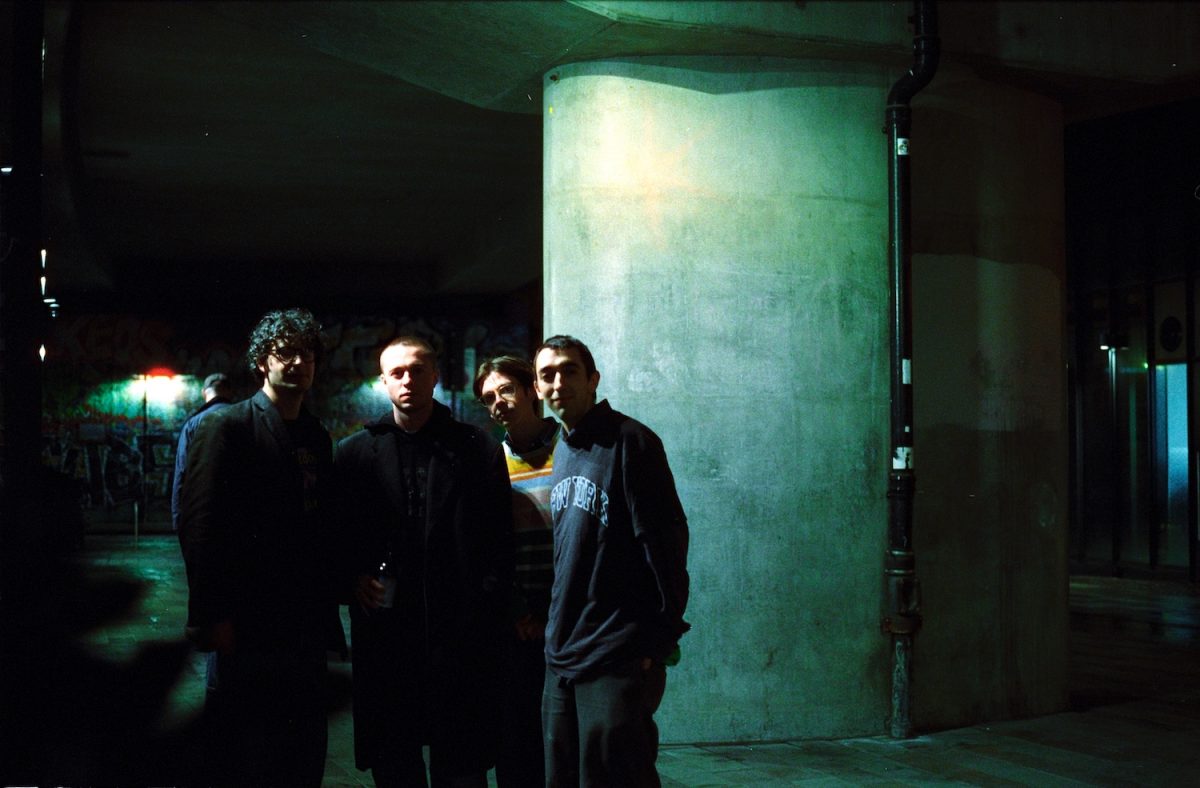
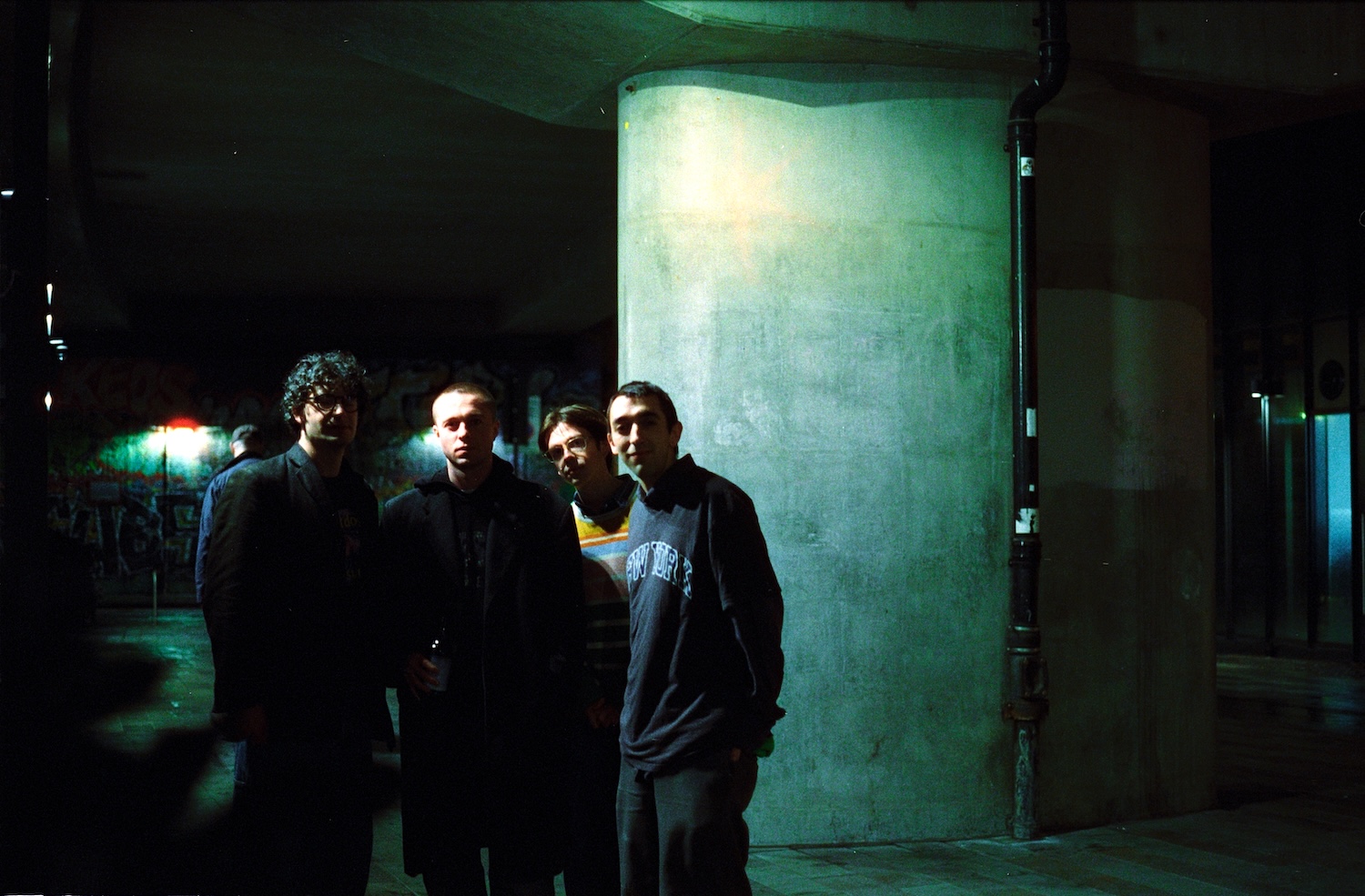
For the better part of a decade, London’s deathcrash has specialized in a post-rock eco-system that moves like a dormant weather system capable of sudden overwhelming force. The quartet’s third album, Somersaults (Untitled), seems to mark some sort of a turning point—or at least an imaginary chronological line in the sand. Written largely on the road while deathcrash opened for the Jesus And Mary Chain and Have A Nice Life, the album is the sound of a band learning to fill bigger rooms without sacrificing intimacy. Tracked with producer Stanley Gravett at London’s Holy Mountain Studios and Studio Black Box in France’s Loire Valley, the songs favor instinct over perfectionism, a shift that nudges the songwriting toward clarity and melody, with a fresh emphasis on vocals. The result remains aligned with deathcrash’s slowcore heroes—only with a subtle, subversive lift.
MAGNET’s Hobart Rowland takes a partial accounting of the group’s recent evolution with singer/guitarist Tiernan Banks.
What did you learn during your extensive touring for your last LP that carried over when it came time to record Somersaults?
A lot of our headline shows involved playing in unusual spaces and creating an intense, dark atmosphere. Our support tour with the Jesus And Mary Chain and Have A Nice Life opened our eyes to playing bigger venues and how you can write and perform tracks to suit those spaces. A lot of that’s confidence, both in yourself and in the listener. We used to really emphasize the tension/release and loud/quiet dynamic in our shows, but sometimes that can feel like a gimmick. Playing confidently can bring just as much emotional power, letting the music speak for itself.
What led to the heavier emphasis on vocals this time around?
Playing those bigger shows also inspired us to write a more vocal-forward album. Watching how those bands and crowds created a whole show together—where it feels like everyone participates—and the kind of euphoria that can generate showed us how our previous live shows had isolated the band from the audience somewhat. In a roundabout way, that influenced the new record, which features more vocals, group singing from the band and choruses that people might actually sing along to. It came about naturally. We’ve been doing this for a long time now, so maybe it came from increased confidence in ourselves or feeling like we had less to hide. Really good, simple, vocal-led songs are better—and harder—to write, and we wanted a new challenge.
From a creative standpoint, what was the biggest breakthrough for the band while working on Somersaults?
We wanted to write songs that were simpler and more direct. As a result, we took more time to write them and had lots of songs that never made the album. There was more editing and more cutting ideas that didn’t quite work.
How did the studio setting and recording process lend themselves to what you were trying to accomplish on this album?
The studio always plays a role, whether consciously or not. It can reflect your mindset going into the recording as much as shape it while you’re there. We recorded most of this album over four days at an amazing studio in the Loire Valley of France. The studio itself and the area were beautiful, and the whole vibe of the trip was a lot of fun. The shorter time span—four days to record more than 10 tracks—reflected our confidence in the shape of the songs we already had. It also helpfully cut out any time for overthinking. The atmosphere contributed to the brighter feel of the record. It’s hard to feel as bleak when you’re surrounded by cheese, wine and so much awesome musical gear.
Are you comfortable with your assumed role as “caretakers of Duster, Low, Codeine’s slowcore lineage”? Seems like a heavy load to carry.
In many ways, that’s very high praise—and it’s amazing to be compared to those bands. They were obviously very important for us when we started making music together and have seeped deep into our musical DNA. Playing with Codeine was a great moment for us. They were so nice and supportive, and they sounded incredible. Being part of those nights, both as performers and audience members, was a real high point for all of us. It’s always hard when you’re making music influenced by bands from a different era. We’ve always strived to make original work that draws from our influences and makes something new, as opposed to just rehashing old ideas. It’s sometimes hard to get that balance right.
Slowcore as a genre has had a proper revival in the time that we’ve been a band. None of us saw that coming, but clearly everyone else was digging through those albums at the same time we were. But while the genre is back in a big way, we don’t think we’re as tied to it as we used to be. We’re certainly not purists. A lot of the influences on the new album that we consciously discussed were more mainstream indie and emo bands—some of them even current. But while we didn’t set out to make another slowcore record, it’s hard to escape a style you’ve built from playing together for so long. We really did try to play faster this time … We really did. Some things never change.
See deathcrash live.