
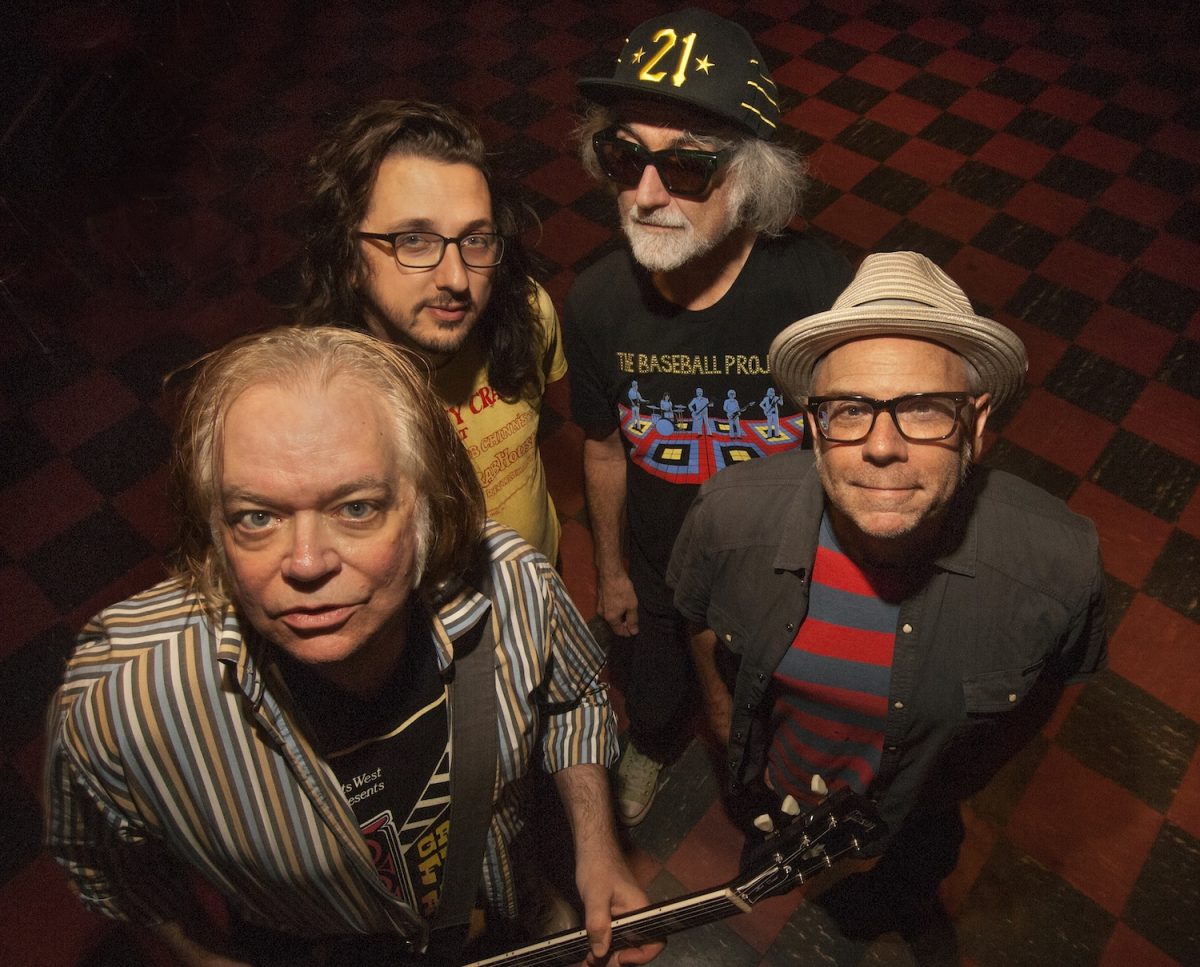
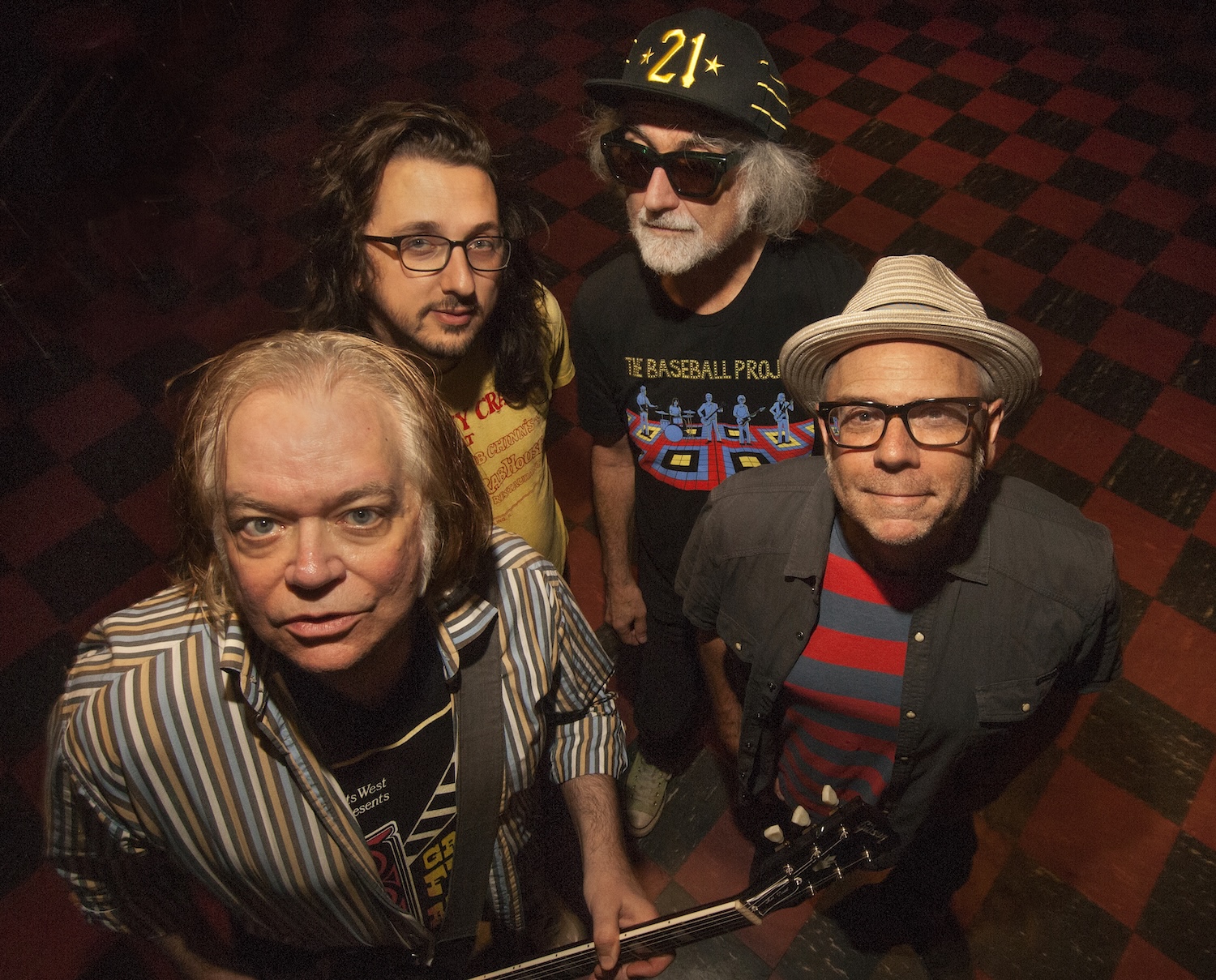
The Young Fresh Fellows’ Loft (Yep Roc) was recorded, fittingly, at Wilco’s Chicago loft during a day off on the band’s 2024 tour celebrating the 40th anniversary of its debut LP, The Fabulous Sound Of The Pacific Northwest. Featuring a long list of guests—including Neko Case (who sings lead on “Destination”), Peter Buck and Wilco’s John Stirratt—Loft was released as a “live in studio” affair and initially sold only at shows in Portland and Seattle in April 2025.
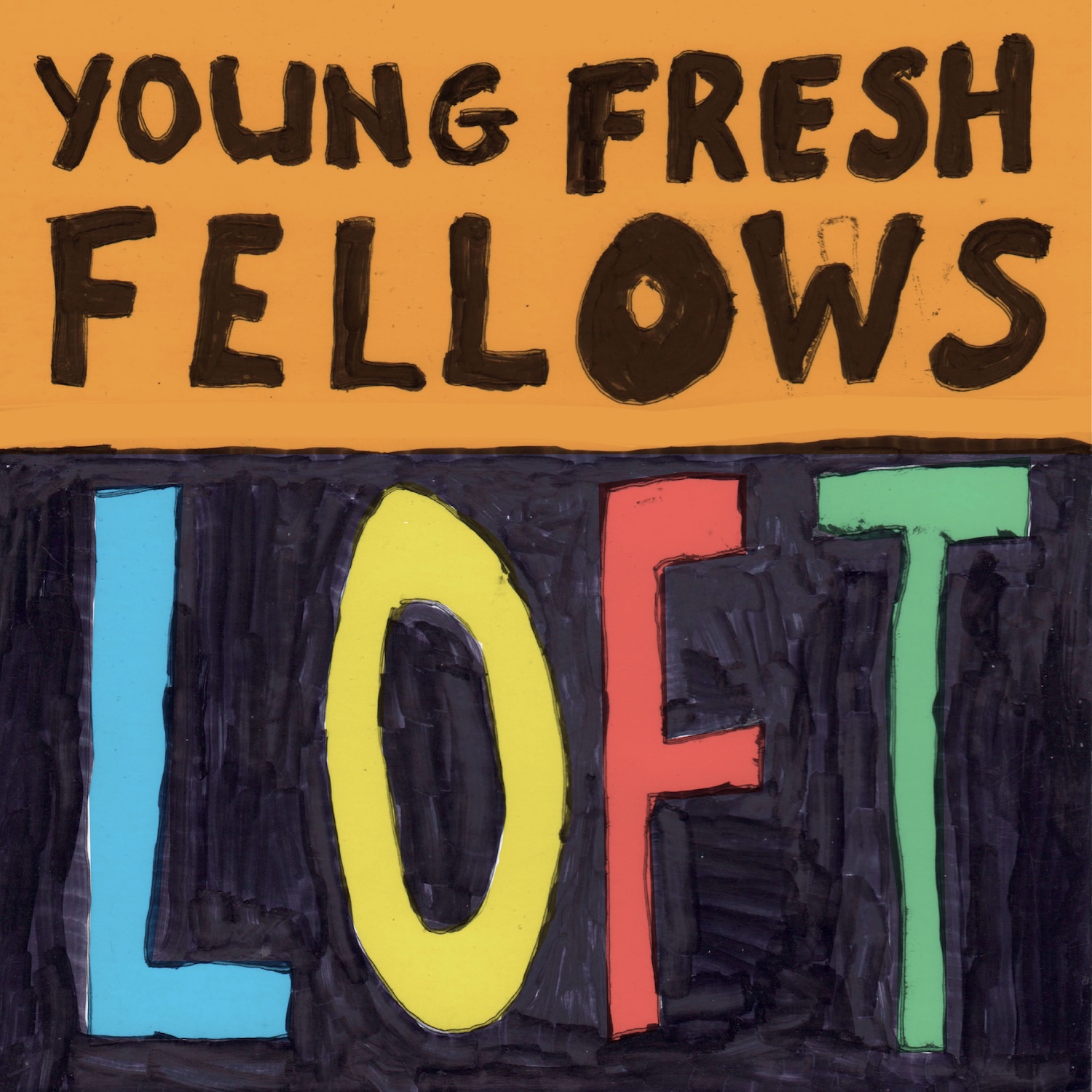
After a few tweaks and overdubs, a fleshed-out version of Loft was then a Record Store Day option in November but is now available everywhere, with cover art that’s an homage to YFF’s Topsy Turvy, which turned 40 last year. Somehow, all of these cross-album celebrations fall in line with the Fellows’ haphazard-yet-brilliant career. Loft, it should be mentioned, is just as great as anything else they’ve done.
MAGNET’s Matt Hickey asked indefatigable YFF leader Scott McCaughey a few questions about Loft and how he’s doing in general; McCaughey suffered a debilitating stroke in 2017 but carries on as a rock ’n’ roll lifer. McCaughey was also nice enough to give us a track-by-track breakdown of Loft.
Here’s the most important question: How are you feeling these days? Do you have any residual effects from the stroke?
I mean, so many people are rooting for me, and that’s so damn cool. I do have a lot of residual effects, but people don’t seem to notice, which is nice, I guess. Besides annoying physical stuff—weakness on my right side, which really messes up my ability to do any fast or coordinated strumming—the worst thing remains difficulty remembering lyrics. I hate using a music stand, but sometimes I can’t avoid it. That being said, I’m kind of tired of using the stroke as an excuse. I mean, I’m still making a ton of music, so what do I have to complain about? Nothing!
I interviewed you in 2009 and reminded you that when we talked in 2003 you said I caught you at the one time you thought Young Fresh Fellows might break up. You responded that breaking up would be too much work. Given the band has been active since, can we assume this is still your stance?
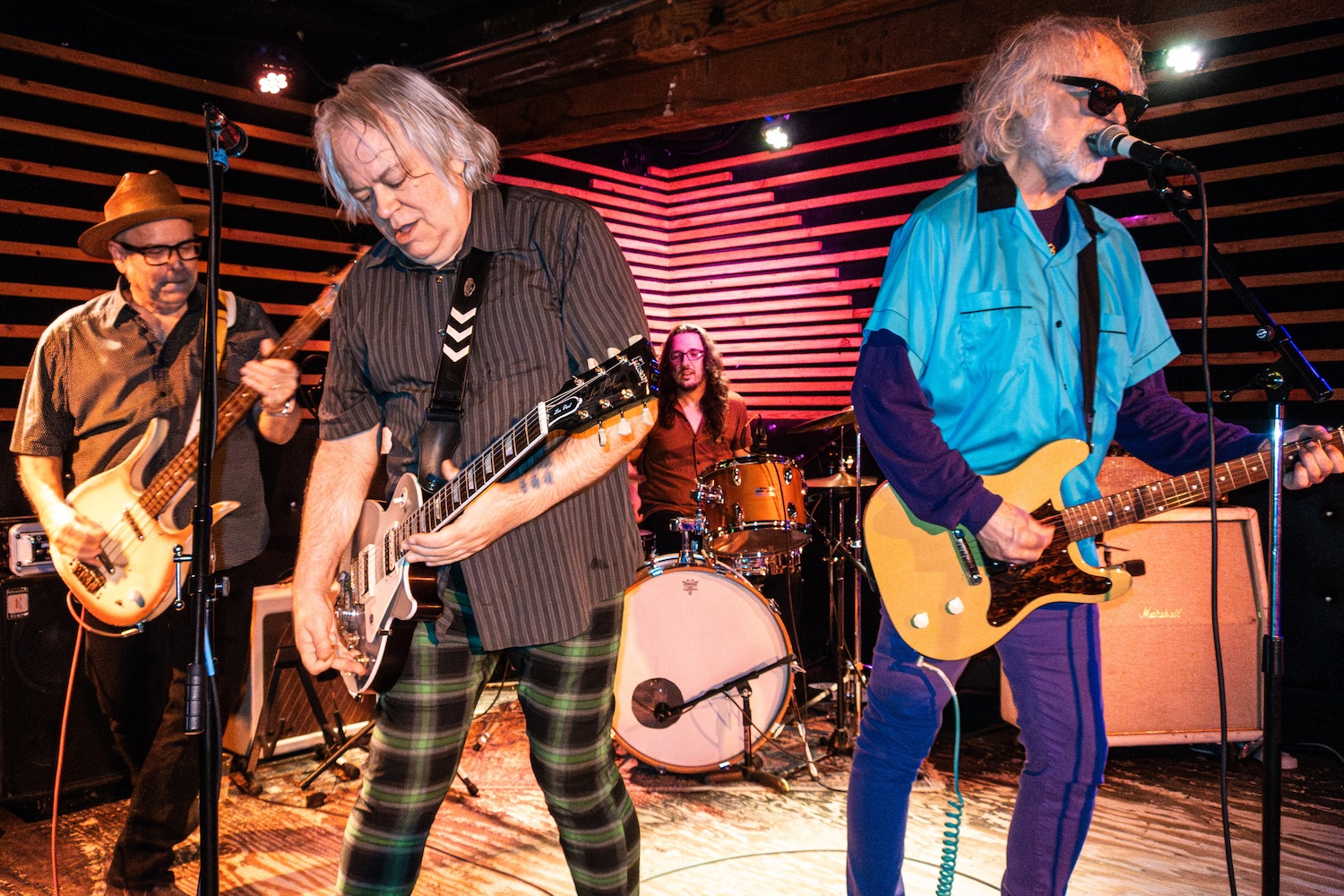
Yes! Another breakup moment came and passed in 2024 when our drummer Tad (Hutchinson) retired from rock ’n’ roll. It was hard to imagine the YFF without our propulsive madman behind us, not to mention his genius, half-baked brainstorms for songs, dance steps and stage outfits. I think he knew that we had a potential perfect “new Tad” in the wings in John Perrin, who was literally raised on our music—thanks to his dad, Dave—and was primed for onstage insanity by 10 years in NRBQ. So on we go at our same sporadic no-plan pace.
How does a band record an entire LP in one day and have it turn out so good?
Man, I don’t know! Apparently, it’s using this recipe of success: 1) Fly to Chicago, play four nights in a row, often two sets; 2) show up with no songs; 3) make sure two band members are very ill and the singer’s voice is thrashed; and 4) this is the key: Go to Wilco’s Loft, use only their gear/instruments, use their most excellent engineer/producer Tom Schick—with Mark Greenberg as right hand—dig up songs you barely knew existed and, after seven or eight hours of learn-song/play-song/forget-song, just as three members are ready to stage a mutiny, say, “Well done, everybody!”
Loft was imagined as a sort of celebration of the 40th anniversary of the band’s debut. Looking back, how do you contemplate or consider this passage of time and the band’s accomplishments?
It’s a weird litany: a string of 40th anniversaries of our classic records. 2024 was Fab Sounds, Topsy Turvy was last year, and next year is The Men Who Loved Music. I still like playing all those songs, and it feels amazing to have a huge ongoing body of music to feed on. I wouldn’t like it much if we weren’t doing new records, too. At the same time, who are we doing them for? That’s easy—it’s always been for us. Not because we’re narcissists—we’re not—but just because, for us, making music is life.
On “Bleed Out,” the last song on the Fellows’ 2020 record Toxic Youth, you sang, “Gave my body and my soul/When I take the final knife/I will bleed out rock ’n’ roll.” This isn’t really a question, but I hope this isn’t for a while, and we all thank you for your service.
[Laughs] I like that: “Thank you for your service.” OK, I guess I’ll take back what I said before and say that’s why we do it!
Scott McCaughey Goes Track By Track On Loft
1) “Overture”
“I watch a lot of Turner Classic Movies. Probably too much. One of the things I’ve always loved is that old-fashioned idea of an overture—this moment before the movie really starts, when you’re settling in and letting your brain slow down. Once we decided this version of Loft could be something different than the live-in-the-room record, I thought, why not lean into that? The ‘Overture’ is made up of little pieces stitched together, some recorded properly, some recorded badly on my out-of-tune piano, some sent in long distance. It’s messy and kind of loose, but I like that. On vinyl, it’s shorter; on the CD, it goes on longer because why not? I love the idea of making people wait just a little before the rock ’n’ roll starts.”
2) “I’m A Prison”
“This one existed in a few different states almost immediately. The version on the live record is raw and super fuzzy—me basically leaning on one sound and letting it rip. When we revisited it, (guitarist) Kurt (Bloch) completely rebuilt the guitars. I don’t even think my original guitar is on the finished version anymore. He cleaned it up, added new rhythm parts, put a solo on it, and suddenly it felt more like a classic punk song than the blown-out thing we captured that day. I also rewrote the lyrics—and then rewrote them again. There are now three different sets of words for this song depending on which format you have. That wasn’t some grand concept; I just figured if I’m going to sing it again, I might as well change it.”
3) “Killing Time In Union Square”
“This is one I’d been saving for a long time. I wrote it years ago and always knew it had to be a Fellows song, but it kept missing its moment. It was supposed to be on Toxic Youth and just didn’t happen. So when we were scrambling for songs before the Loft session, this was one I pulled out of the vault. It felt good to finally let it land somewhere. That’s something I’ve learned over time: If a song sticks around long enough without being recorded, it probably wants a specific home. This turned out to be the right one.”
4) “Three Gasconading Saints”
“I honestly don’t know where that phrase came from. I wrote a poem called ‘The Three Gasconading Saints’ years ago and loved the sound of it before I even knew what ‘gasconading’ meant. Later I found out it means ‘boastful,’ which made me tweak the lyrics a bit so it made some kind of sense—but not too much sense. Jenny Conlee (Decemberists) sang on this and played accordion, which I absolutely love. There’s something really fun about asking someone to sing words that don’t fully explain themselves. You just have to commit and let the mystery be part of it.”
5) “Before The Deluge”
“This might be my favorite song on the record. When we recorded it live at the Loft, it was incredibly simple and really beautiful—just the four of us playing very restrained parts. I didn’t fully realize how personal the song was until I heard it back later. It’s not entirely autobiographical, but it’s closer than a lot of things I write. Adding violin and piano later was tricky because I loved the original version so much. I probably went too far at first, layering everything on, and Kurt was right when he said it needed to breathe more. What’s left feels like a good balance between intimacy and scale.”
6) “Death Becomes Us”
“This is one of the songs where having guests really opened things up. Jonathan Segel (Camper Van Beethoven) sent in both electric and acoustic violin parts, and Morgan Fisher (Mott The Hoople) added keyboards, and at one point I wanted all of it everywhere. Kurt did a great job thinning things out so the song didn’t collapse under its own weight. John Stirratt also sang on this when he was in town, which felt like a full-circle moment—Wilco, the Loft, all of it coming back around. Even with all those elements, the song still feels grounded in that original session, which was important to me.”
7) “Entr’acte”
“Once you decide you’re doing an overture, you kind of have to do an entr’acte, too. I love that word. It sounds fancy and slightly ridiculous at the same time. This piece is actually built around one of Jonathan Segel’s violin parts from another song, repurposed and recontextualized. He probably didn’t even know he played on three tracks until later. That kind of cut-and-paste approach happens a lot now. I like treating recordings as raw material that can be reshaped instead of something sacred.”
8) “Books Don’t Burn Twice”
“This one came at the very end of the Loft session. Kurt was wiped out, (bassist) Jim (Sangster) wasn’t feeling great, and it felt like we might be done. Then I started playing it on piano with John, and Jim rallied and joined in. It was always meant to be a piano ballad, very Mott The Hoople in spirit. The fact that it ended up being recorded almost as an afterthought makes it even sweeter to me. Sometimes the quiet songs arrive when everyone’s defenses are down.”
9) “Destination” (Featuring Neko Case)
“Neko originally came over to sing harmonies. We worked on it for a couple of hours, and she sang all the way through the song. Later, when I was mixing, I muted my vocal just to see what would happen—and suddenly the song made more sense. It wasn’t a plan. It didn’t feel like a ‘feature.’ It just sounded better. Eventually we put my voice back in on the choruses, but she’s clearly the lead. It’s probably the first official Fellows song where that’s the case, and I’m totally fine with that.”
10) “Whispering Hole”
“This one barely existed before the Loft session. I played it for the band at a soundcheck in Wisconsin a couple days earlier, and then we recorded it without really knowing where it was going to go. (Los Lobos’) Steve Berlin’s baritone sax gave it this earthy, grounded feel that I love. It’s one of those songs that benefited from not being overthought. We just trusted it and let it happen.”
11) “1987”
“This song pulls from a lot of old notebooks and half-remembered ideas. I don’t always know why certain years stick in my head, but 1987 kept popping up in my writing. Maybe it’s just far enough away to feel mythic now. The arrangement stayed pretty close to what we played that day at the Loft, which I think helps keep it grounded. Not every song needs to be rebuilt.”
12) “Harpoon In The Hay”
“This one surprised me the most. I didn’t hear it as a 6/8 song at all when I wrote it—it was just chords and words. Then John and Jim started playing this jazzy, waltz-like thing, and suddenly it became something I’d never recorded before. Kurt added sax later, which somehow worked immediately. The rhythm section really shines here, especially John. It’s one of the clearest examples on the record of how different this band sounds with him.”
13) “Exit Music/The Theme”
“I’ve always loved the idea of exit music: the sound that plays while the credits roll and you’re already halfway out of the theater. This was composed after the Loft session and added later, but it felt like the right way to end this version of the album. It ties back to the overture and gives the whole thing a sense of completion, like a curtain coming down. Not an ending exactly, just a pause before whatever comes next.”
See the Young Fresh Fellows live.