

Joe Jackson has never been particularly interested in mythology—especially the kind that suggests music absorbs some sort of magic from where it was created. His latest, Hope And Fury (earMUSIC), was recorded between Berlin and New York, but the dual-location backstory is more practical than romantic. Demos tracked in Brooklyn proved so appealing that the Grammy-winning enigma kept many of them, including several lead vocals.
Even so, Hope And Fury carries a strong sense of place—specifically England and the fading seaside culture of Jackson’s Portsmouth youth. “Welcome To Burning-By-Sea” and “End Of The Pier” form the album’s thematic (if not literal) bookends. In between is a loose emotional thread built from memory and contradiction. Characteristically diverse, Jackson’s 22nd studio album ranks among his best work. Now 45 years removed from his new-wave beginnings, he still has a way with a hook—and he’s got a great band to execute his vision for what he’s half-seriously described as “Bicoastal LatinJazzFunkRock.” The LP features Peruvian percussionist Paulo Stagnaro, guitarist Teddy Kumpel, drummer Doug Yowell and bassist Graham Maby (pretty much a fixture since Jackson’s since 1979 debut).
Next month, the 71-year-old Jackson and his band will kick off a North American tour, followed by an extensive European run in September. MAGNET’s Hobart Rowland spoke with him about recording across continents, the LP cover’s secret connection to the Who’s Tommy, his bond with a certain longtime collaborator and why he still has no interest in becoming an echo of his former self.
One of the many interesting things about Hope And Fury is that it was recorded between Berlin and New York. Did that feed into the flavor of the record?
I’m sorry to hear that you find that interesting. [Laughs] It’s not interesting at all—it’s just logistics. It’s funny, because you’re not the first person to ask about it. For me, it doesn’t matter where I am as far as writing. As long as I have somewhere fairly quiet and access to the keyboard, it doesn’t make any difference. It just so happens that there’s a little studio that I found in Berlin. The demos in Brooklyn turned out so well that we were able to use a lot of the tracks. I thought I’d have to redo all the lead vocals. But I was listening to the demos thinking, “I don’t know how to do this any better.” I think about half of the lead vocals were from demos.
Modern technology makes it easier to sweat over that stuff.
I actually know a guy who’s been working on his album for, I think, 11 years. People are too involved with looking at a screen—using their eyes rather than their ears. I mean, there are great things about technology. If it wasn’t for the technology, I wouldn’t have been able to use a lot of the tracks from my demos. We were able to just email them, convert them and incorporate them into the next session really easily. But I don’t want to turn my home into recording studio—I want it to be where I relax. I have a very basic setup with just a laptop and a keyboard for creating tracks for demos. That’s it. I like to be able to go to the studio to do work, really concentrate on it, get it done as quickly as possible and move on to the really fun part, which is playing live.
You’ve spent a lot of time in Berlin over the years. What’s your relationship with the city now?
Well, I don’t live there anymore. I do go back quite often. I spent a lot of last year there recording and just hanging out because I really like it. But mainly, I’m between New York and Portsmouth, my hometown in England.
How does Portsmouth figure into Hope And Fury?
I was actually thinking further back into the history of seaside towns in England, which became very popular in the late-19th and the early-20th centuries. They’d always have a pier with shows, usually at the end of the pier. That sort of entertainment gradually went out of fashion in the middle of the century. By the time you got to the 1950s, the young people wanted rock ’n’ roll. So it was actually an expression in England—“end of the pier,” meaning corny, old-fashioned entertainment.
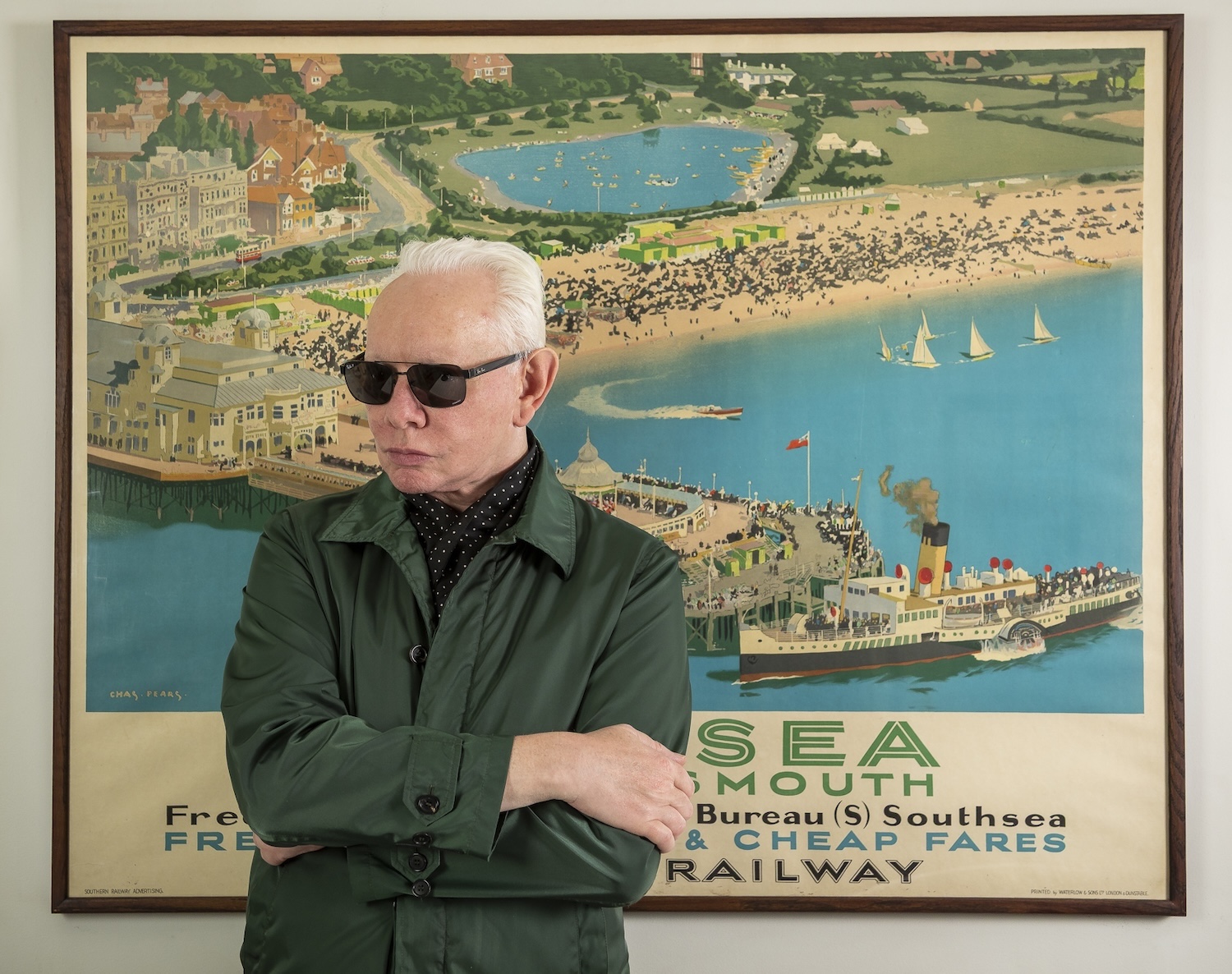
I’ve heard that there was an actual pier fire in the 1970s, and that the album cover ties into that. They were filming Tommy, correct?.
Yes. It’s funny, I actually watched that movie recently, and I hadn’t realized how bad it was. I don’t think it’s aged very well—but that’s a matter of opinion. You can see a brief shot of the pier burning in it. I remember it because I was a teenager at the time. I remember seeing this huge column smoke. I used to go to shows there and saw some great shows. They used to have double and triple bills—like David Bowie on the Ziggy Stardust tour. That was one I missed, and I regret it to this day. I saw Roxy Music on their first-ever U.K. tour. It was always a great vibe.
Ken Russell filmed most of Tommy in and around Portsmouth. They were doing a live sequence with the Who when there was an accident. The whole thing caught fire. There were no more shows after that. “End Of The Pier” kind of refers to that. “Welcome To Burning-By-Sea” is really a song about England. It ended up being all these contrasts of very English things—just impressions of England and of a love/hate relationship with it.
Does that seaside narrative bleed into other songs on the album?
I think there are hints in some of the other tracks. With “Fabulous People,” I was thinking of Brighton. “See You In September” could be an English-seaside scenario. But I never start with a plan or an agenda. There’s only one exception to that, which is (1997’s) Heaven & Hell. Usually, it’s an intuitive process where I’m just, you know, “Let’s go for a walk, and see where we end up.”
From the beginning, the one constant in your band has been Graham Maby—except for 1986’s Big World.
That was the one occasion when he got committed to something else and couldn’t get out of it. I wouldn’t say we had a falling out, but it was kind of … It was disappointing. But Rick Ford did a pretty good job, I thought. He’s living in L.A now doing music editing for films and works with all the big movie composers.
One of your drummers recently passed.
Correct. Gary Burke. It was really sad—he was a really good guy.
Back to Maby, his bass was a real presence on those early albums. It was almost like a lead guitar.
It was. That was my concept at the time. And, you know, he’s … Well, what can I say? I can’t get rid of the guy. He won’t go away. [Laughs] He played his ass off on this new album. I think he’s particularly good.
You’re still pushing forward creatively. What keeps you going?
I’m not sure how to answer that, because it’s a bit of a mystery to me why so many other people just stop. I feel like, “What’s the matter with them?” I can understand, I guess, that some people just kind of lose the plot. I don’t understand them—I understand me. I love doing it. I keep doing it. I keep trying to get better at it. Someone asked me recently, “What can you do now that you’re better than you did when you first started?” And my answer was, “Everything except for one thing: I can’t be 24 years old and new and fashionable.” That’s the one thing I can’t do better, but everything else I do way better. If I ever get to the point where I don’t have anything new that I can get excited about, I’ll stop.
What can fans expect from the Hope And Fury tour?
Oh, I’m not going to tell you that. I mean, you’ve got to have some surprises.
See Joe Jackson live.