
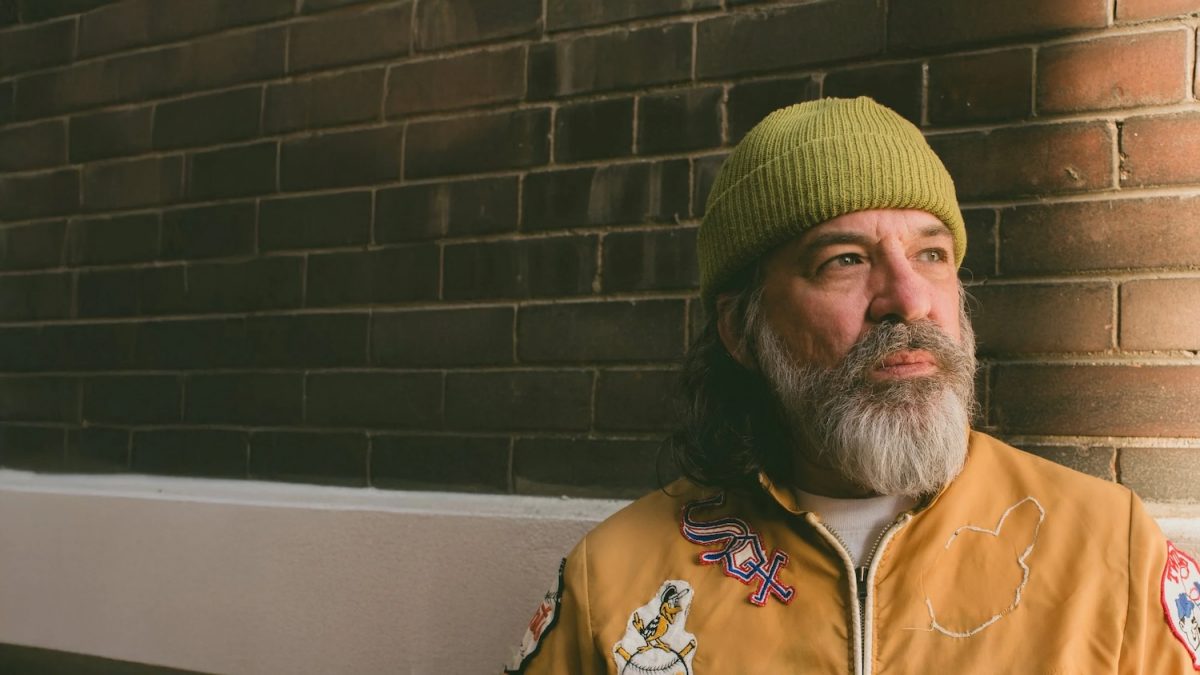

Technically, Sunny I Was Wrong (New West) is Joe Pernice’s fifth solo album. But it could be his first—in the sense that it feels like an authentic singer/songwriter affair and less like a temporary diversion from his ongoing work with/as the Pernice Brothers. The intimate, acoustic-leaning collection may strike some listeners as stylistically diverse, but Pernice doesn’t see it that way. To him, there’s plenty of cohesion thanks to a core studio band that included bassist/producer Jim Creeggan (Barenaked Ladies), drummer Mike Belitzky (Sadies) and keyboardist Mike Evin. There’s also the way the songs were tracked: live, with minimal fuss.
Mostly recorded at Creeggan’s The Worm Factory studio in Toronto, the album succeeds with a simple formula: Trust the players, trust the song, don’t overthink it. Perhaps most striking about this understated gem is the way Pernice leans into space and restraint for a version of himself that’s more breathable and charming, even in its flaws. He’s also bolstered by guest appearances from friends (Teenage Fanclub’s Norman Blake) and artists he’s long respected (Rodney Crowell, Aimee Mann). One, legendary songwriter Jimmy Webb, carries near-mythic weight in Pernice’s musical universe.
Pernice talked more about Webb and the rest of Sunny I Was Wrong’s ensemble cast with MAGNET’s Hobart Rowland.
What was the overall recording process like for Sunny I Was Wrong?
We went into the studio as a four-piece. We’d sit around a table and play through each song low-key. When we all felt like we had our parts, we recorded it live. I don’t think we did any song more than three times to get the take.
A lot of the songs start from a quiet, acoustic place and build outward.
I’d say that’s pretty true. I think there are only three songs with an electric guitar: “The Black And The Blue,” “I’d Rather Look Away” and “If You Go Back To California.” Every song I’ve ever written—with the exception of (the Pernice Brothers’) “Wait To Stop”—was written on acoustic guitar. Then I make choices about how I want to adorn the songs. With this record, I knew I didn’t want to make an indie-rock record. I wanted it to be beautiful sonically.
Were you more conscious of your own vocals this time around?
I’m learning that vocals … I mean, this sounds silly to say, but they’re super important. I was very careful about the keys I chose. There have been times when I’d write a song that would just come to me, and I’d be like, “Oh well. That’s written.” And I’d never think, “Wait a minute. I can move this to a key where I can make my voice most effective.” So I was very conscious about moving things around. There were times when I tried to find that sweet spot. And there were times when I was hoping to evoke something—to make people feel.
What was it like working with Jimmy Webb?
He’s like the Beatles to me. He’s my all-time Beatle. One of the earliest memories is being in East Boston at my grandmother’s house … It was my birthday, and I got a Big Wheel. I remember riding up and down her hallway, and she had that classic vinyl runner over the rug. The song “Galveston” came on the radio, and it stopped me dead in my tracks. Glen Campbell’s voice, the melody—all that stuff hit me on an emotional level, and it was a very important moment in my life. Then I got into Jimmy Webb’s other songs. I love “MacArthur Park.” I love the 5th Dimension stuff.
Pete Mancini reached out to me online, and we became friends. He plays guitar with Jimmy, who we call the Maestro. Out of respect, we refer to him as the Maestro. I wrote the song for this record called “It Got Away From Me.” In it, I reference “MacArthur Park” where I say, “I blew half my life on things I can’t explain/I left so many cakes out in the rain.” I played it for Pete, and he played it for [Webb]—and he said he liked it. I was like, “Fuck it, man. This is my one chance.” I was like, “Pete, we’ve been friends for a couple of years. I don’t want to put you in an uncomfortable position … What are the chances the Maestro would appear on the song?” And he goes, “I’ll ask him.”
I didn’t hear anything back for a month. Pete and I were texting a few times a week, talking about music. And it never came up again. Then I was going home for Christmas, and I got a text: “He said yes.” I wrote back, “Who said yes to what?” And he replied, “The Maestro said he’ll play on the song, but he can’t do it until April.” April? That’s plenty of time for someone to change their mind or forget. But I was like, “I’ll take it.”
So I’m in the recording studio putting the finishing touches on the album, and Pete says, “We’re recording today and tomorrow, and Jimmy’s going to record your song. He sends me a video of him playing piano, and I was like, “Oh my fucking God. It’s actually happening. Then my phone rings, and it’s Pete’s number. I go, “Hey, Pete.” And he goes, “Hey, Joe. Jimmy Webb.” I couldn’t talk. I was starstruck. He went right into talking about the song: “Can I make a suggestion on the arrangement?”
If I had bigger balls, I would’ve said, “Fuck you. Work on your own songs.” But, of course, I was like, “You can make a suggestion.” He said, “If there’s a way you could open with the last line of the chorus, it would bring the song back together. And I was like, “By God, he’s right.” So at the top of the song, I open with the last line of the chorus. We edited that into the song.”
How did you land on the final track list and sequencing?
I had about 40 songs that I’d demoed, and I didn’t know what to pick. I went to my buddy Warren Zanes and was like, “I need your help. What would you put on a record? I want it to work as an album.” I sent him demos for maybe 30 songs, and we narrowed it down. And then I went into these sessions, and we recorded a bunch of them. From there, I was like, “Warren, let’s pick 11.”
Honestly, I’m not disparaging the songs, but they’re all the same to me. There are ones I think are a better than others. But often, I definitely wouldn’t pick the hookiest tunes. I really welcomed the help because I needed it to put a unified record together. At the end of the day, I insisted that one or two tracks had to be on the record, like “Force Feed The Fire.”
I sent Warren “I’d Rather Look Away”—the one Norman Blake sings on—after I sent the other ones, and I was like, “I have this song, too. I don’t know what to make of it.” He goes, “That’s on the record.” And he might’ve called me a fucking idiot or something.
I have 40 to 50 songs written and partially demoed. I’m literally working on three albums right now, not counting the one that’s out. So there’s a lot more where that came from.
See Joe Pernice live.