
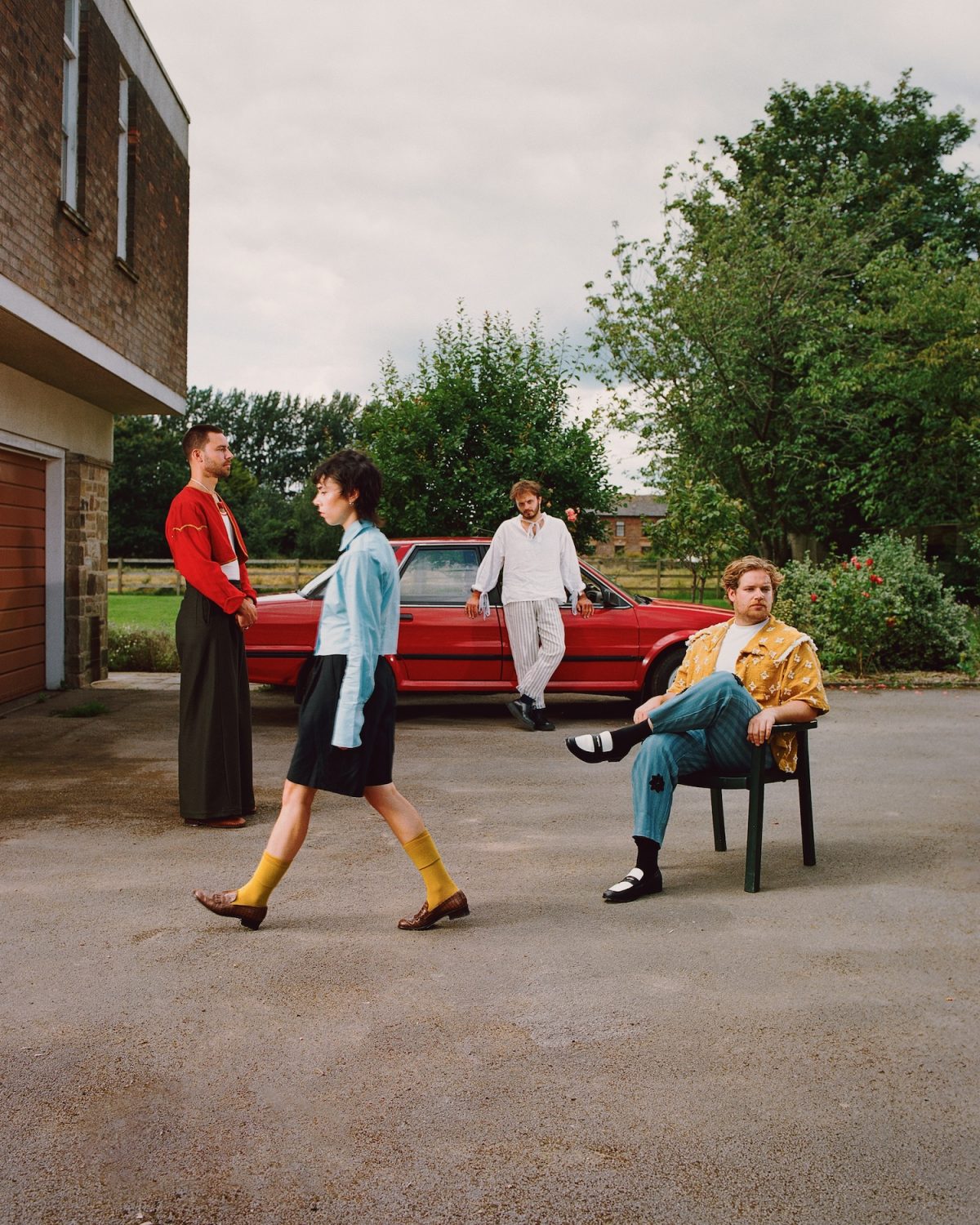

It took Divorce exactly two years to go from South By Southwest buzz band to its first headlining tour of the United States. In the interim, the English quartet was busy making an impression elsewhere. Shortly after signing to Capitol Records’ Gravity imprint in the U.K., Divorce sold out its first tour there. A year later, there were a string of international festivals, the SXSW showcases, tours with Bombay Bicycle Club, the Vaccines and Everything Everything, and Divorce’s biggest headline show to date in London. The band’s first true taste of the States outside the republic of Texas came with an opening slot for Mumford & Sons, then it was back home for the world-renowned Glastonbury Festival.
Needless to say, the two-month run Divorce just finished over here was a far cry from the “BBC Presents” stage at Glastonbury. They played mostly small clubs—all the better to soak up the intense chemistry between co-leaders Tiger Cohen-Towell (vocals/bass) and Felix Mackenzie-Barrow (vocals/guitar). The two are longtime friends and collaborators, but you’d think they were more than that, given the emotional synergy—dare say telepathy—that makes Drive To Goldenhammer one of the best albums you didn’t hear in 2025. Divorce’s unpredictable sound fits somewhat uncomfortably on the alternative-Americana continuum, always with an edge, even in the most tender moments.
MAGNET’s Hobart Rowland touched base with Mackenzie-Barrow between tour dates.
Tell us about life in Nottingham and how it contributed to the early gestation of the band.
I think, at times, Nottingham can feel a bit disconnected from the music industry. It’s a small city, and although it punches above its weight in terms of how many creative people live there, we inevitably felt we needed to push to tour outside of our hometown if we wanted to survive as a band. I think we’d all experienced years of struggling to tap into a wider scene or any kind of link to the music industry. When that happened for Divorce, it felt like we’d really worked hard for it.
Drive To Goldenhammer has gotten quite a reception in your home country. And, frankly, it deserved to be on more year-end lists in the United States. Particularly impressive was how you expanded your sound without sacrificing what makes Divorce Divorce. What was your goal with this LP?
I’m not sure we had a goal beyond making an album we were proud of. I think we managed that, and it feels like we’re always learning more about ourselves and the project. It’s a process that’s always evolving.
As a co-leader of Divorce, how has your creative partnership with Tiger Cohen-Towell evolved over the years? Has some friction been necessary for its survival?
I think we spur each other on for sure. But I wouldn’t say it’s friction really. If anything, we’ve probably learned that the more trust and openness we have between the two of us, the closer we get to coherence and the more often we feel the moments of magic.
What’s your approach been to building a fanbase here, and how has the reception been so far?
We’ve been super-lucky to have been invited to play some pretty amazing opening slots in the U.S. in the past year, which really has been our way into playing there. And the people we’ve met there have been so open and welcoming.
Your recent opening slots for Sam Smith in San Francisco were an interesting pairing. How did it turn out?
It was super-kind of Sam to have us on those shows, and they were such a beautiful celebration of the incredible queer history of the Castro. It felt like a real honor to be part of that and experience how much love was centered by those audiences. We saw more pride flags than USA flags on that trip. Which was fantastic.