
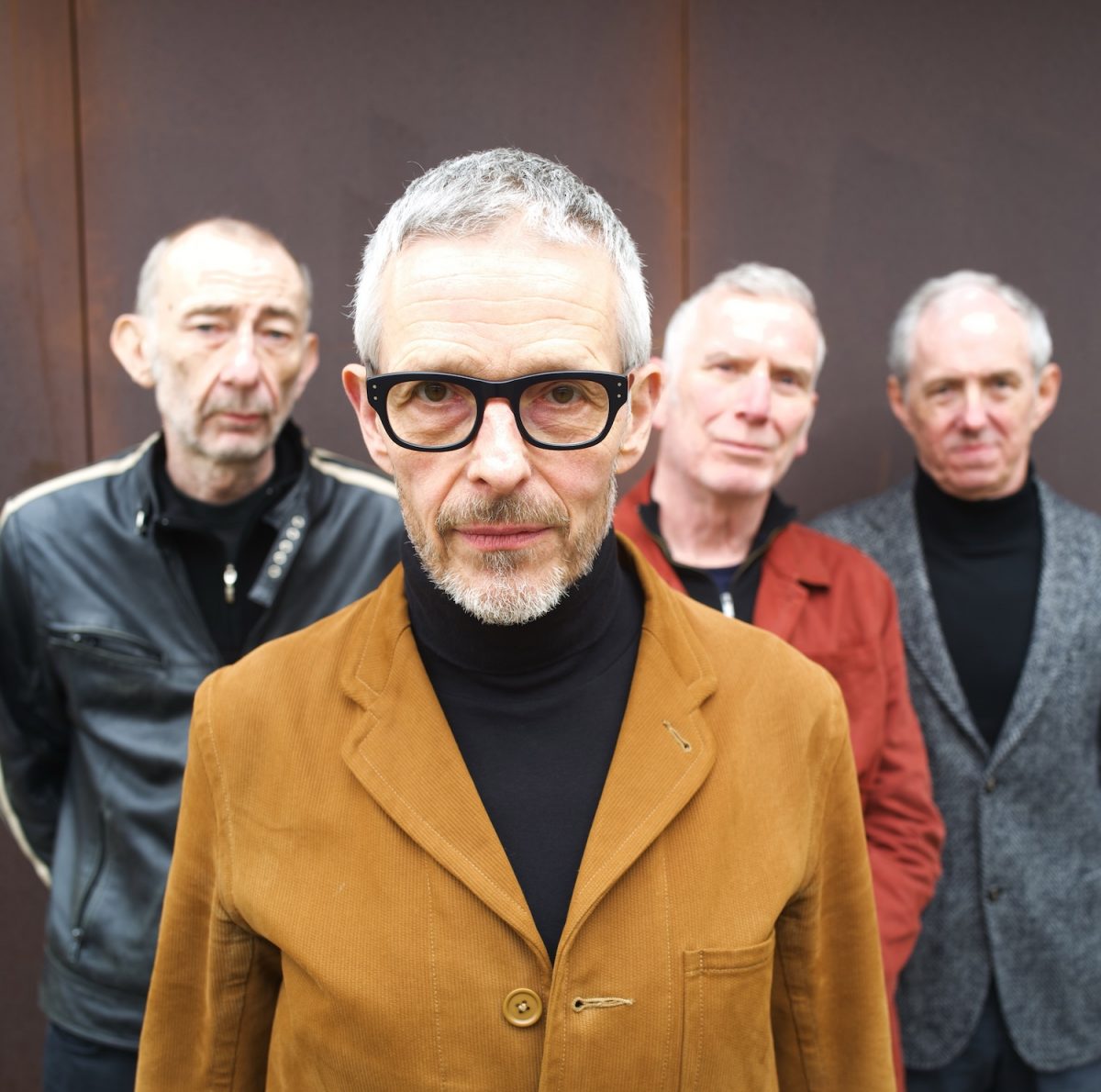
Badges (Tapete) is the Loft’s second album since reuniting for at least the second time in 2023. Remarkably, it’s also just the band’s second studio LP in more than four decades. And, yes, that’s a lot of seconds.
Thwarted mid-’80s pioneers of the jangly, vaguely anthemic sound that came to define the Creation label, the Loft continue its surprising late-period surge following the critical success of last year’s Everything Changes, Everything Stays The Same. That debut was some 40 years in the making, after the band’s notorious implosion mid-set at London’s Hammersmith Palais.
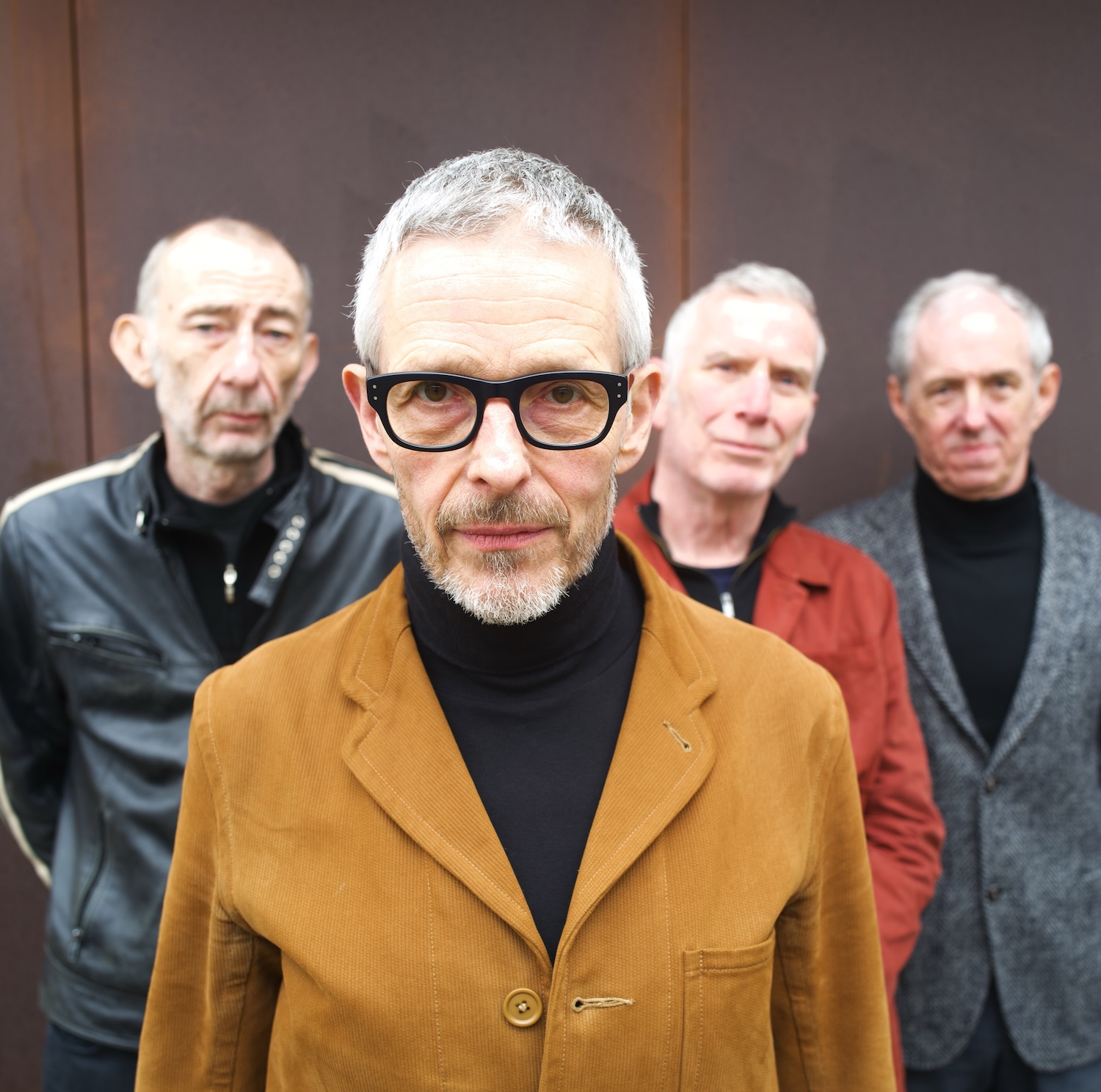
Recorded by Sean Read (Dexys, Edwyn Collins, Iggy) at his Famous Times studio in East London, Badges is the unfettered, good-natured product of four guys—Pete Astor, Dave Morgan, Bill Prince and Andy Strickland—reveling in their status as a functioning band. If anything, Astor and Strickland have only grown more collaborative as songwriters. Thank heavens for small victories, eh?
Here’s more from Astor.
—Hobart Rowland
1) “Happenstance”
“This was one of the final songs the last Loft lineup began before we broke apart. But it never quite found its lyric at the time—just a series of placeholders that didn’t mean anything … and not in a good way. I’d return to it roughly once every 15 years, but nothing ever stuck. In the end, it was the word ‘happenstance’ that unlocked it. I’d had that title in mind for years. And then, one day, while walking around an Iron Age fort in Norfolk, the lyric finally arrived—although I’m fairly certain the location itself had nothing to do with it.”
2) “Sad Comedian”
“One of several songs on the album Andy and I wrote together. What I love about that process is how our different approaches seem to complete each other. He can develop what I bring in, and I can do the same with his ideas. Something happens in that exchange that doesn’t happen when we work alone. A key shift came when Andy suggested changing the feel. It had started as a slow, ballad-type song—but after listening to T.Rex, he proposed trying a rhythm closer to ‘Metal Guru.’ That’s when it clicked into place. The lyric probably comes from my long-standing fascination with Tony Hancock, still one of the great sad comedians.”
3) “Camper Van”
“A song about the idea … almost the fantasy … of having a camper van. I went through a period where I was quite set on the idea, watching endless van-life videos and enjoying the sense of freedom they projected. I never actually followed through, so the song became a way of inhabiting that feeling instead. It’s a small tribute to those who’ve made that version of freedom real around the car parks of the world.”
4) “1955”
“This began as something that never quite worked for me on my own. It changed once Andy and I started working on it together. Lyrically, it’s quite specific, perhaps even generational. That’s something I’ve come to value in the Loft now: The concerns and perspectives aren’t those of our 20s—even if, at some level, they still circle the same territory.”
5) “Beautiful Problem”
“We were playing this at Andy’s place on the Isle Of Wight out in the garden, and I remember describing it as ‘a bit of a donkey.’ Andy disagreed and encouraged me to stick with it. We did, and it’s since become one of my favorites on the record.”
6) “Ex-Lovers And Long Lost Brothers”
“This song came together in that rare, almost effortless way. Andy was making tea, and I started playing a few chords. When he came back, we developed the piece together—riff, chords, the whole thing. Later that night, I found the title among a long list I always keep on my phone. Then the lyrics appeared—and at that point, the song fell into place.”
7) “Goodbye Saturday Night”
“There’s something like a modern ritual about Saturday night: the expectations, the energy, the sense of occasion. It’s also a song shaped by distance from that world. I’m far less likely now to be out until dawn these days. The song also reflects the way I’ve started to use more real locations in my songs. Leicester Square today feels a bit like a theme park. But in the 1980s and 1990s, it had a very different atmosphere. I remember a party there where I saw Richard James (Aphex Twin) with a bandaged hand, entirely unconcerned by the blood seeping through.
“Camden Road was where the Rockingbirds were based in the 1990s—a place where a whole lot of life happened. Again, in the ’90s, Camden town felt a bit like the center of the universe. Crayford Road was where the Loft first rehearsed, a squat occupied by our drummer, Andy Knott, who was and remains a mystery. We haven’t seen him since 1983. Also residing in the same house were a group of self-styled revolutionary architects in black boiler suits, making music by striking pieces of metal.”
8) “C’mon Let’s Hear It For The Now”
“I was sitting in a cafe in Hamburg on a summer evening, looking at a church clock with neon hands, feeling slightly bereft. As sometimes happens, the writing moved in the opposite direction to the mood, toward something entirely affirmative, even while I was far away, scattered and low. It was also great to finally have a song that spelled ‘c’mon’ in the way the title does. Man, one of my favorite groups as I was growing up, had a song called ‘Come On,’ which I loved—and, of course, Slade use this spelling, too. Musically, I had in mind something like a late-period Lindsey Buckingham track … understated, but with a persistent pulse.”
9) “Junk Shop”
“In essence a love song, but more about the process of looking for it. Thinking about it now, it’s likely influenced by W.B. Yeats’ idea of ‘the foul rag-and-bone shop of the heart.’ It touches on the exposure that comes with wanting love—which is exactly the kind of thing I’d much rather talk about in a song than explain here.”
10) “Rob Rides The Sunset”
“This about my friend Rob Sekula, frontman of 14 Iced Bears. I ran into him in Kentish Town one winter evening and asked what he was doing. He said he was heading to the heath to ‘ride the sunset.’ I thought, ‘I’m having this for a song.’ I was reminded of him again when Caroline Katz screened her film about Barry Stillwell’s Tapestry festival (Tapestry Goes West). Rob made a brief appearance onscreen, which elicited spontaneous applause from the audience. I think that’s possibly all you need to know about the legend that is Rob Sekula.”