

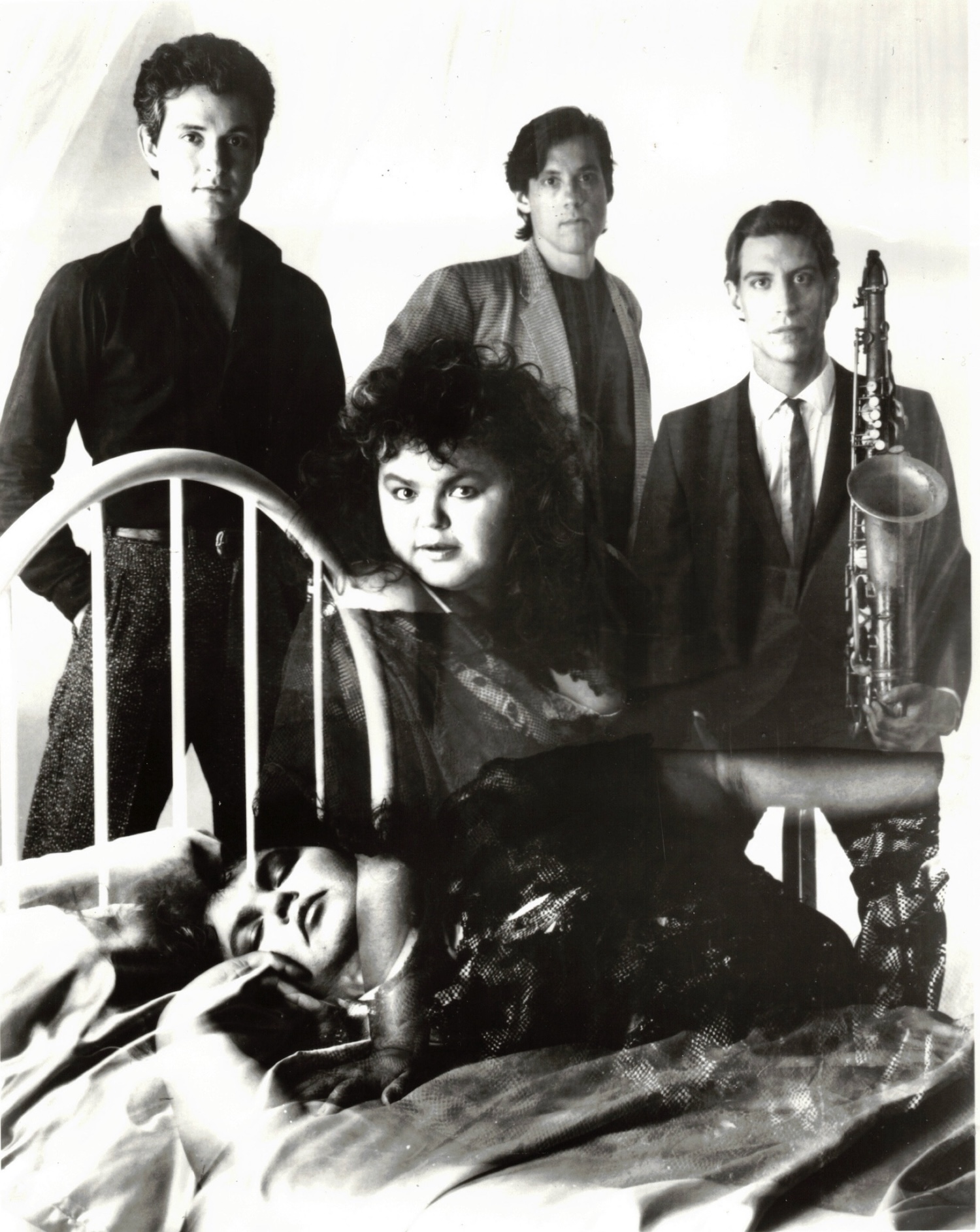
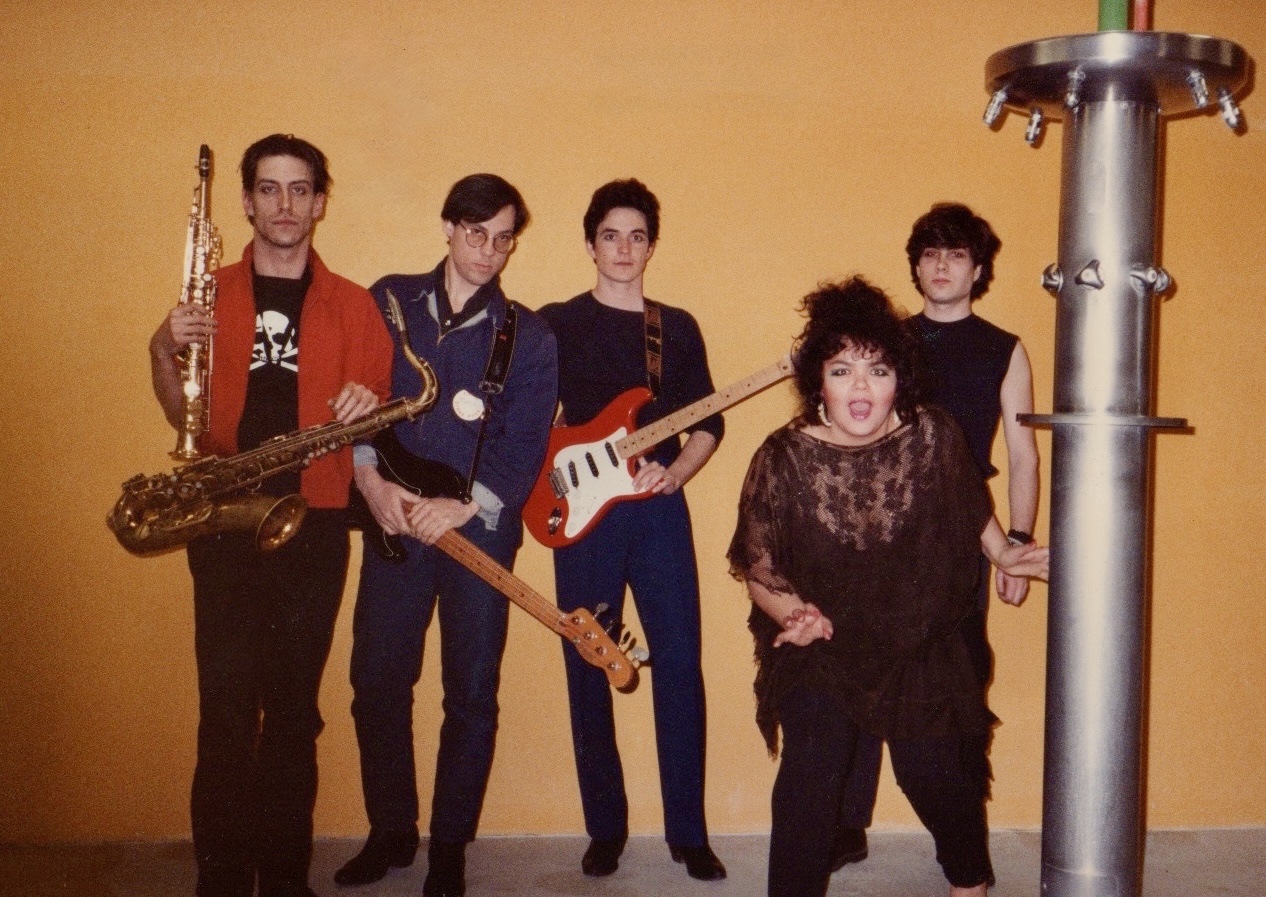
For better or worse, Romeo Void will always be associated with the early days of MTV, where the film-noirish video for 1982’s “Never Say Never” was a staple. Produced by the Cars’ Ric Ocasek, the song itself was equally memorable for its pumping saxophone riff and choice lyric, “I might like you better if we slept together.” Though “A Girl In Trouble (Is A Temporary Thing)” was a bigger hit for Romeo Void in 1984, the Bay Area band still parted ways a year later. In short order, its unconventionally charismatic Native American frontwoman, Debora Iyall, went the logical route, releasing her solo debut on Columbia. When the album tanked, Iyall barely hesitated in a return to her previous vocation, forging a lengthy career as an artist and art educator.
Now living in Raton, N.M., Iyall has largely stayed out the new-wave nostalgia business. But she was more than happy to discuss Live ’81-’85 (Liberation Hall). The new release complies highlights from vintage Romeo Void performances in Ann Arbor, Mich., Albany, N.Y, London and Berlin, tracing the band’s five-year lifespan as it covers material from its three studio albums.
Here’s what Iyall had to say in a chat with MAGNET’S Hobart Rowland.
What’s it like listening to these live tracks more than 40 years later, and what are some of your most distinct memories from these shows?
I can hear the band responding to me—and me to them, and the sound engineer to all of us. I’m astounded by what a complete synapse-firing experience it is to listen to these live recordings. I can really appreciate the anger that comes through—the defiance is innervating. Going back and listening to these shows has made me even more grateful for having had the opportunity to perform with such an outstanding band. I was learning as I went. I was the least musically literate member. I’ve always had a deep appreciation for the work ethic it took for us to create our unique sound.
From Berlin, I remember the thick cloud of smoke blanketing the broad 12-foot ceiling above the crowd. It seemed like everyone was smoking Gauloises, a French cigarette. I was a little nervous because I had friends in the audience. We’d traveled overnight into Berlin, arriving in the morning, because that was the most advantageous time to get past the border police. To this gal from Fresno, the Europeans just seemed so sophisticated. The crowd was quite familiar with our music—I’m fairly sure there were quite a few Americans and Canadians in the audience. I believe it was in an industrial building, so it was quite cold. It was maybe 25 degrees that night. But everything was firing—all synapses were sparking between us and audience.

The 17 tracks cover a period of five years. How did the band evolve as a live unit in that span?
I feel like the audience helped me grow with their enthusiasm and acceptance for what I was doing naturally. I wanted to consistently top my own work and develop as a singer and lyricist. In Europe, (drummer) Aaron (Smith) and (saxophonist) Benjamin (Bossi) were playing and responding to each other throughout all the instrumental sections and solos. It’s easy to hear. There was also a lot of improvisation and collaboration with our live sound engineer, Louie Beeson, who recorded all the material featured on Live ’81-’85. You can hear Louie using delays and other audio board tools, boosting areas of various songs and reacting to what was being played in the moment.
Many fans first encountered Romeo Void on MTV. How did the whole music-video phenomenon both help and hurt Romeo Void?
As soon as there was MTV, we were on it. We had the budget for a video at just the right moment. Once people had seen us, they’d be right at the front of the stage, singing along. They knew the lyrics. It was a step beyond them having the records. By the time they saw us live, they already had a relationship with us from having us in their living rooms. I don’t think the marketing people could appreciate how solid that connection was. They were pretty much hung up on trying to sell a product.
What have you been up to in recent years?
I’ve been recording and performing primarily in New Mexico and Colorado with a three piece called the Raton 3. We’ll often invite friends to perform with us as the Raton 3 And Friends. We’re on all the digital platforms and YouTube. It’s a great creative outlet and I’ve been learning lots of songs from the 20th century—it’s primarily a 20th-century-centered band. We do a few Romeo Void songs and some songs I’ve written during my solo career. I’m also working on a memoir, which will include stories from my childhood up through Romeo Void and the present. I lived in a unique time, and chronicling it is challenging and rewarding. I have 250 pages so far but no publisher—just someone who’s willing to edit once I have a manuscript.
With Benjamin Bossi sadly passing away a few years ago, is there any chance of a Romeo Voide reunion?
I don’t see it. I’d rather just listen to us at our height and appreciate what was.