
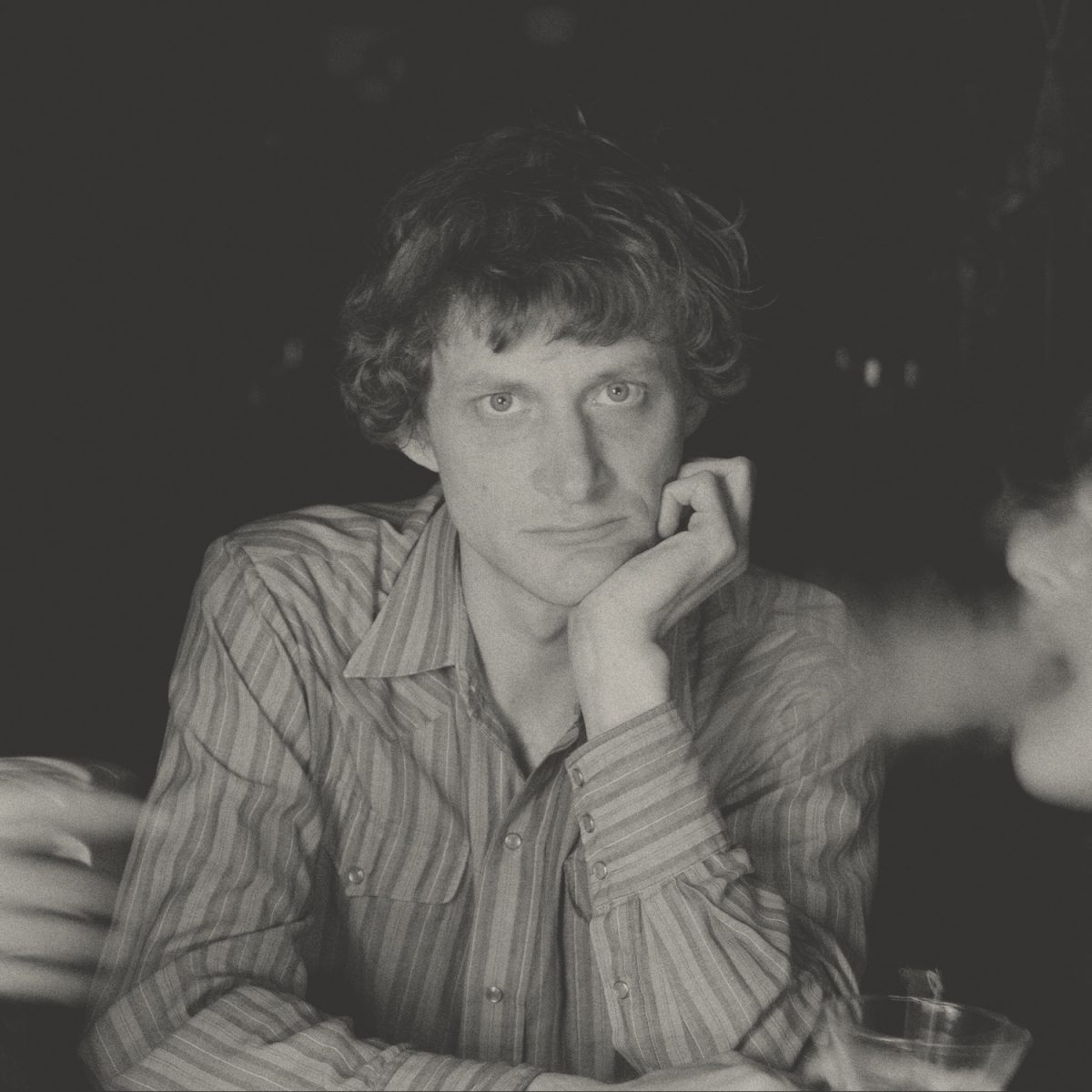
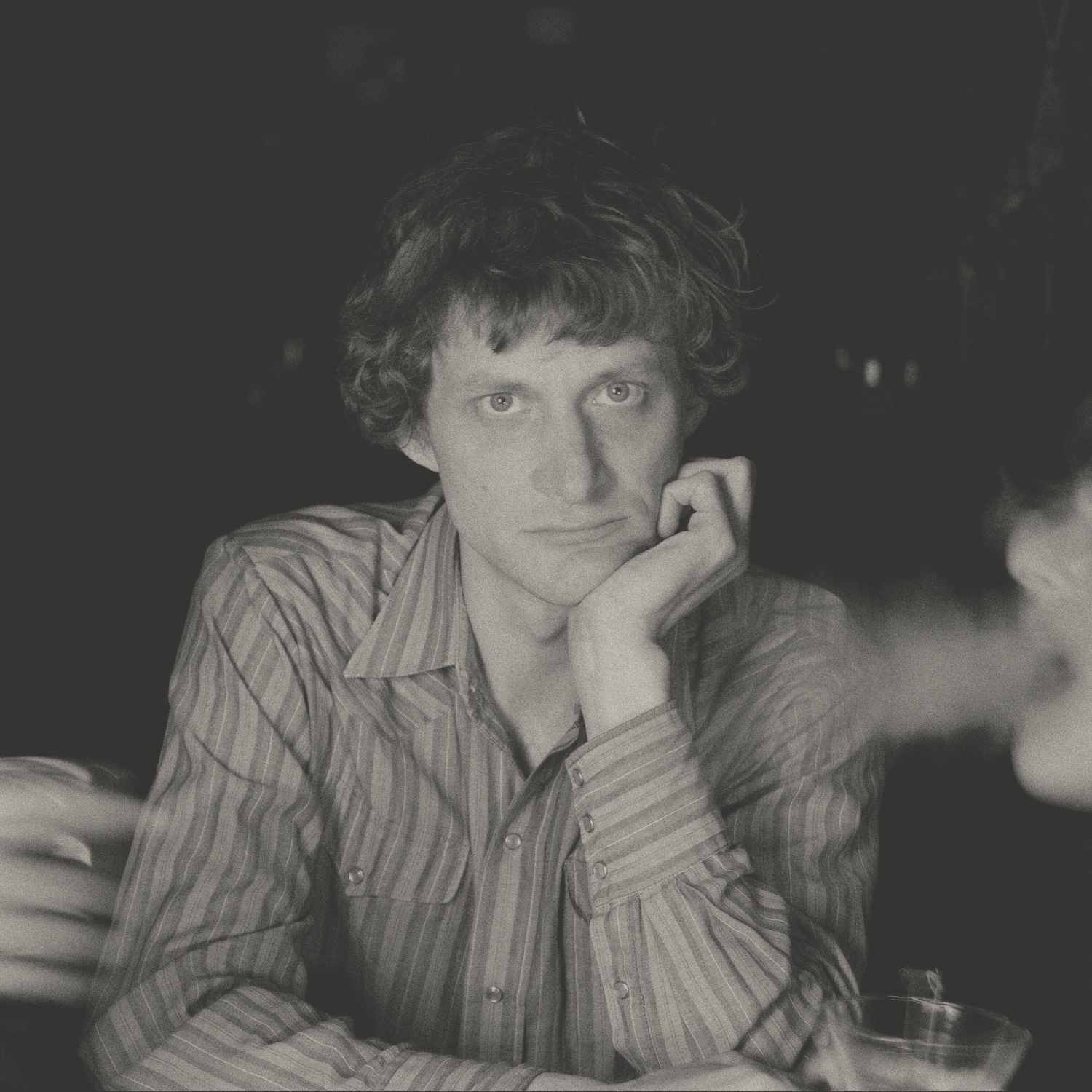
The rituals of OCD are often the stuff of cliché (e.g., endless hand-washing)—and they’re certainly not funny to the sufferer. Even so, Kyle Morgan’s “Paper Towel Ballad” offers a surprisingly buoyant first-person take on the frequently misdiagnosed anxiety disorder, transforming intrusive thoughts and compulsive behavior into something at once heartbreaking and darkly humorous. Making neurosis palatable is a common theme on Ghost Of A Problem (Starcrossed Losers), a warm hug of a sophomore release that confronts obsession and self-doubt with eye-opening clarity and wit.
For the follow-up to 2022’s Younger At Most Everything, the Brooklyn-based singer/songwriter doesn’t stray far from his comfort zone, working again with producer Ryan Dieringer and longtime collaborators Sean Cronin (Very Good) and Rachel Housle. Ghost Of A Problem conveys its stories of missed connections, mental spirals, roadside revelations and everyday absurdities via an approachable mix of folk, Americana, baroque pop and indie rock.
In a recent interview with MAGNET’s Hobart Rowland, Morgan spoke honestly about mental illness, collaborating with his ex-partner and letting go of the endless pursuit of self-improvement.
Your struggle with OCD is a central theme on Ghost Of A Problem. How did you approach writing about those experiences in a way that wasn’t too self-absorbed?
While I’ve never written so explicitly about OCD, most of my songs are touched by the internal suffering caused by the condition: fear, self-doubt, spiritual confusion, the longing for deliverance. After my previous record’s downtrodden exploration of such emotionally laden themes, I wanted to purposefully make something more playful and less burdened by self-concern. Musically, I did this by employing more major tonalities, upbeat, activating rhythms and pop/rock instrumentation. Lyrically, I shifted from introspective rumination to more matter-of-fact, concrete imagery, contextualizing inner drama within an external reality. OCD manifests itself in such irrational, absurd ways that humor is often a natural response. By writing about paper towels and toilets rather than the terror of hurting others or the sorrow of isolation, I was able to put my struggles in perspective and lighten the load. It’s a gift to not take yourself so seriously.
What influences come to mind as guideposts for this album?
Generally speaking, I feel more guided by my inner relationship with music itself rather than any manifestation of it. Another way to say that is: I work more intuitively and unconscious of specific influences. That said, some artists that come to mind are Jonathan Richman, David Byrne, Lou Reed and, always, Tom Waits. The way they use humor and ordinary, tangible things to evoke the deeply personal and emotional has had a profound impact on me.
How did working closely with Ryan Dieringer, Sean Cronin and Rachel Housley reshape the songs from the original demos?
Sean and Rachel are masters of minimalism on bass and drums, respectively. Also excellent songwriters, they’re cognizant of what a song needs and the space required for the vocals to be present. Very seldom do they play anything unnecessary. Arranging with them feels like breaking down the songs into their essential grooves and then laying down a solid, reliable foundation. They know exactly how to create dynamic lifts with the subtlest of changes. After making three albums with Ryan, I inherently trust his sense of direction in the studio. He’s quite skilled at visualizing and executing a sonic image that brings balance and energy to each song. He does it by capturing sounds beautifully with dearly loved and maintained gear, but also with his attention to my performances and through gentle guidance. Often, I feel like I’ve done an adequate take, but Ryan will see the potential for something more nuanced and push me to a level of expression I wouldn’t otherwise access.
Some of the lyrics on the LP were written by poet Courtney Bush. How does that collaboration with your ex sit with you now?
The collaboration occurred while Courtney and I were still partners and living together. As a poet, her relationship to song is naturally more grounded in language and the manner of the singer’s delivery. While lyrics are extremely important to me, I’m first and foremost a musician. More often than not, the language in my songs occurs to me by virtue of its sound, rhythm, groove and syllabic resonance—how it serves the sonic architecture of the song. The lines Courtney brought to me weren’t necessarily written to be put to music. You might think that would make it more challenging, but I found the opposite to be true. The opportunity to relinquish control of lyrical content, meaning and structure really freed me to inhabit a space of pure musical intuition and to explore rhythms and turns of phrase I’d never have landed on working alone.
You mention abandoning the “hope of self-actualization” while writing these songs. Did making the album ultimately reinforce that feeling or challenge it?
By “self-actualization” I meant fixing myself or attaining some ideal version of myself not so bogged down by neurosis and depression. The trouble is, the harder you strive to get rid of what you don’t like, the more attention you give it and the more you reinforce its existence. I was exhausted from trying to solve my own mental problems. I began to see that such self-concern was actually the thing perpetuating said problems. So I decided to just give up and try out being who I actually am. The making of the album reinforced this sense of resignation in the sense that it was a practice in non-judgmental observation. I think it served to reinforce the letting go of self-actualization. My problems are not so much center stage in Ghost. There are other names in the stories: Johnny, David, Jamie, Sophie, Pastor Greg, Max, etc. On the other hand, for me, making and releasing music is probably the highest form of self-actualization—in its more positive sense. So in that way, making this album ultimately served to challenge my resignation and encouraged me to “get on with it” … not to retreat back into my inner world and set everything in order before acting, but to venture into the world and engage with others, trusting that it’s OK to make mistakes and that it’s all part of learning.
See Kyle Morgan live.