
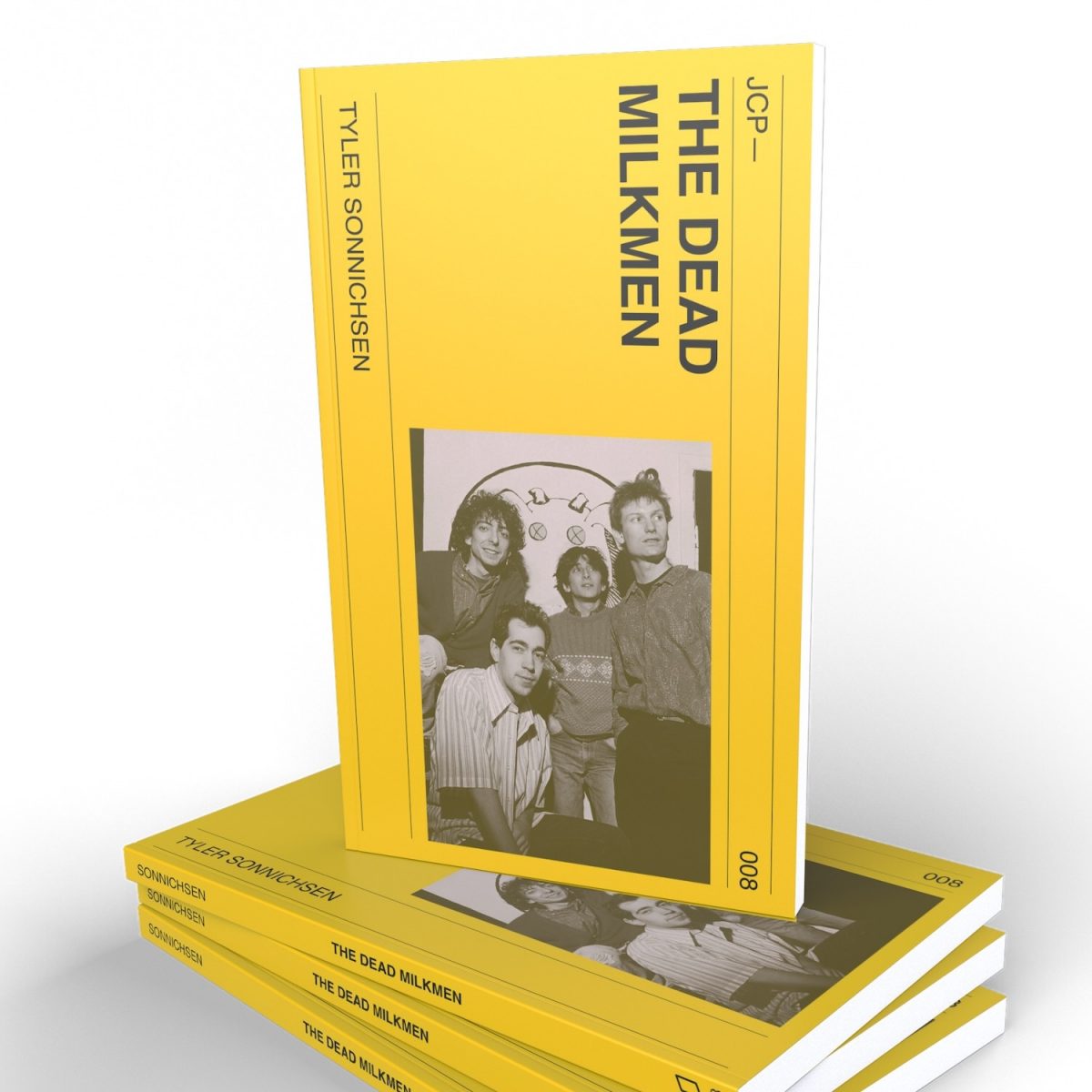
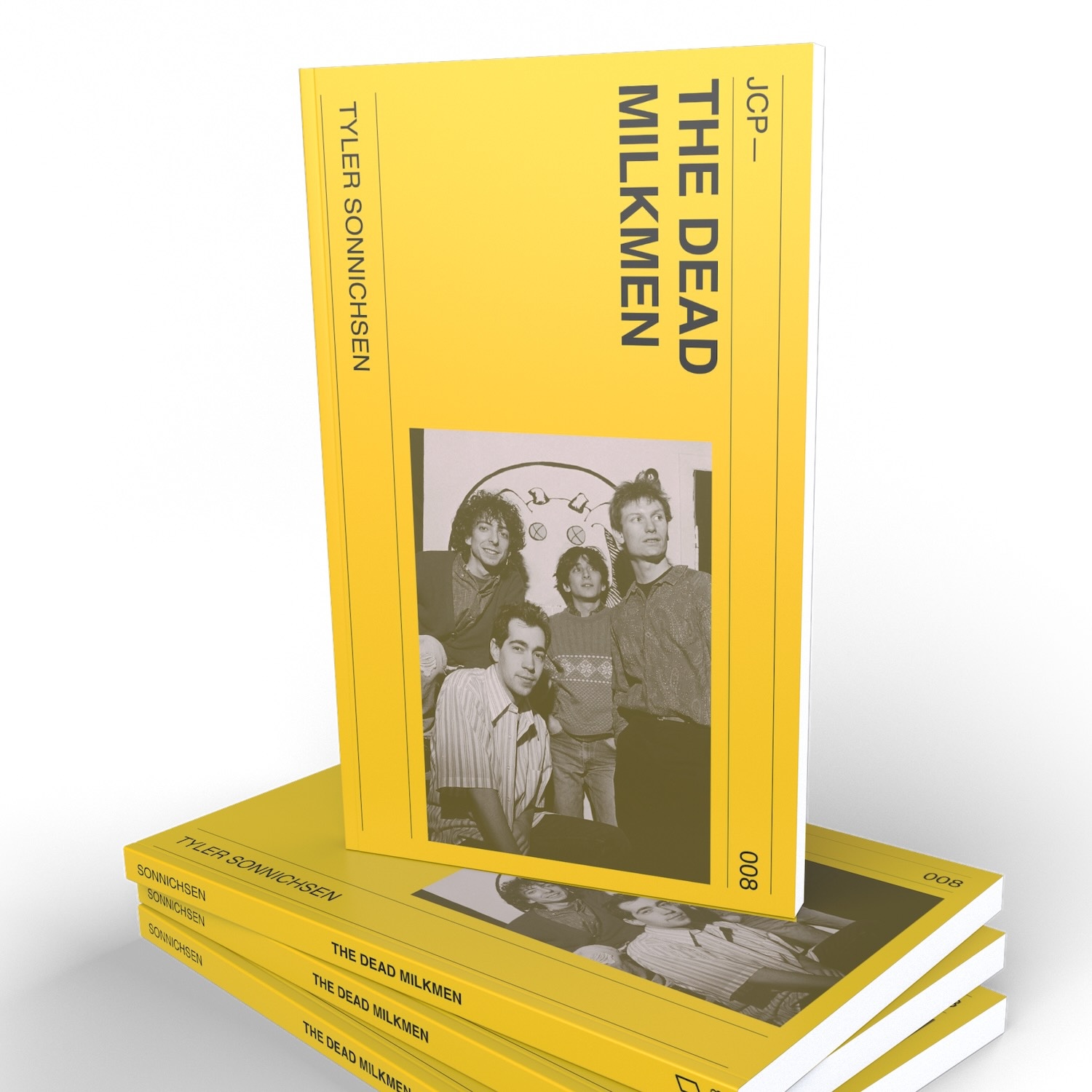
The following excerpt is from The Dead Milkmen (J-Card Press) by Tyler Sonnichsen, out June 30. The Dead Milkmen (1983-1995, 2004, 2008-present) are a legendary punk band from MAGNET’s hometown of Philadelphia, known for such college-rock classics as “Punk Rock Girl,” “Bitchin’ Camaro” and “Methodist Coloring Book.”
In 2015, the Dead Milkmen gathered at Miner Street to record an exclusive single for Weathervane Music, a nonprofit cofounded by Brian McTear. Thirty years since “Tiny Town” and five years into their second chapter, the most successful export of Philadelphia hardcore had arrived at what vocalist/keyboardist Rodney Anonymous termed “folk-punk-triphop-industrial.” To continue getting their music into the world and “accomplishing this goal,” they needed trusted collaborators. McTear and his partner Amy Morrissey, among their most trusted, put it bluntly: “When you try to straighten out the Dead Milkmen, they cease to be the Dead Milkmen.”
“Prisoner’s Cinema” begins with guest vocalist Jill Knapp, whom Rodney recruited because “she has a beautiful voice, and I don’t,” chanting us into the song like Chumbawamba stoned in the Mummers Parade. And then it gets unsettling. Rodney declares that “no one writes songs about the poor anymore,” slams the Wobblies songbook on the table, admonishing corporate America for stripping back benefits and wages “‘til you’re nearly working for free.” As their old comrades the Minutemen said, to “put it in simple worlds, working men [or however they choose to identify] are pissed.”
Considering how attached the Dead Milkmen are to the Reagan era in public memory, “Prisoner’s Cinema” was a rallying cry in the dying embers of the Obama era. Liberal optimism was getting a wake-up call: citizens were turning their cars into taxis and their spare bedrooms into hotels, and figuring out clever new ways to stick their hands into each other’s pockets. While taking swipes at office culture, the song calls attention to the closest thing America still has to a working class: people who wake up at 3 a.m., thousands of miles from their families, to spray Eagles fans’ puke (and whatever horseshit the fans didn’t ingest) off the street before the suit-and-tie crowd files in. For Dandrew Stevens, piloting the track with his bass line, it’s the ones who worked hard to raise three kids, got fired from their jobs during COVID, and had to DoorDash to make ends meet, getting nickel-and-dimed by our tech overlords. All his bandmates have these stories.
Rodney’s anger was fully realized in Philly, but it was bred in Coatesville, the home of Lukens Steel, where his father worked as a foreman for more than 40 years. His father’s career traversed the rise of unions and the decimation of the industry by cheap Japanese imports in the ’70s. In 1956, Rodney P. Linderman graduated from Scott Senior High School along with his progressive (and talkative) sweetheart Mary Work, and they married the next year. They would often ride into the city to Studio B at 46th and Market, where they would dance on American Bandstand as it first went national on ABC. An early iteration of the Dead Milkmen would romanticize this, Ray Davies–style, in “On Bandstand” in 1982. The Lindermans’ experience placed them on the front lines of the rise of teen idols like South Philadelphia’s Frankie Avalon (born Francis Avallone). In 1970, Frankie Avalon cohosted the “Our Little Miss” child beauty pageant on CBS, earning a severe excoriation from Harlan Ellison. In 1986, his character would appear in the Dead Milkmen’s “Beach Party Vietnam” with his arms blown off.
“To me, our music is very sad or very angry with little bits of humor slipped in to make it palatable,” Rodney told PennLive. “It’s like the Porter’s speech in Macbeth. Here’s a whole play about regicide but, in the middle of it, there’s a guy complaining about his job.”
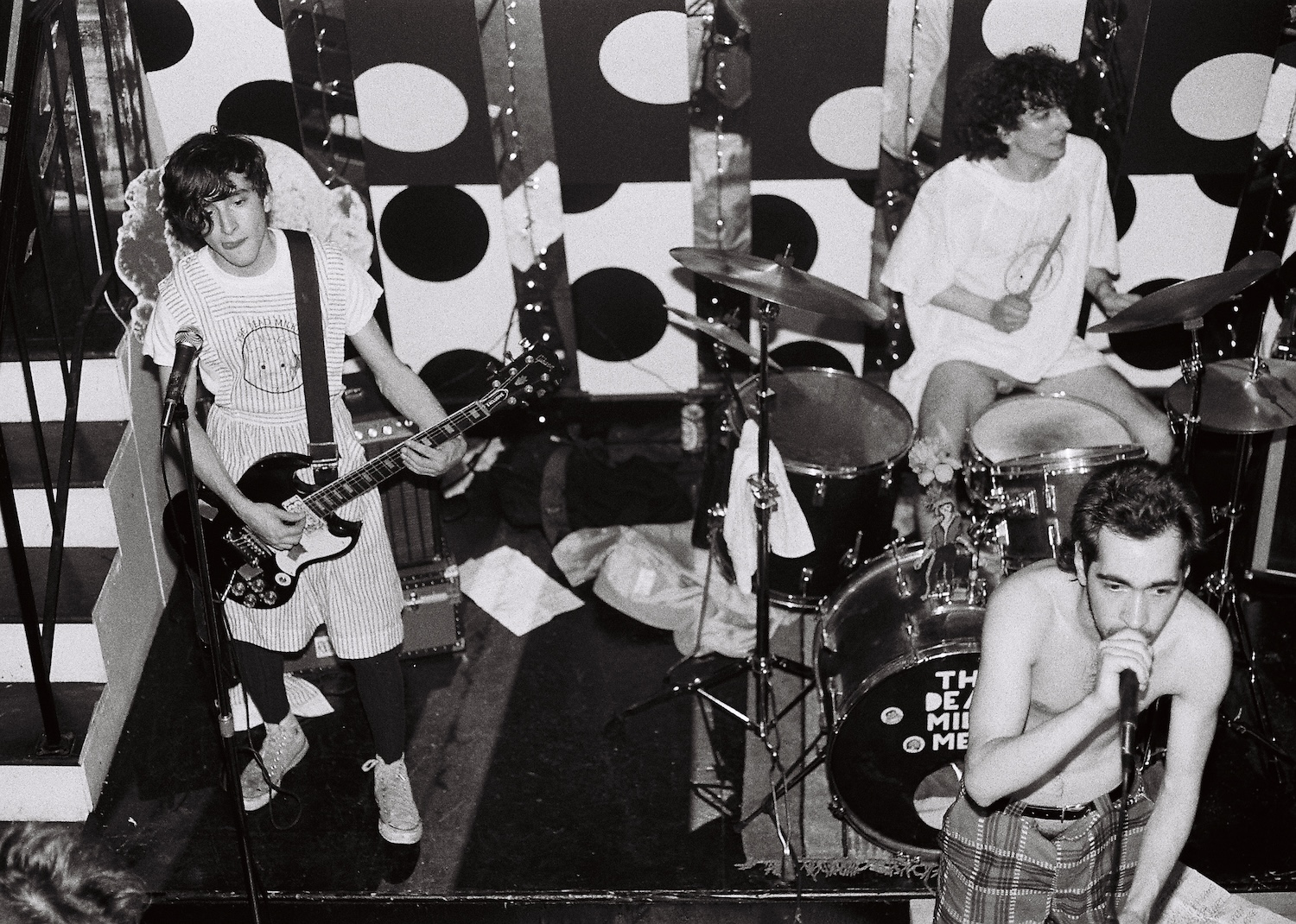
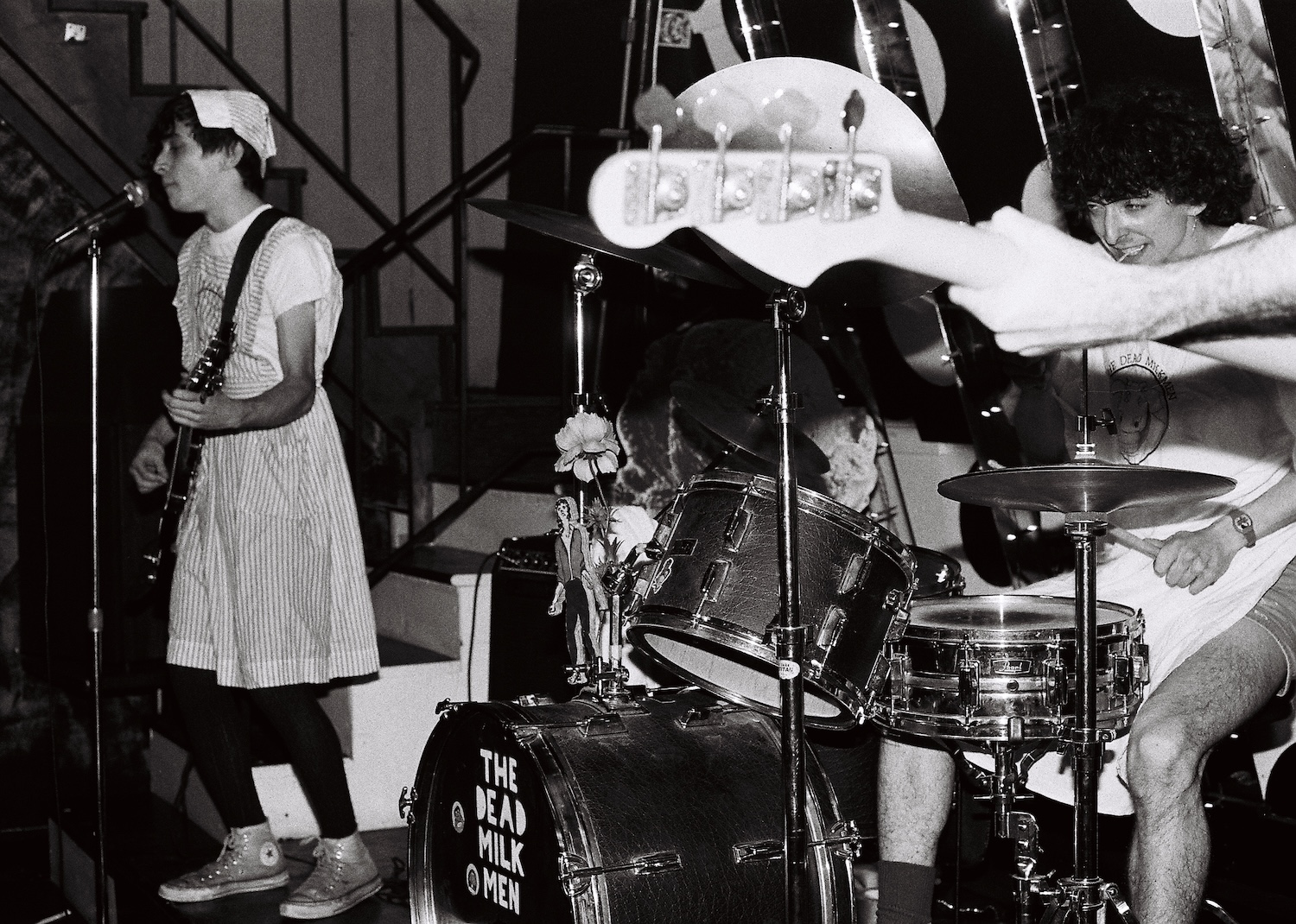
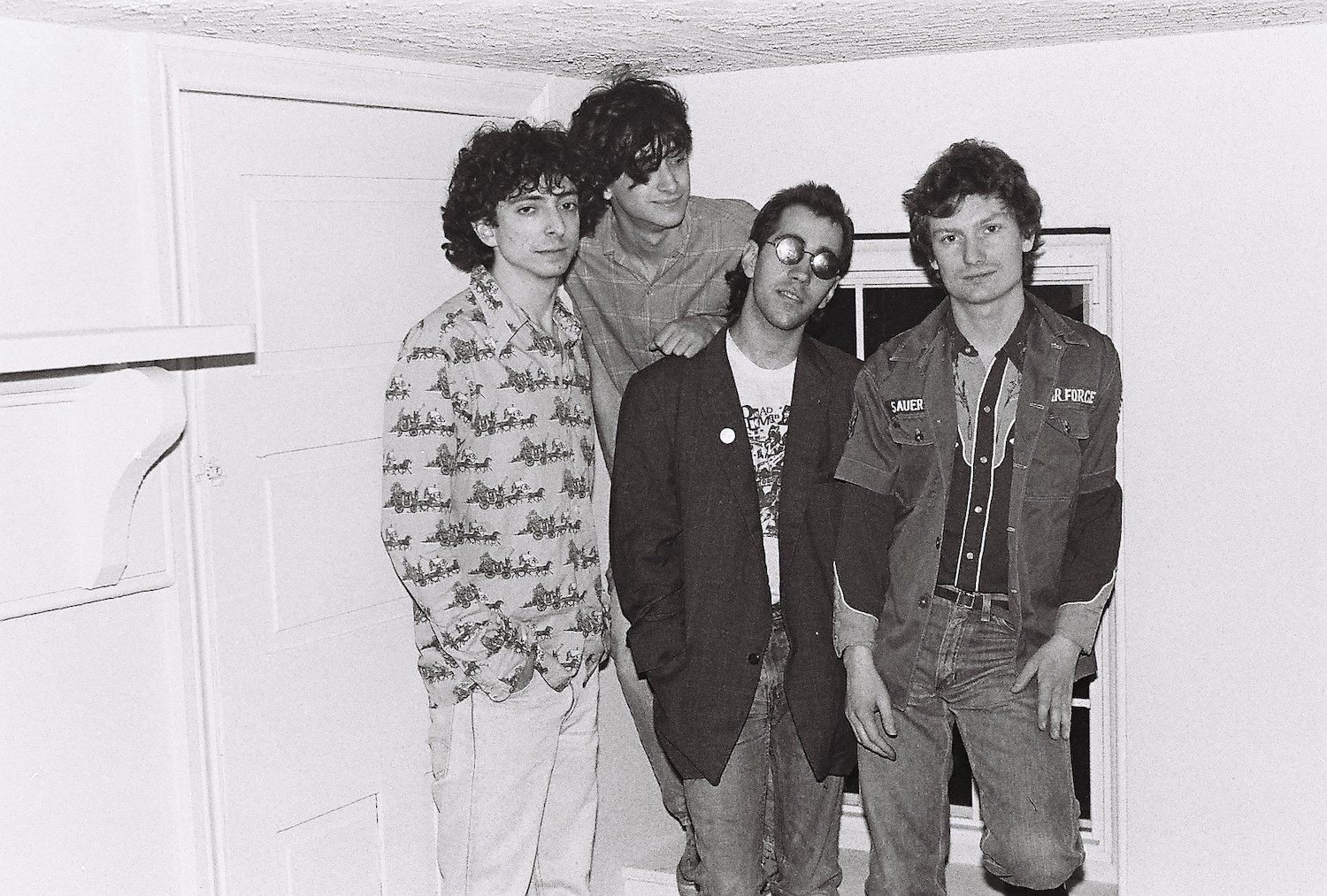
At FYF Fest in Los Angeles in 2011, Rodney devoted his “Bitchin’ Camaro” spiel to blaming Michele and Marcus “Pray Away The Gay” Bachmann for more than a dozen LGBT teen suicides in her Minnesota district that year. He suggested that the lawmaker’s iron-closeted husband was a big South Carolina Gamecocks fan, leading the crowd in a chant of “MARCUS BACHMANN LOVES THOSE COCKS! MARCUS BACHMANN LOVES THOSE COCKS!”
The Dead Milkmen spent a lifetime getting labeled as something tantamount to “punk’s comedy troupe.” Given enough space, I could add a full appendix of bad headlines like: “Philadelphia’s Pre-Eminent Punk Rock Pranksters,” “Some Milk And Kookies,” “Milkmen Pour On The Satire,” “Milkmen’s Delivery Is Curdled,” “Moo To You” and the most 1992-coded headline ever printed: “Delivering Serious Songs . . . Not!” The Dead Milkmen and their “comical” indie counterparts (e.g., New York’s King Missile, Melbourne’s This Is Serious Mum, a.k.a. T.I.S.M.) were undervalued because comedy has a bad habit of being undervalued in its time. The Marx Brothers and Three Stooges—both household names that transcended vaudeville, conquered the silver screen and enjoyed careers that spanned half a century—never got validation from the critical establishment until it was too late. Despite having two films now preserved in the National Film Registry (1933’s Duck Soup and 1935’s A Night At The Opera), the Marx Brothers never garnered a major Oscar nomination. The Three Stooges, starring Philadelphia-native Louis Feinberg (better known as Larry Fine), got one nomination for their anarchic two-reeler Men in Black (1934) but never got one raise from Columbia. Today, nobody cares who won that Oscar, but a giant mural of Larry and his violin towers over his birthplace by Third and South, blocks from where Zipperhead, the Philadelphia Pizza Company and a beleaguered Blockbuster Video once stood.
By being “serious about not being serious,” the Milkmen were, ironically, to the left of so many urbane punk bands. In many respects, the Dead Milkmen are the quintessential punk-nerd group, beloved by a list of celebrity fans including Simpsons creator Matt Groening, Dungeons & Dragons pilot Ray Winninger and actor Wil Wheaton, who wrote a testimonial for the Now We Are 20 retrospective in 2003. In 2025, though the band had little to do with it, their mascot-logo appeared prominently on Chris Pratt’s T-shirt and truck in The Electric State, a $320 million boondoggle for Netflix. The Milkmen remain the most common go-to reference in a review of any band who dares mix punk with humor.
This prompts a greater question of punk: Where was this cabal of humorless fucks who ran things in the ’80s? The Ramones were still touring and singing about falling in love at the Burger King. Adrenalin O.D., whose song “Trans Am” allegedly inspired “Bitchin’ Camaro” (according to Going Underground author George Hurchalla), were playing all the time in New Jersey. Even the Minor Threat kid—later revealed via Dischord box-set studio cutouts—could be cutups. Punk was supposed to be funny. The Misfits, whom the Milkmen loved, emerged from suburban New Jersey and sang about “Teenagers From Mars” and something called “Astro Zombies.”
“Glenn Danzig was actually a very funny young man before he became the world’s most gigantic butthole!” exclaimed Tesco Vee on a 2019 panel seated next to dry, witty former Minor Threat drummer Jeff Nelson. Tesco’s Meatmen, like their Michigander contemporaries the Crucifucks, simultaneously raised and lowered the bar for anarchist irreverence in hardcore. The Milkmen would parody his “Meatmen Stomp” as the “Milkmen Stomp” in their 1984 Sellersville Sessions—a demo recorded in drummer Dean Sabatino’s parents’ basement with an audience of friends and siblings. It was a catalog of their corner of the Philadelphia hardcore scene, ultimately exposing Flag Of Democracy (F.O.D.), Little Gentlemen, YDI and others to the world outside the Commonwealth. All these bands were, variably, hilarious.
“The Dead Milkmen did, actually [play with the Dickies], and they’re not serious!” guitarist/vocalist Joe Genaro told Cheap Shot Philly in 2008. “And the Angry Samoans, and they’re not serious. And the Minutemen actually have their humor.”
The Minutemen absolutely had their humor, taking it so far as to cover their van’s back window with a poster of the Three Stooges. In 2010, I asked Mike Watt which Stooge was his favorite.
“I don’t know,” he pondered, “Moe always played the Stalinist. But … those guys needed each other.”
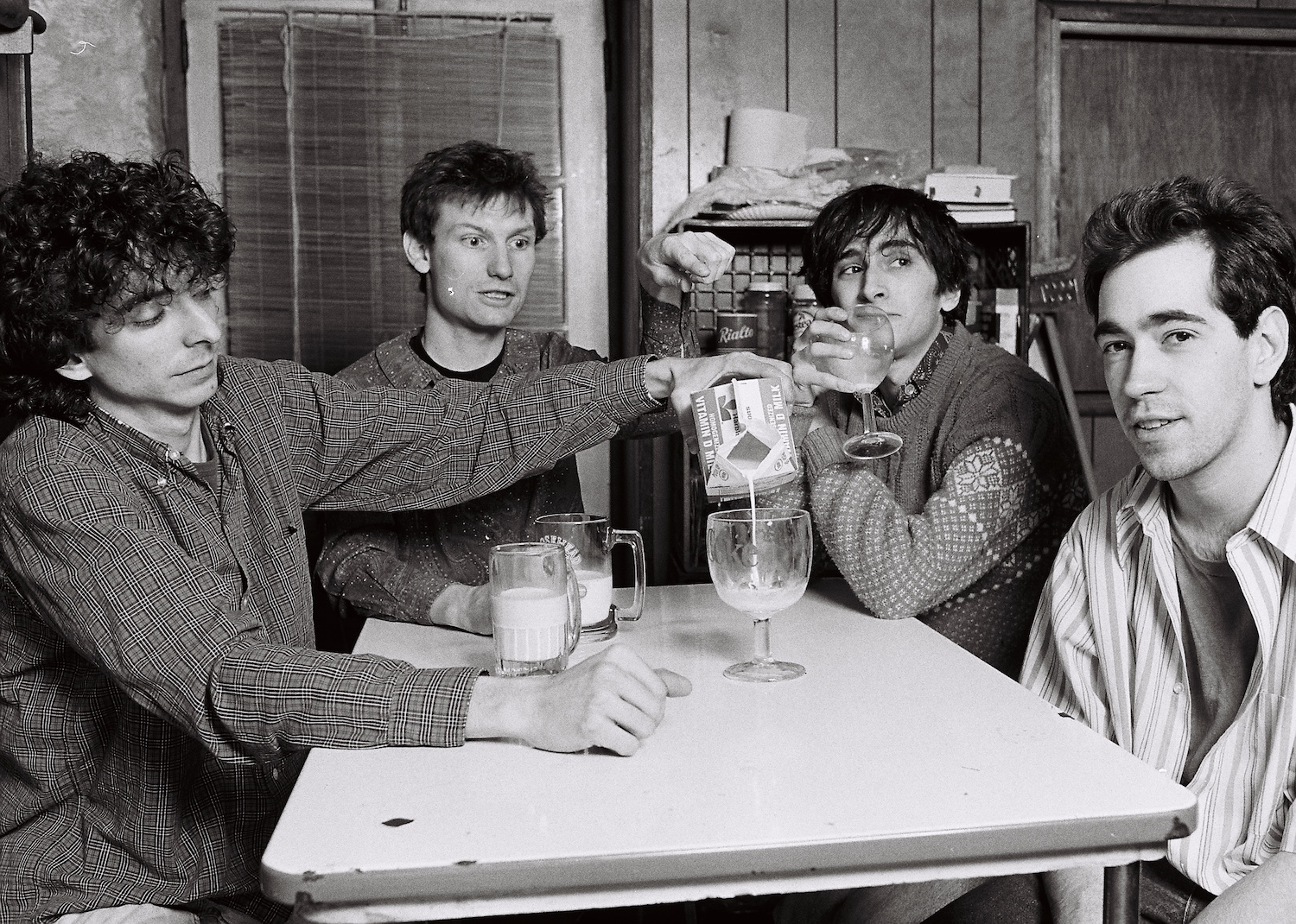
If Boon, Watt and Hurley were punk’s Howard, Fine and Howard, then the Dead Milkmen are unquestionably its Marx Brothers. Rodney is Groucho, the Borscht Belt anarchist wiseass who talked circles around everyone (though his father would become more famous for posing with a cigar, on the cover of Beelzebubba). Joe Jack Talcum (Genaro) is Harpo: the quiet, expressive one—an inveterate collector who is good with strings and always in cahoots with somebody. The late Dave Blood (Dave Schulthise) was Chico, the fearless elder statesman who could talk his way into or out of anything, skilled with women and silly accents. Dean Clean (Sabatino) is Zeppo: the multitalented “normal” one who pays their taxes and could play the straight man when absolutely necessary. Reagan’s (and then Bush’s, and then Clinton’s, etc.) America has always been their Margaret Dumont, that wealthy dowager at the butt of their jokes who had no idea what was going on. As if to drive this home, they covered “Lydia, The Tattooed Lady” on Dr. Demento’s 2018 Covered In Punk compilation, Hail, Philly, And Hail, Freedonia!.
In 1988, Dave Blood explained his “theory of salad dynamics” to Creem magazine: “Rodney has no salad. I have a plain salad. Dean has Italian dressing, and Joe Jack has Thousand Island. Now do you get it?”
Typical of many Blood-lines, he was simultaneously pulling the interviewer’s leg while making a point: The Dead Milkmen have always been four very different people, with four distinct working-class family backgrounds, four different musical pedigrees, four quite different personalities and even four different manners of messing with journalists, record labels, zinesters and possibly even this author. The handful of values that do overlap include honesty, an antipathy for rock-star bullshit and an inability to stop creating music. Listing the other bands and collaborations of the individual Milkmen would take half a page. To expand the list into solo projects would fill a whole page.
“We are all very different, but I think that everybody in the group appreciates that fact because, in reality, that was the strength of our relationship,” David wrote in his final interview in 2003. “We all brought different things to the process. Some people might call it synergy. Maybe that’s what it is, but it worked well for us right up until the end of the band thing. It never got ugly, although it got a bit strange at times.”