
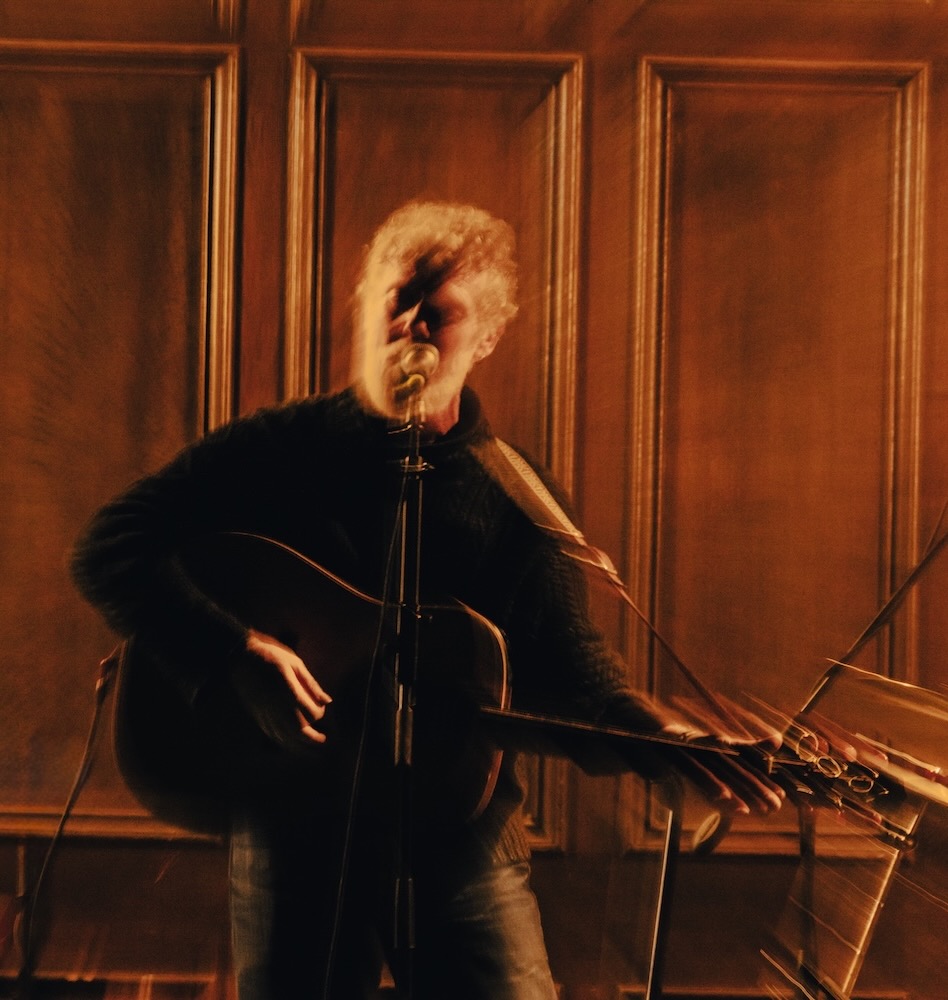
MAGNET’s Mitch Myers takes a quick dip into an old folk song and pays tribute to the Irish bards of the ages. Photo by Chris Sikich.
The tragic passing of Glen Hansard has resonated for many different people in many ways. The Dublin musician was a popular singer/songwriter, a rock star, an actor, a busker and an activist as well as a beloved brother-in-arms. In proper Irish fashion, his funeral was a loving, poignant farewell with family and friends (some famous) honoring the man in both words and song.
Hansard’s resume was hard to beat. From busking and The Commitments to the Frames and the Swell Season to Once and a robust solo career, Hansard was always active and striving forward.
Hansard also occupied a place in the prestigious lineage of Irish bards. The original bards were the oral storytellers, musicians, poets and esteemed performers who chronicled history and culture for their patrons and communities. From 17th-century blind harpist/composer Turlough O’Carolan to 20th-century writer Brendan Behan to contemporary artists like Van Morrison, the Irish bard has always lifted people up, preserving memories and experiences, and encouraging us all through troubled times.
It was just a few years ago that Glen Hansard and Lisa O’Neil sang the Pogues’ classic “Fairytale Of New York” at singer Shane MacGowan’s funeral, and now here we are, faced with a similarly sorrowful event. While the final tune performed by the gathered at Hansard’s funeral was Bob Dylan’s “Forever Young,” the outgoing procession leaving St. Patrick’s Cathedral embraced the refrain of yet another time-honored favorite, “The Auld Triangle.” Hansard himself had recorded the tune in 2010 with Damien Dempsey for the Society of Saint Vincent de Paul charity. Another classic case of a folk song outliving the singers who perform it.
Dublin-born Dick Shannon wrote “The Auld Triangle” about Mountjoy Prison in the early 1950s. Often uncredited and/or miscredited, his evocative song was first recorded by Dominic Behan (also of Dublin), but it was made popular by Dominic’s brother. Brendan Behan used it in his 1954 play The Quare Fellow, which depicts a single day in a prison where one of the inmates is due to be executed. The “old triangle” is the iron triangle bell that was struck repeatedly to wake the convicts each morning.
Long considered an essential Irish folk anthem, “The Auld Triangle” has been covered by the Pogues, Dylan, the Dubliners, Cat Power, Jeff Tweedy, Bert Jansch and many others. It was used in the movie Inside Llewyn Davis and has even been adopted as a chant for fans of Dublin’s Bohemian Football Club. The song’s chorus mentions the Royal Canal, as Mountjoy Prison sits directly on the banks of the Dublin waterway. Over the years, “The Auld Triangle” has been alternately titled “The Royal Canal” by recording artists like Ian & Sylvia, Liam Clancy and the Clancy Brothers.
The song itself conveys feelings of longing, frustration, lust and loneliness, as well as the bleak and austere nature of prison confinement. It should be remembered that Brendan Behan came from a strict republican family, joined the IRA at age 16 and was imprisoned in both the United Kingdom and Ireland before gaining general amnesty in 1946.
While the political edge of Behan’s message has been softened over the years, the rousing, human aspect of the song has only grown in depth and resonance. “The Auld Triangle” has widened in recognition as modern and popular artists continue to embrace the song, often to mark communal moments, cultural solidarity and shared grief. The sing-song, singalong, jingle-jangle chorus has a compelling repetition, and the haunting melody has proved impossible to resist, especially in the pubs and, even, at funerals.
The lyrics of “The Auld Triangle” have been malleable and subtly changing from artist to artist since Shannon first wrote the iconic ballad all those years ago. This is how a traditional folk tune unfolds.
Oh, a hungry feeling, came o’er me stealing
And the mice were squealing in me prison cell
Then the auld triangle went jingle jangle
All along the banks of the Royal Canal
To begin the morning, the screw was bawlin’
“Get up out of bed, and clean up your cell”
And the auld triangle went jingle jangle
All along the banks of the Royal Canal
Ah, the screw was peepin’, and the lag lay sleepin’
Dreaming about his girl Sal
Then that auld triangle went jingle jangle
All along the banks of the Royal Canal
In the female prison, there are 75 women
And among them I wish I did dwell
Then that auld triangle could go jingle jangle
All along the banks of the Royal Canal
Hats off to the grand, enduring tradition of the Irish bard, Hansard, Behan and all the rest.