
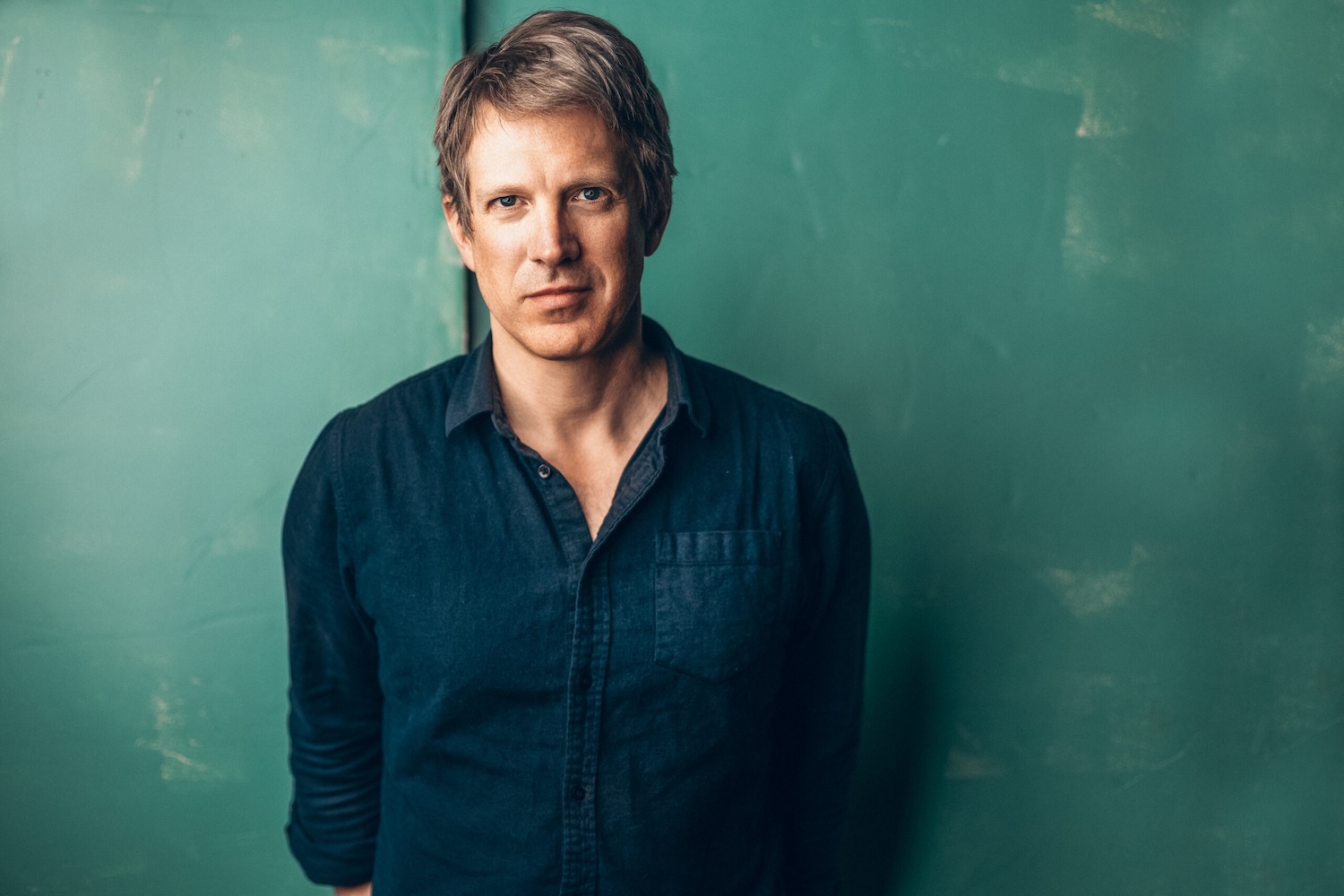
Shearwater’s The New World (Polyborus) took shape over four years across multiple countries, with sessions in London, Berlin, New York and the band’s home state of Texas. Along the way, core members Jonathan Meiburg, Emily Lee and Dan Duszynski reeled in a global supporting cast that includes bassist/producer Shahzad Ismaily (Marc Ribot), sax player Doug Wieselman, multi-instrumentalist Farouz Zriek, guitarist Leo Abrahams (Brian Eno, Imogen Heap), percussionist Thor Harris (Swans) and Malian musicians Mahamadou Tounkara and Moctar Kouyate, not to mention Laurie Anderson. This impressive cast of collaborators nudge the songs outward, creating environments that feel almost livable.
For nearly a quarter century, Shearwater has made music that treats wonder and unease as complementary forces. In laying the groundwork for The New World, Meiburg—an accomplished naturalist, ornithologist and author—gathered sounds from different corners of the world. Shearwater’s 11th studio album makes a deceptively simple point: Pay attention. Beauty is everywhere, even when everything else threatens to overwhelm.
Checking in recently with MAGNET’s Hobart Rowland, Meiburg covered a range of topics, from field recordings and long-form fiction to why the internet shouldn’t get the final word on reality.
You’ve said that when you’re feeling hopeless or powerless, contemplating the living world is the only thing that helps. How did that realization shape the emotional core of The New World?
When I was a young kid, I got freaked out by a voice on the radio reading “I think I could turn and live with animals …” by Walt Whitman. I remember wailing and feeling like I’d lost something precious, while my poor parents tried to figure out what was upsetting me. Over the years, I’ve learned that it’s not impossible to get it back for a moment or two. And you don’t have to be deep in the wilderness to do it.
The LP was assembled with field recordings from multiple countries. What function do those real-world sounds serve?
Working with field recordings is a little dangerous. They can make you feel you’re stepping into a moment of someone’s life, which is a strong flavor that can easily overpower a song. But when they work, they help make a song feel like a place, which we’re always striving to do.
For The New World, you assembled one of the most eclectic groups of musicians in Shearwater history. What did they bring to the table?
Our last album (2022’s The Great Awakening) was recorded in a house in Texas during the pandemic, which left us craving human and musical connection with friends in new places. Shahzad Ismaily’s studio, for example, is a real beehive. There are so many fascinating musicians flowing through, and sessions there felt like one of those parties where people just keep turning up. It took a while to edit and sculpt all those performances, but they helped us find places in the songs we’d never have reached on our own.
Has your nonfiction writing changed the way you think about storytelling in songs?
At a distance, I think every big project feels about the same. There’s a period of exploring, then revising, then refining—and each stage requires a different mindset. Working in different media has helped keep me from getting too scared when I inevitably get lost. If I’m patient, a way will open. But the details are different. I don’t think most of my songs would stand on their own as prose—they’re not supposed to. Songs are like lichens, which are a cooperative arrangement between a fungus and an alga. Each can live separate from the other, but they thrive when they work together—and you can sub out “words” and “music” for “fungus” and “alga.” Most of all, in writing or in music, you just have to remember what information you’ve given your reader or listener at any moment, and how you might carry them from one place to another.
If listeners take away just one thing from the new album, what do you hope it changes about the way they view the world around them?
I’d like to be able to make things that remind us—including me, while I’m making them—that the living world that made us is a very beautiful and mysterious place, and there’s a lot to learn about and from it. Don’t let the internet fool you.
See Shearwater live.