
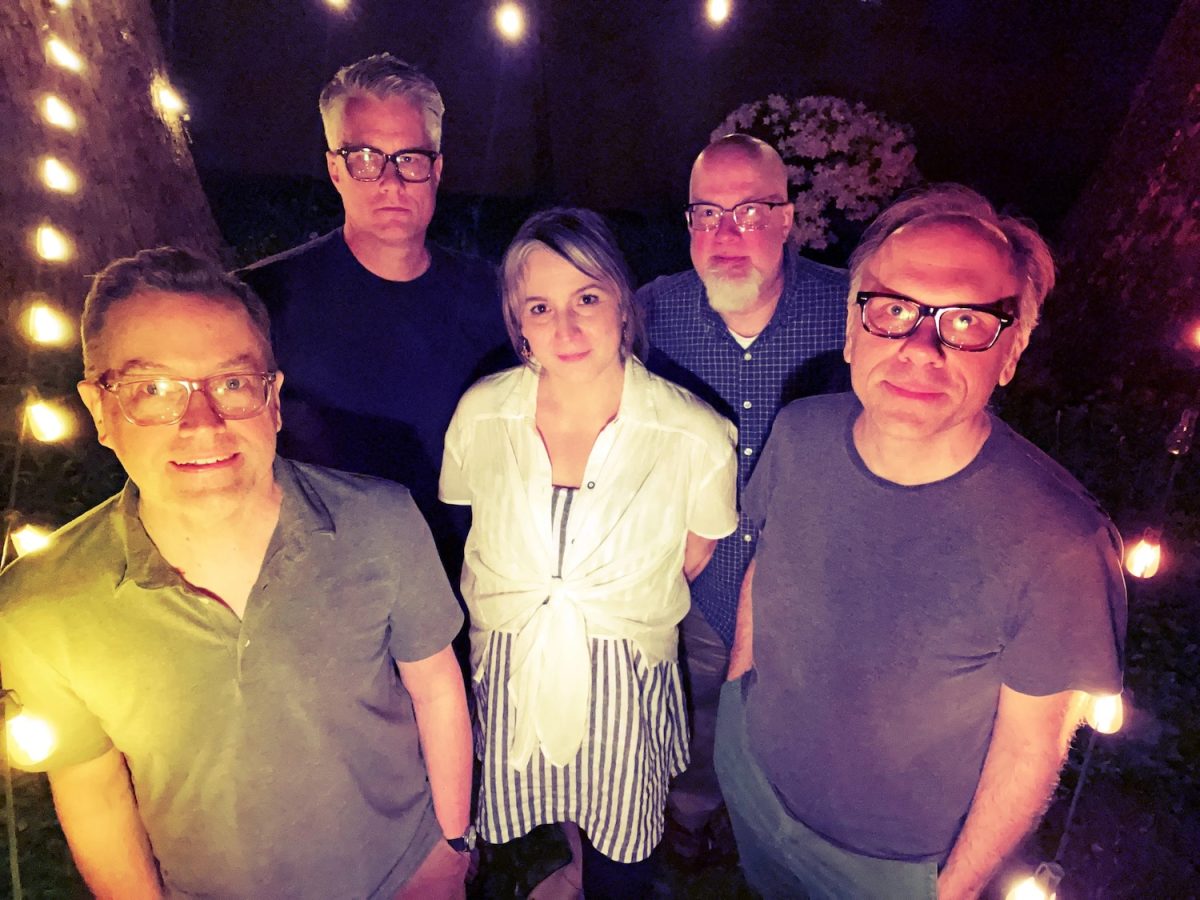
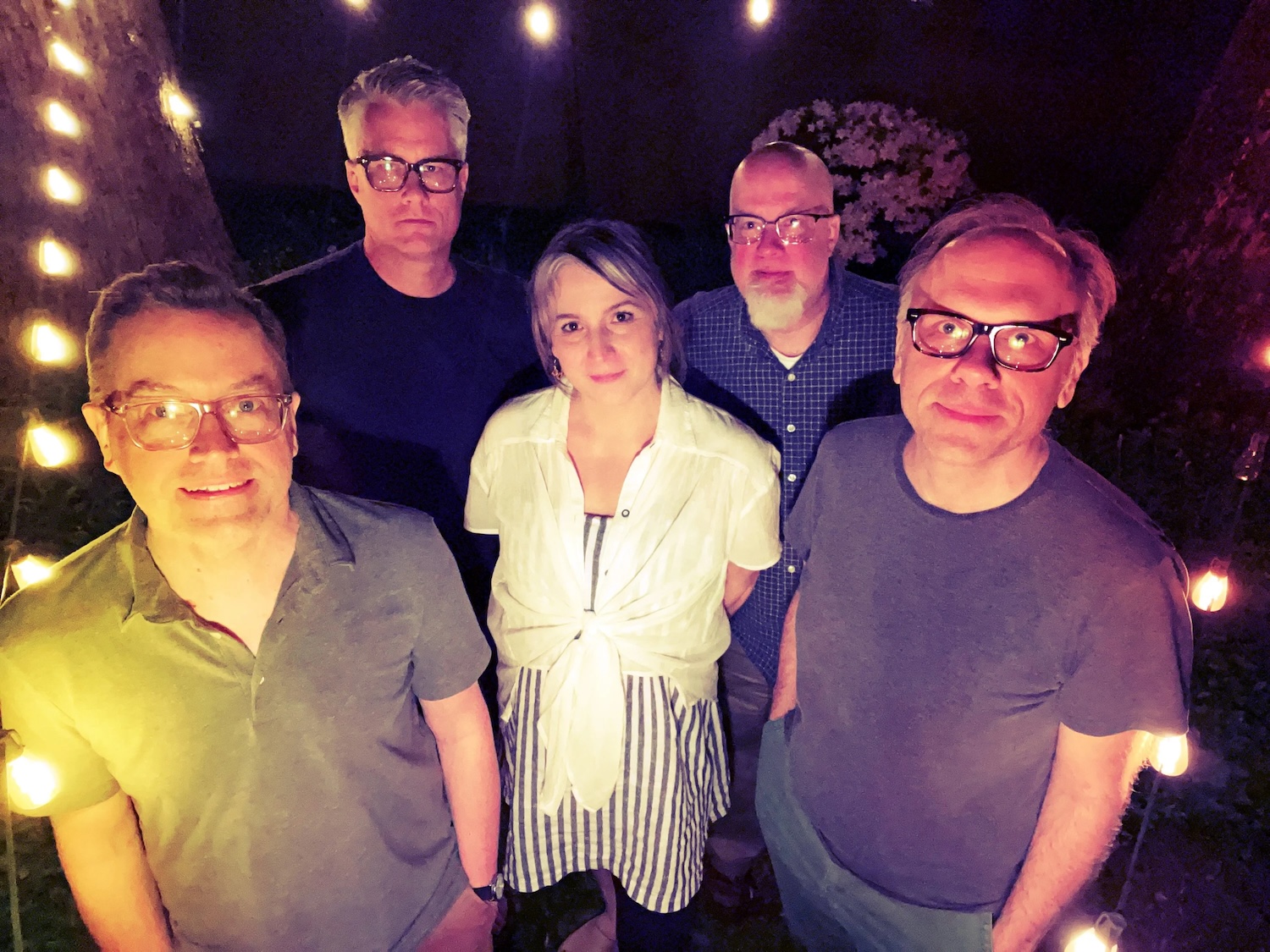
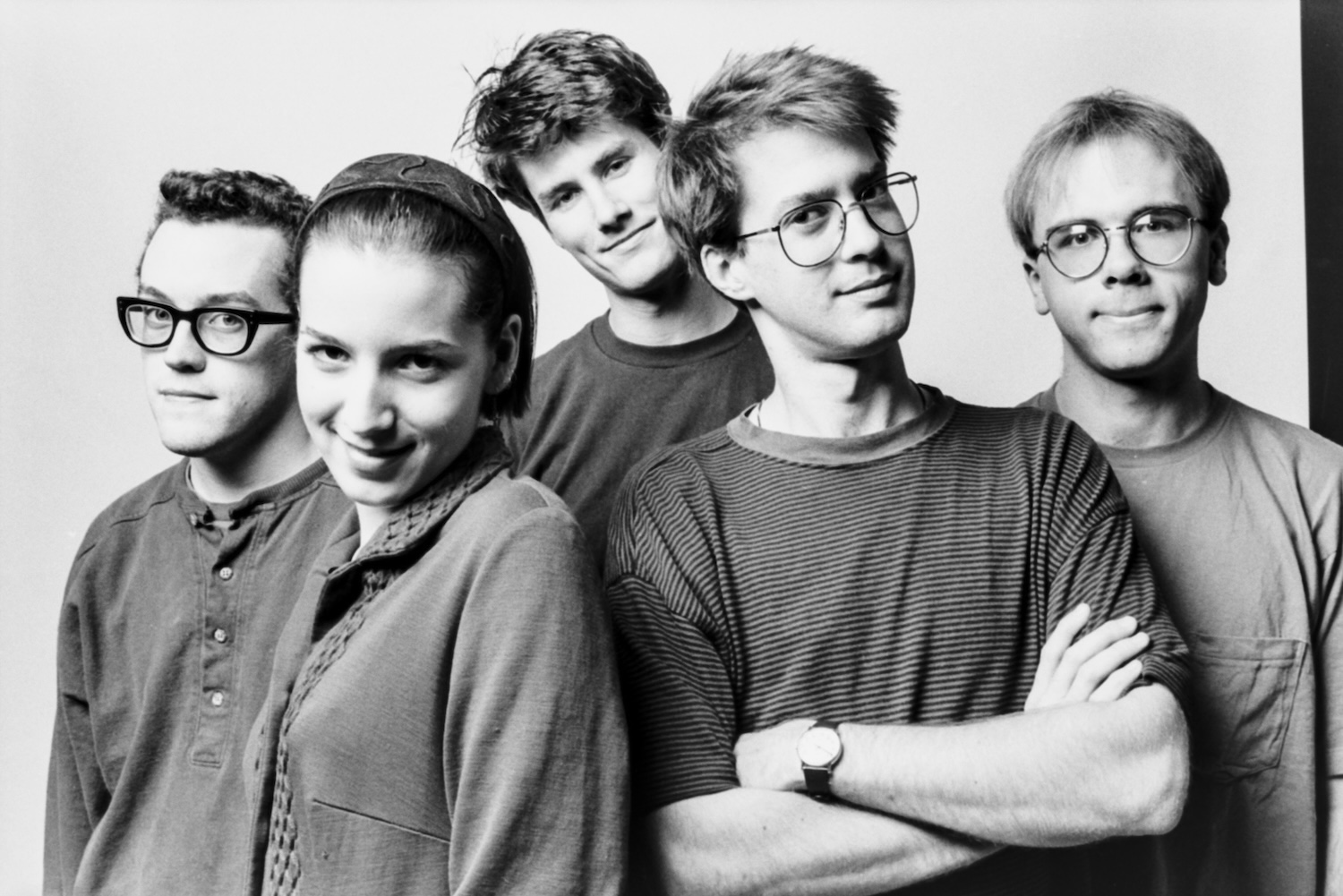
Listening to Velocity Girl’s earliest recordings is like witnessing a band sort itself out on the fly. Though it would go on to become one of the defining indie-pop acts of the early ’90s, the Washington, D.C.-area outfit didn’t arrive fully formed—few good bands do. There were shifting lineups, steep learning curves and at least one song that once made co-founding guitarist Archie Moore’s physically ill to hear.
That track, “Clock,” is the starting point for 1989-1992 (Slumberland), a new compilation of Velocity Girl’s output before its move to Sub Pop. Recorded on a four-track in a basement, “Clock” featured original vocalist Bridget Cross, who’d later join Unrest, another foundational D.C. act of that era. Velocity Girl’s evolution accelerated quickly from there. Cross departed, Sarah Shannon arrived, guitarist Brian Nelson eventually joined the core group of Moore, bassist Kelly Riles and drummer Jim Spellman, and this freshly cohesive lineup set about discovering how melody, distortion and interlocking guitars could happily coexist. “Forgotten Favorite” became the turning point—a modest seven-inch that did well on college radio in 1991 and helped crystallize the sound that would carry Velocity Girl into its Sub Pop years.
Restored from the original tapes and newly remastered, 1989-1992 assembles the Cross recordings, Shannon’s earliest appearances, singles, compilation tracks and “Forgotten Favorite.” Moore also reworked two previously unreleased songs (“I Know Exactly What You Mean” and a cover of the Jam’s “That’s Entertainment”) whose rough mixes had been unsuitable for release.
MAGNET’s Hobart Rowland sat down with Moore and Shannon on a bicoastal Zoom call to revisit those formative years.
MAGNET: Going back to D.C. in the late ’80s and early ’90s, there was the heavier post-hardcore world and bands like Velocity Girl who were approaching things from a more melodic direction. Did the two scenes ever converge?
Moore: We were friends with a lot of what would’ve been called post-hardcore then: Jawbox, Shudder To Think, Fugazi. We knew and loved those people. We considered what we were doing to be kind of different and more aligned with Tsunami and Unrest. I think we regarded the difference as basically pop versus rock. Pop songs were the focus of our band, anyway.
Was there ever any weirdness or competition between those sides of the scene?
Shannon: Everybody was very supportive. I think that was kind of the name of the game in D.C., really—to support each other. I can’t think of any instances of anybody poo-pooing another band because they were too this or not enough that. I think it was just like, “You’re making music. We want to hear it.”
Moore: And being in D.C. in the late ’80s into the ’90s, we didn’t realize how good we had it. We grew up with this infrastructure where DIY was almost like a birthright. We came up in a band and thought, “Well, we want to do a record,” and it naturally occurred to us back then to release our own record. That’s all stuff that Dischord and SST on the West Coast helped establish in the U.S. independent scene. Being here in D.C., when I got to college, I walked into a local record store and there was a rack of the latest Dischord releases on the wall. I assumed it was like that in stores all over the country with their own local scenes. It was only after a few months that I realized, “No, this is actually pretty special.”
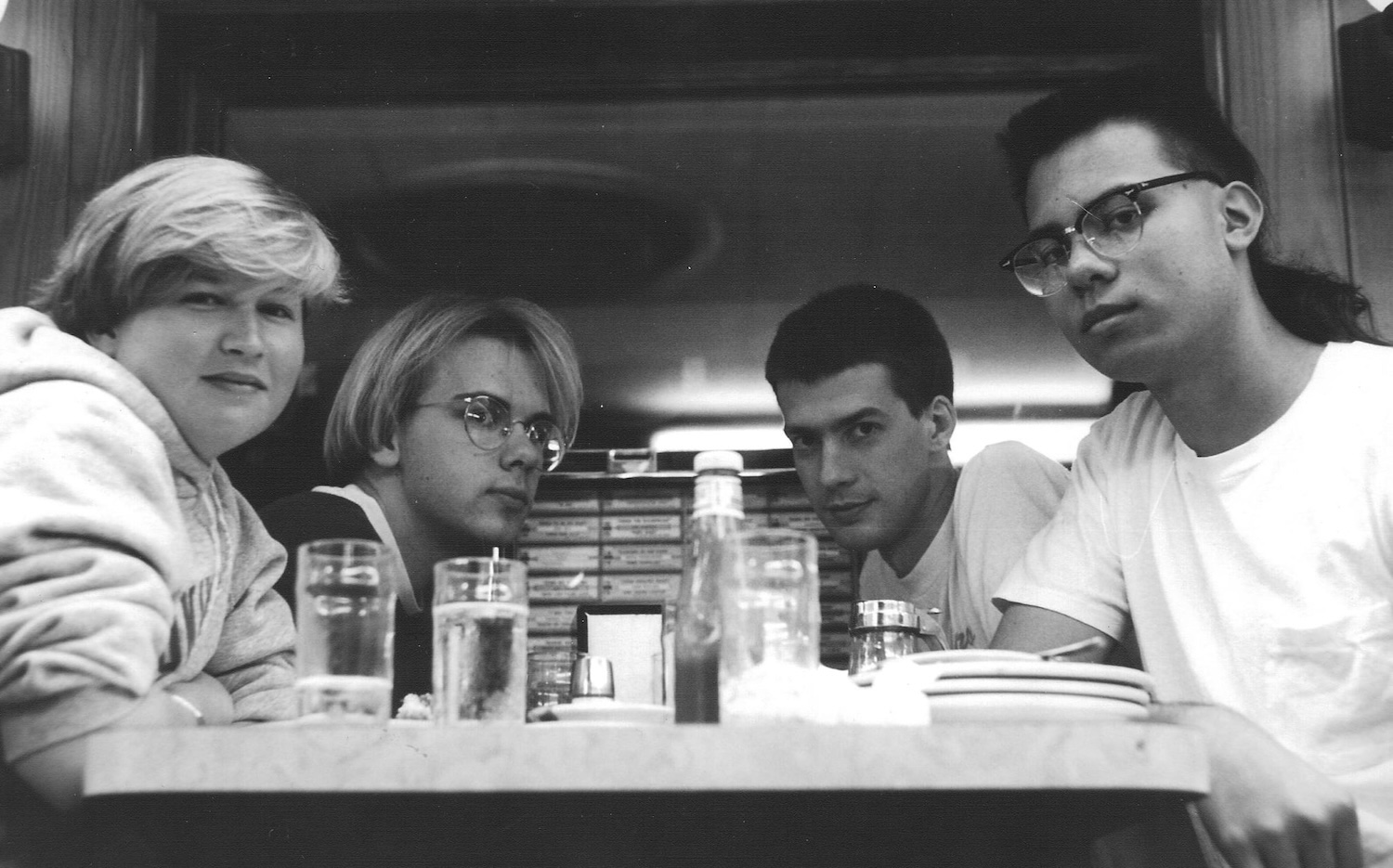
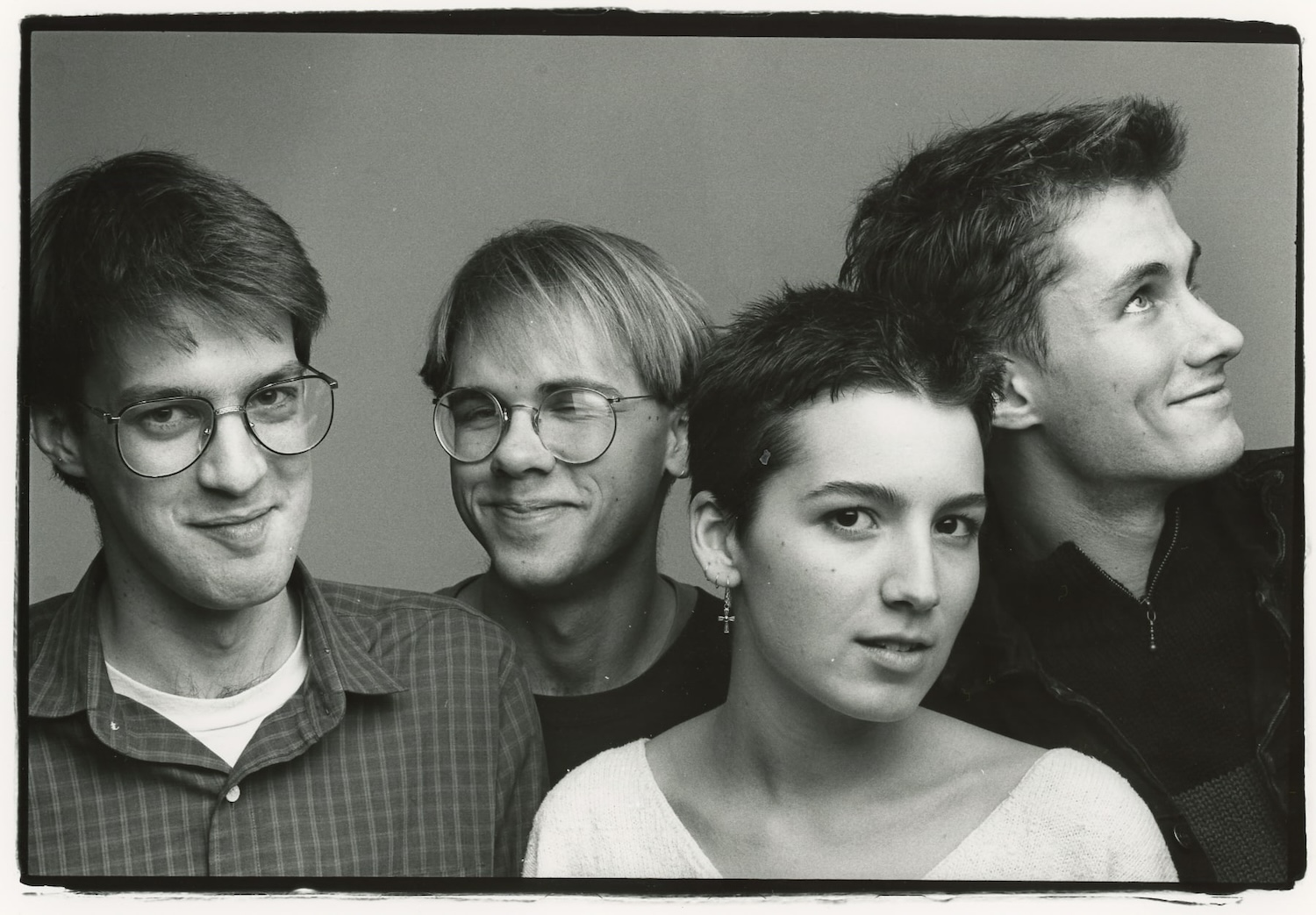
What was it like revisiting the early Velocity Girl material after so many years?
Moore: The fact that we’re all pretty close to 60 now means there are literally decades of space between when we did it and hearing it now. I’m actually kind of touched or tickled by the records now when I listen to them. But I was embarrassed about “Clock” almost as soon as it came out. It was on a compilation for Slumberland, and we were the first song on it. I remember Kelly played it at a party at his house right when it came out, and I ran into the bathroom and threw up in the sink. It was a real crisis of confidence for me.
And now?
Moore: I’ve come to a place where I like “Clock” a lot now. I hear it and think, “Oh, wow, Bridget’s vocal performance is really interesting.” It’s got a weird, almost goth thing going on. But I couldn’t listen to it for years.
What changed with the first single, “I Don’t Care If You Go”?
Moore: That was the first time we ever went into a studio, and it was an eight-track studio in this guy Barrett Jones’ basement. He went on to be the Foo Fighters’ engineer. It was in Arlington (Va.), and it was called the Laundry Room, because that’s essentially what it was. That felt like a real luxury to us: eight tracks. There were only five of us in the band. What were we going to do with all that extra stuff? We were all very happy with the way that record came out. I think everybody in the final lineup likes “I Don’t Care If You Go.” We think that was a successful song. It was our first pop song. That’s where it started being something.
Sarah, how did you end up joining the band?
Shannon: Except for Brian, we all went to the University Of Maryland. I met Jim through mutual friends at American University. I’d hang out with him a little bit at the same parties at AU. Bridget quit, and he knew I was a singer and asked me to join the band. I had this weird little audition with just him. I think I sat in the car for like an hour because I was so nervous. He was probably pissed off that I was late, but he never mentioned it. I think I sang along to some of the stuff they’d already done. Maybe he played a few chords, and I sang some notes. Honestly, as long as I could carry a tune, I probably would’ve been in.
Archie, what did Sarah immediately bring to the band?
Moore: When Sarah joined, we were down to a four-piece from a five-piece because two people had left and one person had filled in. We still didn’t have Brian in the band. For about a year, we were trying to figure out what our sound was because Sarah’s voice had a lot of different things going on. We had to re-envision ourselves as a band. There are two versions of “Forgotten Favorite.” The first one we didn’t use. Sarah gave this really amazing, belting-it-out kind of performance. By the time we came back a couple weeks later, I’d kind of “wimped her down” because I wanted it to sound like Lush or some U.K. indie-pop band, with airy, whispery voices. That’s what’s really interesting to me about the two unreleased songs on the compilation. Sarah still had the strong Sarah voice on those—really forceful, right from the get-go. Those were the first songs we ever recorded with her.
Shannon: I have to say I never felt “wimped down.” I’d just joined the band, and I didn’t really know how to fit in or where my voice was going to land. I’d been studying opera, but that wasn’t my thing. I didn’t want to be an opera singer. I’d wanted to be a rock star since I was a little kid, but I had no idea how to do it. It probably took me until the second full-length record to really find exactly where I wanted to put my voice. You can hear that.
“Forgotten Favorite” has endured as one of the songs people immediately associate with Velocity Girl and that era of indie pop. How did it feel when you realized that it was actually connecting with listeners?
Moore: I’m still very proud that we have a song that really resonated with people, because that was shocking. These were tiny little singles we were putting out. They had U.S. indie distribution, but these were not big records. That song ended up charting pretty highly on the college radio charts. We’d go on these tiny little tours. A tour would be like three shows—we’d go to West Virginia and play Arlington or something. When we went to West Virginia, the people who let us stay with them were like, “Oh yeah, that’s the song that gets everybody out on the dance floor when we have parties.” I couldn’t wrap my head around that. People play our record because they think it’s a banger?
Shannon: Playing it live over and over again, you could feel that connection onstage. It was like, “Yeah, man. This is the stuff.”
Was “Forgotten Favorite” also the point where you felt you’d found the Velocity Girl sound?
Moore: Probably, and it’s probably no coincidence that it was right after Brian joined, too. We had two guitar players, we had guitar interplay, and I think around then is when we figured out how our sound was going to work. “Forgotten Favorite” was our attempt, at least guitar-wise, to be like “Vapour Trail” by Ride. We were very much inspired by shoegaze music, though I don’t think we were capable of the sonic soundscape aspects of it. We weren’t really technically minded. We basically just turned the distortion all the way up.
Sarah, is there another song that represented that moment for you?
Shannon: The first thing that comes to mind is “Sorry Again.” That connects with my little-girl rock-star dreams because I remember the exact moment I was in the car on 495 and heard it on the radio. My brain exploded. I started jumping around and looking around like, “Does anybody know? That’s me! I’m on the radio!” Maybe that’s more about the song being a hit than about the sound of it, but that’s the one that comes to mind.
Do you hear Velocity Girl filtering down into younger bands today?
Moore: We had members of the Linda Lindas come to one of our reunion shows. I don’t know if we can directly relate to them sonically, but I love them, and their father had played Velocity Girl for them when they were little kids. To have something you listened to as a kid and then have your dad or uncle say, “Hey, these guys are coming back around. Do you want to go to this concert?” The fact that they came to the show and wanted to meet us was amazing. Of course, I was more starstruck than they were. They’re a lot more famous than us.
What did those 2023 reunion shows reveal to you about the way the music has endured?
Moore: I’ve watched several of our peers, like the Swirlies, who are very good friends of ours, and Drop Nineteens, who we don’t know personally. And if you go to a show by either of those bands, it’ll be half male-pattern-baldness guys with white hair and half Gen Z. Our shows had maybe some millennials and a few Gen Z, but it was nowhere near what some of those ’90s shoegaze bands have experienced.
Shannon: Our kids thought it was pretty cool.
Moore: That was one of the big sparks for us. It was like, “It’s kind of now or never, because we’re all about to be really old.” Our kids had never gotten to see us play.
When Velocity Girl ended, how difficult was it to adjust to life outside the band?
Shannon: It was difficult for me. I’m not a super-prolific songwriter, and Jim was our de facto manager and publicist. He was the “let’s practice” guy.
Moore: That’s absolutely the case. We literally would never have gone on tour or even gone into Barrett Jones’ basement recording studio if Jim hadn’t been that guy.
Shannon: Well, I didn’t have Jim anymore, so it was slow going (as a solo artist). Once I finally put something out, it got a few notices, but it just didn’t get any traction, and I was kind of heartbroken. You don’t really realize what rarefied air you’re living in when you’re in it. We were very lucky. I think we were good, but we were also really lucky. It was hard to get knocked down a peg or two. But it was also like, “Well, what are you going to do, Sarah? Your rock-star dreams didn’t come true. You’re still going to keep making music.” Although I stopped for a good long time to have babies.
And where has music taken both of you since?
Shannon: I teach music to children 12 months to six years old. It’s wonderful. I get to watch the 12-month-olds basically eat the instruments or cry when I walk into the room. Then slowly they start to get simple rhythms and melodies. By the time they’re four or five and getting up to six, we can play songs on the xylophone. Oh, and I totally forgot about my rock band for kids. It’s called the Not-Its. We’ve put out seven records. That’s kind of how I got into teaching kids music. We played all over the greater Seattle area and somehow got invited to play in China and India. I’m also working on new songs. I’m going to put out a new solo record.
Moore: I slowed down for a while with music and started doing it again in the past five years. Professionally, I ended up in the world of audio. I work for a post-production place and record audiobooks. I also mixed the first Pains Of Being Pure At Heart album in 2008. They were very much a band influenced by Velocity Girl and Black Tambourine and the American noisy-pop bands of that time, so that was really cool.
Any chance this reissue leads to more Velocity Girl shows?
Shannon: I doubt it. It’s a pretty big production. I live out here on the West Coast. I’m happy to come back, but it’s a lot of practice. Everybody has day jobs. It’s hard to pull it together.
Moore: Rock ’n’ roll will not die.
Shannon: It will not die.
?