
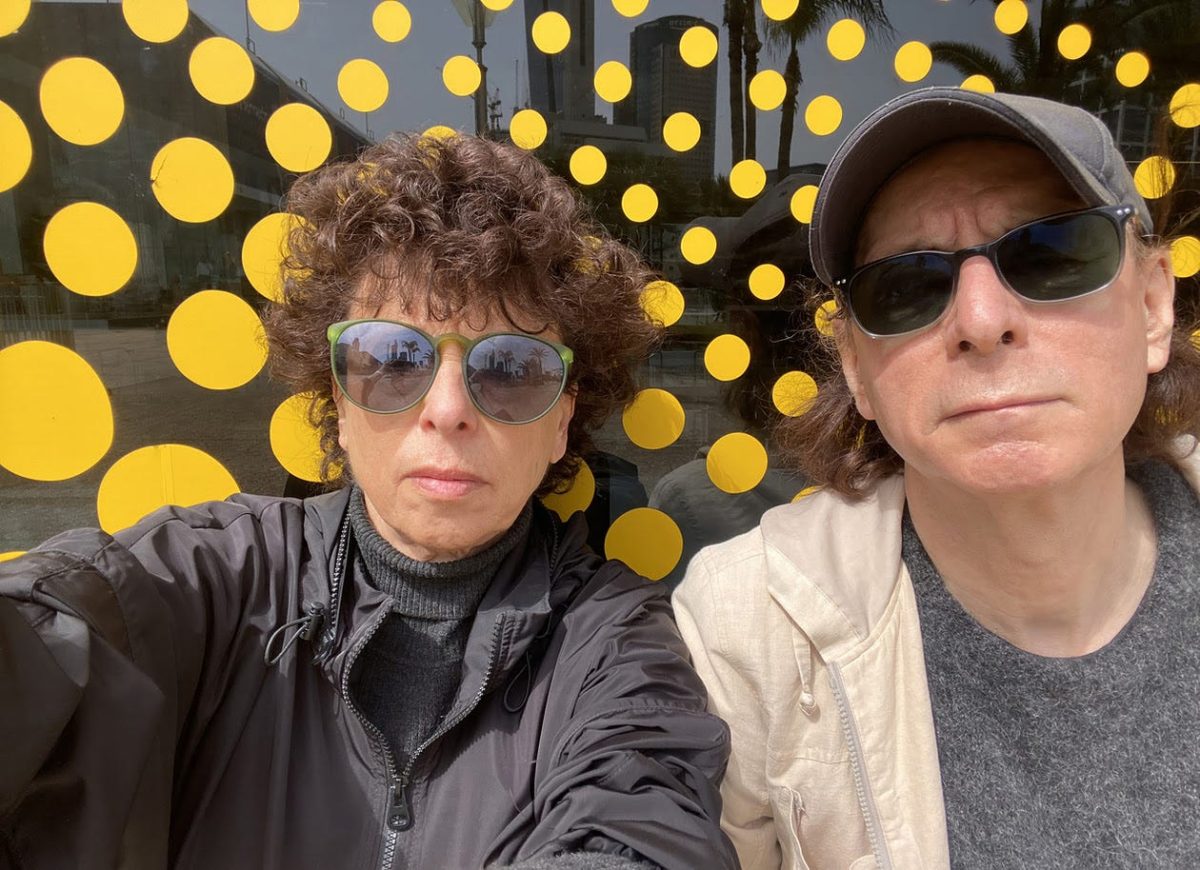
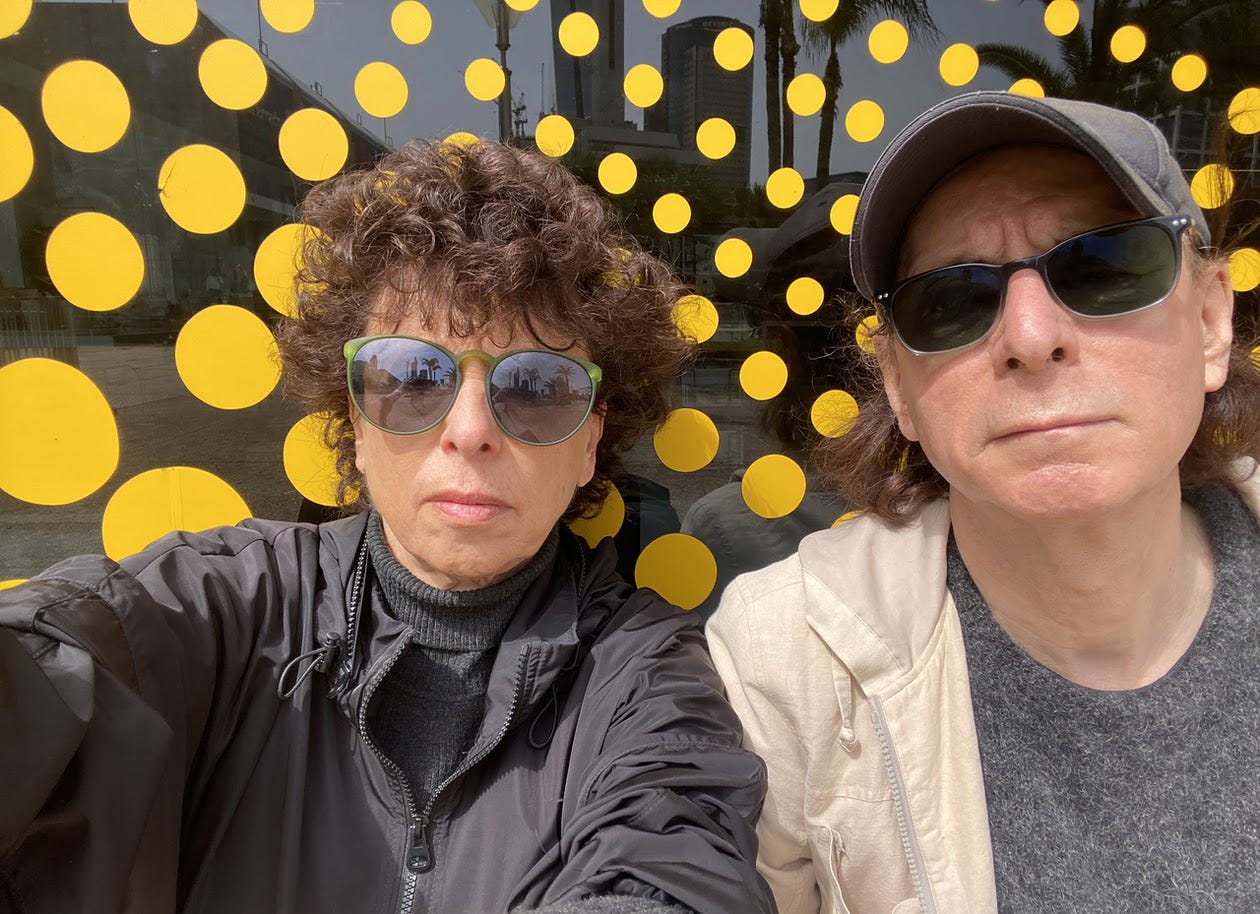
What Is Lost Will Return (swim~) came together with unusual speed. This past March, with another Immersion tour approaching, Colin Newman and creative/life partner Malka Spigel wondered whetherthey could possibly finish a new album in time. By the end of April, they’d delivered it, with the work of drummer Matt Schulz (Holy Fuck) helping move the sessions forward. And if last year’s WTF?? was an unambiguous response to the bewilderment of the moment, What Is Lost Will Return is far less reactionary, its balance of joy and melancholy equally propelled by pop hooks and hypnotic repetition.
Newman is celebrated for his affiliation with Wire and Spigel for her work in Minimal Compact—both influential ’80s post-punk acts. But the busy couple prefers to focus on the now. Their weekly radio program, Swimming In Sound, has become yet another fertile offshoot of their creative ecosystem, its diverse indie playlist serving to raise the bar for their own work. This month, look for them to take over a five-week Thursday-night residency at KCRW in Los Angeles.
MAGNET’s Hobart Rowland managed to wrangle Newman and Spigel for an engaging Zoom discussion from their home in Brighton, England.
These new songs strike me as unusually immediate and catchy. Was that something you were consciously pursuing?
Newman: Every album is a reaction to the previous one, to life, to everything. Immersion started out as a pure electronic duo, but that was a long time ago. Through collaborating with a lot of other people—especially in the past five or six years—we’ve developed a way for Immersion to be a vehicle for the things we do. We’re interested in communication and making that communication pretty direct, so I guess hooks are part of that … and also, lyrics that aren’t opaque. It’s just a whole approach.WTF?? was obvious. You don’t need to ask what it was about. We all live in the now. I think where we wanted to go with this one was, “Let’s get beyond just reacting.”
Spigel: Part of what we play on our radio show is beautiful pop songs. We’re kind of suckers for good melodies, I guess.
Your voices create an interesting tension on this album—Malka’s melodic singing against Colin’s more conversational delivery.
Spigel: I guess we react to each other. Because we’re a couple and we’ve been working for such a long time, it’s quite hard to break it down and think, “How did we get to this?” We just do. If you gave each of us a set of chords that were inviting to perform on and a set of lyrics we knew we could work with, we’d each come up with something completely different.
Newman: Malka has this brilliant vocal style and delivery. She makes those dreamy choruses really stand out. There are things we play on our radio show that definitely feature spoken word or people talking—or a combination of talking and singing. I’m saying “talking,” as opposed to “rapping.” Rapping is a bit culturally exclusive, whereas talking is just talking.
This is the second pure Immersion album in two years. Did What Is Lost Will Return grow naturally out of the WTF?? sessions?
Spigel: First of all, there was a tour arranged for us this year, and Colin thought we should have a new album with it. We just love working in a studio and creating new music. So it was partly because of the tour and partly because we love creating music.
Newman: The big thing that really happened to pull it to the next level was Matt. He drums with us, and he said, “I’ve got this studio just down the road from where I live. I can get in there and do some drums recorded in a nice room, and it’s not going to cost a fortune.” We were like, “OK, give it a go.” The addition of another layer of drums really took it somewhere else. The fact that he added this well-recorded, strong rhythm meant we could continue and finish it in an inspired way. I still can’t believe how quickly we did it.
You spend two hours every week immersed in new music for Swimming In Sound. How does that feed back into your creative selves?
Spigel: It’s not like, “Oh, that guy sounds amazing. Let’s do something in that style.” It never works like that. But when you hear a lot of great music being created, it inspires you and brings out yourself. It grows you as an artist, I guess.
Newman: And there’s a standard when you’re hearing the way people are finishing tracks to. About 95 percent of the stuff on the show is being released by independent artists on independent labels, quite a lot of it made in their own studios and spaces. But people are finishing stuff to a pretty high standard. You’re hearing audio that’s really effective—and that does influence us.
How do you prevent Immersion from settling into a formula?
Newman: Almost anything can become a formula, to be quite honest. That’s why we like to collaborate. It takes us out of our comfort zone and the habits we have. We wouldn’t even be singing or having guitars in Immersion if it weren’t for collaborations we’ve done with other people.
Spigel: You love singing and playing guitar.
Newman: You love playing guitar.
Spigel: I can’t play the guitar, but I love playing it.
Newman: Malka is very enthusiastic.
“Megafauna” feels more ominous than much of the album. How did that track take shape?
Newman: The bass is the original.
Spigel: Oh, is it?
Newman: It was probably recorded in Brooklyn in 2022.
Spigel: Matt is crazy. We were visiting New York, and he suddenly said, “Why don’t we go into my friend’s studio and do some recording while you’re there?” So he flies in, and we spend three days literally just jamming—piece after piece after piece after piece. Those pieces just sat around for a while, and when created new material, we dug them out and built more music on top of it. That’s how “Megafauna” started. But the mood kind of created itself.
Newman: Malka is, on one level, kind of a reggae bass player. The bass part has this ominous dub-reggae kind of bass. It doesn’t even have chords. I just play notes against it.
After working together for years, has the language you use to create music changed, or has it simply become more instinctive?
Spigel: We’ve been together so long, and we’ve grown as people and as a couple. I’d say our voice is more together than ever.
Newman: There’s an amazing power in doing something where you’re both facing in the same direction and you don’t really need to ask a lot of questions about it. You kind of know instinctively that this is what you should be doing. How that translates—whether it makes us more famous or sells us lots of records—is almost immaterial. What really matters is that we’re creating something relevant to now and to us. We’re not sitting in the past and trying to live off it, which is kind of death. It’s like saying, “Take me now,” basically.
See Immersion live.