
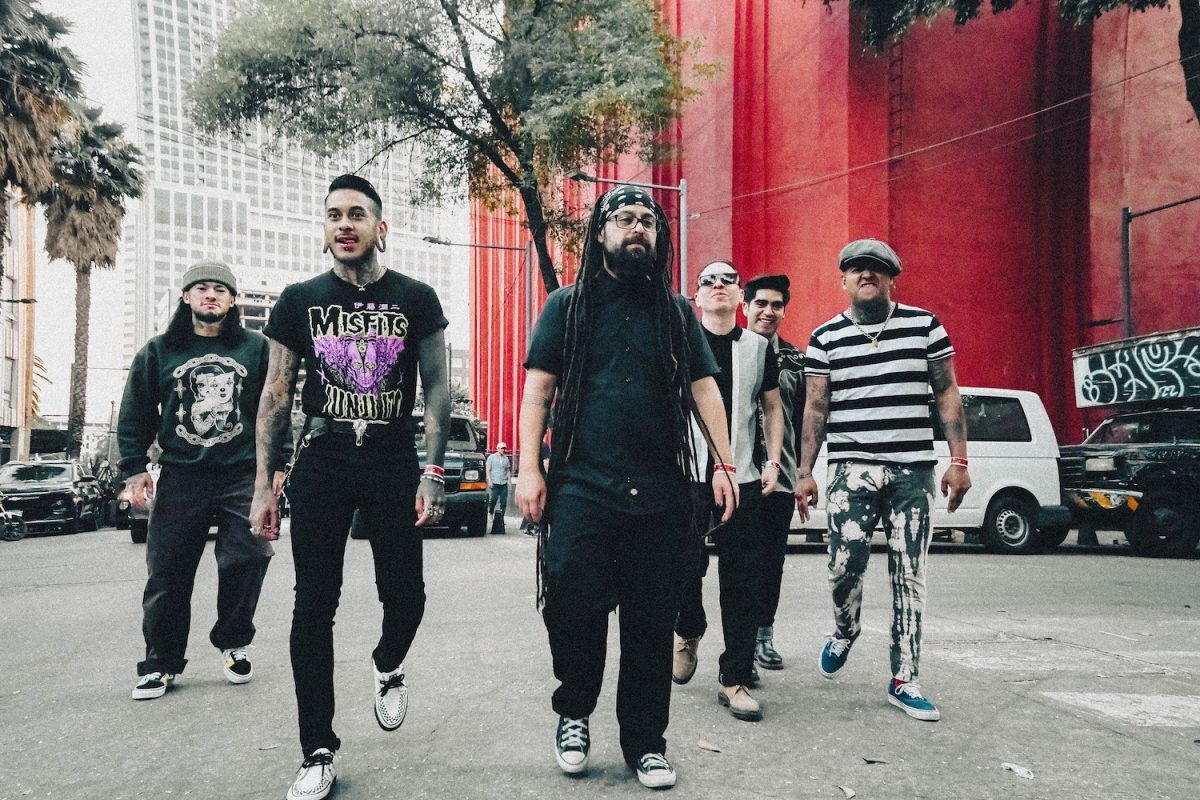
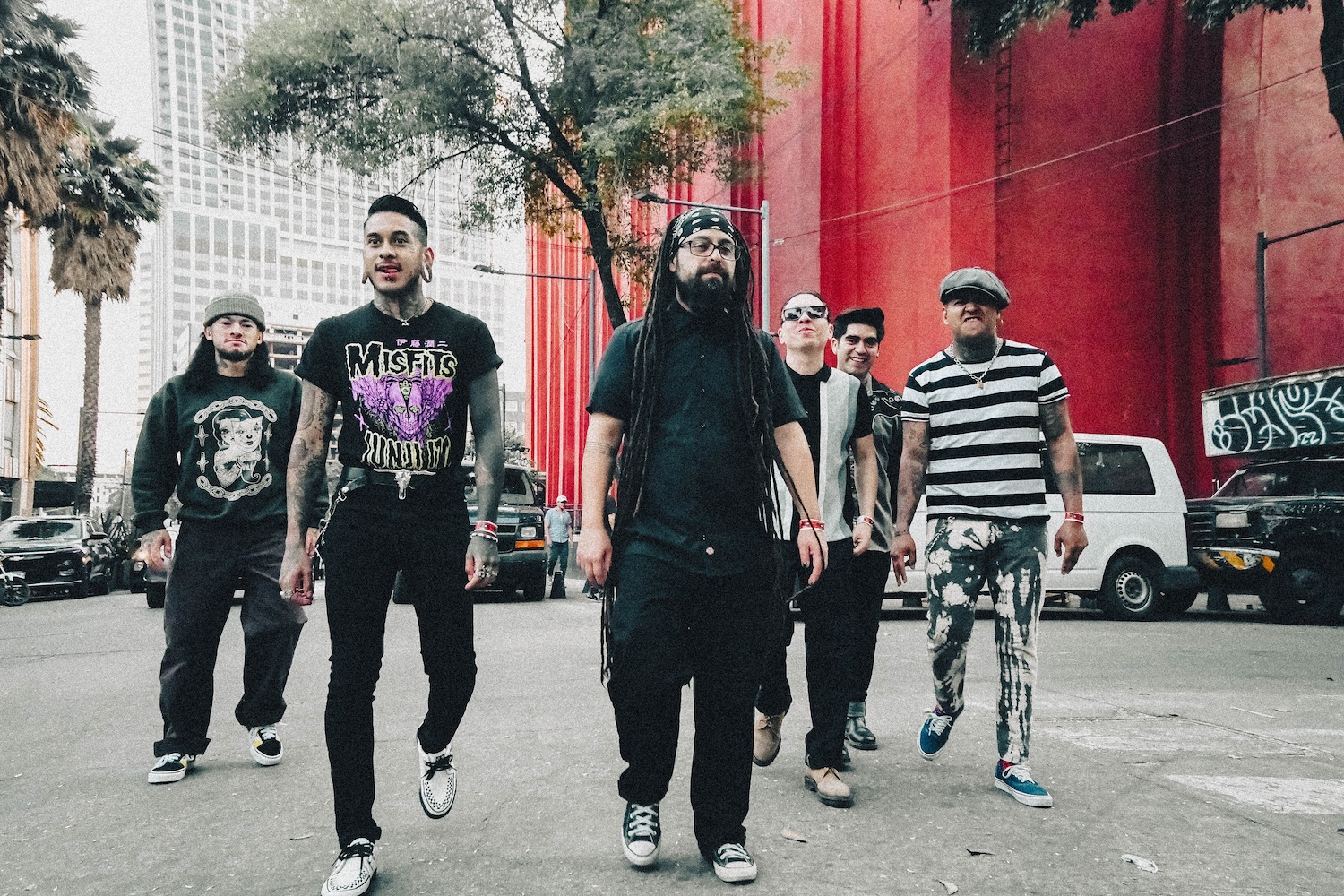
Produced by Black Pumas’ Adrian Quesada, Marimbazos De Oro (Mixto) expands considerably on the cumbia/punk hybrid that originally propelled Son Rompe Pera’s three Gama brothers from the outskirts of Mexico City to Coachella, Fuji Rock and clubs and festivals around the world. Ranchera, salsa, grupera, bolero, hardcore punk and cumbia all have a place on the band’s all-inclusive third LP—some of it music the Gamas once dismissed. These days, it provides a crucial emotional connection to a childhood and family life they’ll never recover after their father, José “Batuco” Gama, was killed a decade ago in an act of street violence in their hometown of Naucalpan. All of which makes Marimbazos de Oro the best sort of reclamation project.
Here’s a full-album breakdown from Allan “Mongo” Gama.
1) “Reptilio” (“Reptile”)
“In the 1950s, fantasy and sci-fi movies explored worlds where mankind was controlled by reptiles, sometimes secretly blending into society and even becoming our leaders. ‘Reptilio’ questions who the people in our governments really are, what their real goals are and whether maybe all that jokey stuff from the B-movies is actually true. Are they here for our souls? And what if we all have a bit of reptile inside of us?”
2) “El Reencuentro” (“The Reunion”)
“This is based on a melody that aired constantly in Mexico City during the 1990s as the background music for a local Alcoholics Anonymous PSA. Years later, after becoming trapped in cycles of addiction, we entered Alcoholics Anonymous ourselves. While in recovery, we learned to play the song from the PSA, and it helped us get through those difficult times.”
3) “Nada Que Hacer” (“Nothing To Do”)
“This song was first released on our 2011 Stomping Rats demo tape, Get Drunk, Have Fun, Let’s Wreck!!. It was an anthem for that chapter of our lives—a soundtrack for broke young people with endless weekends of parties, shows and sleeping wherever the night happened to end. Back then, our only goal was to have fun with our friends. Today, we never stop working.”
4) “Me Olvidaste” (“You Forgot Me”)
“I wrote this almost a decade ago in Chile during our first trip outside Mexico to record our debut album. I’d just ended my first real long-term relationship, and I was confused because what she said had happened wasn’t what I thought had happened. I was alone on another continent, and I didn’t know how to deal with the contradiction between our two versions of what had been a shared story.”
5) “Arboledas” (“Groves”)
“‘Arboledas’ is the beginning of the Gama brothers’ story, describing from a kid’s viewpoint what it was like growing up on the streets of our hometown of Naucalpan. This isn’t a sepia-colored, folkloric view of Mexico. My lyrics describe the reality of our neighborhood and the fear I felt every day as I passed Mercado Las Arboledas on my way home, hearing gunshots, breaking bottles and what sounded like witches screeching on almost every corner. The song is in the ranchera style, one of our father’s favorite rhythms, with inspiration from old Los Lobos songs and a guest appearance by Zac Sokolow (La Lom).”
6) “Sombra” (“Shadow”)
“Mexico has plenty of centuries-old myths about supernatural creatures. La Sombra is that shadow that always seemed to be stalking us when we were growing up. Whether we were in the bathroom, kitchen or anywhere else in the house, we always seemed to be followed. But whenever we finally got up the nerve to investigate, nobody was there. We’re lifelong Misfits fans, so the song is in that horror-punk cartoon style the band popularized. Punk legend Spike Slawson (Me First And The Gimme Gimmes) contributed backing vocals.”
7) “La Cura” (“The Cure”)
“Where does a rebellious teenager who isn’t understood by anyone find an identity in a chaotic city? With music, of course. When everything else seemed to be against us, we got lost in the music of our favorite bands, rehearsing for days to emulate our idols. We drew inspiration here from our favorite Chilean bands: Anarkia Tropikal and La Floripondio.”
8) “Lágrimas” (“Tears”)
“Mental health, depression and sobriety aren’t usually hot topics for cumbia lyrics, but those same rhythms that make us move our feet can also help us through our most difficult times. The happiness cumbia brings is a reminder that even at the worst moments in life, there’s hope things can get better. We don’t need to go into a lot of detail about how hard and dangerous it was growing up on the outskirts of Mexico City, far from the beautiful historic downtown. Everyone has their own battles, and we just want you to know you’re not alone. Your lágrimas aren’t a sign that you’ve been defeated. They’re the first step on a path toward healing.”
9) “Muérete” (“Die”)
“This is the first Son Rompe Pera song written entirely by (José) “Murfy” (Gama), the youngest of the three of us. It’s also our shortest song to date. It’s fast, harsh and brutal. People told him to quit music, that he wasn’t going anywhere. This is his hardcore-punk response to them from 2026: ‘You were wrong. Now GTFOH!’ But Murfy wants everyone to know it’s all in the past—he’s not that angry anymore.”
10) “José Dolores”
“This is an ode to our dad, José Dolores, affectionately known as “Batuco.” He taught us how to play marimba practically against our will—for pesos at restaurants, bus stops and community spaces. Those songs would eventually help take us from backyard parties to some of the biggest stages on the planet. (Jesùs) “Kacho” (Gama) plays the same marimba parts our father played. He wrote the song with Los Angeles-based soul singer Trish Toledo.”
11) “Eres Lo Más Lindo” (“You Are The Loveliest Thing”)
“We grew up listening to many different musical styles, but grupera was everywhere in our lives during the ’90s. Bands like Los Bukis, Los Temerarios and Bronco are now legends, connecting with new generations and keeping the style alive. ‘Eres Lo Más Lindo’ is a Grupo Teocalli song we’ve wanted to cover for a while. We decided to put it on this album to showcase another side of our musical influences that might surprise some fans. It wasn’t the biggest hit when it came out, but it was one of our father’s favorites, and we remember him always playing it while we set up the marimba or got ready to perform.”
12) “Hagan Rueda” (“Form A Circle”)
“During the recording sessions for this album at Electric Deluxe Recorders in Austin, we spent a lot of downtime messing around with the amazing synthesizers producer Adrian Quesada has collected over the years. We decided to do a version of this old ’60s cumbia track by legendary Colombian composer Ángel María Camacho y Cano. Instrumental in bringing the rhythms and melodies of Colombia’s Caribbean coast to an international audience, he was the first person to record costeña music in the U.S. during historic New York sessions in the 1920s. Our version ended up somewhat in the style of cumbia oscura, mixing different synths with our marimba to give it a classic-yet-futuristic vibe. It was something completely new for us—and we really loved it.”