
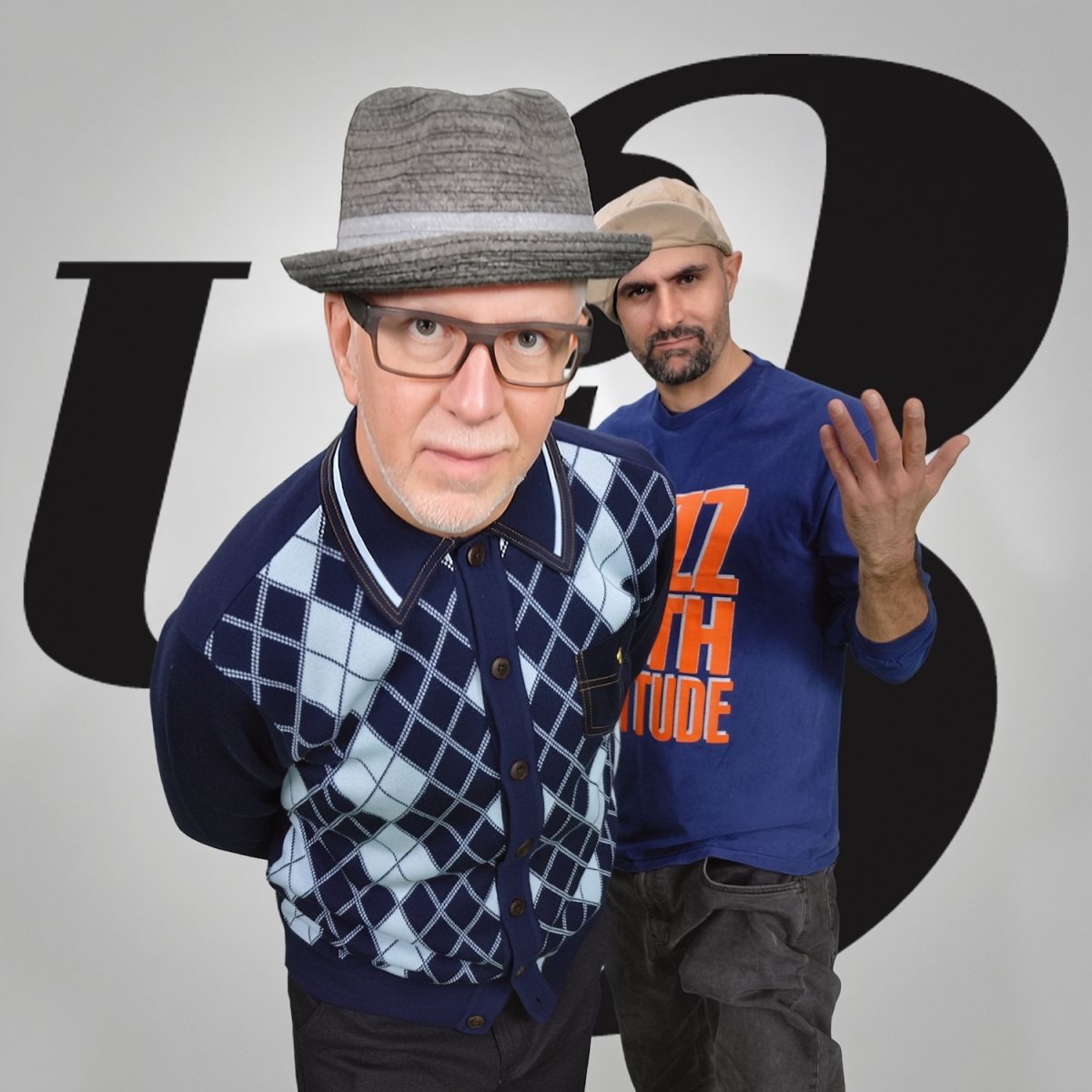
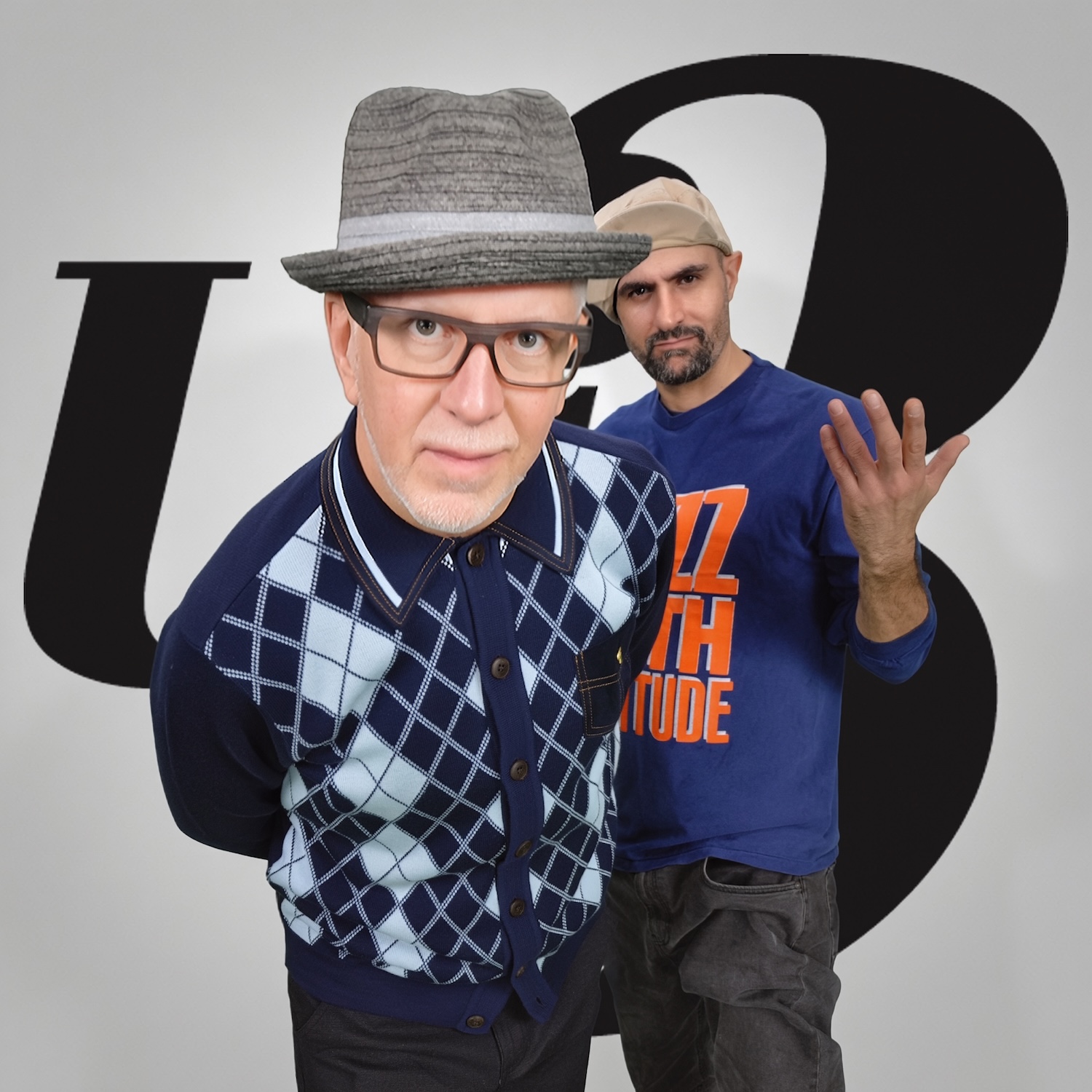
Calling Snap, Crackle & Bop! a return to Us3’s roots may be an unfair assessment. As London-based mastermind Geoff Wilkinson is quick to point out, this is the group’s 11th album, and jazz and hip hop never stopped being among his primary musical interests. What’s changed is the increasingly expansive collection of sounds he’s willing to put alongside them.
The self-released Snap, Crackle & Bop! follows a lengthy break for Wilkinson, who suffered a series of heart attacks in 2014 and subsequently spent his recovery creating library music from his home studio. When he decided it was time for another Us3 release, MC Akil Dasan was his first call. Wilkinson originally envisioned using two vocalists, but the pair generated so much material that Dasan became the sole voice on the album—a first in Us3 history.
The familiar Us3 foundation is still there. Longtime collaborators Ed Jones (saxophone, flute), Bryan Corbett (trumpet, valve trombone) and Mike Gorman (keyboards) join Wilkinson as he freely incorporates Latin rhythms, Afrobeat, Amapiano, reggaeton, trap and Caribbean influences. More than three decades after Us3’s landmark Hand On The Torch helped establish a new dialogue between jazz and hip hop, Wilkinson seems less interested in preserving that original formula than following the same no-holds-barred impulses that created it.
Speaking with MAGNET’s Hobart Rowland, Wilkinson covered a range of topics, from his musical hiatus to reconnecting with Dasan to the essential role cross-pollination plays in keeping music moving forward.
Snap, Crackle & Bop! finds Us3 reconnecting with its jazz-hop foundations after more than 30 years. Was that a conscious decision?
I’ve always said an album is only a snapshot of where you’re at that particular time. Jazz and hip hop will always be my two main interests. I like the fact that both types of music liberally borrow from other genres to develop and grow—something I also think has been prevalent in my own music. Snap, Crackle & Bop! has many influences. I’ve always had diverse taste in music, and this is a good representation of where my head is at at the moment.
You’ve said everyone was smiling in the studio immediately after recording “Have A Great Day.” What did you hear in the playback that made you giddy?
That’s a hard one to put into words. It’s a feeling more than anything, and it was just one of those feelings that told us all that something magical had just happened. I love working with Akil—and not just for what he brings to the studio. We have some amazing conversations outside of the studio. He’s really into critical thinking and enjoys being questioned and challenged. I think that’s why he likes working with me, because I’ve always thrown things at him to see how he’ll react. I already had the title for “Have A Great Day” before he’d heard the backing track, but what he did on it surpassed my expectations. And I have to say the horn section—Ed and Bryan—took it a stage further. It just clicked.
“Cool Cat,” “I Like To Party” and “Have A Great Day” all emphasize humor, pleasure and celebration in different ways—and that spirit seems representative of Snap, Crackle & Bop! as a whole. Was there a desire to make an album that offers some release from the heaviness of today’s world?
I hadn’t even thought of it like that. I think we were just having fun, and maybe that shows. It’s been such a long time since I’ve had all the guys in the studio, and it really was a great vibe when we were recording. I don’t think it’s all party time, though. There’s some serious stuff on there. I think my favorite line from Akil on the whole album is the opening line to “One Step Ahead,” where he says, “I love learning, I love being wrong, changing my mind is how I keep it strong.” Think about that for a minute. In an age of social-media echo chambers, most people don’t actively seek views that challenge their own ways of thinking. Akil does. He’s a deep thinker with an open mindset. I like to think of myself like that, too—and that’s why we get on so well.
Latin influences have surfaced repeatedly throughout Us3’s catalog. What continues to draw you to those rhythms, and how have the ways you incorporate them changed over the decades?
On the first album, (1993’s) Hand On The Torch, there was a track called “Different Rhythms, Different People,” where I sampled Art Blakey saying, “The drum is the most important instrument.” I’ve always thought that’s true. Certainly in dance music, that’s what people dance to. And Latin rhythms are pretty irresistible in the swinging-hips department. I don’t know if my use of Latin rhythms has changed over time. I just try not to repeat myself—so if there’s something I’ve done before, I’m more likely to try something new and a bit different now.
Live jazz musicians have also been essential to the Us3 aesthetic, and Ed Jones, Bryan Corbett and Mike Gorman again play crucial roles here. What did their chemistry provide in this case?
Those three guys have been mainstays of the live band for a long time now. Ed has been with me right from the start. They’re all phenomenal musicians in their own right, and they definitely bring a little spice to the Us3 sound. I like to give them space to express themselves in the studio and shape things to what I want the final result to be. I’ve also toured a lot with these guys, and they’ve all become really good friends, too. Although they all play with other bands, I wouldn’t class any of them as “session musicians.” They all have their own voices. They all have their own jazz outfits, too.
Sounds like you’re not a fan of session musicians.
I’ve worked with session guys before, but I’ve found that they were kind of toning it down in the studio, giving me what they thought I wanted. That’s not good. I like working with guys who just be themselves. It’s my job to capture that.
Us3 emerged at a time when bringing jazz and hip hop together was still seen as a novel notion. With those boundaries far more porous today, what does “jazz hop” mean to you in 2026?
I never liked that particular term. I always called Us3’s music “hip-hop jazz,” as it has elements of both. I think jazz has become more infused in popular music now, in a way that it wasn’t back then. It’s become normalized, which I think is good. Recently, A$AP Rocky sampled Thelonious Monk’s version of Duke Ellington’s “Caravan” on a track called “Robbery” on his latest album. If a similar level of hip-hop artist had done that in the early ’90s, it would’ve been seen as revolutionary, but now it’s just normal. I like fusions of different things. I like the way Afrobeats and Amapiano are becoming more intertwined now. Check out “Ololufe” by Wizkid, which came out a few years ago—a brilliant combination of the two, when that was a fairly new thing.
So the future is bright for music in the 21st century?
It will always continue to evolve. I think there’s a healthy cross-fertilization of a lot of different things going on at the moment. I actually think hip hop is going through a bit of a stale period. It seems to me there’s more innovation and experimentation in R&B production nowadays. I like the new Destin Conrad album, which fuses reggae and R&B to brilliant effect. Music … Where will it go next?