
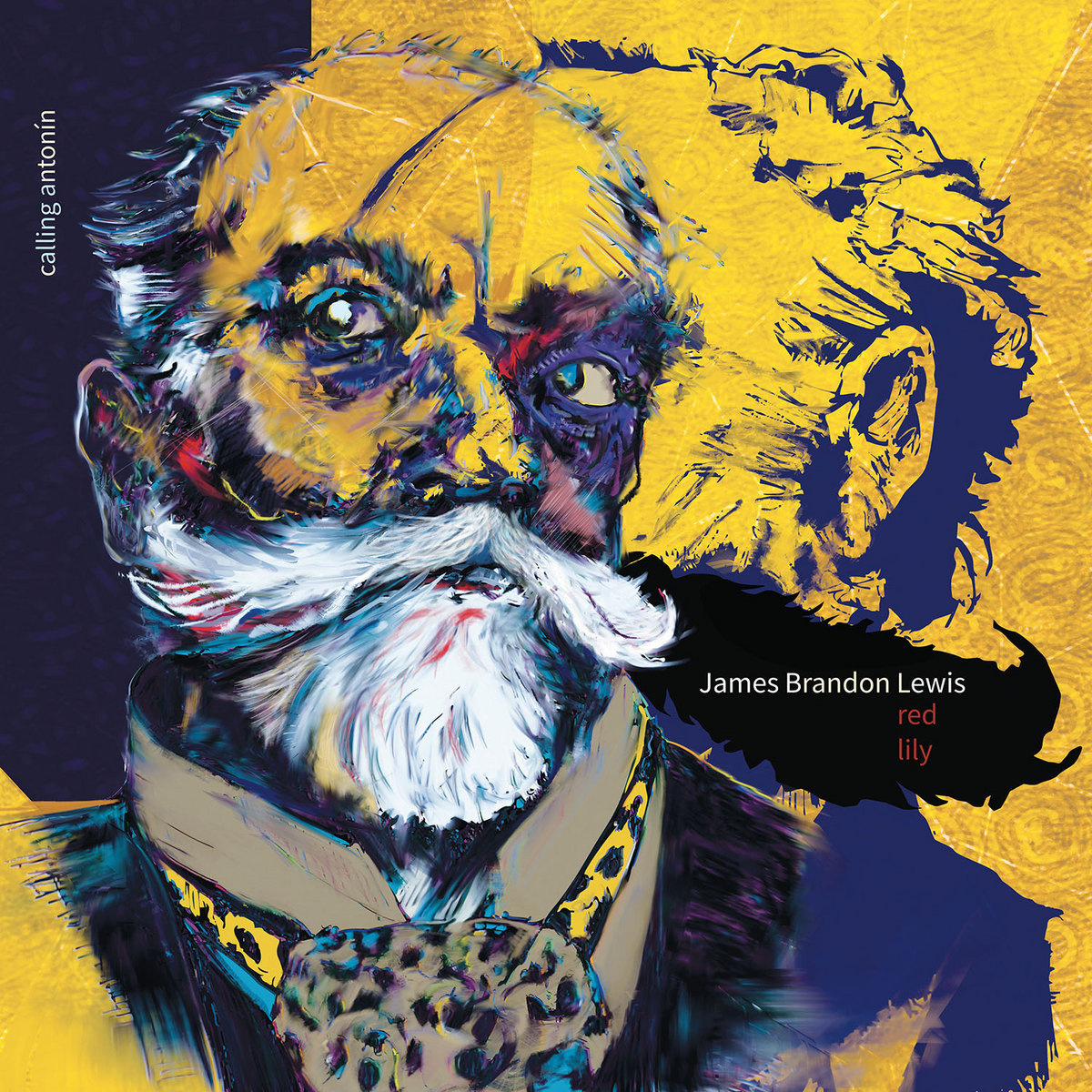
The first two albums by James Brandon Lewis’ Red Lily Quintet celebrated cultural figures whose examples had directly affected the tenor saxophonist’s life. George Washington Carver instigated Lewis’ devotion to scholarship, while Mahalia Jackson shaped the gospel music that was his family’s passion and the bedrock of his own musical formation. Czech composer Antonín Dvořák might seem like a curious third choice in a sequence that has so far celebrated African-American brilliance, but it makes sense once you know the story of his sojourn in the U.S.
Dvořák came to this country in 1892 to be the director of the National Conservatory Of Music Of America. The school’s inclusive policies included not just admitting black students, among other marginalized populations, but refraining from charging them tuition. Dvořák further insisted that his pupils should look not to Europe, but to American folk forms, including those of native and African-Americans, for inspiration. In a time just a few years past the institution of Jim Crow, this was a radical message.
Given the backstory, merely jazzifying Dvořák’s compositions would be inadequate to the task of recognizing his cultural impact. His themes are present in several Calling Antonín tracks, as well as the bohemian folk music that was close to Dvořák’s heart. But Lewis mixes them with the black sacred music that Dvořák identified as America’s true original resource. Sometimes, the combination is solemn and stately, but when the saxophonist lets loose, it courts abandon. Lewis also mixes in the stuff that moves him, too. “Dilemma Of Hearts” echoes James Brown in tragi-confessional mode, with Lewis playing the role of singer and cornetist Kirk Knuffke juggling those of back-up chorus and appointed articulator of inconsolable heartache. He’s more than up to the task.
Red Lily went through some changes on the way to Calling Antonín. Core members Lewis, Knuffke and drummer Chad Taylor remain from the first two albums, and their chemistry is as combustible as ever. But string players Christopher Hoffman and William Parker are out, replaced by a larger (but also illustrious) trio comprising violist Melanie Dyer, cellist Tomeka Reid and bassist Joshua Abrams. They deliver orchestral pastures as strong as old wood, spirited solo turns and rhythms that’ll get you off your duff and shouting. Revised and newly purposed, Red Lily remains one of the best jazz bands of our moment. [Tao Forms]
—Bill Meyer