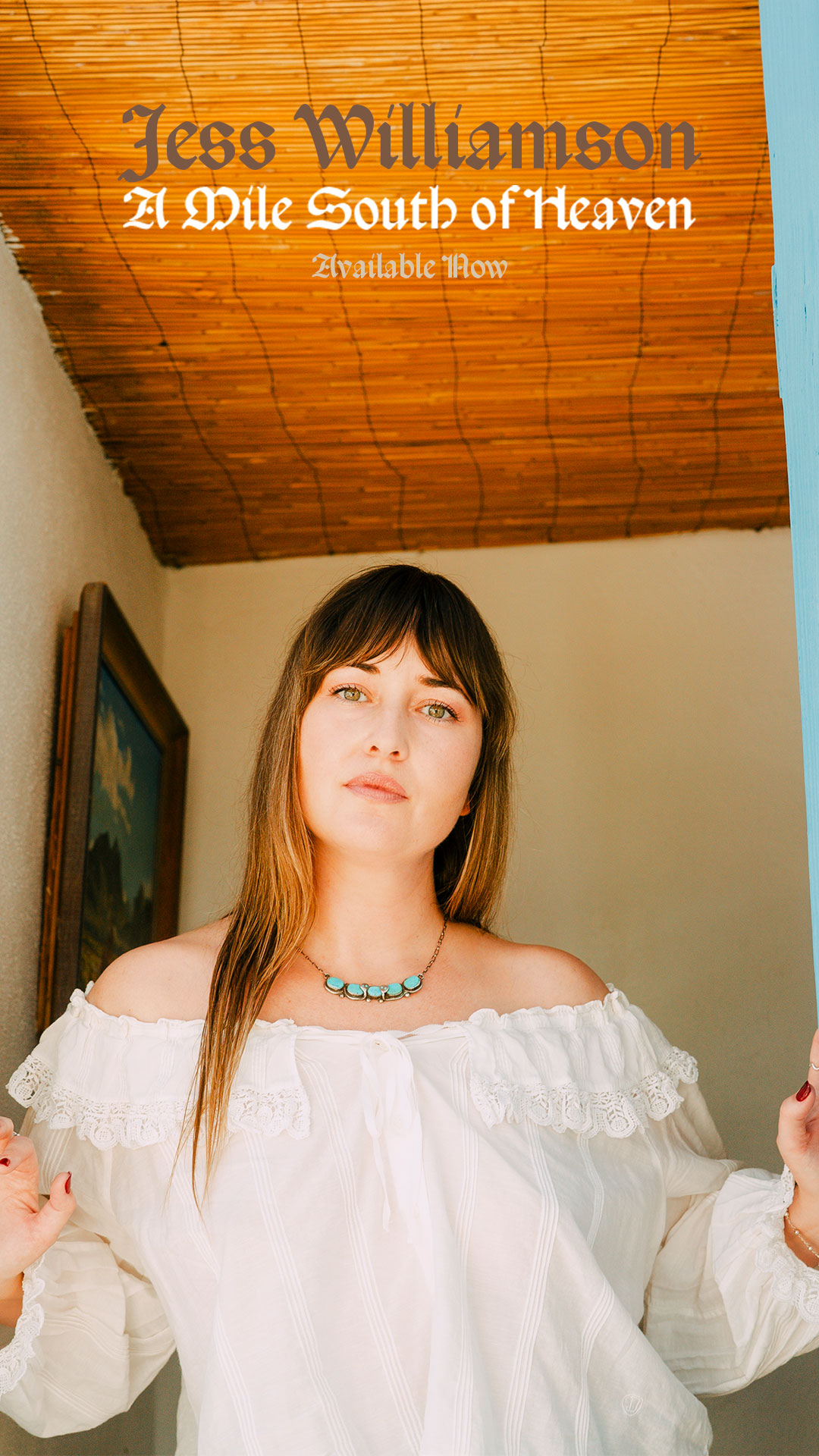

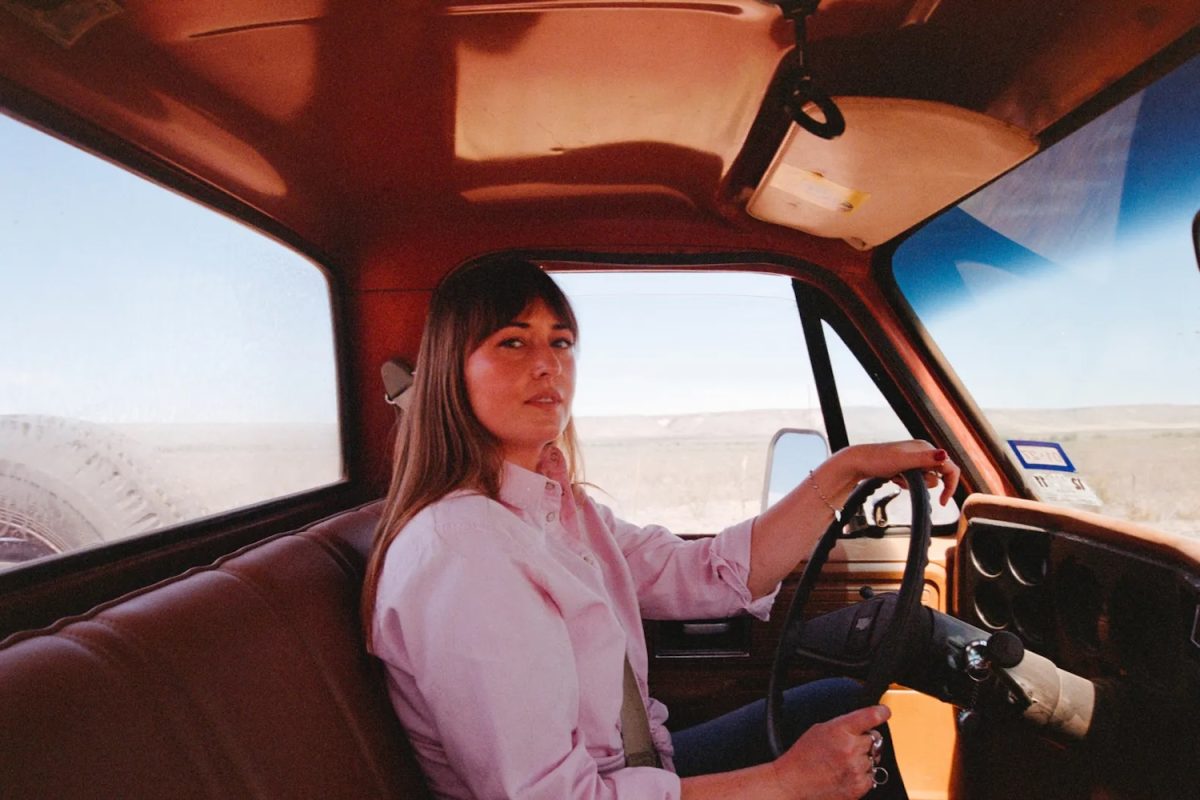
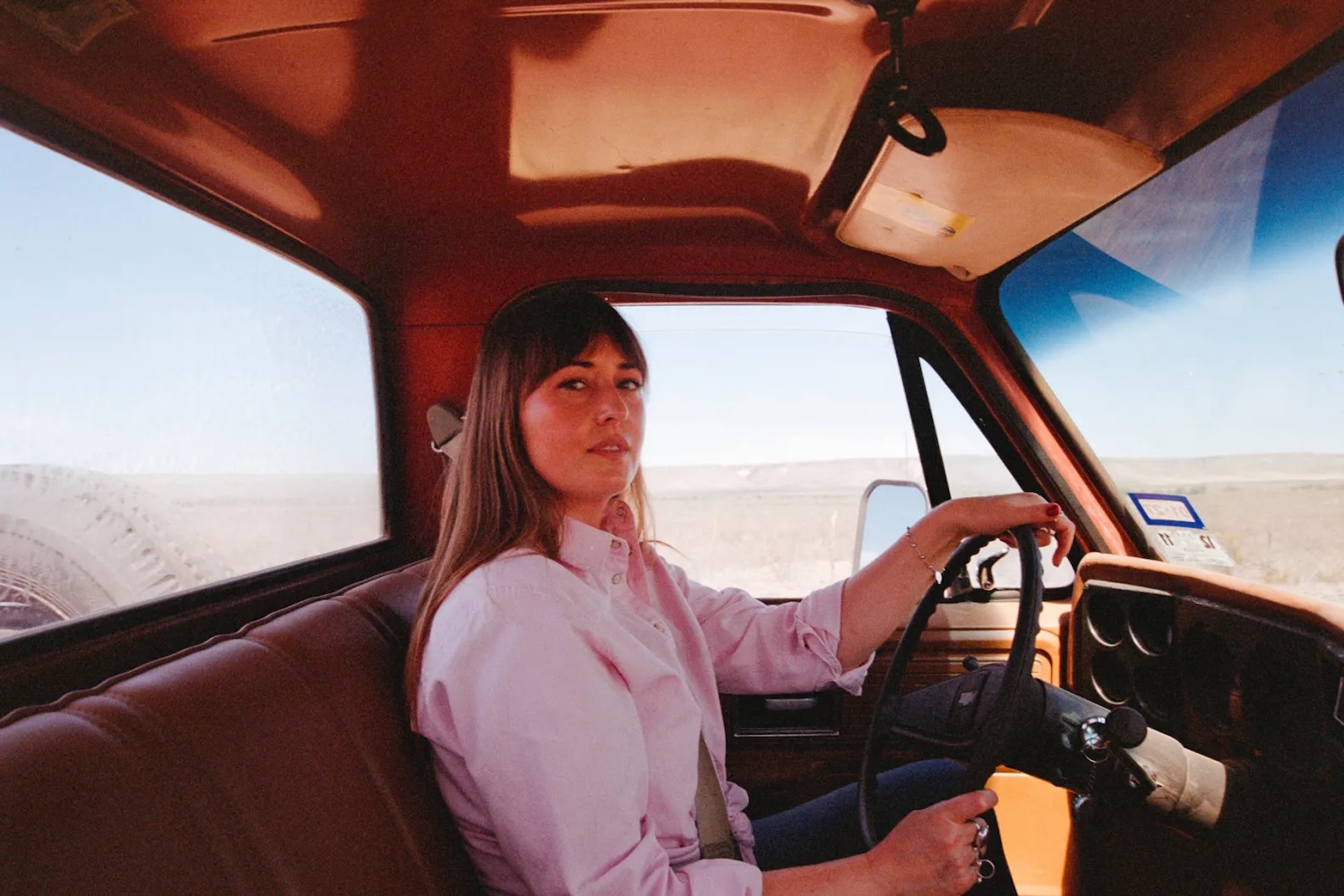
With A Mile South Of Heaven (New West), Jess Williamson has made her most straightforward country album to date, while coming to terms with the reality that an ideal life may not exist. The LP was produced by the perpetually busy Shooter Jennings at Sunset Sound in Los Angeles, one of two places Williamson calls home these days. The other is the funky, arty West Texas hamlet of Marfa, about 520 miles from Dallas, where she was born and raised.
A Mile South Of Heaven nudges steel guitar, fiddle, banjo and other traditional instrumentation to the forefront. The convention trappings are quite the change from the more mystical and experimental elements of 2020’s Sorceress and 2023’s flat-out wonderful Time Ain’t Accidental, though country influences have always informed Williamson’s work to some extent. She also delved into those roots as one half of Plains, her 2022 collaboration with Waxahatchee’s Katie Crutchfield.
“I’ll always keep exploring all kinds of sounds and instrumentation, but this is what this album needed to be,” Williamson told MAGNET’s Hobart Rowland. “It really felt like we followed where the songs wanted to go.”
Here’s more from the interview.
You’ve described A Mile South Of Heaven as an acknowledgment that we’re always chasing some impossible ideal. What brought you to that point?
It was less one experience and more something I started to notice over time. There’s this idea that once you achieve a certain level of success or get to a certain place in your life, everything will finally click and be “enough.” It doesn’t really work that way—at least not for me, historically. There’s always something more to strive for, some other version of your life you can imagine. And there are unforeseen difficulties once you get to that next exciting thing. The album is partly about recognizing that tendency in myself and trying to appreciate the life that’s actually happening—rather than constantly chasing some imaginary version of perfection.
What made you want to embrace country music so fully this time around?
Growing up in Texas, country music is just what music is. We didn’t even call it country music, and that’s what I was raised on. For this album, it wasn’t super-intentional from the get-go. I think Shooter and I both just came to the table with similar tastes. I knew I wanted to make the album with him, and a lot of our conversations about the songs weren’t even specifically country-leaning. They were more about the songwriting.
So it was more of a natural evolution.
I think the songs themselves were asking for this kind of treatment: real instruments, traditional instrumentation, not a ton of bells and whistles. They’re very rooted in storytelling, in specific places and characters and experiences. We wanted the arrangements to support that. Working with Shooter and these incredible musicians, we were able to make something that felt very classic but still felt like me.
How difficult was it to roll with simplicity this time?
It felt really freeing. Earlier in my career, I was drawn to more abstract lyrics and unusual arrangements, and I think part of that was just where I was creatively at the time. I loved exploring those worlds, and I still do. But with these songs, it felt like it was time to do something confident and classic with them.
What did Shooter understand about your music that made you feel particularly heard?
The first thing was that he was a fan of my music, which meant a lot to me. He wasn’t approaching the project as someone who needed to come in and change what I was doing or turn me into something else. He understood my songwriting and believed in the songs as they were. He was very encouraging of my singing, and that gave me a lot of confidence in the studio. He also took the time to listen to everyone’s ideas in the studio, and that created a comfortable atmosphere for experimentation.
You’ve described the whole thing as a reward for not giving up on Los Angeles. How so?
I’d spent so many years in L.A. trying to make things happen, sometimes wondering why I was still there, and then there I was making a record at Sunset Sound with Shooter Jennings and this incredible band. It felt like one of those moments where you realize that maybe things have been unfolding the way they’re supposed to, even if it didn’t always feel that way at the time.
“High Heels And Blue Jeans” explores the different ways we perform to weather difficult circumstances. How has that applied to you, particularly as a woman navigating the music industry?
I think as women, we’re often taught to be accommodating, to be pleasant, to make other people comfortable, and sometimes you don’t even realize how much of yourself you’re adjusting to meet those expectations. When I first moved to L.A., I was excited to make friends and find my place in the music community. And looking back, I can see times when I was trying to be a version of myself that I thought other people wanted me to be. As women—and this is a lot of what the song speaks to—we need to get the job done no matter what we’re going through. It might be going to work or caring for your family or getting onstage. So we pull ourselves together, put our makeup on, dress up, become a certain version of ourselves to get through. And in that way, it’s not dishonest. It’s a really sweet and specific kind of feminine strength.
The album ends with the line “I am a tourist here, I come and I go.” Are there are two versions of yourself trying to figure out how to coexist?
I live between two places, but I’m becoming more comfortable with the idea that those two versions of myself don’t necessarily have to be reconciled into one. For a long time, I felt like I needed to make a decision about where I belonged. But lately, I’ve started to realize that maybe this back-and-forth is just what my life looks like right now—and that’s OK. I love being in L.A. and feeling connected to this incredible world of music and art, and I also love going back to Marfa, where I have this wonderful community and a completely different pace of life. There’s also something a little self-deprecating about that lyric. Being a tourist is kind of an insult in both places. In Marfa, I’m not really a local because I come and go, and in L.A., I sometimes feel like I’m just passing through this sparkly world that I don’t entirely belong to either. But I’ve realized that I don’t necessarily need to belong to either one completely. The one constant has always been music, and maybe that’s where I really belong.
See Jess Williamson live.