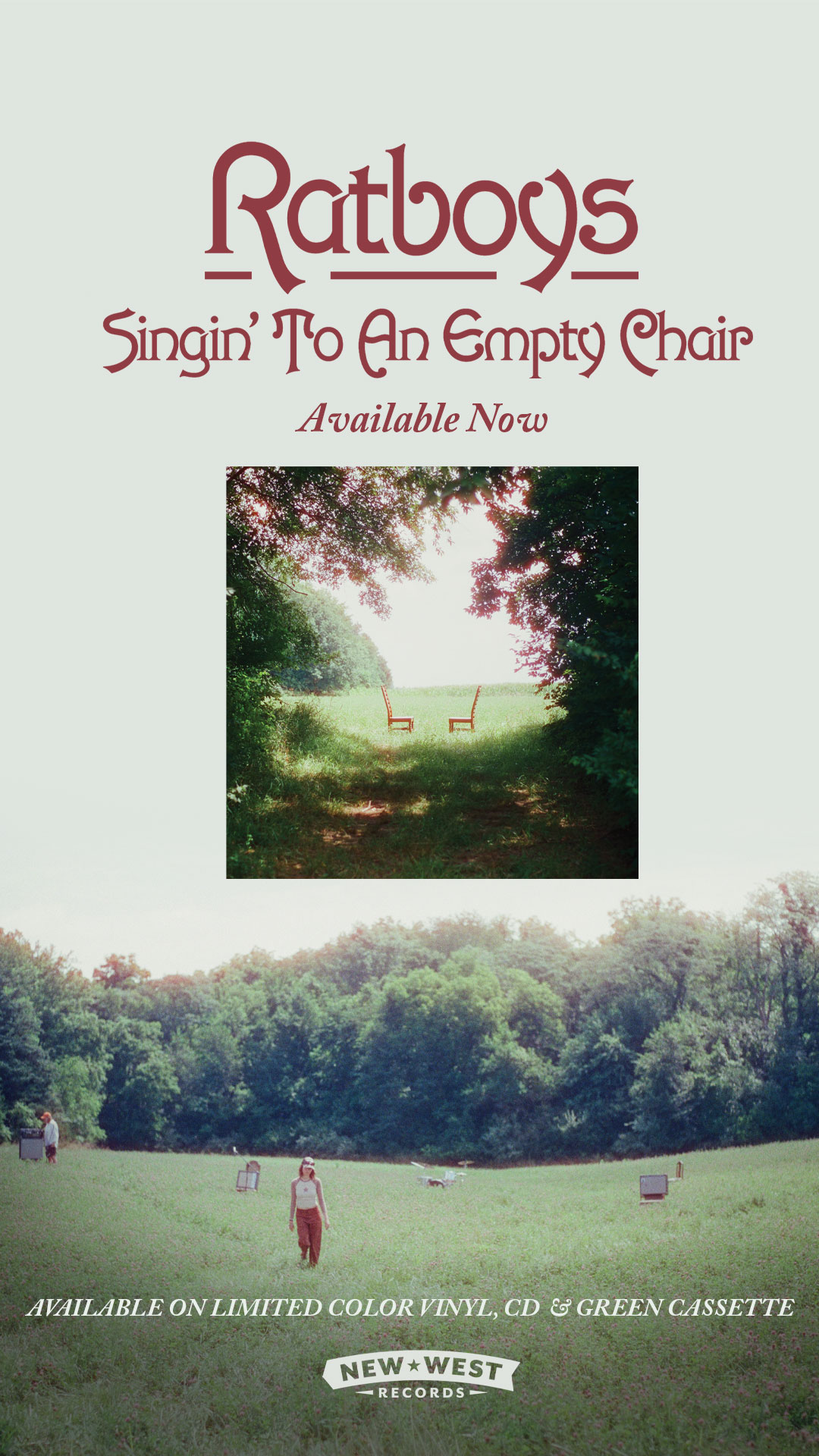

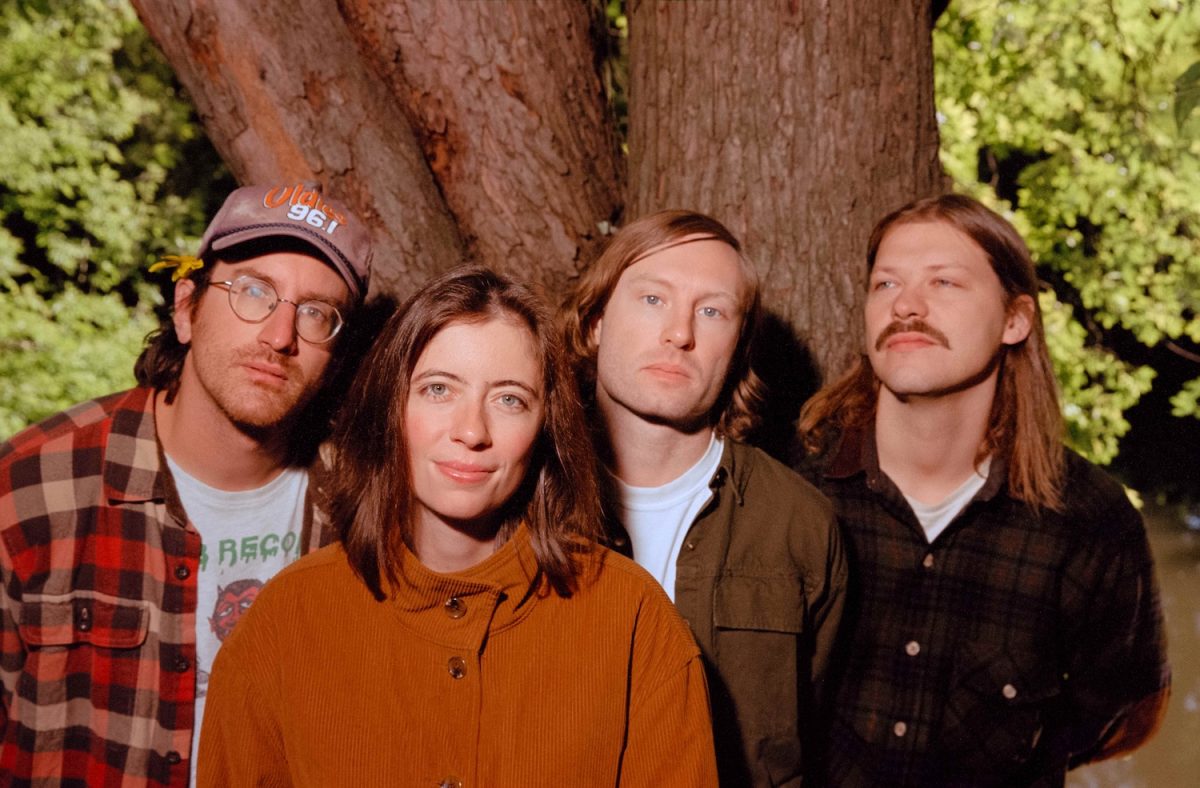
Turns out Chris Walla’s subversive pop instincts are a perfect match for Ratboys’ delicate fury—and the initial result was The Window, one of the best indie-rock efforts of 2023. The seasoned Chicago quartet went with their gut and retained Walla for Singin’ To An Empty Chair. Ratboys’ sixth studio album and first for the New West label is a razor-focused, filler-free representation of a band in peak form. Though the group’s creative fulcrum has always been singer/guitarist Julia Steiner and guitarist Dave Sagan, the 2020 acquisition of bassist Sean Neumann and drummer Marcus Nuccio shouldn’t be underestimated. Six years later, Nuccio’s exceptional playing is a crucial driver of the band’s all-important loud/soft dynamic.
After a week of hashing things out in a remote cabin, Ratboys and Walla took their latest working song list to Steve Albini’s Electrical Audio in Chicago, finishing up at a studio in nearby Evanston. The title is a nod to a Gestalt-therapy exercise where a patient attempts a difficult conversation with someone who’s not physically there. On a related note, family dynamics have always found their way into Steiner’s lyrics in some form. And here she’s ripping off the Band-Aid with equal parts whimsy and empathy.
MAGNET’s Hobart Rowland caught up with Steiner a week prior to Ratboys’ international tour, which kicks off tonight in Detroit. If you haven’t seen this band live, don’t delay.
Tell us more about the Chris Walla factor and how it’s figured into your sound over the past two LPs?
A lot of it came from our level of comfort throughout the process—with ourselves, with Chris and with the spaces where we were recording. The guys and I spend a lot of consistent, quality time together, and we went into this record feeling really open and at ease around each other. That dynamic definitely extends to Chris. He’s someone we know really well by this point. We trust him completely, and vice versa—and I think that comes through in the music. We also felt really comfortable recording in the Midwest. In a cabin we’d visited beforehand, and then in our hometown of Chicago. We got to sleep in our own beds each night and commute on the same roads we drive every day. Existing in that comfort zone outside of the music gave us a lot of stability and space to push things and experiment in the studio, if that makes any sense.
How were the emotions that steered the songwriting on Singin’ To An Empty Chair different from those that figured into The Window?
It’s hard to say because with both records—and every record we’ve made, really—these new songs didn’t come out in one condensed time period. They didn’t all come out in one go when I was feeling one overarching emotion. I like to think these songs represent the full-color variety and scope of my moods and emotions throughout the three years they took shape. If there’s a difference between the emotional underpinnings of these songs versus the songs on The Window, it’s perhaps that everything felt a bit more heightened and real this time around—largely because of some upheaval in my personal life, combined with the excitement of getting to play live shows again coming out of the pandemic.
It’s been more than a decade since your 2015 debut, so I guess you’re now officially indie-rock survivors. What’s been the key to the band’s longevity and ability to evolve.
The good news is that any band that’s called it quits during the past decade still has music out there to be heard. Honestly, I think of any band that records and releases music as one that lives forever in a real way. As far as us, I think a huge part of it is our willingness to work side jobs outside music and to be scrappy in the band to keep it going. Each of us puts in a ton of work hours outside actually playing music and writing songs, whether it’s designing merch, running our webstore DIY-style, making posts on Patreon or even doing repairs on the van. We’re all willing to get our hands dirty. We’re also willing to speak up when we need help or if something doesn’t feel right. We have a good foundation of honesty and respect within the band, and that’s something we all work to maintain.
How did your new affiliation with New West come about?
We first met (New West A&R director) Meg (Barron) at a show we were playing in Nashville. That night, I made a flippant comment onstage about us looking for a new record label, and Meg introduced herself to us at the merch table right after. It really felt like kismet, and we felt a connection with her and the whole crew at New West right away. There wasn’t much more to it than that, to be honest. We’d completed our contract with Topshelf, and we were excited to try something new.
Six albums in, there are obviously certain things fans have come to expect and appreciate from you guys. Is there a Ratboys “formula” per se? And is deviating—or not deviating—from it something you’re conscious of with each new LP?
I don’t think there’s a formula really—and, to that end, I’ve often wondered what the throughline is between our records that makes them sound like us. I think a big part of our identity is the connection I have with Dave, and the ways he’s encouraged me to push my songwriting over the years while also helping me to hear and embrace my strengths. From the very beginning, the contrast between his slightly rough-around-the-edges guitar playing and my innocent-sounding, relatively clean vocals has been really exciting. I think we’ve been playing with that sense of contrast and expanding on it with each song and record ever since—and in a way that happens very naturally, without us ever really talking or even thinking about it.
See Ratboys live.