
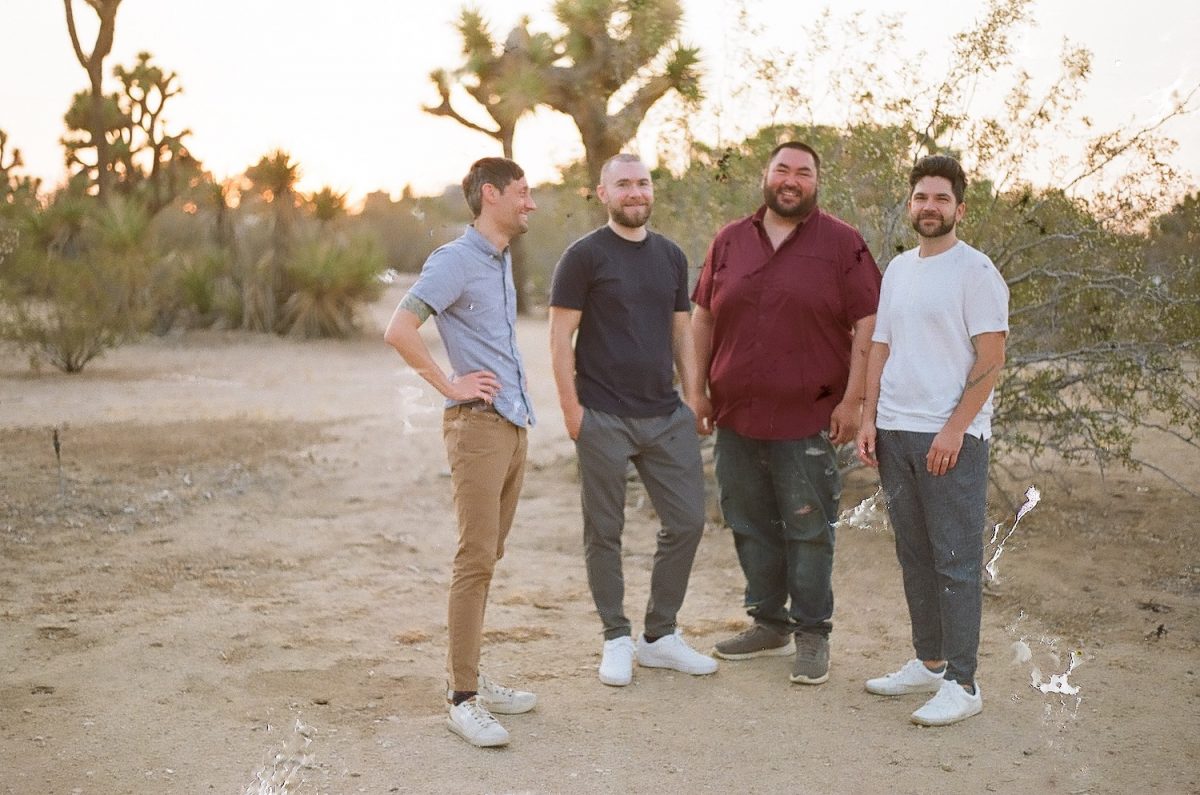
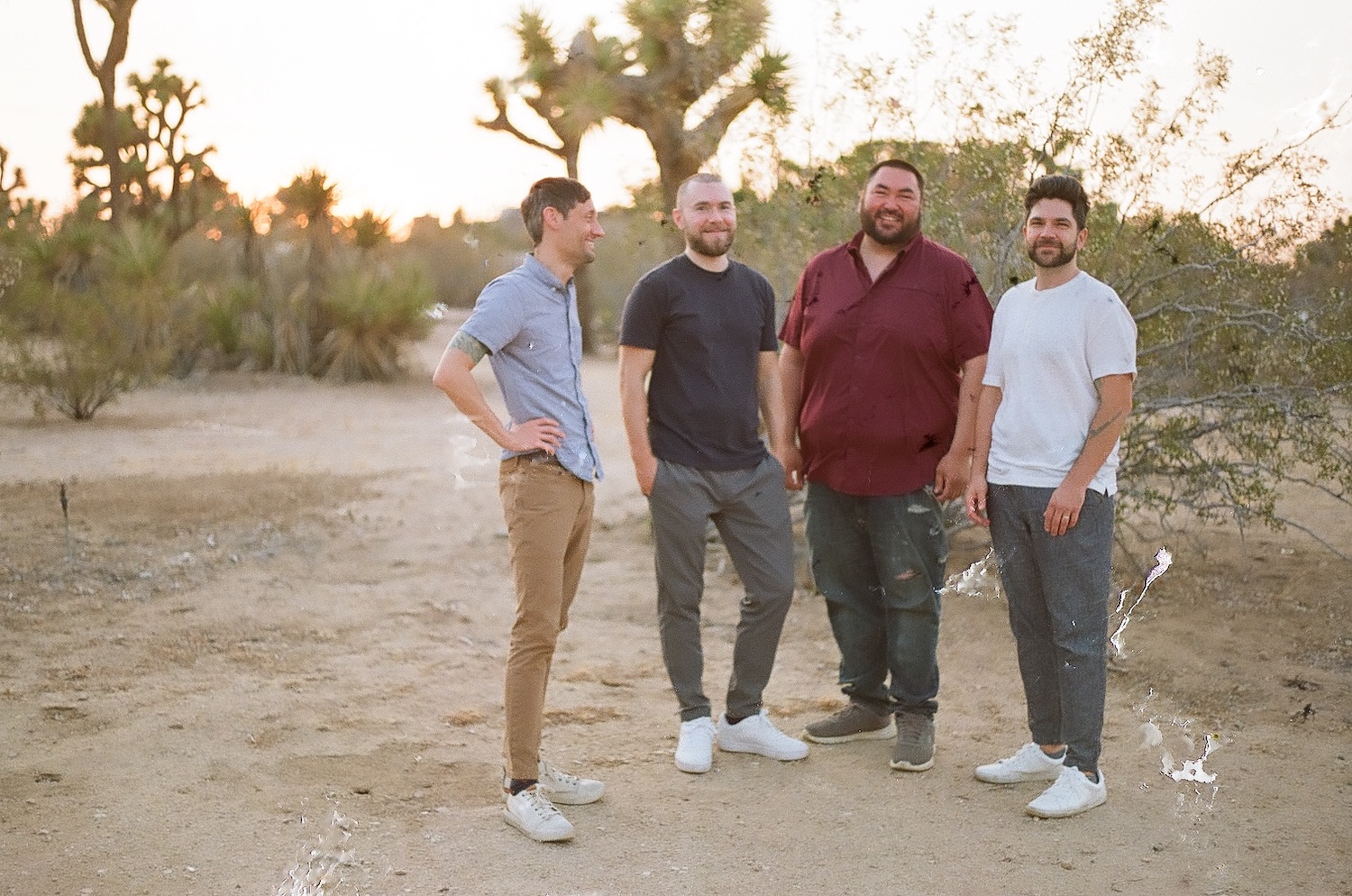
As native Alaskans, frontman Daniel Hall and the rest of the Lives Of Famous Men know something about disconnection. And how it can take on a life of its own in a big city like Los Angeles, their current home.
That primary trigger for existential anxiety figures heavily into the self-released End Times Elevator Music, bolstered by the persistent absurdity of modern life and the inexplicable decisions made by those in charge.
Over the past two decades, the band has had the good fortune of working with an impressive slate of producers, including James Paul Wisner (Paramore), Casey Bates (Portugal. The Man) and Paul Q. Kolderie (Radiohead). For End Times, Grammy-nominated producer Alex Newport (At The Drive-In, Bloc Party) makes efficient use of analog synths, bringing a retro urgency to the group’s arty, cerebral indie pop—and an eerie warmth that makes disconnection sound, well, cool.
Hall goes floor by floor on End Times Elevator Music.
—Hobart Rowland
1) “No Alarm”
“This song has unfortunately become more relevant in the five months since we first released it as a single. It’s about unchecked power. As I write this, the U.S. government has once again pulled the world into a war over oil—only this time it’s tweeting about the destruction of an entire civilization. More missiles are launched, more innocent people die, and more of us just scroll past it. It’s hard not to believe this is the end.”
2) “Wish I Were Here”
“End Times is an album about anxiety, and ‘Wish I Were Here’ is a song about ways of coping with it—think ‘Oblique Strategies,’ but for existential dread. What began as a list of prompts for managing depressive spells has turned out to be a handy protocol for navigating our current reality. The title nods to one of these prompts: inhabiting a different headspace by writing a fictitious postcard.”
3) “Lost In The Branches”
“Our second single off the album is about algorithmic culture and how all-consuming it’s become. I think back to how the music scene felt in our early days as a band—physical, communal, artist and audience intermingled—and how flat and diffuse things feel now by comparison. I thought trees were an apt metaphor. They’re organic and rooted in place, and there’s the cold logic of nodes and branches that decides everything from the songs we’re fed to the news we’re targeted with.”
4) “Waiting”
“A song can help you say the things that feel impossible to say otherwise. ‘Waiting’ is the conversation I could never have with my mom about why I left the church: the hypocrisy, the self-certainty, the horrifying things that are done in its name.”
5) “The Imposter”
“This one’s sort of a dark comedy about how devastating self-consciousness can be when taken to its extreme. It begins with a guy trying to come clean about how he’s manipulated a friend into thinking he’s a better person than he really is. She chalks it up to imposter syndrome, which he sees as proof of the manipulation. It becomes a catch-22, where real trust is impossible. Colette Auburn, one of my favorite fellow Alaskan artists, joined us for the guest vocal.”
6) “Parallel Lives”
“Our third single is also a relative bright spot on the record. In every relationship, there’s the time that came before ‘each other’—and I wanted to write a love song about that time. ‘Parallel Lives’ isn’t about fate per se. But it is an appreciation for the rest of the story of two people and what’s true about each of them that ultimately brings them together.”
7) “It Stays With You”
“This is a song about my brother, a marine who’s served in Afghanistan and Iraq. Because I didn’t believe in those wars—or most wars, really—for a long time it prevented me from empathizing with what he had to endure to do what he thought was right for his country. I’ve watched him grow as he’s come to terms with it himself, and it made me realize I wasn’t always there for him when he needed me. This is me reckoning with that—and trying to make a change.”
8) “End Times Elevator Music”
“What’s happening in the U.S. and around the world is both overwhelming and profoundly sad. Trivial as it may seem, music has helped me find meaning in a moment that feels completely nonsensical. This song was influenced in part by the documentary How To Let Go Of The World And Love All The Things Climate Can’t Change. Ever since I watched it nearly 10 years ago, this idea has stuck with me: We’re probably too late to undo the worst of our decisions, but we can still appreciate beauty when we encounter it.”