


“You know how they say Black Flag got in a van, and they brought punk rock to the world? Well, the Strokes got on a bus, and they brought ‘downtown cool’ to the world. Along with the internet, they were changing everything, not just music. They were changing attitudes.” —Lizzy Goodman, Meet Me In The Bathroom
Ah, the halcyon days of good old, grubby NYC.
When you could actually see the Strokes in their native habitat: Luna Lounge. Arlene’s Grocery. Max Fish. 2A.
Getting drunk with and hitting on the locals.
It was a more innocent time. (Less innocent on the part of the Strokes themselves; more innocent in that we had yet to encounter the hostility and “grow the hell up, fast” societal moments of things like September 11 and COVID just yet.)
The term “nepo baby” didn’t exist at that point, even though Strokes frontman Julian Casablancas—progeny of the New York modeling agent John Casablancas and Danish model Jeanette Christiansen (a.k.a. Miss Denmark 1965)—clearly experienced the kind of private-school upbringing we’d later associate with folks like Paris Hilton, who attended the same Upper West Side prep school as Casablancas.
Those were different days.
So when the Strokes emerged out of the bubbling late-’90s NYC indie/dance/punk scene that also gave us Interpol, Yeah Yeah Yeahs, LCD Soundsystem and the Rapture, it was almost a reflexive thing for the rock-journalism industrial complex to immediately label them “saviors of rock” and hearken back to the golden-era CBGB whirlpool that birthed Talking Heads, Television, Ramones and Blondie and had been spiritually kickstarted by dirtbag forefathers such as the Velvet Underground and Stooges.
Lou Reed’s European sons were now among us in all their walk-on-the-wild-side, slummin’-it, downtown glory. Sure, it was lazy. Sure, watching Pitchfork and others fall all over themselves to avoid calling the Strokes the “bold new era in rock” (only to assign them the rare 9.1 rating that assured them of that status) was almost hilarious, even as it was happening. Sure, seeing then-It-artist Ryan Adams follow them around the Lower East Side like a puppy dog in search of Scooby snacks to ensure he was within the cool-kid blast radius was pathetic. (Adams also recorded his own version of Is This It before re-recording Taylor Swift’s 1989, a very weird musical form of “who wore it better.”)
But the Strokes’ debut still stands today as one of the all-time greats; NME certified it as “best of the decade” in 2009, and Rolling Stone came a-calling sometime after that with similarly glossy plaudits. That moment, as Goodman’s book and documentary—its title lifted from a Strokes song of the same name, natch—made clear, has become a coming-of-age bellwether for everything we now pine for in this post-post-post-everything world. Call it “More Songs About Hangovers And Nudes.”
To this point, predictably, the Strokes have struggled to top that standard of greatness. The sheer dirty/greasy economy of songs such as “The Modern Age,” “New York City Cops” and “American Girl” ripoff “Last Nite” (which closed tonight’s encore) can stand alongside any band’s freshman release, any time. Even though fans and critics didn’t love its follow-up work quite as much, the band nonetheless carved a path through the aughts that granted the Strokes indie-made-men status, rehab stints and all. I mean, when Courtney Love writes a song called “But Julian, I’m A Little Bit Older Than You,” you just have to accept your hall pass to the zeitgeist and get on with it.
That said, the Strokes’ outsized reputation was always a bit of a cartoon compared to their lived experiences. They were more culturally rich than they were monied (Is This It was recorded almost entirely at night because the boys were all working a series of shit daytime jobs to stay financially afloat), were described as “militant” in their rehearsal habits and were reputed to be imperious, aloof or arrogant in ways that, frankly, didn’t really square with most people’s real-life encounters (mine included). Mostly I found them, at that point, to be goofy boys with a sharp sense of wolfpack humor, along with all the attendant self-inflicted habits that tend to come with the territory of experiencing too much, too soon.

So with Is This It set to celebrate its 25th anniversary in October (as much time has gone by since then as had gone by between Eagles’ Hotel California, Boston’s self-titled debut and Stevie Wonder’s Songs In The Key Of Life and the Strokes’ debut), the Strokes have now set out—six LPs later and with the original lineup less Nick Valensi, replaced for this tour by Longwave frontman Steve Schiltz on guitar and keyboards (more on that in a sec)—to reconquer America, with a new Rick Rubin-produced album, Reality Awaits, to promote.
Last year’s Oasis reunion tour had the distinct whiff of nostalgia about it, given that Oasis, Blur and their ilk were really the backbone of 1990s Britpop, wearing their Beatles, Jam, Stone Roses and Smiths influences like Union Jack badges on their anoraks. So when that circus blew through city after city with essentially the same early-career setlist, you could hardly blame fans of a certain age for busting out their old box-logo tees and marching to their local stadia to get on the bus, don’t make a fuss and sing the blues if they want. The Strokes’ latest tour still traffics in some of that early-millennial, Dirty Rotten Big Apple nostalgia but also features songs from across the band’s discography, including the new LP.
Reality Awaits has proven a polarizing affair so far. It essentially blends the Strokes’ penchant for simple, straight-ahead guitar rock with Casablancas’ vocals having mutated from “worn but not broken” (in the band’s early iteration) to autotuned. It’s a strange affectation that nonetheless does little to obscure the fact that Casablancas’ lyrics seem as confused about relationships 25 years later as they did back in the band’s three-minutes-and-a-cloud-of-angel-dust prime.
But here’s the thing: Whereas Oasis’ crowd consisted of a majority of old heads with a surprising number of younger fans sprinkled about, the Strokes fanbase is very much the twentysomethings I remembered back when I was first discovering the band on its home turf in the early aughts. So when the group busted out song after song from the new album—kicking off its set with “Lonely In The Future” (lyrics: “I heard that 20 fucking years ago, I did, Fantano, word for word, when I was a kid,” simultaneously skewering themselves and the modern music industry in one tidy couplet), quickly transitioning to “Going Shopping” (the video to which features Walton Goggins of Righteous Gemstones and White Lotus fame), then on to “Dine N’ Dash” and “Going To Babble On” (geddit?)—and the kids to my left and right were singing loudly along to every word, I realized that this is their band today just as much as this was my band yesterday, all those years ago, when I was a kid.

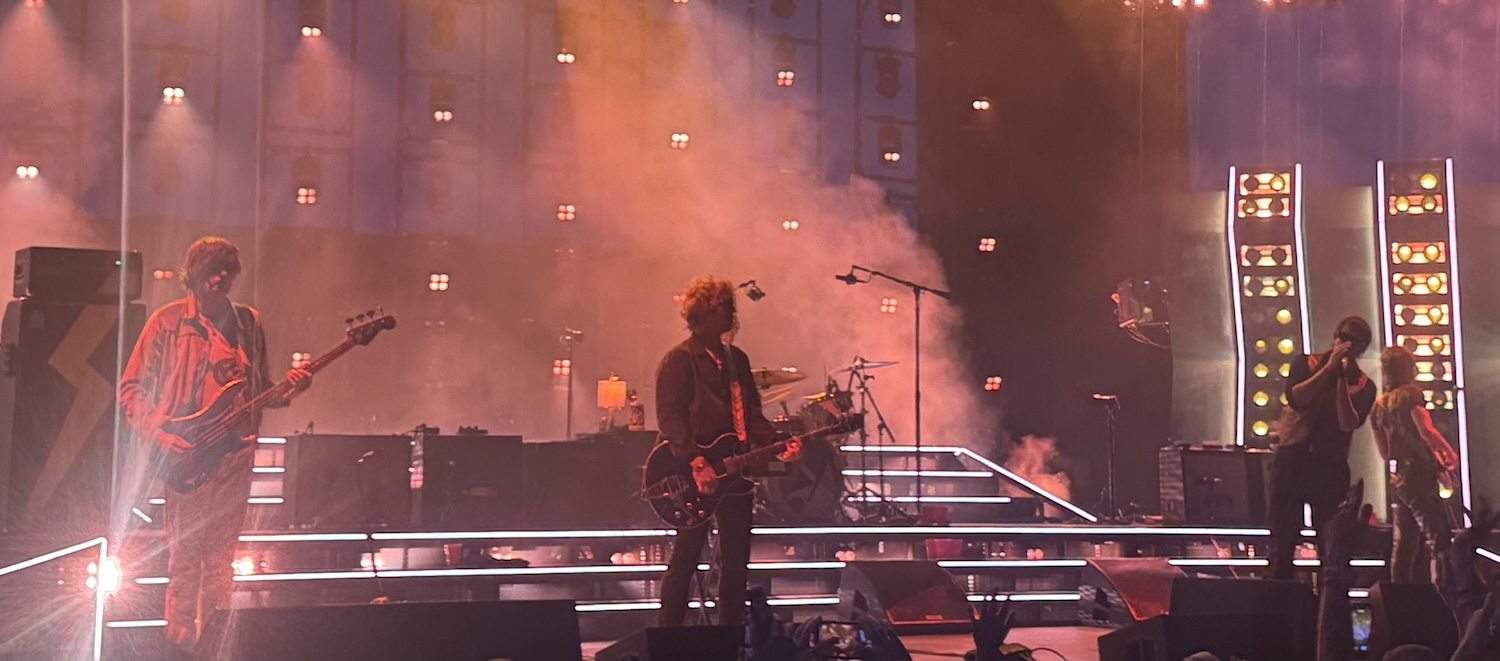
Inasmuch as the old-head brigade would’ve loved nothing better than to see the original five Strokes in all their glory—Valensi stepping away for “personal reasons,” whether truly personal or just residual friction with Casablancas, only the band knows this for sure—the choice of Schiltz as a replacement for this tour was an inspired one. He’s a gifted guitarist, an economical keyboardist on those songs that require it and a very game part of the Strokes lineup and chemistry, handling with relative ease the tricksy and layered guitar parts on older tracks such as “You Only Live Once,” “Reptilia,” “Someday,” “Take It Or Leave It” and even a song like “Life Is Simple In The Moonlight” from overhated/underloved 2011 transitional record Angles. Generally speaking, the Strokes’ energy this night at the Hayden Homes Amphitheater was high, their taut togetherness very much intact and a sense of smart-assyness was liberally sprinkled about the high-desert stage like the hot fun in the summertime that it was.
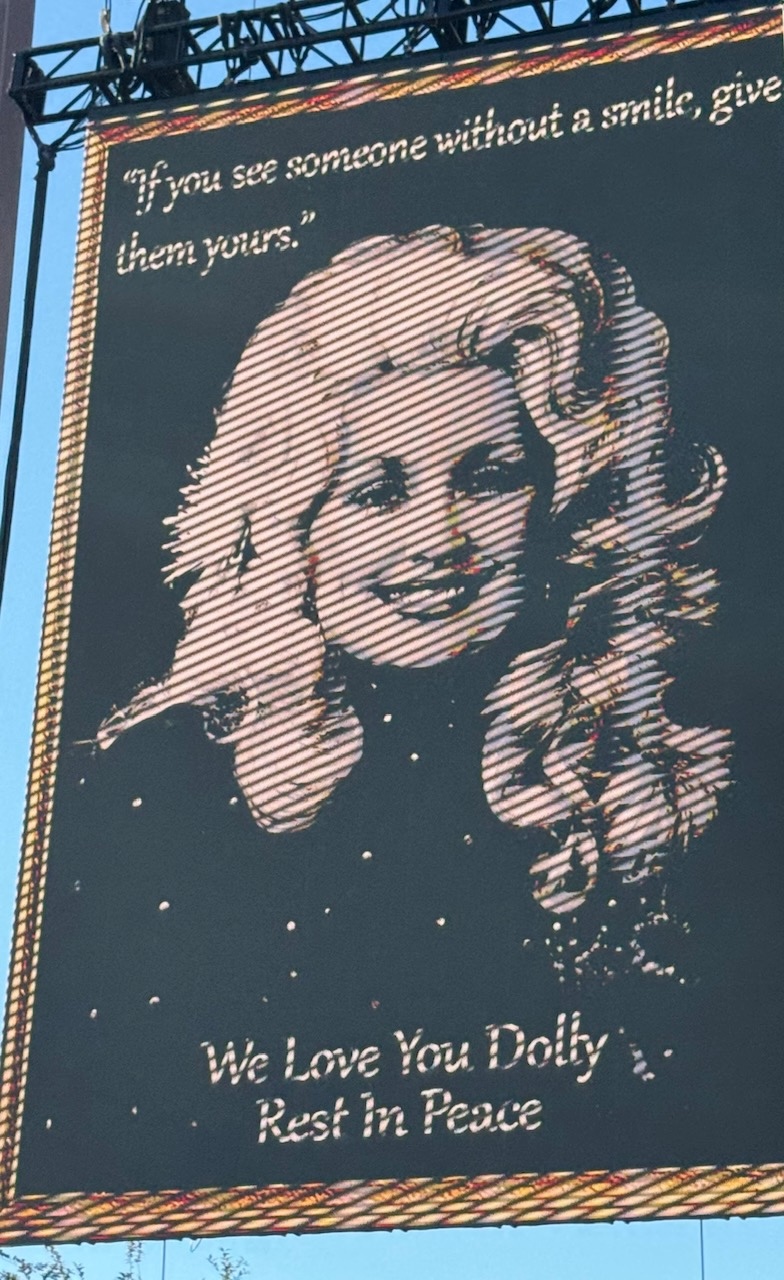
For his part, Casablancas seemed blown away by the reception this evening—the 8,000-seat venue (the only Live Nation facility in the state of Oregon, surprisingly) was sold out, and the crowd was lively—leading him to remark, “We’ve gotta get out here more often.” (The Strokes were making their first trip to Bend and hadn’t played in this part of the world since 2002.) Whether it was the full moon, the temperate evening or the raucous reception of the crowd that got him verklempt, Casablancas—in shades all night despite the darkness—paid tribute to Dolly Parton (whose passing had been announced earlier in the day), laughingly excused himself for “fucking up the ending” to a moody rendition of “Call It Fate, Call It Karma” and generally carried on as if surprised to learn that fans outside of major urban centers had decided to throw some weight behind the group.
“When we was young/Oh man, did we have fun,” Casablancas spat out during “Someday,” one of the band’s oldest tracks from the Is This It era. “I ain’t wastin’ no more time.” I love the Strokes’ continued sense of urgency; you’ve gotta appreciate a band that can somehow survive all the tumult of the last 25 years and still find a way to sound alive, fresh, energized and like its members are having as much fun playing for you as you are revisiting the darker, more dimly-lit corners of your youth.
As Goodman wrote in Meet Me In The Bathroom all those years ago, “I saw kids in Connecticut and Maine and Philadelphia and D.C. looking like they had just been drinking on Avenue A all night; sixteen-year-old kids in white belts and Converse Chuck Taylors with the greasy hair—hair that had been clean a week ago. Those kids had probably never even smelled the inside of a thrift store before Is This It came out. They found a band they wanted to be like. They found their band.”
I think it’s safe to say that while the Strokes may not have made New York “safe” for the rest of us, the kids have planted their flag squarely on the grimy square where the band resides, one more generational click down the road.
—Corey duBrowa