Every Saturday, we’ll be posting a new illustration by David Lester. The Mecca Normal guitarist is visually documenting people, places and events from his band’s 25-year run, with text by vocalist Jean Smith.
David’s painting is called Fractured Glimpse. Attending an Evelyn Glennie concert at the Chan Centre for the Performing Arts, I was wondering what I might write about the event. Listening is different knowing that Evelyn Glennie is deaf. To sit quietly — hearing structure in waves, placement of sound and volume. To think about orchestration and listening — wood, architecture and Evelyn’s bare feet.
Up early the next morning, I conjure several funny things with my entirely subjective mind’s eye. I start to write. David’s painting is very loose. It illustrates a sense of having been exposed to part of a thought, or a gesture, but before transmission is completed, comprehension is relegated to a glimpse. Writing can sometimes start as a glimpse that you want to explore further, so you turn the glimpse into something bigger, better defined, large enough to examine — to understand. Turning it over in your hands, in your mind, a different experience arrives for documentation. “Your papers please Mr. Glimpse.” “Credentials be damned,” spits Mr. Glimpse and turns so forcefully on his boot heel that he spins a full three-hundred-and-sixty-five days and ends up facing the official again. They both laugh.
I catch a ride with Dave and Wendy (who are the band Horde of Two). We talk about the event and then there is silence. Wendy, from the front seat, says, “Jean?”
“Yes?” I say, looking out the window at the pedestrial mayhem at Broadway and Commercial.
“I may introduce you to my boss and she might say that she’s heard a lot about you.”
“OK,” I say, thinking that sounds reasonable.
“I just wanted you to know that (how did she put it?) I’ve told her good things about you.”
“Wendy,” I say. “I don’t like to assume things about people, but in this case, I assume that you are not griping to your boss about me.” This gets a few laugh, so I continue, “No, I cannot imagine you saying — my partner is in a band with this woman who is totally annoying, utterly bonkers.” More hilarity, the light changes to green and I thank Wendy for giving me a polite warning of what her boss might say.
We get to the Chan Centre, where Wendy is the Programming Manager. She greets some of her co-workers and in some cases she introduces me, and Dave already knows some of them. This all falls into place as one might expect, standing around waiting to go into the concert hall. I go to the very interesting restroom — a round room with a round central sink station and mirrored walls. When I return, Wendy and Dave are standing with two women. Wendy does an introduction that somehow ends up with one woman departing quickly and the remaining woman saying to me, “Nice to meet you Cindy, I’ve heard a lot about you.” I gather, from the introduction, that the departing woman is called Cindy. I nod and smile. Once seated, I ask Wendy about Cindy. “I was informed that your boss might say she’s heard a lot about me, but I wasn’t informed that I would be held accountable for all of Cindy’s doings. How, may I ask, is Cindy regarded?” Wendy, once she stops laughing (she is one who laughs a lot at the funny things I say and I like this in a person) says, “Cindy is very highly regarded and that everyone aspires to be like Cindy.” Wendy says she’ll clear this up with the woman later and I say there is no need.
After the concert we attend a cheese-eating event with some of the event sponsors — they like to meet the artists, so this is the purpose of the reception. Various members of the orchestra stop by the cheese table on their way out to the tour bus. Evelyn attends and eats no cheese.
I am introduced to a woman who, to me, looks exactly the same as the woman who thought I was Cindy and this woman has a very similar name — Kristi to the other woman’s Christine, but before I am able to make this distinction, I lean and look rather too long at the name tag pinned to the bosom of her scoop necked top. The name on the tag is hard to read — catching light — and so I’m leaning and looking at her bosom just long enough to feel weird and since I am trying to eat a lot of cheese, I’m clutching a paper plate of crackers, a plastic knife and a crumpled napkin. “Oh,” I say. “Didn’t we meet already downstairs?” I thought Wendy was about to reconstruct the introduction to deal with the Cindy incident, but no, we had not met downstairs and so I re-apply myself to the eating of cheese without further comment, because there is no need. I am simply a cheese-eater, nothing is expected of me.
Leaving the room we pass this close to Evelyn and I thank the fellow who gave a speech about the new season at the Chan, during which everyone in the room except me stopped piling cheese onto crackers to stand still and listen. So I thank the guy who talked about memberships and the new series, thinking it’s likely that he supplies the cheese. “Thank you,” I say. “It was grand.” Proceeding along a rounded cinder block corridor towards the stairs, I say, “I used a five letter word all on my very own.” I don’t know why I say these things. Anyway, I got a few more laughs.
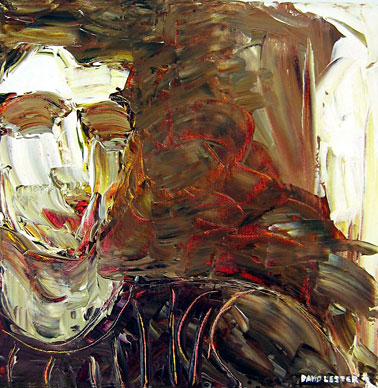 David’s painting is called Fractured Glimpse. Attending an Evelyn Glennie concert at the Chan Centre For The Performing Arts, I was wondering what I might write about the event. Listening is different knowing that Evelyn Glennie is deaf. To sit quietly: hearing structure in waves, placement of sound and volume. To think about orchestration and listening: wood, architecture and Evelyn’s bare feet. Up early the next morning, I conjure several funny things with my entirely subjective mind’s eye. I start to write. David’s painting is very loose. It illustrates a sense of having been exposed to part of a thought, or a gesture, but before transmission is completed, comprehension is relegated to a glimpse. Writing can sometimes start as a glimpse that you want to explore further, so you turn the glimpse into something bigger, better defined, large enough to examine—to understand. Turning it over in your hands, in your mind, a different experience arrives for documentation. “Your papers please, Mr. Glimpse.” “Credentials be damned,” spits Mr. Glimpse and turns so forcefully on his boot heel that he spins a full 365 days and ends up facing the official again. They both laugh.
I catch a ride with Dave and Wendy (who are the band Horde Of Two). We talk about the event, then there is silence. Wendy, from the front seat, says, “Jean?”
“Yes?” I say, looking out the window at the pedestrial mayhem at Broadway and Commercial.
“I may introduce you to my boss, and she might say that she’s heard a lot about you.”
“OK,” I say, thinking that sounds reasonable.
“I just wanted you to know that”—how did she put it?—”I’ve told her good things about you.”
“Wendy,” I say. “I don’t like to assume things about people, but in this case, I assume that you are not griping to your boss about me.” This gets a few laugh, so I continue, “No, I cannot imagine you saying, “My partner is in a band with this woman who is totally annoying, utterly bonkers.”
More hilarity, the light changes to green, and I thank Wendy for giving me a polite warning of what her boss might say. We get to the Chan Centre, where Wendy is the programming manager. She greets some of her co-workers, and in some cases, she introduces me; Dave already knows some of them. This all falls into place as one might expect, standing around waiting to go into the concert hall. I go to the very interesting restroom: a round room with a round central sink station and mirrored walls. When I return, Wendy and Dave are standing with two women. Wendy does an introduction that somehow ends up with one woman departing quickly and the remaining woman saying to me, “Nice to meet you, Cindy. I’ve heard a lot about you.” I gather, from the introduction, that the departing woman is called Cindy. I nod and smile. Once seated, I ask Wendy about Cindy. “I was informed that your boss might say she’s heard a lot about me, but I wasn’t informed that I would be held accountable for all of Cindy’s doings. How, may I ask, is Cindy regarded?” Wendy, once she stops laughing (she is one who laughs a lot at the funny things I say, and I like this in a person) says, “Cindy is very highly regarded, and everyone aspires to be like Cindy.” Wendy says she’ll clear this up with the woman later, and I say there is no need.
After the concert, we attend a cheese-eating event with some of the event sponsors—they like to meet the artists, so this is the purpose of the reception. Various members of the orchestra stop by the cheese table on their way out to the tour bus. Evelyn attends and eats no cheese. I am introduced to a woman who, to me, looks exactly the same as the woman who thought I was Cindy, and this woman has a very similar name—Kristi to the other woman’s Christine. But before I am able to make this distinction, I lean and look rather too long at the name tag pinned to the bosom of her scoop-necked top. The name on the tag is hard to read—catching light—and so I’m leaning and looking at her bosom just long enough to feel weird, and since I am trying to eat a lot of cheese, I’m clutching a paper plate of crackers, a plastic knife and a crumpled napkin. “Oh,” I say. “Didn’t we meet already downstairs?” I thought Wendy was about to reconstruct the introduction to deal with the Cindy incident, but no, we had not met downstairs, so I re-apply myself to the eating of cheese without further comment, because there is no need. I am simply a cheese-eater; nothing is expected of me.
Leaving the room, we pass this close to Evelyn, and I thank the fellow who gave a speech about the new season at the Chan, during which everyone in the room except me stopped piling cheese onto crackers to stand still and listen. So I thank the guy who talked about memberships and the new series, thinking it’s likely that he supplies the cheese. “Thank you,” I say. “It was grand.” Proceeding along a rounded cinder-block corridor toward the stairs, I say, “I used a five-letter word all on my very own.” I don’t know why I say these things. Anyway, I got a few more laughs.


 A deep-voiced, working-class songwriter with an affinity for ’50s-era crooners, American country music and grand orchestration, Richard Hawley has paid tribute to his hometown of Sheffield, England, through songwriting that serves as a sepia-toned photograph of timeless places and love-troubled lives. While it may seem as if nothing changes in Hawley’s stylishly retro work, sixth album Truelove’s Gutter (Mute) is a deceptively tranquil sea change of sonics—employing glass harmonica, waterphone and other ethereal sounds—and themes, with the album delving into lyrical topics of dashed hopes, drug addiction and, of course, love gone wrong. Befitting its title, Truelove’s Gutter finds Hawley trawling Sheffield’s shadows and back alleys on his most spacious, soul-baring album to date. Hawley is guest editing magnetmagazine.com this week. Read our Q&A with him.
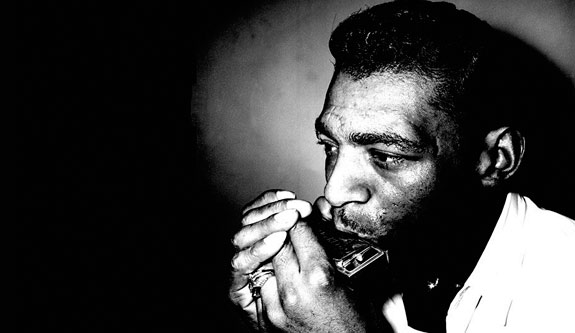 Hawley: The first man to amplify the harmonica, Little Walter was, in my opinion, also the best. I wanted to let you know that there’s a brilliant multi-CD package of all of his stuff, The Complete Chess Masters (1950-1967). It is beyond brilliant. My uncle Frank worked with him in England in the early ’60s. It’s a family story that gets retold and retold. I am thankful to have this music in my life. Video after the jump.



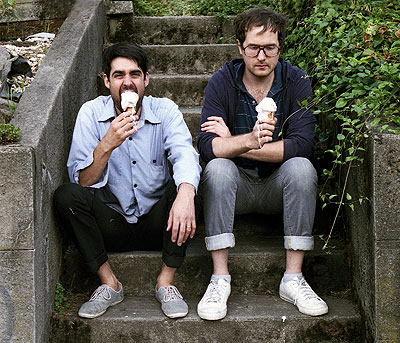 Charles Salas-Humara and Joe Kelly are
 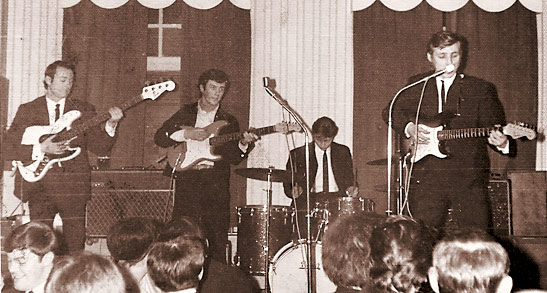 Hawley: As a boy, I took it for granted that my family were all either musicians or into music. I didn’t think about it. As an older man, I realize how lucky I was. I was brought up in a really rough part of my hometown of Sheffield, and their influence guided me so massively but also gently away from some dangerous pastimes that were easily available around us. (Those things I was to discover of my own free will later on in life.) If I ever had heroes, I think these three men are those. My grandfather was a music-hall performer. He had an act where he used to play the violin behind his back while he stood on his head. This was some years before Hendrix. It didn’t catch on. [Hawley’s dad’s band, the Dave Hawley Combo, is pictured]