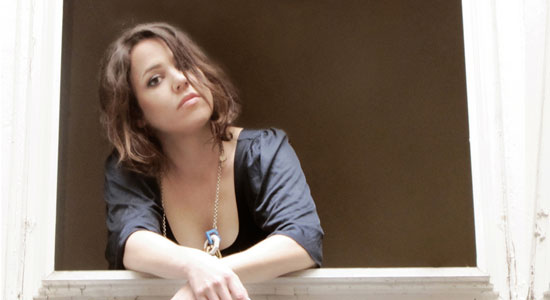
If By Yes is the latest project from the multi-talented Petra Haden. The band’s debut, Salt On Sea Glass (Chimera), took almost a decade to make and features Haden collaborating with Yuka Honda (Cibo Matto) and Hirotaka “Shimmy” Shimizu and Yuko Araki (Cornelius), as well as guests such as David Byrne and Nels Cline (Wilco). Haden is the daughter of jazz legend Charlie Haden and the sibling of musicians Rachel, Tanya (the sisters are triplets) and Josh Haden. Though she has played with a who’s-who of alt-rock and jazz artists over the past 20 years, Haden is perhaps best known for her fantastic 2005 a cappella interpretation of The Who Sell Out. Haden will be guest editing magnetmagazine.com all week. Check out the mix tape she made us in 2008, and read our brand new Q&A with her.
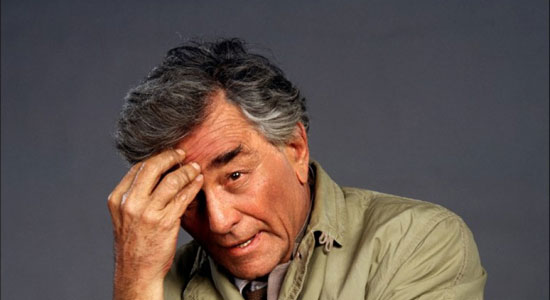
Haden: I started watching Columbo about six years ago. It used to be on regular TV a lot. And now, unfortunately, it’s not! Instead, I see that Walker, Texas Ranger is dominating the channel it used to be on. I was sick in bed when I rediscovered Columbo, and it was very comforting to watch Peter Falk’s odd character. He’s an oddball and a genius. He looks tired, but he is full of spunk. That’s why I love him so much. I was thrilled to meet him a few years ago and gave him my solo record, Imaginaryland. He said, “You’ll be lucky if I listen to this in the next seven months.” He then gave me his book, Just One More Thing (which was a common phrase he used when he was just about to figure out a crime). And he signed it for me! I almost cried.
If By Yes is the latest project from the multi-talented Petra Haden. The band’s debut, Salt On Sea Glass (Chimera), took almost a decade to make and features Haden collaborating with Yuka Honda (Cibo Matto) and Hirotaka “Shimmy” Shimizu and Yuko Araki (Cornelius), as well as guests such as David Byrne and Nels Cline (Wilco). Haden is the daughter of jazz legend Charlie Haden and the sibling of musicians Rachel, Tanya (the sisters are triplets) and Josh Haden. Though she has played with a who’s-who of alt-rock and jazz artists over the past 20 years, Haden is perhaps best known for her fantastic 2005 a cappella interpretation of The Who Sell Out. Haden will be guest editing magnetmagazine.com all week. Check out the mix tape she made us in 2008. We recently caught up with her via email.
MAGNET: Not that you care, but you and your sisters were born two days before me in 1971. Rod Stewart’s “Maggie May” was the number one song in the U.S. and U.K. And John Lennon’s “Imagine” was released the day you guys were born. Not too shabby, huh? Haden: Whoaa. Cool!
What was it like growing up in such a musical family? Was there ever any doubt you would end up doing it as a career? Was there ever any rivalry between you and your sisters and brother, even in jest? Growing up in a musical family made learning music fun. Since I was little, I knew that I would be playing music for a long time because I enjoyed it so much. There was never any rivalry with my siblings. We’ve all liked working together, and it’s great to be involved in their projects.
The list of artists you have played with is staggering: Green Day, Beck, Queens Of The Stone Age, Weezer, Foo Fighters, Mike Watt, Decemberists, Victoria Williams, Bill Frisell, Bette Midler, etc. Is there anyone else you are dying to collaborate with? What do you think it is about you that makes people seek you out to work with? I can’t think of anyone I am dying to collaborate with, because I love seeing what comes next for me. So far, the artists I’ve worked with I’ve always wanted to work with. So I like being surprised. I don’t know what it is about me that makes people seek me out.
You started writing with Yuka almost a decade a ago, but the If By Yes record just came out. What took so long? Can you explain the creative process of you working with Yuka? There’s no real reason why it took so long. Sometimes things take a long time. It just happened that way. The process of working with Yuka started with us writing songs in her apartment in NYC. She came up with song structures, and I would write melodies, which I later recorded.
You recorded the album in NYC, L.A. and Japan? How long did the actual recording take? It was done last year, right? Over a period of about eight years. Some of the songs were recorded in NYC. And a lot of the songs were done in the last couple of years. “Still Breathing” was remixed in Japan by Keigo Oyamada, and I recorded my vocals there, too.
You sing with David Byrne on the album. What was that like? It was a lot of fun! I listened to his music in high school. Back in the day. So it was an honor to work with him.
Can we expect another If By Yes record down the road? Any lives dates? Although I enjoyed my time with If By Yes, I am not continuing with them. I think it’s important for me to concentrate on my own work now.
What was it like getting the thumbs up from Pete Tonwshend for Petra Haden Sings: The Who Sell Out? That must have been an amazing feeling. But then you said you heard Roger Daltrey didn’t like it. What’s that guy’s problem? I’d offer to rough him up for you, but he looks like he’s in pretty good shape these days. Getting the thumbs up from Pete T. was very surprising to me! I was so excited when I heard that. I recorded the album on a cassette eight-track Mike Watt gave me. So at the time, I thought it sounded like shit, with all the hiss and extra noise in the background. But then after a while, all the noise kinda grew on me. I have to remember that the most important part of that whole experience was having fun. All the worrying about how it sounds and messing up while working the eight-track kind of gives it character. I was just happy he liked what I did, and I was happy singing it.
Back in 2008, you told MAGNET you were working on an album of a cappella film themes, tentatively titled Petra At The Movies. How is that progressing? Yes, that album is done for the most part. I’m still not sure of the title, but be expecting some interesting surprises. I will let you know the release date soon!
You sing on the upcoming album by 80-year-old jazz legend Paul Motian. Was that at all intimidating? No, it wasn’t. He is a lot of fun and made me laugh the whole time. He’s known me since I was a baby. Now, singing some of those songs was intimidating. They’ve all been sung by the best, so I was a little nervous.
What do you have planned for the rest of 2011? Working on getting my record out. And putting together another Sellouts choir.
Speaking of movies, I’ll tell you a funny story about my brother-in-law, some surfer dude from Jersey named Tom, if you tell me one about your brother-in-law, Jack Black. He was re-enacting Peter And The Wolf for his kids one day, while the music and story was being played. It was funny to watch him impersonate all the animals!
Thanks to Amor de Días for guest editing our website all week. Be sure to check out the duo’s debut album, Street Of The Love Of Days. Here’s the video for “Wild Winter Trees.”
Let’s jump right in. I’m back in Canada attending the Festival International de Jazz de Montreal. While the Undead Jazz Festival in New York this week offers plenty of quality improvisation and jazzy eclecticism for omnivorous music fans, our northern neighbors throw a party on a far larger and much wider scale. Speaking of NYC, I began my sojourn with a couple of Manhattan-based acts. The first was at my favorite venue, the small and intimate Gesù, with the David Binney Quartet. This particular quartet has played together for years and displays Binney’s strength as a composer as well as his prowess on the saxophone. Binney is a thoroughly modern alto player and produced a steady stream of intricate, creative lines of sound, but drummer Dan Weiss stole the show repeatedly with an impressive barrage of rhythmic counterpoint as the band laid down its carefully structured foundations. You can usually catch this quartet playing at the 55 Bar in NYC and should definitely do so.
Then it was off to the Théâtre Jean-Duceppe to see ace guitarist Marc Ribot’s trio, Ceramic Dog. Ribot has performed at the Montreal fest many times, and this year he’s hosting several nights with different musicians as part of the Invitation Series. Although the venue on Saturday was only half-full (or half-empty), the band put on a very powerful show. Ribot’s guitar was burning with intensity as Ches Smith pounded the drums (and added a series of electronic textures to the mix) with bassist Shahzad Ismaily prodding the group from underneath. They played a convincing version of Hendrix’s “The Wind Cries Mary,” but I preferred Brubeck’s “Take Five” where Ribot juxtaposed traditional jazz sounds with the bracing style of guitar heroes like Mike Bloomfield, Carlos Santana and B.B. King. This was a left-end-of-the-dial encounter and only points to Ribot’s diversity as a player and a bandleader. More on him as the week progresses.
I only saw about a half-hour of Brazilian singer Milton Nascimento but can testify that he still has one of the most amazing romantic voices in the world. While I don’t speak Portuguese, there’s never a problem absorbing the intense and beautiful emotions he conveys, and when Nascimento let go with his wordless crooning falsetto, I was completely transfixed. The only reason I abandoned Nascimento was to run back to the Gesù for a solo show by pianist Brad Mehldau. Mehldau is a festival favorite—and with good reason. He’s one of the best piano players on the planet. As usual, Mehldau played with focused concentration and often-amazing complexity. Besides performing Nirvana’s “Smells Like Teen Spirit,” he interpreted some Radiohead and Massive Attack before tackling an intricately melodic version of “My Favorite Things” and a beautiful take on Paul McCartney’s “Blackbird.” The only thing that could tear me away from such a performance was the clarion call of Prince’s midnight show down the street at the Metropolis nightclub.
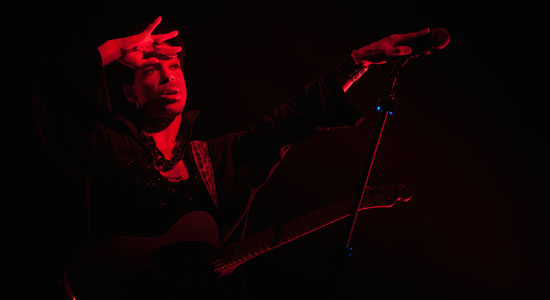
Prince’s second night of two special shows was off the hook. While he’d just played for nearly four hours the evening before, Prince’s show was fun-filled and relentless. Featuring his typically rocking band and special saxophone soul man Maceo Parker, the Purple One served up a mix of totally hard funk, frenetic black rock, a surplus of Hendrixian guitar stylings and plenty of sexy soul numbers. Drawing from his deep repertoire, he sang favorites like “Controversy,” “Pop Life,” “D.M.S.R.” and “Take Me With U.” He also went into a driving version of Chic’s “Le Freak” and Wild Cherry’s “Play That Funky Music White Boy” as well as the Time’s “Jungle Love” and Shelia E.’s “A Love Bizarre.” The show just went on and on and on (and on). At three in the morning, Prince came back for a third (or fourth) encore and did a triumphant version of “Purple Rain,” then came back again to supposedly end with “Kiss.” I walked out of the Metropolis at 3:30 wondering if I might have missed yet another encore, but in any case, score one for the opening night of the Montreal Jazz Festival.
Amor de Días—the duo of Alasdair Maclean (Clientele) and Lupe Núñez-Fernández (Pipas)—just released debut album Street Of The Love Of Days via Merge. (Those of you who speak Spanish know that the band’s moniker translates to “love of days,” hence the album title.) Maclean and Núñez-Fernández worked on the 15-track LP for more than three years, and it features guest spots by the likes of Louis Philippe, Damon & Naomi, Gary Olson (Ladybug Transistor) and Danny Manners. Maclean and Núñez-Fernández will also be guest editing magnetmagazine.com all week. Read our brand new Q&A with them.
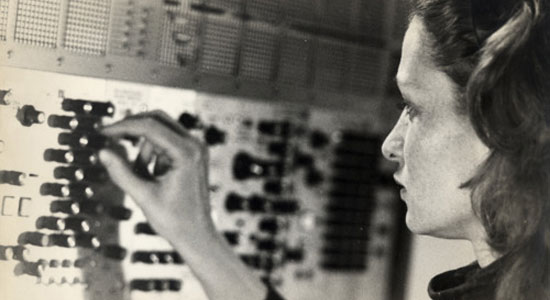
Núñez-Fernández: I think it was through Ubuweb that I came across Eliane Radigue‘s music a few years ago, and since then, she’s become one of my favorite composers, someone I come to again and again. In the ’50s, she studied electroacoustic techniques under Pierre Shaeffer, the founder of musique concrète, and then in the 60s, she was Pierre Henry’s assistant, developing her own style slowly but steadily while raising her three children with Arman. Then in the mid-’70s, she took a few years off music when she converted to Tibetan Buddhism, but her guru sent her back to it and she started making a large-scale cycle of works based on the life of 11th-century Tibetan master Milarepa. These days, she’s still composing and studying the teachings of the Tibetan lamas. 1992’s Kyema, Intermediate States, a layered synthesized drones piece, is from a trilogy inspired by The Tibetan Book Of The Dead. The word “kyema” in Tibetan refers to a state of surprise mixed with sorrow; for me, all her work suggests an uncanny sense of transformation. I’m looking forward to this festival of her work in London when we come back from tour.


 If By Yes is the latest project from the multi-talented Petra Haden. The band’s debut, Salt On Sea Glass (Chimera), took almost a decade to make and features Haden collaborating with Yuka Honda (Cibo Matto) and Hirotaka “Shimmy” Shimizu and Yuko Araki (Cornelius), as well as guests such as David Byrne and Nels Cline (Wilco). Haden is the daughter of jazz legend Charlie Haden and the sibling of musicians Rachel, Tanya (the sisters are triplets) and Josh Haden. Though she has played with a who’s-who of alt-rock and jazz artists over the past 20 years, Haden is perhaps best known for her fantastic 2005 a cappella interpretation of The Who Sell Out. Haden will be guest editing magnetmagazine.com all week. Check out the mix tape she made us in 2008, and read our brand new Q&A with her.