
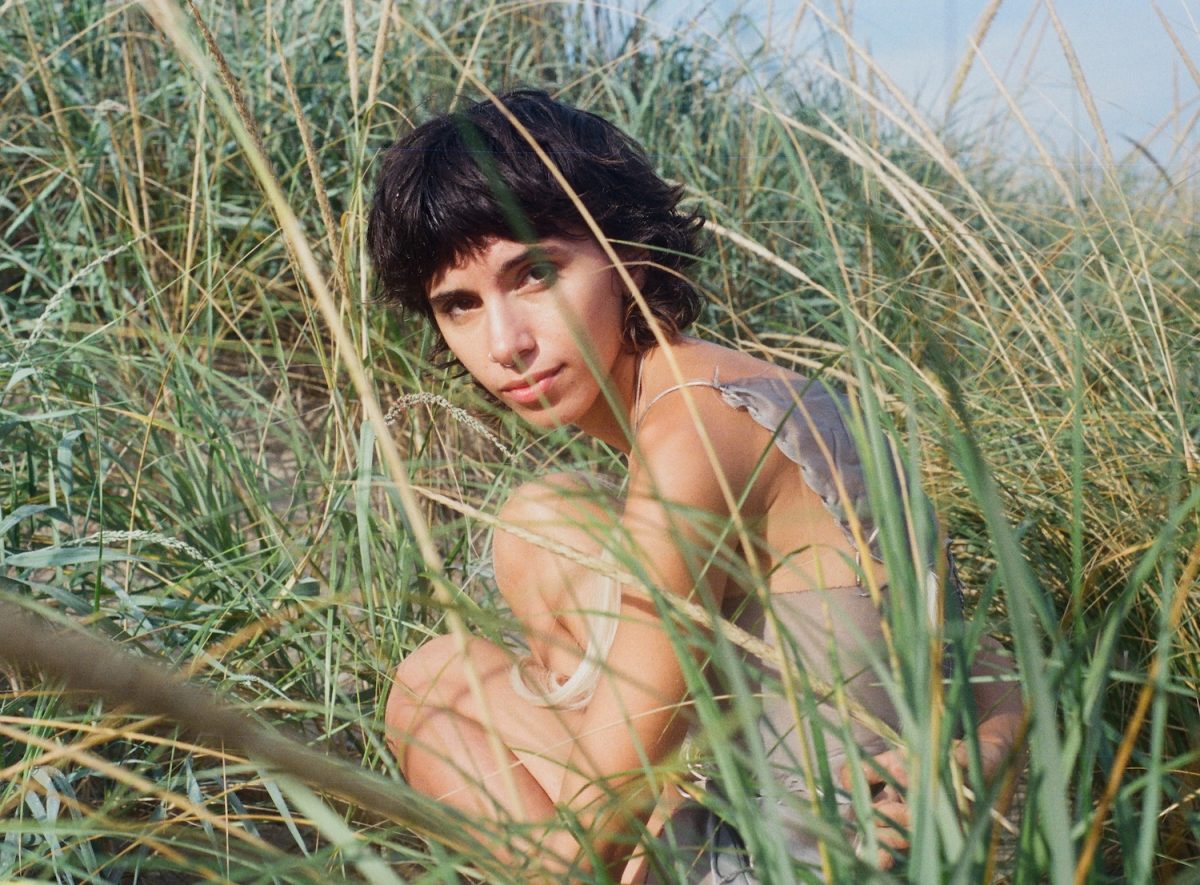
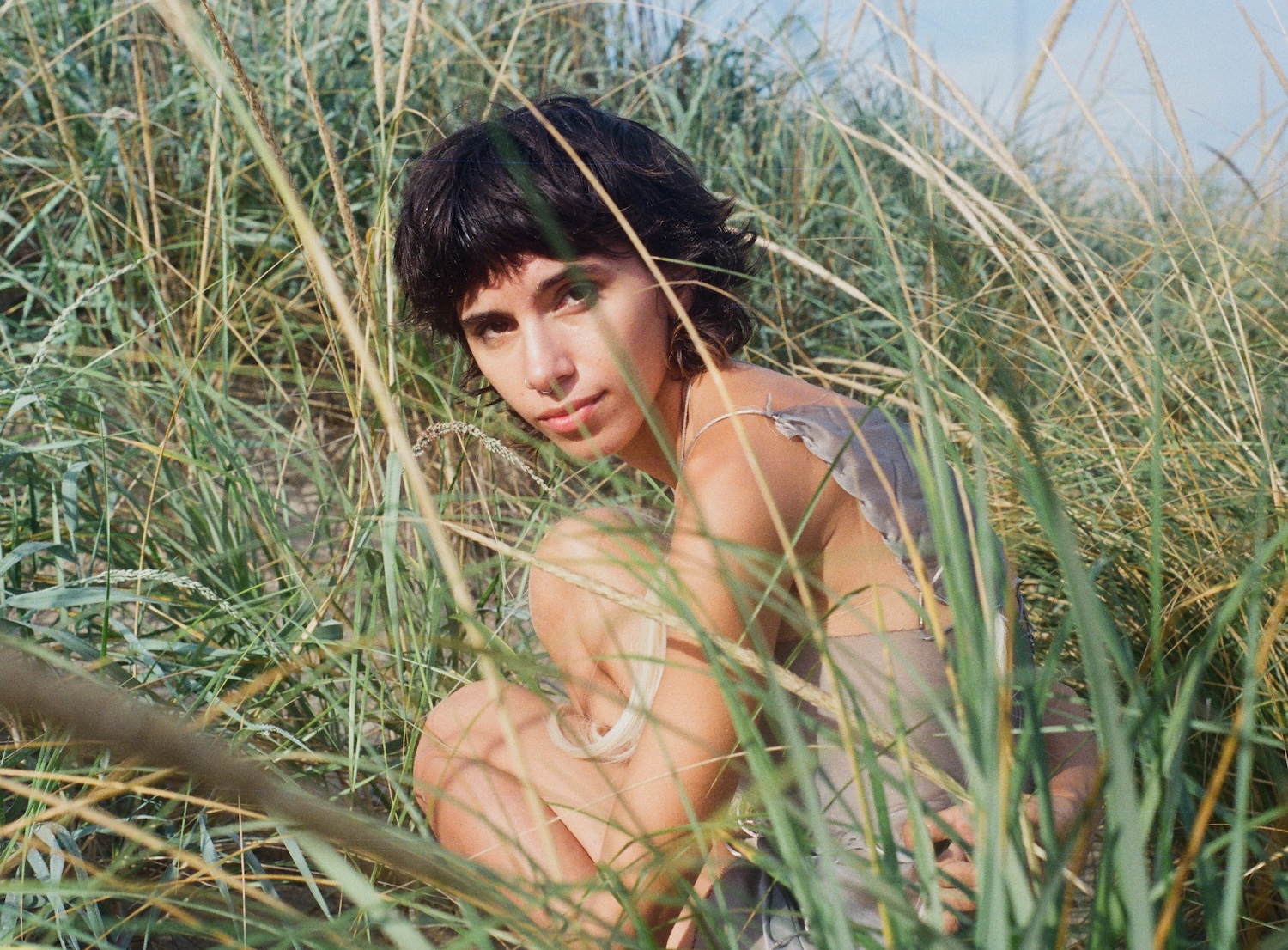
Camila Ortiz doesn’t treat songs as static objects. Within Otracami’s purview, they move, accumulate and spill over, absorbing fragments of voice, memory and environment until they feel almost alive. On Runoff (Figure & Ground), that sense of motion is the whole point. Written during a period of personal and professional upheaval, Otracami’s second full-length traces the uneasy push-pull between staying and leaving, containment and release.
The Brooklyn-based artist brings a refined composer’s ear to her process—layering field recordings, fractured vocal loops and full-band interplay into something that feels both meticulously arranged and emotionally unguarded. To achieve that nuanced balance, Ortiz worked with a tight-knit core of collaborators, including guitarist/engineer Andres Abenante (Birthing Hips, Jaybird Studio), drummer Jon Starks (My Trio, jondownload) and bassist Jesse Bielenberg (Dora Jar, altopalo). The result is an album that feels like a heavy load in the best way.
Here’s a breakdown from Ortiz.
—Hobart Rowland
1) “Headphones”
“‘Headphones’ started with a guitar loop and little voice memos I’d taken of people: my partner, my sister, my mom, my grandma. I turned the little fragments of words and breaths into percussion. I wanted the melody over it to feel flowing, circular, both intuitive and strange. Lyrically, it sets the stage for the rest of the album. It contains this uneasy intimacy—moments of warmth, moments of fear, a claustrophobic feeling. ‘I turn to go, spinning slow’ is the crux of the song: paralysis, circling.”
2) “Sirens”
“This is the first song I wrote for the album. At first, I wasn’t sure it belonged—it’s about the mythology of sirens. They used to be Persephone’s handmaidens and got turned into monsters by Persephone’s mother after she was kidnapped and taken into the underworld—basically as punishment for just being there when something bad happened. Ultimately, the song is about work, and it reflects the emotional complexity of an employer/employee relationship I was experiencing at the time. I wanted it to feel ancient, medieval … like a spell, like wailing.”
3) “The Wait”
“This was another early one. I wrote it about meeting up with an ex I hadn’t spoken to in many years. I came in carrying these big resentments and pain that I couldn’t figure out how to express in the moment, and I felt so frustrated by that. It’s about incomplete catharsis—getting this one opportunity to say something you really need to say and then feeling like you missed it. Sonically, I wanted it to feel epic and frenetic—airy, with pure, piercing harmony.”
4) “Can’t Go Back”
“‘Can’t Go Back’ is about family. I started with this kind of melodic picking pattern in the chorus and the lyrics, ‘I don’t want what I cannot have, I don’t miss what I can’t get back.’ Images from childhood were coming in that kind of dreamlike, fragmented way. The song speeds up a lot halfway through—that was a decision I made with Jon and Andres while recording. We felt like there needed to be more urgency.”
5) “Lose You”
“Direct, cathartic, ragey. I was writing about a dynamic I had with someone close to me that had for so long felt deliberately confusing, invasive, manipulative. I was also wanting to understand my own role in that dynamic—what drew me to it. Writing the song felt like a moment of clarity and rage. Jon and Andres really brought this one to life … and shredded. Andres used a milk frother on guitar, which is the sound that’s like a dentist’s drill.”
6) “July 19”
“‘July 19’ is a love song describing a moment of intimacy that can hold you through fear. I wanted it to feel close, warm, textured. I also wanted it to end in the middle of a sentence, almost breaking off, so it didn’t feel too conclusive or sweet.”
7) “Sleep Well”
“I’m most proud of the vocal harmonies and counterpoints here, and I wanted the song itself to feel meandering and shadowy, both vague and direct. The vocals are from the original recording I made moments after I wrote it. I liked the close and direct quality, the freshness. I never wanted to make another version.”
8) “Lost Fruits”
“‘Lost Fruits’ is about disappointing someone you love, and then indulging in the pain of that disappointment. I love Jon’s drums in this one. Their soft texture is anchoring, circular.”
9) “Perfect Reach”
“There’s a very haunted demo of this one floating around. It was stark. I wrote it in deep winter, I was reading—and very moved by—Mariana Enriquez’s Our Share Of Night. I wanted to use the song to cast a spell or put myself into a trance. I wanted to summon this person I’d hurt, and I also knew if I did, I’d want to send them away. Jon and Andres added this urgency and intensity that felt really right.”
10) “Please”
“This song touches on family and romance, picking up threads of different relationships, past and present, that felt impossibly tangled in the moment I was writing. It’s about the relief of finally being alone, trying to untie that knot.”
11) “Penny Frog”
“The album is about leaving and coming back, and ‘Penny Frog’ is the coming back. I’d been talking to my dad about this Peruvian bar game called sapo, where you try to throw a coin into a (bronze) frog’s mouth. In the moment, I felt like that was what I was doing: tossing a coin, getting a little closer to letting go of control, of knowing. I recorded it alone in my apartment. It was the last song I wrote for the album.”