
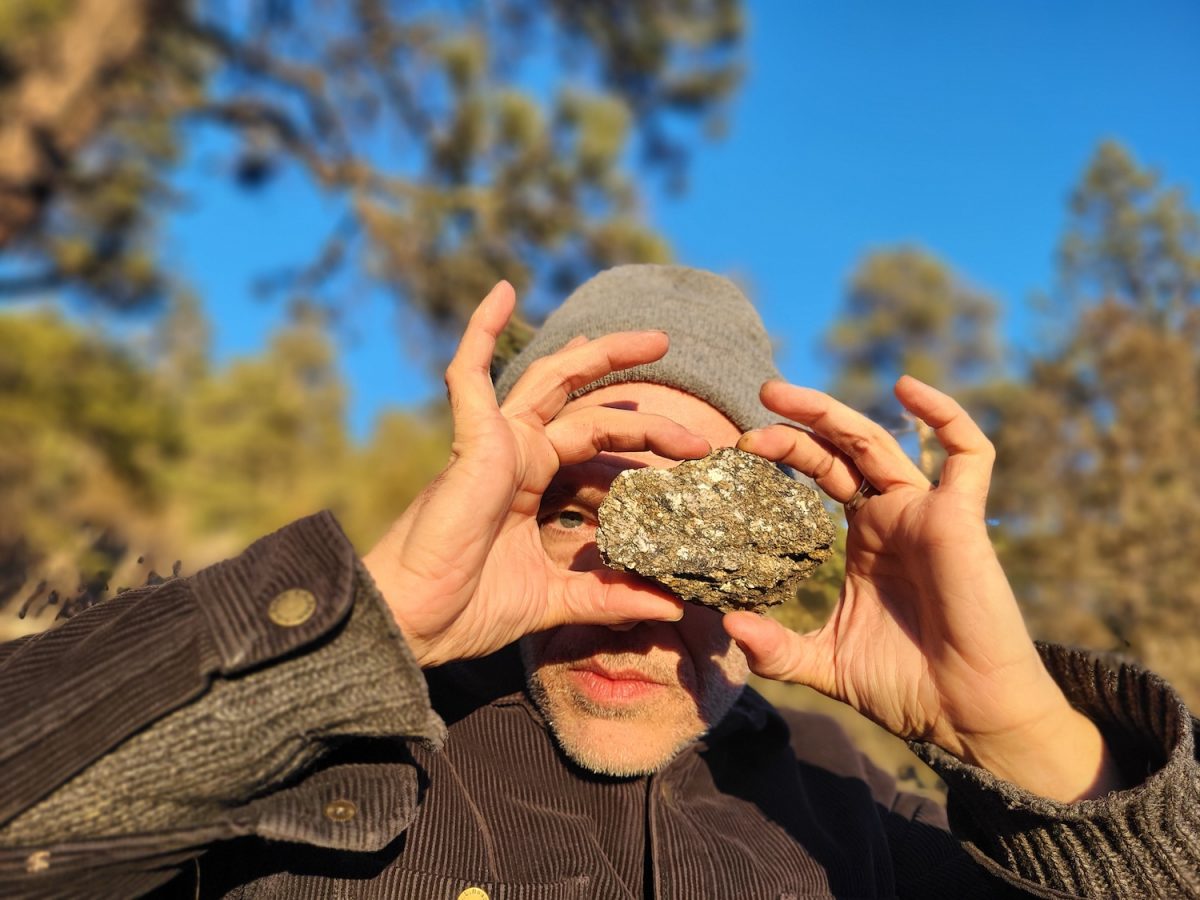
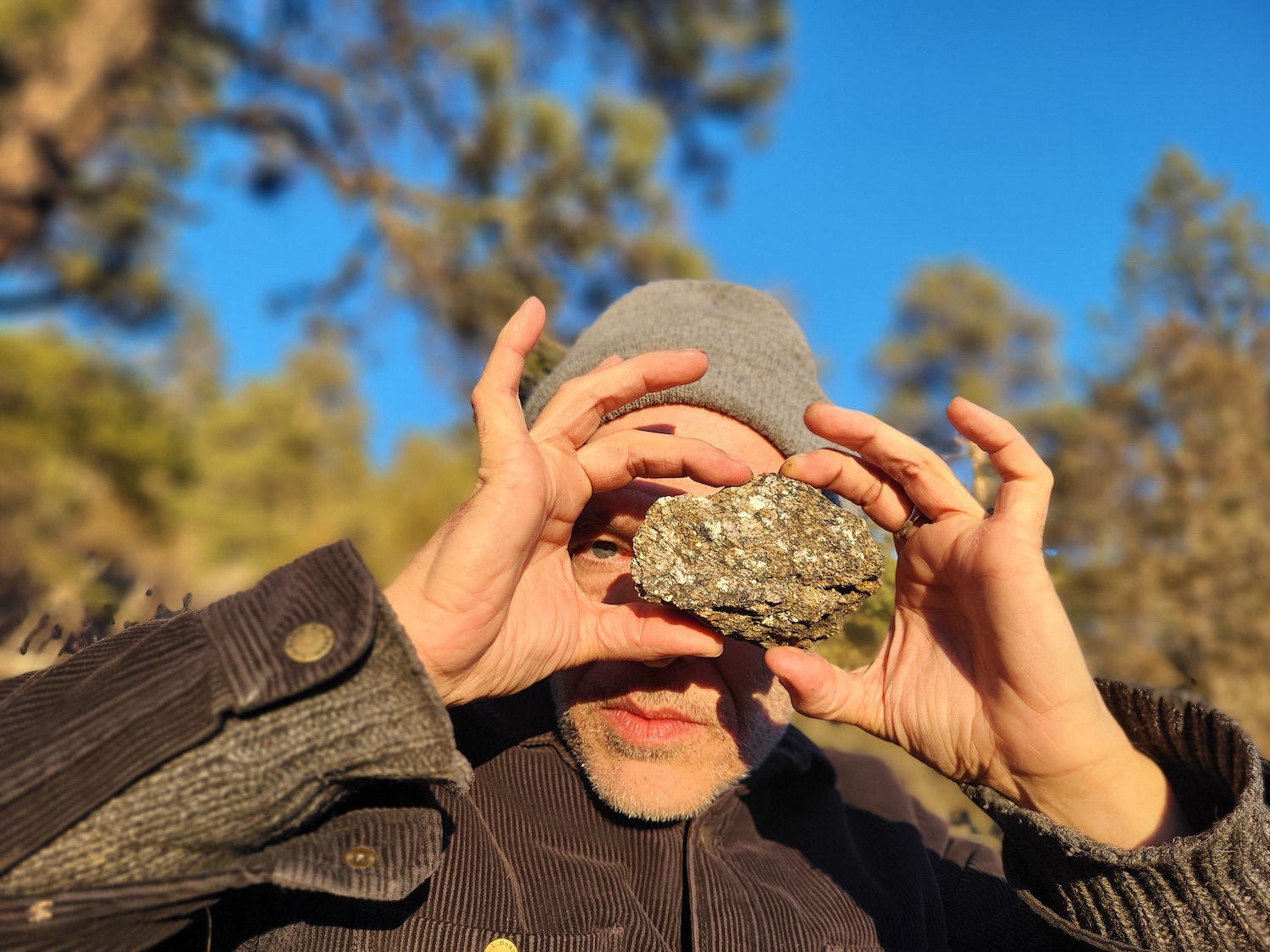
Simon Joyner has been making the hard work of acute, interpersonally focused songwriting look effortless for three-and-a-half decades. He’s also the proprietor of Grapefruit Music, which is both a record label releasing his own and other artists’ music and a record store in downtown Omaha, Neb. Joyner has typically applied his precise language and rough-hewn melodies to portrayals of characters dealing with existential trials, but the sudden death of his adult son Owen in 2022 turned his writer’s gaze inward. In 2024, Joyner presented Coyote Butterfly, a measured and profound cycle of songs about grief and loss. He has just followed it up with Tough Love, a double LP recorded with his long-time producer, Michael Krassner, and a band, the Nervous Stars, that mixes familiar collaborators with newcomers who bring a narrative-enhancing musical instability into the mix.
—Bill Meyer
The songs on Tough Love seem to share a theme of aftermath. It feels like every single song begins after something else has happened. Did you intend for your writing to deal with a particular theme, or are these just the last dozen songs that you wrote?
I hadn’t really thought about that, but it is is true now that I consider the question. It makes sense for how I approach songwriting. I think what’s most interesting about what people go through is how they deal with what gets thrown their way, whatever struggles present themselves. So, I guess it makes sense that I would start some of these songs by presenting the problem as being in the past, and then all the real work is still ahead of these characters.
It’s kind of how I’ve always worked. I don’t really have a theme in mind when I start writing and then try and connect them. What happens is, I usually don’t write anything for a year or two between albums, and I just live my life as normal. And then when I do start writing, I have a lot of experience since the last writing spree, and it ends up in the songs. A theme sort of presents itself, and it becomes clear what’s going on or what I’m preoccupied with. Sometimes there’s extra songs that don’t really fit, but there’s usually enough that seem to be a grouping that it’s easy to see them as a record.
As I was kind of looking back through your discography, I realized that you’ve made several double albums. All of them are ones that are more chaotic in sound, and a couple of them have a sidelong last song.
I think it might be because of Blonde On Blonde, you know, and “Sad Eyed Lady The Lowlands.” It seems like everything is working its way toward that last song. After hearing those three sides, you think, “How could this last song be the most important thing that it needs to be to stand out?” But Dylan pulls it off, and I’ve always been impressed by the arc of that of that record. That’s a perfect double album, you know, if you’re going to write too many songs.
Can you say a bit about how Tough Love was put together and how the musicians contributed to it?
I had done some recording projects with Caleb and Micah Dailey, who run Moone Records in Phoenix. And they were friends with Michael Krassner, who I’ve worked with going all the way back to the Chicago years, starting with (1998’s) Yesterday, Tomorrow And In Between. I had seen them backing up someone else, then some of their own solo projects when I’d been to Phoenix to visit Krassner, and I just really loved what they were doing. It just seemed really genuine and purely musical, and I wanted this record to have a little bit more chaotic or noisier and improvised aspects. I think maybe it’s already inherently chaotic if you’re doing a double album. If you’re doing a sprawling thing, you sort of have to acknowledge that things are a little crazy already, so it makes sense for the music to dig in in that way, too. These guys seemed to be the right crew who were willing to experiment and play instruments they hadn’t really mastered. And everyone was up for creating some layers of murk to be mixed in at some level. Even if the song on top of it is more structured, there would be these things teaming under the surface that would fit the story lines of these characters who are going through stuff.
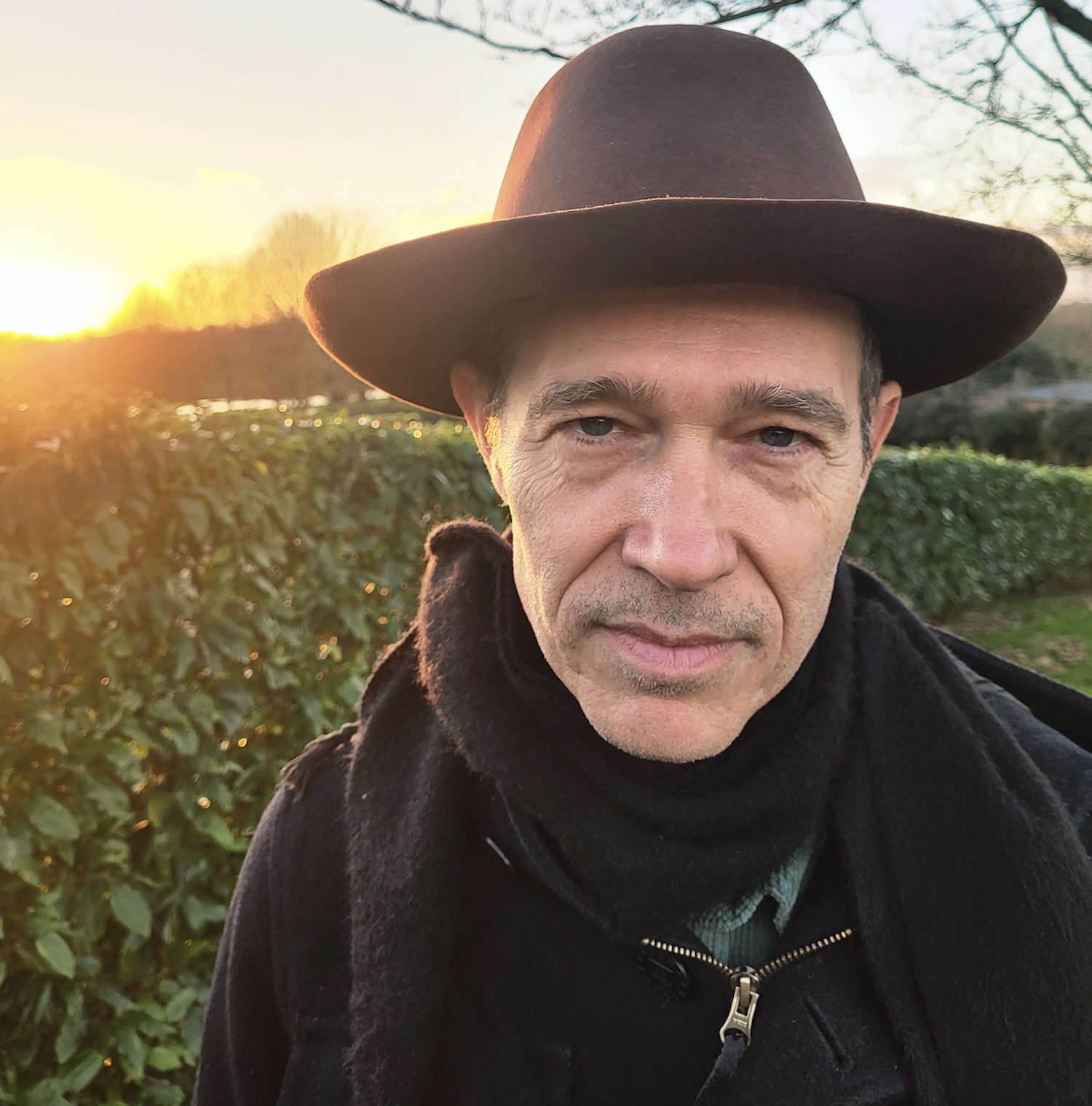
On Coyote Butterfly and Tough Love, you have really taken on something that happened in your own and your family’s life. Could say a bit about dealing directly with your own life? Because I think that that hasn’t always been subject in your writing.
The very early records that I made were really influenced by Loudon Wainwright III, kind of confessional songwriting. Journalistic—you have to tell the truth about everything that happened and do it in an artistic way, and everyone gets outed in these songs. I grew out of that kind of that mode of songwriting and hadn’t really returned to it. When I’m writing about my own life, it’s always been indirectly, where I’d find a way through these fictional scenarios to discuss the important stuff about what’s happened in my life without having to use the actual personal details. But when my son Owen died, I wasn’t really able to imagine writing again until I tried to address the loss and all the feelings around it and the grief. Fiction didn’t seem appropriate for that, and so with Coyote Butterfly, those songs are all very directly autobiographical. There are a couple songs that they use a loose fictional foundation, but it’s all like part of this autobiographical song cycle.
On this album, I return to writing in the previous style, through characters and all that kind of thing, except for the last song on the record, which is the missing piece from Coyote Butterfly. It’s kind of dealing with my own sense of failure as a parent and my guilt, and really letting myself have it for all the things I didn’t do or could have done better. I think it’s a natural thing that people go through when they feel like something they could have done could have prevented this tragedy that they’re living with. So, I kind of returned to the autobiographical for that last long track. But even that is, like, I’m imagining a confrontation with my son that that never happened. It’s really my feelings about myself, and I’m using him make myself face these things, but it seemed like I still had that to get out. Coyote Butterfly is mostly dealing with grief and celebrating his life and how hard it was to lose him. But this anger at myself—I hadn’t completely approached the subject from every single angle until I wrote this “Tough Love” song.
The rest of the album is in the style of true characters, even though there’s quite a bit of my own life. I think the fact that I’m still dealing with loss and grief allowed me to write about these other kinds of characters, people who lose a husband in an accident or have a falling out with a sibling, and give those songs more weight through my own experience without it being something that actually happened to me. So it is new that I’m writing in this style, but I think it’s more related to losing Owen, specifically, that it felt necessary to write directly and honestly about that experience at least, and at least to for a bit of time. You know, I’m sure I’ll be writing about him and about what my family’s gone through in lots of different ways going forward, but for at least these two albums, I needed to approach it from every angle and really get it out, and that seemed the only way to do it. I don’t think that it means that it’s marked a turning point in my songwriting where it’ll be strictly autobiographical from here on out, especially since for most of this record I was able to write in the way that I’m more that I’m used to.
What’s going on with Grapefruit?
Oh, well, there’s a lot of releases coming. I’m really excited about the first record of new music from Peter Jefferies in 25 years, a really incredible album that I’m very excited to be releasing. That will be coming soon. There’s a record by Sarah Mary Chadwick. She’s from New Zealand, but she’s now a resident of Australia. She’s mostly done singer/songwriter records, but this record is like an experimental hip-hop album. Her songwriting is completely different than I’ve ever heard. It’s furious and hilarious, and it’s got this strong feminist thread running through it. It’s massive, and it’s wonderful. There are things in the works that haven’t been turned in yet, but those are the two that are the closest to making it out this year. Just continuing to put out other people’s music, things that I can champion and try and find an audience for in my own little way. That job is easy. I love it. Supporting other artists is my favorite part of what I do. If I ever stop writing my own songs, I think I would be totally happy just trying to make records come out for other people.
The store arm of the label is really great. You know, it’s a curated shop. It has the kinds of records that I want to see when I go into a record store, a lot of underground music and full sections by bands that only sell it, you know, one record every six months. It’s kind of a labor of love in and of itself, but we happen to be in a part of downtown Omaha that is a touristy area, and so the foot traffic is amazing. There are all these hotels around, so we’re able to do really well selling the used records that we get in. They keep the doors open so that I can have 50 Fall albums in a section that, you know, don’t sell fast enough. Or all the Television Personalities albums. Or, you know, this, that or the other things that aren’t Radiohead.