
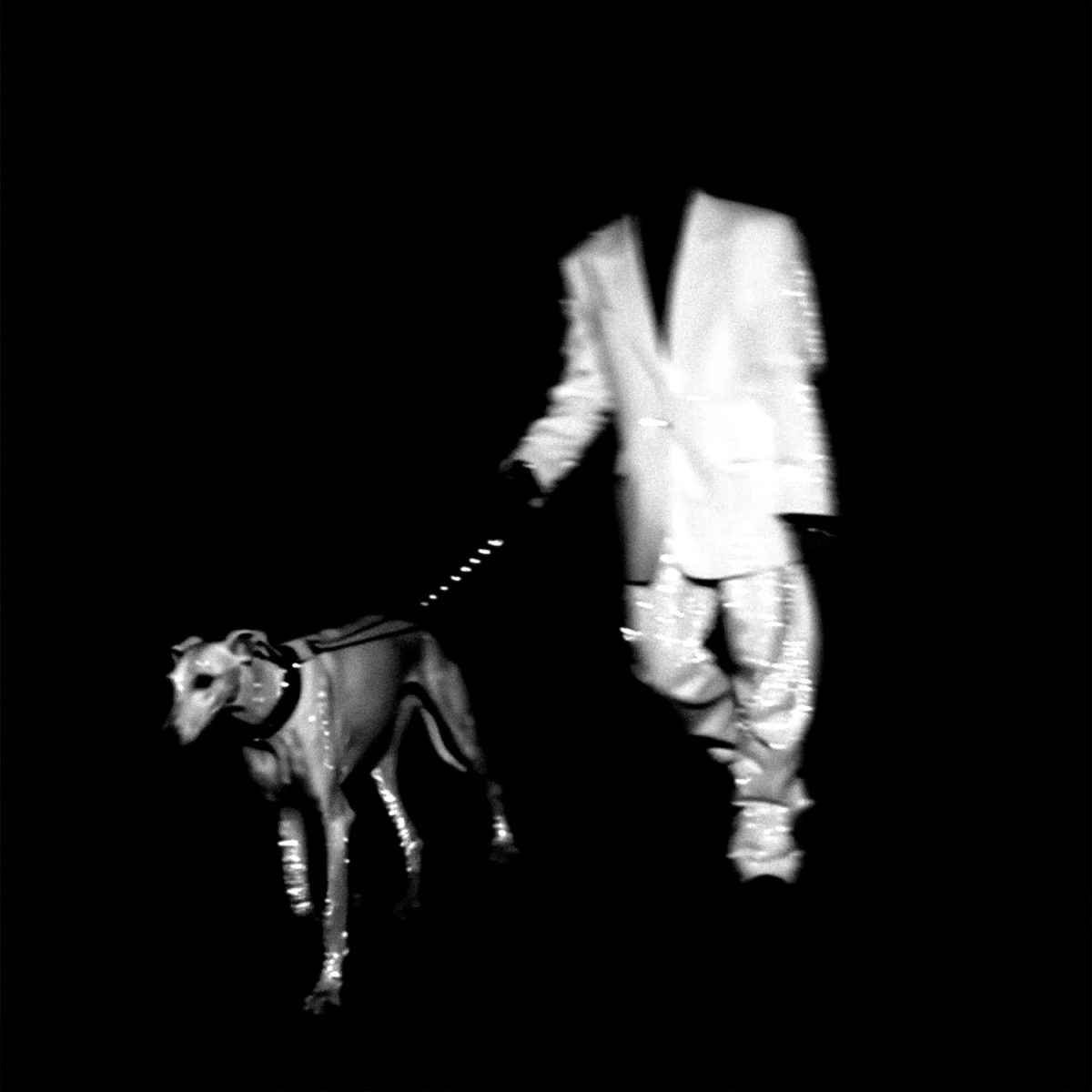

Throughout his 20-year career, Robbie Furze has been most comfortable in a place where noise, melody and atmosphere intersect, from the relentless industrial hardcore of Panic DHH to the towering electro-rock chaos of the Big Pink. These days, he’s leaving things decidedly more open-ended, spearheading a collective where longtime friends and collaborators shape each new release. M.O.T.H.E.R.’s self-titled EP (Fullaway) emerged from a period of profound emotional highs and lows for Furze. (More on that later.)
Joined by buddies Jamie T and Kills guitarist Jamie Hince, Furze seems intent on embracing the communal spirit, even when the subject matter is painfully personal. One highlight, “My Love,” transforms grief into something universal and even uplifting, the song’s anthemic hooks colliding with the richly textured production. It’s music rooted in loss that refuses to be consumed by it.
In a recent Zoom chat with MAGNET’s Hobart Rowland, Furze and Hince outlined their vision for M.O.T.H.E.R. as a project without boundaries.
What led you down the collective path, as opposed to starting a traditional band?
Furze: It wasn’t a decision right at the beginning. Me and Jamie (Hince) made the decision together after we’d gotten the songs in place. Both Jamies have their own schedules and their own bands, so the idea was that they’d be involved whenever they could be involved.
Hince: I’ve kind of forgotten what it’s like to start a band, where you sit down, make the decision and write songs. This didn’t happen like that. We just wrote songs. Then there was a necessity to do something with them, so we put them out. It was almost like a little social group across the Atlantic just hanging out and making music to ease a bit of pain—mostly pain Robbie was going through. But me and Jamie T were going through our own things, as well. It became a nice distraction … dare I say therapy? Maybe not therapy but definitely a release valve.
Is there a certain freedom in knowing you aren’t locked into a permanent lineup?
Furze: Absolutely. It gives us the scope to evolve however we want, which is something I find really exciting. This could go anywhere musically depending on who gets involved on the next song or the next EP. Me and Jamie have already started writing together again and have some things in the pipeline. Whether they sound anything like what we’ve already done, I don’t know. That’s the exciting part: It could lead anywhere.
Hince: It’s easy to understand the collective idea in other art forms. There are film production companies, art collectives, fashion houses. Somehow, music people immediately think, “Well, it has to be a band.” I like the idea of being more like a film production company—pulling different people together and seeing whatever cocktail comes out of that.
M.O.T.H.E.R.’s handlers have thrown out names like Massive Attack, N.E.R.D. and UNKLE. Do those comparisons make sense to you?
Hince: Well, we’ve only made one EP, so the idea that this is some huge collective doing all these different things is still to be proven. But if references like N.E.R.D., UNKLE and Massive Attack help people understand it, that’s absolutely fine by me. They’re pretty high standards.
You chose to release four songs instead of stretching things into a full-length album. Was there enough material for something longer?
Hince: We’ve been working on a lot of music, but there’s something really special and coherent about this EP. That’s why we chose those four songs. There’s something cohesive about them in the sentiment, even though they’re all very different. When I hear them, I get this kind of “fist in the air in a lake of tears” feeling. We’ve let very little through the filter since then.
Furze: We chose the four tracks because they were the strongest and the most cohesive. Why include songs that aren’t at exactly the same level just for the sake of having an album? I don’t even know if that matters anymore. Maybe next, it’s just a single … maybe another four-song EP. The idea of making something longer simply because people expect it doesn’t interest me.
Hince: Whether something is an EP or LP doesn’t seem to matter when you’re releasing it, but it still matters for festivals and booking shows. There’s still this old dinosaur mentality of, “Have you got an album coming out?” before people give you a slot. That feels incredibly old-fashioned now.
These songs were written while Robbie was losing his mother and becoming a father. How did those two enormous life events shape the EP?
Furze: There was this incredible juxtaposition of pain from what I was going through with my mum being sick and then losing her, alongside this overwhelming sense of hope and happiness from having my daughter. The pull between sadness and happiness was insane. Then there was the glory of the friendship I was sharing with Jamie and Jamie. We were all rallying together because everyone was going through their own difficult moments. Jamie is the godfather to my daughter, so there was this real sense of family. It was an incredibly emotional time, both in good ways and bad ways. I think you can hear that in these four songs. It’s ingrained in them.
Hince: My dad died four days after Robbie’s mum died, and I was staying with Robbie at the time. It was surreal … going to hospitals, funeral parlors, picking up ashes, going to funerals, then coming home to this little kid jumping around. I don’t know why that sort of loneliness makes people bond, but it really does.
Even though the songs are deeply personal, they feel remarkably communal.
Hince: It’s weird how grief creates that sort of gang feeling—a sense of community and coming together. Whatever that journey was, whether metaphorical or real, between the hospital bed and coming home to a child jumping around, it creates a bond.
Furze: Once you have kids, you realize you can’t just give up. As hard as life gets, and as much horror as life can show you, we have a responsibility to rally together. Not just for each other, but for the next generation.
What did each of the Jamies bring creatively to M.O.T.H.E.R.?
Furze: Jamie Hince is an incredible guitarist with a completely unique style. It’s melodic but percussive, aggressive but beautiful. The minute he plays, you know it’s him.Then there’s his production. He has this extraordinary, original way of seeing songs. That’s one of his superpowers. Jamie T is just an incredible lyricist. He has unbelievable confidence with lyrics and melody. His guitar playing is great, but that’s not his standout gift. His delivery, his melodies, his lyrics—they’re primal. There were moments where he’d stop everyone, grab a pen, write for five or 10 minutes, then walk up to the microphone, sing one take and completely floor the room. It would take me days or weeks to arrive at something like that. That spontaneity creates incredible energy.
And, Jamie, where does Robbie fit into all this?
Hince: I hesitate because it’s Robbie’s project. Without Robbie, there wouldn’t be this thing. He’s always had a knack for combining gang spirit with sentimentality—that feeling of people coming together in an epic way. He’s always had that running through his music.
Looking beyond this EP, what do you hope M.O.T.H.E.R. becomes?
Furze: I want to keep delivering music of this standard while pushing the sound further. The exciting thing is we’re not tied to a particular genre. It’ll probably remain rock-based with live guitars, but I want to throw in musicians and influences people wouldn’t expect and see what comes out.We’ve talked about working with more electronic artists. Maybe people from harder musical backgrounds. If I can cross-pollinate genres and create something truly unique, that’s the goal.
Hince: We’re swimming in this little pool of the moment, bridging a gap between Aphex Twin and Fugazi.
Furze: Exactly. We just want to make music that makes us feel excited. As simple and dumb as that sounds, it means everything to me. The last thing I want to do is make a pale imitation of something bland.
Hince: That’s the beauty of this collaborative setup. Nothing comes out unless it’s good enough. It’s not like being trapped in that traditional album cycle where records sometimes get released because they have to be.
Furze: We’re not going to put anything out unless it’s brilliant. There’s already too much distraction in the world. It doesn’t need more mediocre music.