Sir Mix-A-Lot may forever be linked to 1992 mega-hit “Baby Got Back,” but you’d be off-base in labeling him a one-hit wonder. One of hip hop’s ultimate DIY practitioners, he was a platinum-selling artist long before “Baby Got Back” introduced suburbanites everywhere to the glories of the big, bad booty. He founded his own record label, produced his own tracks, created a Seattle hip-hop scene from scratch and was among the first hip-hop acts to collaborate in the rock genre. These days, he is working on a new album due out next year and generally surveying a scene hugely influenced by the music he created two decades ago. Sir Mix will be guest editing magnetmagazine.com all this week. Read our Q&A with him.
Sir Mix-A-Lot: If 30 is the new 20, then MILF is the new hot chick! She knows what she wants. She eats right, sleeps well, keeps her toes done. And she is looking to show some lucky man that she is ready for the pickin’. Gotta love that MILF!
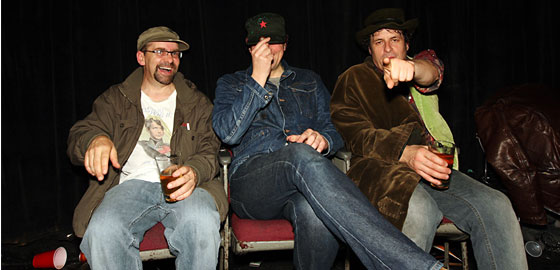
Is it time for a New Zealand Flying Nun scene appreciation trend? (If you’ve never seen the words “New Zealand Flying Nun” strung together before, here is a recent article to get you started.) This month, the Bats release new album The Guilty Office (Hidden Agenda); compatriots the Clean (pictured) will issue Mister Pop (Merge) September 8. For more on the Bats and the Clean, read our Lost Classics entry on New Zealand rock.
The Bats’ “Countersign” (download): https://magnetmagazine.com/audio/Countersign.mp3
The Clean’s “In The Dreamlife You Need A Rubber Soul” (download):
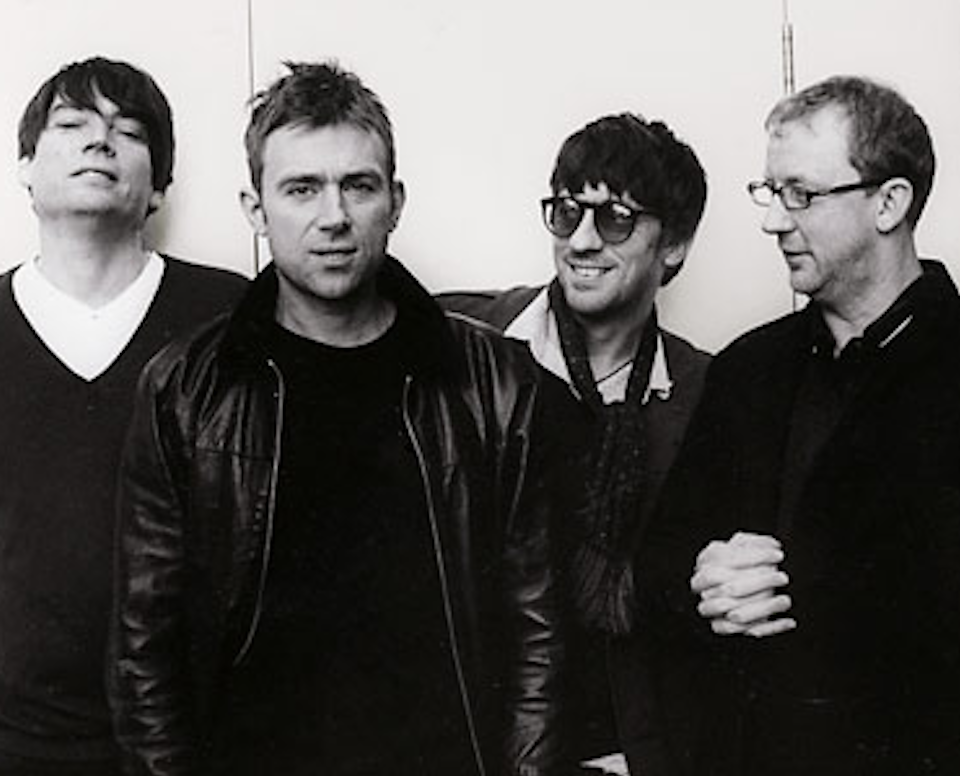
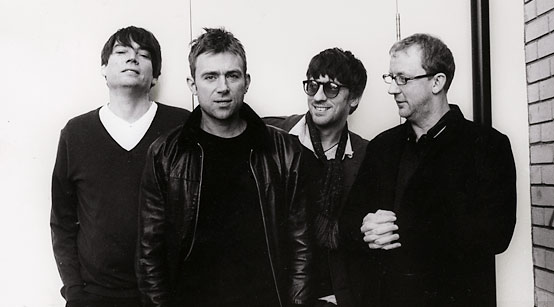
Blur was one of the most quintessentially English bands of the Britpop era. Drifting from shoegaze to grunge to pop, the group always retained its core influences of the Kinks, the Beatles and XTC. But despite a few solitary hits, Blur never quite made it in the U.S. And that’s a shame, because with a span of seven full-lengths, multiple EPs and some killer singles, Blur proved that it had the staying power many of its contemporaries lacked. But as the band succeeded financially, guitarist Graham Coxon grew more and more disenchanted, finally leaving after 1999’s 13. Following 2003’s difficult Think Tank, Blur went on hiatus. Since then, Coxon has developed a prolific solo career, singer Damon Albarn founded Gorillaz, bassist Alex James started a cheese farm, and drummer Dave Rowntree ran unsuccessfully for public office. Now reunited as a four-piece for the first time in nearly a decade, Blur is back in the public eye. And with rumors of a new album circulating, what better time to examine its most underrated and overrated songs?
:: The Five Most Overrated Blur Songs 1. “Song 2” (1997) Woo-hoo! Now name another line from “Song 2.” A Nirvana parody that the rest of the world took seriously, “Song 2” is good, grungy fun and remains Blur’s highest-charting single in the U.S. It’s not that Blur couldn’t do heavy riffs (the brilliant “Popscene” or “Bank Holiday”) or that it didn’t know when to just have fun (“Girls & Boys”). So what made “Song 2” so huge? It’s probably the woo-hoos.
2. “Parklife” (1994) Parklife the album made Blur the defining band of the Britpop generation. (For the few months until Oasis’ (What’s The Story) Morning Glory? came out, anyway.) But “Parklife” the song made Blur feel like a caricature by reducing its many talents into something cheap. “Parklife” goes beyond comedy and into just plain goofy. In attempting a Who-style character piece (the song even features spoken verses by Quadrophenia mod Phil Daniels), Blur assumes the “cheeky chap” image that would often hold it back from experimenting with its musical potential.
3. “She’s So High” (1991) With its droning beat and slightly sketchy lyrics (“I want to crawl all over her”), Blur deserved a better beginning than “She’s So High.” Despite its flaws, Leisure is a thoroughly solid debut thanks to buoyant numbers “There’s No Other Way” and “Bad Day.” So why start off a career with “She’s So High”? At least it gave Blur a chance to produce one of the most dated videos in music history.
4. “Country House” (1995) By the mid-’90s, Britpop was beginning to show signs of strain. With Oasis scrambling to repeat the success of Morning Glory, Pulp struggling to deal with success and Blur working on a follow-up to the massive Parklife, it was only a matter of time before it all fell apart. “Country House,” the center of a publicity feud with Oasis, was Blur by the numbers, complete with a goofy video and a sneering dismissal of the middle class. While it might have won the battle of the charts, Blur ultimately lost the Britpop war, and “Country House” has aged about as well as Albarn’s Penguin Books T-shirt.
5. “Crazy Beat” (2003) OK, so there aren’t that many fans of “Crazy Beat.” Not in this universe, anyway. But it was one of Blur’s final singles and also one of its biggest chart successes. A supposed reinvention that wound up more annoying than inventive, “Crazy Beat” can always be defended under the catch-all of “experimentation.” Duck noises are not experimentation. They are annoying. And until Blur release something new, our last memories of the band will be of “Good Song” and “Crazy Beat.” That is, frankly, unacceptable.
:: The Five Most Underrated Blur Songs 1. “You’re So Great” (1997) A Coxon number from the often bombastic Blur, “You’re So Great” is strangely sweet and instantly memorable. Coxon’s too-often neglected talents (see 1998’s “Coffee & TV”) might have led to the band’s split, but it gave him free rein to explore a vibrant solo career. True, if the world had paid a little more attention to Coxon during his time with the band, we might’ve had more Blur. We certainly wouldn’t have had Think Tank. But we probably wouldn’t have had this overlooked, stripped-down love song gone awry. “Sad, drunk and poorly,” indeed.
2. “Badhead” (1994) A brief pause in the hectic mash of Parklife, “Badhead” is one of Blur’s loveliest pop moments, with a horn section and ironic detachment in spades. But as with many of Blur’s best songs, it’s clear that Albarn’s claim of “I might as well just grin and bear it” isn’t fooling anyone. How “Badhead” wasn’t released as a single is surprising; how it didn’t become a pop classic is unthinkable.
3. All of The Great Escape (1995) OK, so The Great Escape wasn’t the best follow-up to the chart-conquering Parklife. It was indulgent, possibly due to some illicit substances consumed during its creation. But The Great Escape is stacked with some of the band’s best singles (“Stereotypes,” “Charmless Man”) and one contender for its top five (“The Universal”), as well as Albarn’s clever, even haunting, lyricism. Take, for instance, the Morrissey-influenced disaffection of “Best Days”: “Other people break into in a cold sweat/If you said that these were the best days of their lives.” The album is Albarn’s most notable attempt to recapture the Kinks circa Village Green in the light of the morning after, and even if it doesn’t always succeed, it makes for an interesting failure.
“Best Days”:
4. “Caramel” (1999) Like Blur grown up, 13 struck a fine balance between feedback-heavy fuzz (“Bugman”) and delicate melodies (“No Distance Left To Run”). In a way, it was its Abbey Road, a breakup album (or at least, a breakup-with-Coxon album) that combined the experimentation of Think Tank with both classic melodies and straightforward lyrics. This gospel-infused number is one of Blur’s strangest ever, ambient and dreamy and completely deserving of its seven-minute length. While “Tender” might have been 13’s most celebrated tearjerker, “Caramel” is a haunting depiction of a band coming apart at the seams.
5. “Mace” (1992) Picking up 1994’s The Special Collectors Edition is a must for any obsessive Blur fan, as it tracks the band’s b-sides up to the Parklife era. But it’s worth getting for “Mace” alone, a snotty, poppy number that taunts, “Used to know/But now you don’t.” While “Mace” was the b-side to the classic “Popscene,” it stands completely on its own. At its release, Blur was still in the process of finding a new style that would be artistically and commercially successful. Even if the culmination of that process—Modern Life Is Rubbish—didn’t sell as good as it should have, it’s gone down in history as a classic precursor to Britpop. For a band still uncertain of its future, “Mace” is a surprisingly cocky example from the Modern Life era.
Sir Mix-A-Lot may forever be linked to 1992 mega-hit “Baby Got Back,” but you’d be off-base in labeling him a one-hit wonder. One of hip hop’s ultimate DIY practitioners, he was a platinum-selling artist long before “Baby Got Back” introduced suburbanites everywhere to the glories of the big, bad booty. He founded his own record label, produced his own tracks, created a Seattle hip-hop scene from scratch and was among the first hip-hop acts to collaborate in the rock genre. These days, he is working on a new album due out next year and generally surveying a scene hugely influenced by the music he created two decades ago. Sir Mix will be guest editing magnetmagazine.com all this week. Read our Q&A with him.
Sir Mix-A-Lot: Let me start by saying, ain’t no hatin’ in me, but when the country that gave us Aretha, James, Marvin, Jimmy, Janis, Otis, Motown, Stax, hip hop and rock ‘n’ roll starts sending a message that the best talent is the person who can best sing someone else’s song, something is fucked. Karaoke is fun to watch, but take a stroll through YouTube and type in “James Brown Sammy Davis” and watch James Brown run through a 10-minute medley of his own songs on a Sammy Davis special. Surely he would have lost on American Idol, but without a five-octave voice, dimples and a cute smile, James Brown left a mark on the game far beyond most of the perfect-singing, souless, pop icons out there.
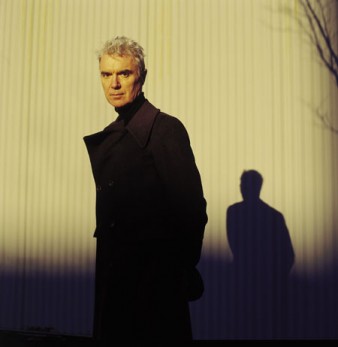
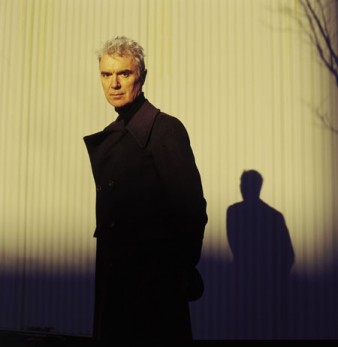
What’s different about David Byrne in 2009? His suit fits. The notorious image from Stop Making Sense of Byrne in the big-and-tall suit, undulating like a used-car-lot figurine, is burned in the brains of the YouTube generation. These days? He’s that weird guy with white hair who curated a stage at Bonnaroo two weeks ago. Thankfully, neither of these preconceptions was visible at Saturday’s show at Red Rocks, where Byrne played to an audience who more than likely bought original Talking Heads releases on vinyl.
Known mostly as a “newgrass” and jam-band hub, Colorado has seen a recent wave of indie-leaning acts, highlighted by Denver’s own DeVotchKa. The foursome came dressed for the occasion in matching black suits, save tubist/bassist Jamie Schroder in a black polka-dot dress and red cardigan. Singer Nick Urata crooned in usual fashion over the tribal-orchestral beats supplied by the rotating violin, accordion, tuba, stand-up bass and drums behind him. As made famous by the opening credits of Little Miss Sunshine (for which DeVotchKa played the score), “The Winner Is” was a crowd favorite. The group closed with a raucous European polka jam that sparked droves of uninhibited Coloradans to dance in their rows, Fat Tire cans in hand.
Like every element of his set, Byrne’s entrance was carefully choreographed. The 57-year-old took the stage at the stroke of 9 p.m., leading a parade of white-clad musicians and back-up singers. Generously offering to forego his customary pre-show babble (he told us this through two minutes of pre-show babble), Byrne opened with a lush version of “Strange Overtones.” It was the first of several songs off of last year’s Everything That Happens Will Happen Today with Brian Eno, quickly followed by the heaven-reaching “One Fine Day.” Throughout the set, Byrne was sporadically joined by three interpretive dancers. In the usual style of his live show, their moves seemed to exist independent of time or contemporary culture. But, in the end, that’s a large part of what David Byrne is. Old, but not really. Corny, but still somehow cool. At one point late in the performance, Byrne led the ensemble in a choreographed “sitting” office-chair routine, complete with a high-speed rolling slide across the diameter of the stage to conclude the song.
The natural acoustics of Red Rocks boded well for Byrne and his 10 stage performers, with warm reverberating bass tones and vocals that seemed to carry miles away from the hills of Morrison. The audience contributed to the late-show appearance of power duo “Once In A Lifetime” and “Life During Wartime,” the latter releasing a bottled-up dance blowout in the aisles. Byrne returned for three encores, the first of which included Al Green cover “Take Me To The River.”
—John Hendrickson
David Byrne And Brian Eno’s “One Fine Day” (download):


 Sir Mix-A-Lot may forever be linked to 1992 mega-hit “Baby Got Back,” but you’d be off-base in labeling him a one-hit wonder. One of hip hop’s ultimate DIY practitioners, he was a platinum-selling artist long before “Baby Got Back” introduced suburbanites everywhere to the glories of the big, bad booty. He founded his own record label, produced his own tracks, created a Seattle hip-hop scene from scratch and was among the first hip-hop acts to collaborate in the rock genre. These days, he is working on a new album due out next year and generally surveying a scene hugely influenced by the music he created two decades ago. Sir Mix will be guest editing magnetmagazine.com all this week. Read our Q&A with him.
 Sir Mix-A-Lot: If 30 is the new 20, then MILF is the new hot chick! She knows what she wants. She eats right, sleeps well, keeps her toes done. And she is looking to show some lucky man that she is ready for the pickin’. Gotta love that MILF!



 Is it time for a New Zealand Flying Nun scene appreciation trend? (If you’ve never seen the words “New Zealand Flying Nun” strung together before,